FAA Private Pilot Written Test 2026: Format, ACS Areas, Cost and How to Pass
The FAA Private Pilot — Airplane knowledge test (test code PAR) is 60 multiple-choice questions in 2 hours 30 minutes, pass mark 70%, taken at a PSI testing centre after an instructor’s endorsement. It is the easiest of the FAA writtens to pass and the easiest to pass badly: a 72% goes on your record and the examiner on your checkride is required to re-test you orally on every area you missed. Here is what it covers, what it costs, and how to walk in prepared.
The test at a glance
| Item | Private Pilot — Airplane (PAR) |
|---|---|
| Questions | 60, multiple choice, three options each |
| Time | 2 hours 30 minutes |
| Pass mark | 70% (42 correct) |
| Where | A PSI testing centre (the FAA’s testing contractor); computer-based |
| Prerequisite | An endorsement from an authorised instructor or an FAA-accepted home-study course; government photo ID |
| Validity | 24 calendar months to complete the practical test |
| Fee | Set by PSI, about USD 175 at the time of writing; check the PSI site |
| Supplement | The Airman Knowledge Testing Supplement for Sport, Recreational and Private Pilot (FAA-CT-8080-2H) is provided on screen: charts, figures, legends |
The result comes as an Airman Knowledge Test Report listing the ACS codes of every question you missed. Keep it: you need it for the checkride application, and your examiner must cover those codes in the oral.
What it covers: the ACS areas
The Private Pilot — Airplane Airman Certification Standards (FAA-S-ACS-6) define every knowledge element the test may draw on. The knowledge portion maps to these Areas of Operation:
- Preflight preparation — pilot qualifications, airworthiness requirements, weather information (METAR, TAF, graphical forecasts, PIREPs, winds aloft), cross-country flight planning, national airspace system, performance and limitations, operation of systems, human factors.
- Preflight procedures — inspection, engine start, taxiing, runup, before-takeoff check.
- Airport operations — communications, light signals, runway lighting, traffic patterns, markings and signs.
- Takeoffs, landings and go-arounds — normal, crosswind, soft-field, short-field, forward slip, go-around.
- Performance manoeuvres and ground reference manoeuvres.
- Navigation — pilotage and dead reckoning, VOR, GPS, diversion, lost procedures.
- Slow flight and stalls — including spin awareness.
- Basic instrument manoeuvres.
- Emergency operations — engine failure, systems malfunctions, emergency equipment.
- Night operations.
- Postflight procedures.
In practice the written leans hardest on weather and weather products, airspace and its weather minimums, regulations (14 CFR 61 and 91), performance charts, weight and balance, navigation and chart reading, aerodynamics and aircraft systems. Every question has a code such as PA.I.C.K3 (Area I Preflight Preparation, Task C Weather Information, Knowledge element 3); the code on your test report tells you exactly which task to revisit.
What it is written from
- Pilot’s Handbook of Aeronautical Knowledge (FAA-H-8083-25) — the core text: aerodynamics, systems, instruments, weight and balance, performance, weather, airspace, navigation, ADM.
- Airplane Flying Handbook (FAA-H-8083-3) — manoeuvres, takeoffs and landings, emergencies.
- Aeronautical Information Manual — airspace, procedures, lighting, signals, communications, medical facts.
- 14 CFR Parts 61 and 91 — certification and operating rules; Part 830 (NTSB reporting) and 68 (BasicMed) appear too.
- Aviation Weather Handbook (FAA-H-8083-28) — replaced AC 00-6 and AC 00-45; weather theory and products.
- Chart Supplement, sectional chart legend, the Testing Supplement figures.

All of these are public documents, free from the FAA’s website. That is why a question bank can cite the exact page — and why you should distrust any explanation that cannot.
Cost, endorsement and booking
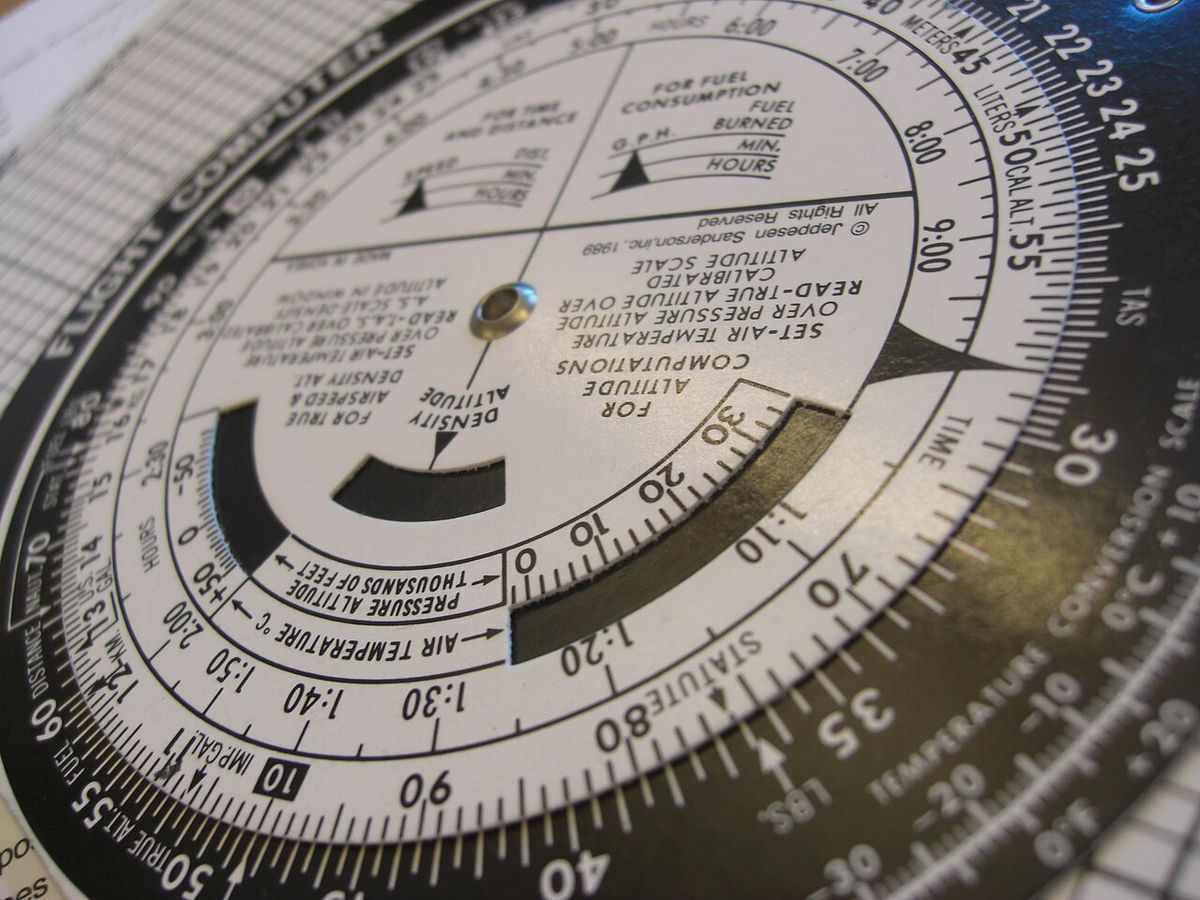
Three things before you can sit: an FTN (FAA Tracking Number, free, from IACRA), an endorsement — your instructor signs your logbook after ground training, or an FAA-accepted home-study course issues a graduation certificate — and a PSI booking. The fee is paid to PSI, about USD 175 at the time of writing. Bring government photo ID; a plotter, a mechanical E6B and a non-programmable calculator are allowed, and the testing supplement is on screen.
A fail costs you the fee again and an instructor’s re-endorsement after additional training. The result is valid for 24 calendar months; if the checkride slips beyond that, you re-sit the written.
How to pass it properly
- Aim above 90%, not 70%. Every missed code becomes an oral question on the checkride, and examiners read the report before you arrive.
- Study the ACS, not a bank. The old memorise-the-bank approach died with the published banks in 2012; the FAA rewrites questions. Learn the concept behind each ACS code and any question on it is answerable.
- Weather and airspace are half the battle. Cloud clearance and visibility minimums by airspace class, VFR weather minimums at night, special VFR, reading METARs and TAFs, weather theory (fronts, stability, icing, thunderstorms).
- Practise the figures. Sectional chart questions, performance charts (takeoff and landing distance, cruise performance, crosswind component), weight-and-balance graphs and the wind-side of the E6B come straight from the supplement.
- Know the numbers cold: currency (three takeoffs and landings in 90 days; night), medical durations, inspection intervals (annual, 100-hour, transponder 24 months, ELT), oxygen altitudes (12,500 / 14,000 / 15,000 ft), speed limits (250 kt below 10,000 ft; 200 kt below Class B, in Class C/D), fuel reserves (30 min day, 45 min night VFR).
- Take timed practice tests of 60 questions and review every wrong answer against the handbook page, not the answer key.
After the written: the checkride
The practical test has an oral and a flight portion with a Designated Pilot Examiner, against the same ACS. You need the written passed, the aeronautical experience of 14 CFR 61.109 (40 hours minimum under Part 61 including 20 dual and 10 solo, with the specified night, instrument and cross-country flying), a current medical or BasicMed, and your instructor’s endorsements. Examiner fees are separate from the written and vary widely by region; ask early.
Common questions
How many questions are on the FAA private pilot written test? 60 multiple-choice questions, each with three options, in 2 hours 30 minutes. The pass mark is 70%, i.e. 42 correct.
How much does the private pilot written test cost? The fee is set by PSI, the FAA’s testing contractor — about USD 175 at the time of writing. A re-sit costs the fee again plus an instructor re-endorsement.
How long is the private pilot written test valid? 24 calendar months. You must pass the practical test within that window or re-take the written.
Do I need an instructor to take the written? You need an endorsement: from an authorised instructor after ground training, or a graduation certificate from an FAA-accepted home-study course. You also need an FTN from IACRA and government photo ID.
What is on the private pilot written test? Everything in the knowledge elements of the Private Pilot — Airplane ACS: weather and weather products, airspace, regulations (14 CFR 61 and 91), performance and weight and balance, navigation and charts, aerodynamics, systems, human factors, airport operations and emergencies. Weather, airspace and regulations carry the most weight.
What score do I need on the FAA written? 70% to pass, but aim above 90%: every ACS code you miss is printed on your test report and must be covered in the oral portion of your checkride.
Prepare for the assessment, not just the application
Getting the interview is the easy half. v1prep has 16,000+ technical questions with every answer cited to its source — A320, B737, EASA ATPL theory and the FAA writtens.
Start practising free →