Landing Technique and Crosswind Operations
Landing technique covers the last part of the approach: holding the aiming point, flaring to reduce the rate of descent, touching down in the touchdown zone aligned with the runway, and decelerating. In a crosswind the pilot must also cancel drift, by crabbing, sideslipping or a combination of the two.
The last few hundred feet decide whether an approach becomes a safe landing. The pilot must hold a path to the runway, reduce the rate of descent to touch down in the right place at the right speed, keep the wheels aligned with the runway in whatever wind is blowing, and stop within the distance available. Hard landings, tail strikes, floats that use up the runway and crosswind veer-offs all begin here.
The principles are the same from a training aircraft to a jet transport, though heights, speeds and procedures differ. This article follows the landing from the aiming point to the roll-out, then covers crosswind technique for landing, take-off and taxi. The approach before it is covered in stabilised approach, the distances in landing distance.
Aiming point and touchdown zone
On a steady approach the visual aiming point is the spot on the runway that stays still in the windscreen while the rest of the scene expands around it. If speed and configuration are held, keeping it in a fixed position keeps the aircraft on a constant path. If the aircraft slows, the nose rises and the spot drifts, and a pilot who descends to put it back arrives low and slow.
ICAO Annex 14 requires an aiming point marking, two broad white rectangles, on paved instrument runways of code 2, 3 and 4. Its distance from the threshold grows with runway length: 150 m where the landing distance available is under 800 m, 250 m up to 1,200 m, 300 m up to 2,400 m and 400 m beyond. Touchdown zone markings follow in pairs every 150 m. In the United States the aiming point is about 1,000 ft from the threshold and the touchdown zone stripes come every 500 ft (see aerodrome markings and signs).
The pilot's eye and the wheels follow different paths. On a large aircraft the main gear is well below and behind the flight deck, so without a flare the wheels would meet the ground short of the point the pilot is aiming at, and the shallower the approach the greater that gap. Certified landing distances start at 50 ft above the threshold. A 3° path from that height meets the runway about 950 ft further on, so for a typical jet the airborne part is about 1,000 ft, plus any float.
Runway shape deceives. A runway narrower than the pilot is used to makes the aircraft seem too high, which leads to a low, flat approach and the risk of landing short. A wider one gives the opposite illusion: a high approach, a high round-out and a heavy landing.
The landing flare
The flare, or landing flare, also called the round-out, is the progressive increase in pitch just above the runway that reduces the rate of descent for touchdown. Thrust or power is reduced to idle during it. The target is a touchdown in the touchdown zone, on the main wheels first, at a controlled rate of descent.
On the Airbus A320 the flare starts at about 30 ft radio height from a stabilised approach, and the pitch increase is about 4°. The thrust levers are brought to idle, with an automatic "RETARD" reminder at 20 ft in a manual landing. The flare is gentle and progressive, never extended in search of a perfectly smooth touchdown. The pilot monitoring calls "PITCH, PITCH" if the pitch attitude reaches 10° or approaches the tail strike limit shown on the display. In a light aeroplane the flare starts lower, and the aim is to touch down at low speed in a nose-up attitude, with the nose wheel held off.
A forward centre of gravity raises the control forces, and near the forward limit the elevator may not raise the nose enough. In propeller aircraft, closing the throttle suddenly in the flare removes the slipstream lift and can drop the aircraft onto the runway.
Floating and ballooning
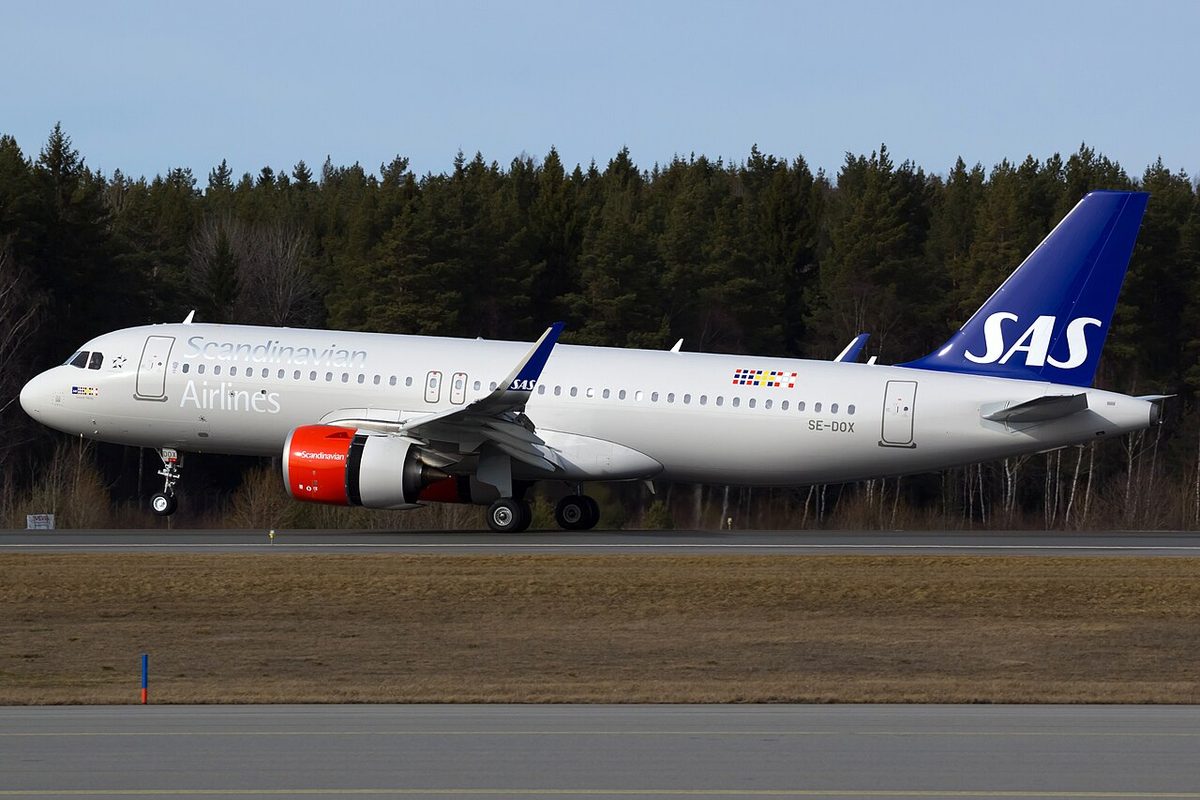
Within about one wingspan of the surface, and markedly below half a span, the ground restricts the wingtip vortices and downwash. Induced drag falls, the wing needs less angle of attack for the same lift, and the aircraft decelerates slowly. This is ground effect, and it causes landing float: the aircraft keeps flying above the runway while surplus speed bleeds away. Every knot above the recommended threshold speed becomes runway distance. As a rule of thumb, 10 per cent excess speed at the threshold adds about 20 per cent to the landing distance; ATPL performance textbooks use a second rule of thumb for jets, about 200 ft of extra distance for every 5 kt above VREF.
The cure is prevention: cross the threshold at the planned speed. Once floating, the pilot holds the attitude and lets the aircraft settle, never pushing it onto the runway, which risks a nose-first touchdown or a bounce. If the aircraft will not touch down in the touchdown zone, the answer is a go-around.
Ballooning is a climb away from the runway during the flare, usually from pitching up too quickly or too far, sometimes from a gust. The aircraft ends up higher and slower than intended. A small balloon is handled by holding or slightly lowering the attitude, adding a little power to cushion the descent and resuming the flare. A large balloon, or one with speed decaying fast, calls for a go-around. A bounce is treated the same way: a light one can be held and cushioned, but after a high bounce the safe choice is to go around rather than attempt a second touchdown at low speed and high attitude.
Warning: a sudden gain of airspeed and a balloon above the path on short final, under a shower or storm cloud, may be the first phase of a microburst outflow. Go around at once while performance is still available.
Firm, hard and long landings
A firm landing technique is a deliberate, positive touchdown in the touchdown zone without an extended flare. It is not a hard landing. It spins the wheels up and puts weight on them immediately, which lets the ground spoilers and autobrake operate and the anti-skid work. A soft, extended flare prolongs the float and delays all of these, so on a wet or contaminated runway the firm landing is essential (see wet and contaminated runways).
A hard landing exceeds the loads the structure was designed for. Transport aeroplane landing gear is designed for a descent velocity of 10 ft/s (3.05 m/s) at maximum landing weight. Touching down with drift, in an abnormal attitude or above the maximum landing mass also overstresses the structure. The crew reports a suspected hard landing so that maintenance can inspect the gear, its attachments and the surrounding structure. Typical causes are a high sink rate carried into the flare from an unstable approach, a late flare and the runway illusions above.
A long landing is a touchdown beyond the touchdown zone or beyond the point the operator's procedures specify. Crossing the threshold high or fast, floating and holding off for a smooth touchdown all lengthen the air distance, and runway used in the air is not available for stopping. Many operators require a go-around whenever the aircraft cannot touch down in the touchdown zone (see runway excursion).
Derotation, reverse and deceleration
Derotation is lowering the nose wheel onto the runway after the main wheels have touched down. It is done without delay but smoothly: Boeing's procedure is to fly the nose wheel onto the runway, and Airbus calls for derotation as soon as the main gear is on the ground. Letting the nose drop heavily loads the nose gear and the forward fuselage structure.
Deceleration then comes from three sources:
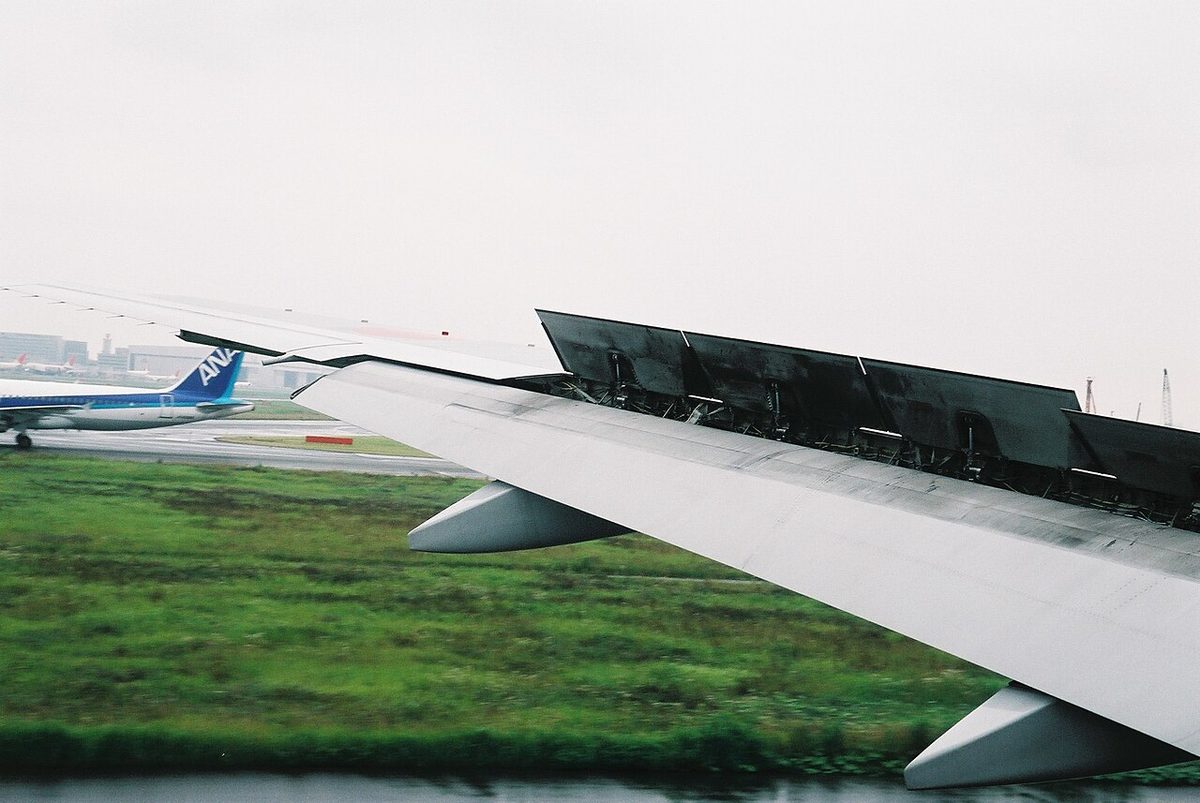
- Ground spoilers dump the lift and put the aircraft's weight on the wheels, so the brakes can work, and add drag. On the A320 they will not extend if a thrust lever remains above idle; Boeing crews confirm the speed brake lever is up and the pilot monitoring calls "SPEED BRAKES UP", or "SPEED BRAKES NOT UP".
- Wheel brakes, manual or through the autobrake, with anti-skid protection.
- Reverse thrust, selected immediately after main gear touchdown. A320 crews select maximum reverse or idle reverse, the lowest reverse setting, which gives slightly more thrust than forward idle. Maximum reverse is mandatory in an emergency, when deceleration is not as expected, after a failure affecting landing performance, after a long flare or touchdown, or with an unexpected tailwind.
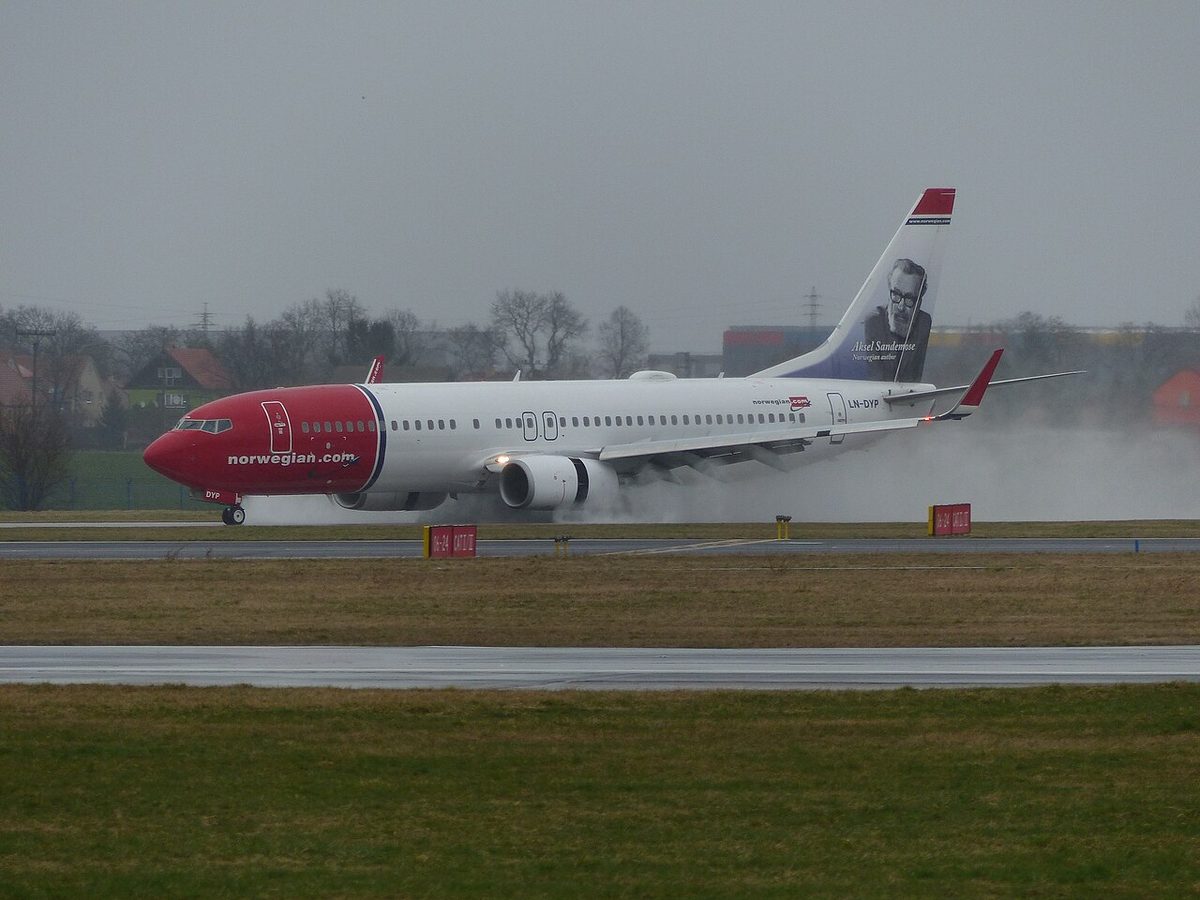
Reverse is most effective at high speed and is reduced as the aircraft slows, because at low speed the engines can re-ingest exhaust and debris. On the A320 the pilot monitoring calls "SEVENTY KNOTS" and the pilot flying selects idle reverse; maximum reverse should not be used below 70 kt. On the Boeing 737 the call is "60 KNOTS", and the reverse levers reach the reverse idle detent by taxi speed. Certified dry-runway landing distances take no credit for reverse, so idle reverse is often enough on a long dry runway.
Crosswind landing: crab and de-crab
To track the extended centreline in a crosswind, the aircraft heads partly into the wind. The difference between heading and track is the crab angle, and an approach flown this way with wings level is a crabbed approach. Touching down with that drift still on puts large side loads on the landing gear, so the crab is removed, fully or partly, before touchdown. The crosswind landing technique is one of the following:
- Crab and kick (de-crab). The crab is held to the flare. The pilot then applies downwind rudder to align the fuselage with the runway and upwind aileron to keep the wings level and stop the aircraft drifting downwind. Airbus recommends rudder for alignment and roll control only as needed for the centreline, and accepts a residual crab of up to about 5° in a strong crosswind rather than the bank that would remove it completely, which could strike a wingtip or engine.
- Wing-low (sideslip). The upwind wing is lowered to stop the drift and opposite rudder keeps the nose aligned with the runway, so the aircraft touches down on the upwind main wheel first. It is widely taught for light aircraft; on airliners the bank angle is limited by wingtip and engine nacelle clearance.
- Combinations. Some operators crab on the approach and change to a sideslip for the last part in strong winds. For a slippery runway one E-Jet operator touches down in the crab.
Autoland systems perform the de-crab themselves. On the A320, for example, the FLARE mode, which engages at about 40 ft radio height, reduces the sideslip through the yaw axis to line the aircraft up with the runway while it flares. After touchdown the pilot keeps straight with rudder and nose wheel steering; in a light aircraft, aileron is moved progressively into wind as speed falls.
The maximum demonstrated crosswind in a flight manual is what was shown during certification, not a limitation unless stated as one. Operators set their own limits, lower on slippery runways, and the gust is added to the steady wind when comparing (see wind components and crosswind limits). On the A320, in strong or gusty crosswinds above 20 kt, the approach speed is at least VLS + 5 kt, and the crew may raise the increment to 15 kt.
Crosswind take-off technique
The crosswind take-off technique in a light aeroplane starts with full aileron into wind as the roll begins, reduced as speed builds and the controls become effective, with rudder keeping the aircraft on the centreline. The aircraft is lifted off cleanly, without skipping sideways, and once airborne turned into wind to track the runway direction.
Airbus procedures for the A320 set the sidestick half forward until 80 kt, released to neutral by 100 kt. With a tailwind, or a crosswind above 20 kt, the stick is held fully forward to 80 kt and the thrust is set rapidly to about 70 % N1 and then progressively to take-off thrust by 40 kt ground speed. Lateral inputs are kept small on the ground and in the rotation, to avoid spoiler extension. The tiller is not recommended during the take-off roll, as it is so effective that the aircraft may over-react. At 130 kt wheel speed the nose wheel steering is disconnected from the pedals, so strong crosswinds then need more rudder. Crosswind is one of the factors in tail strikes on take-off (see take-off procedures and rejected take-off).
Crosswind taxi technique
Wind acting on the fin makes an aircraft on the ground weathervane, turning into wind, and a gust under the upwind wing can lift it. The crosswind taxi technique for a tricycle-gear light aeroplane follows the rule "climb into, dive away from":
| Wind | Ailerons (control wheel) | Elevator |
|---|---|---|
| Quartering headwind | Turned into the wind, upwind aileron up | Neutral |
| Quartering tailwind | Turned away from the wind, upwind aileron down | Forward, elevator down |
Taxi speed is kept low, especially on slippery surfaces, where steering and braking are weaker and the weathervane tendency is harder to resist.
Frequently asked questions
What is the flare in landing?
The flare, or round-out, is the progressive nose-up change of pitch just above the runway that turns the approach descent into a gentle touchdown. The power is reduced to idle at the same time. On the Airbus A320 it starts at about 30 ft radio height from a stabilised approach, with a pitch increase of about 4 degrees. Light aircraft flare lower and touch down on the main wheels in a nose-up attitude.
Why does an aeroplane float during landing?
Close to the ground the surface restricts the wingtip vortices and downwash, so induced drag falls sharply and the aeroplane decelerates slowly in ground effect. Any speed carried into the flare above the recommended value must be bled off before touchdown, and it turns into runway distance. A 10 per cent excess over the recommended speed adds roughly 20 per cent to the landing distance.
What is the difference between a firm landing and a hard landing?
A firm landing is a deliberate, positive touchdown in the touchdown zone without a prolonged flare. It spins the wheels up and puts weight on them at once, so spoilers and autobrakes work early, which matters most on wet or contaminated runways. A hard landing exceeds the loads the structure was designed for, the transport aeroplane standard being a descent velocity of 10 ft per second at maximum landing weight, and requires a maintenance inspection.
What is the crab and de-crab crosswind technique?
The aeroplane approaches in a crab, heading into wind with the wings level so that it tracks the centreline. In the flare the pilot uses rudder to align the fuselage with the runway and aileron to stop the wing lifting and the aeroplane drifting. Airbus accepts a residual crab of up to about 5 degrees in a strong crosswind, rather than the bank needed to remove it completely, to avoid a wingtip or engine strike.
How should the controls be held when taxiing in a crosswind?
In a tricycle-gear light aeroplane the rule is climb into the wind and dive away from it. With a quartering headwind, turn the control wheel into the wind so the upwind aileron is up, with the elevator neutral. With a quartering tailwind, turn the wheel away from the wind so the upwind aileron is down, and hold it forward so the wind cannot lift the tail.
Test yourself on Landing Technique and Crosswind Operations
The v1prep banks cover this topic in Operational Procedures (070), with a worked explanation for every answer. EASA ATPL, PPL, IR and CPL, the FAA written tests and A320/B737 type ratings.
Start practising →Sources and further reading
- FAA Airplane Flying Handbook (FAA-H-8083-3C), Approaches and Landings
- FAA Pilot's Handbook of Aeronautical Knowledge (FAA-H-8083-25), Chapters 5 and 11
- FAA AC 91-79B, Aircraft Landing Performance and Runway Excursion Mitigation
- ICAO Annex 14, Aerodromes, Volume I, Aerodrome Design and Operations
- EASA Easy Access Rules for Large Aeroplanes (CS-25)
- FAA Aeronautical Information Manual, Chapter 2 Section 3, Airport Marking Aids and Signs
Library articles are written for study and exam preparation. They do not replace your aircraft's approved documentation, your operator's procedures or the regulations themselves.