Emergency Beacons and Search and Rescue Signals
Emergency beacons are radio transmitters that alert search and rescue services to an aircraft, vessel or person in distress and guide searchers to it. Emergency locator transmitters, EPIRBs and personal locator beacons send a coded 406 MHz alert through the Cospas-Sarsat satellites, and most add a 121.5 MHz homing signal.
An emergency beacon is a radio transmitter whose only purpose is to tell the search and rescue (SAR) services that someone needs help, and where. Aircraft carry emergency locator transmitters (ELTs), ships carry emergency position-indicating radio beacons (EPIRBs) and people carry personal locator beacons (PLBs). All three send a digital alert on 406 MHz, which the Cospas-Sarsat satellites relay to a rescue coordination centre; ELTs and PLBs add a weak 121.5 MHz signal on which searchers home in the last stage of the search.
Radio is only part of the picture. Survivors still attract rescuers with flares, lights and symbols laid out on the ground, and aircraft use a small set of visual and pyrotechnic signals to declare distress or urgency without a radio. ICAO Annex 12 governs search and rescue and Annex 2 the visual signals, while EASA and FAA operating rules decide which aircraft carry which beacon. The voice procedures are covered in distress and urgency communications.
Emergency locator transmitters
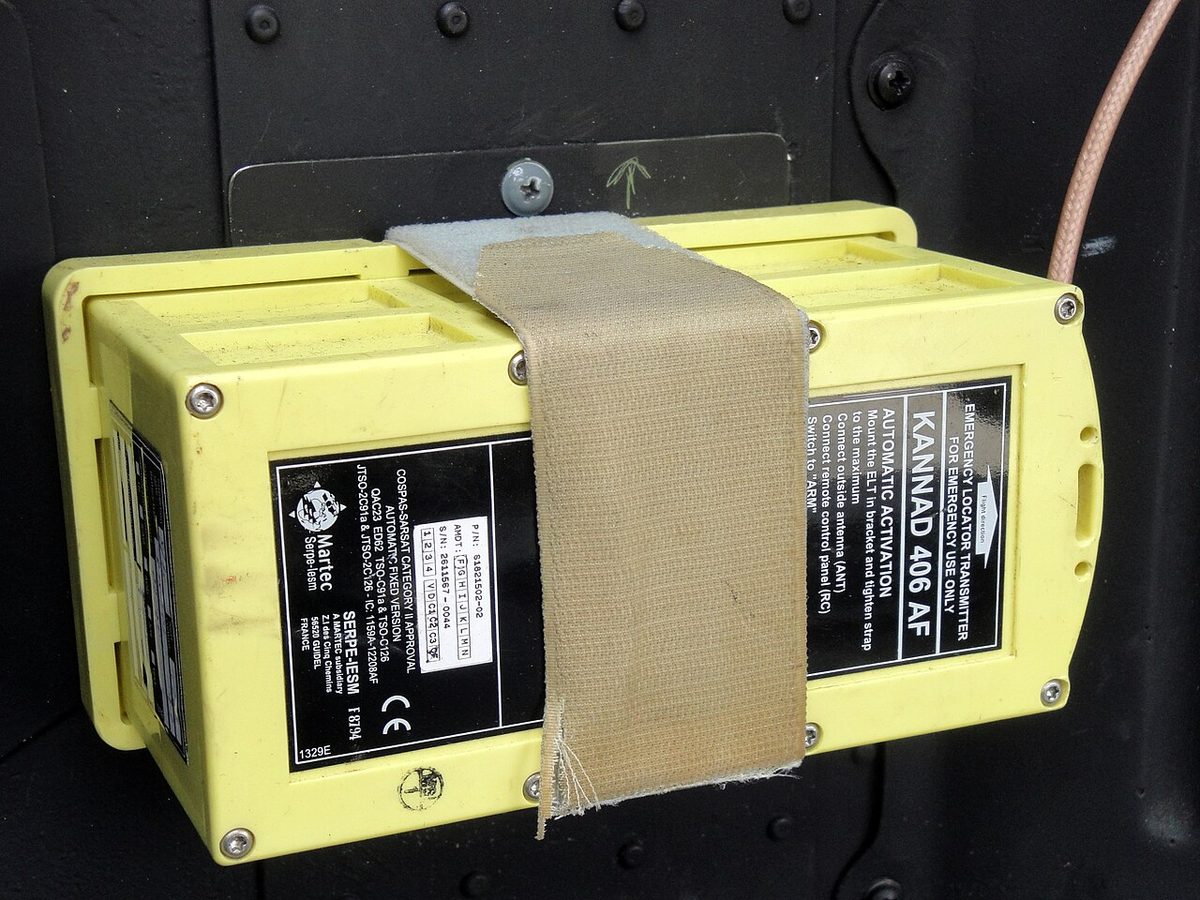
An ELT is carried in the aircraft and normally switches itself on when a crash sensor, often called a g-switch, detects the deceleration of an impact. ICAO and EASA recognise four types:
- ELT(AF), automatic fixed: permanently attached to the aircraft and set off automatically by the crash, transmitting through an external antenna.
- ELT(AP), automatic portable: rigidly attached, automatically activated, but readily removed after a crash.
- ELT(AD), automatically deployable: released from the aircraft and activated automatically.
- ELT(S), survival: removed from the aircraft and switched on by the survivors.
Airliners have a remote switch on the flight deck. On the A320 the ELT selector has ARMED, ON and TEST/RESET positions: ARMED lets the unit transmit on impact, ON starts transmission at once, and TEST/RESET runs the self-test or stops a transmission set off by a hard landing. The A320's installation transmits on 121.5, 243 and 406.025 MHz, the Boeing 737's on 121.5, 243.0 and 406 MHz, and on both an amber light shows when the ELT is transmitting. The A320's ELT antenna sits on the upper aft fuselage, with a clear view of the sky once the aircraft is upright on the ground.
Carriage rules differ by operation. For commercial air transport, EASA requires ELTs that transmit simultaneously on 121.5 MHz and 406 MHz. An aeroplane with more than 19 passenger seats carries at least one automatic ELT or two ELTs of any type; if its individual certificate of airworthiness was first issued after 1 July 2008, it needs two, one of them automatic. Long overwater flights add survival ELTs: an aeroplane able to continue to an aerodrome with the critical engine inoperative needs life-rafts and two ELT(S) when it flies more than 120 minutes at cruising speed or 400 NM, whichever is less, from land suitable for an emergency landing. Under Part-NCO, an aeroplane certified for six passenger seats or fewer may carry an ELT(S) or a PLB, carried by a crew member or passenger, instead of an installed ELT. In the United States, 14 CFR 91.207 requires ELTs in most civil aeroplanes; the battery must be replaced or recharged after one cumulative hour of use or when half its useful life has expired, and the ELT inspected every 12 calendar months.
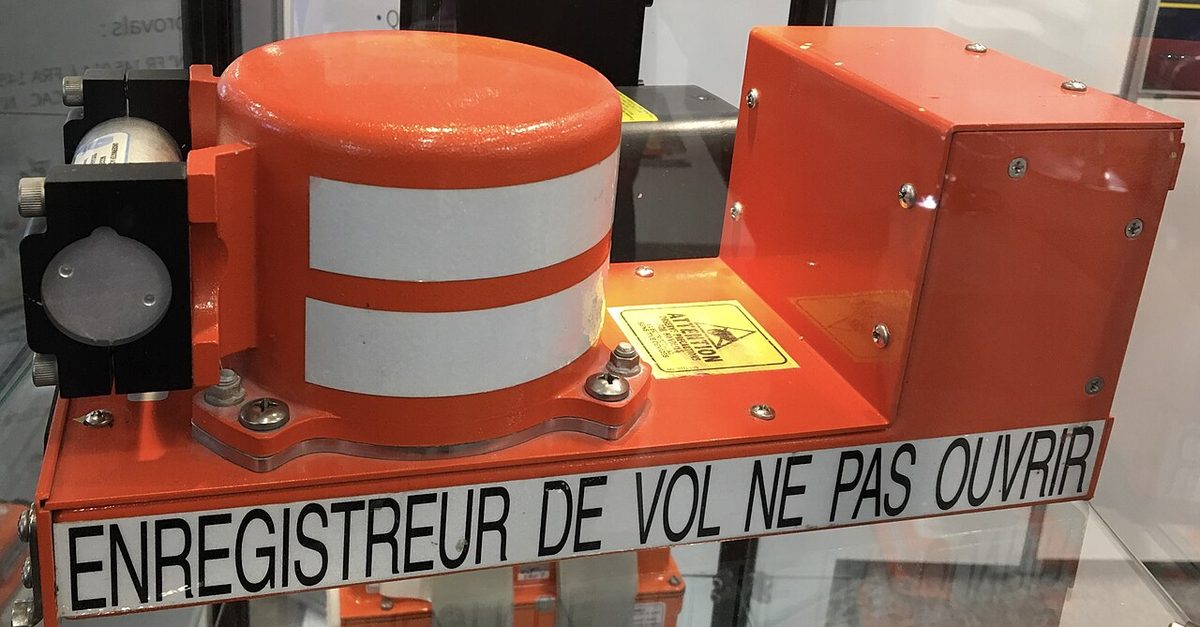
An underwater locator beacon is a different device. Clamped to each flight recorder, it is activated by immersion and sends ultrasonic pulses at 37.5 kHz for at least 90 days, 30 days on older units, so that divers and ships can find the recorder on the seabed. It does not transmit on the SAR radio frequencies (see flight recorders).
EPIRBs and personal locator beacons
The EPIRB is the maritime beacon, registered to a vessel and carried in ships and boats; the aeronautical mobile service allows survival craft and EPIRB stations to take part in communications on the emergency frequencies. The PLB is a small beacon carried by a person, such as a hiker, sailor or pilot, and registered to its owner. A PLB is switched on by hand, so it depends on a survivor who is able to activate it; an automatic ELT does not. The three types share the same 406 MHz alerting system, which is why a pilot can carry a PLB in a light aeroplane where the rules allow it.
406 MHz versus 121.5 MHz
The two frequencies do different jobs:
| 406 MHz | 121.5 MHz | |
|---|---|---|
| Purpose | Alerting through the satellites | Homing by searchers nearby |
| Content | Digital burst with a unique coded identity | Audio tone, no identity and no voice |
| Detected by | Cospas-Sarsat satellites and ground stations | Direction-finding equipment in search aircraft, ground parties, anyone listening on 121.5 MHz |
| Satellite processing | Yes | Stopped in 2009 |
Older ELTs transmitted on 121.5 MHz without any 406 MHz channel. Satellites once listened for them, but the analogue signal carried no identity, and satellite processing of 121.5 MHz ended in 2009. A 121.5-only beacon is now heard only by an aircraft or station listening within range. The 406 MHz burst, by contrast, identifies the beacon: the rescue coordination centre can look up its registration, contact the owner or operator and check quickly whether the alert is real. Many ELTs also radiate on 243.0 MHz, the military emergency frequency.
The Cospas-Sarsat system
Cospas-Sarsat is the international satellite system that detects 406 MHz distress beacons. Its satellites relay each burst to ground receiving stations, which decode the beacon's identity, work out its position and pass the alert to the rescue coordination centre (RCC) for the area. The RCC organises the search in its search and rescue region, whose boundaries should as far as practicable match those of the flight information regions. ICAO requires states to provide SAR on a 24-hour basis and to help aircraft and survivors regardless of their nationality.
A beacon supplements the ATS alerting service rather than replacing it (see alerting service and search and rescue). If an aircraft with a flight plan fails to arrive within 30 minutes of its estimated time of arrival, or no communication has been received for 30 minutes after it was due, the uncertainty phase (INCERFA) is declared, followed if necessary by the alert phase (ALERFA) and the distress phase (DETRESFA). Item 19 of the flight plan, which lists endurance, persons on board and emergency and survival equipment, is kept by the filing office for that purpose.
ICAO Annex 6 also contains provisions for locating an aeroplane in distress while it is still in flight. France's AIP lists an ELT triggered in flight, or an automatically deployable flight recorder, as a means of meeting them: Cospas-Sarsat detects the signal and passes it to the competent RCC.
Testing and false alerts
Every false alert costs rescue resources, so testing is controlled. The FAA's AIM allows operational tests of 121.5 MHz ELTs only in the first five minutes after any hour, for no more than three audible sweeps, so that monitoring stations can tell a test from a real alert. A 406 MHz ELT is checked with its built-in self-test, which sends a specially coded test burst, following the manufacturer's instructions. A hard landing can trigger the crash sensor, so pilots listen on 121.5 MHz before shutting down for the ELT's distinctive downward-sweeping tone; an accidental activation is switched off and reported to the nearest ATC facility or flight service station. Boeing 737 crews check at pre-flight that the ELT light is extinguished.
SAR on-scene and maritime frequencies
| Frequency | Use |
|---|---|
| 406 MHz | Beacon alerting through Cospas-Sarsat |
| 121.5 MHz | International VHF aeronautical emergency frequency; beacon homing |
| 243.0 MHz | Military UHF emergency frequency; also radiated by many ELTs |
| 123.1 MHz | Search and rescue on-scene frequency |
| 2182 kHz | International maritime distress and calling frequency, in the MF band |
| VHF FM channel 16 | Maritime distress and calling in coastal waters |
121.5 MHz and 123.1 MHz kept 25 kHz channel spacing when European voice frequencies moved to 8.33 kHz, so that any aircraft can use them. Aircraft do not normally carry VHF FM marine radios, so to talk to a vessel they usually relay through a coastguard or coastal radio station.
The first aircraft to reach the scene of an accident, if it is not a SAR aircraft, takes charge of the on-scene activities of all aircraft arriving later until the first dedicated SAR aircraft arrives; if it cannot talk to the RCC, it may hand over by mutual agreement to one that can. To lead a surface vessel to survivors, a pilot circles the vessel, crosses low ahead of its bow rocking the wings, then heads towards the scene. Crossing low astern of the vessel while rocking the wings means its help is no longer required.
Visual and pyrotechnic distress signals
Annex 2 and SERA define signals an aircraft can make without a working radio. Distress is signalled by SOS in Morse code by light or any other signalling method, by red rockets or shells fired one at a time at short intervals, or by a parachute flare showing a red light, as well as by MAYDAY by voice. Urgency, meaning the aircraft must land but needs no immediate assistance, is signalled by repeatedly switching the landing lights on and off, or the navigation lights in a way distinct from their normal flashing. Green and white pyrotechnics carry no distress meaning; a red pyrotechnic fired from a control tower means do not land for the time being (see radio communication failure).
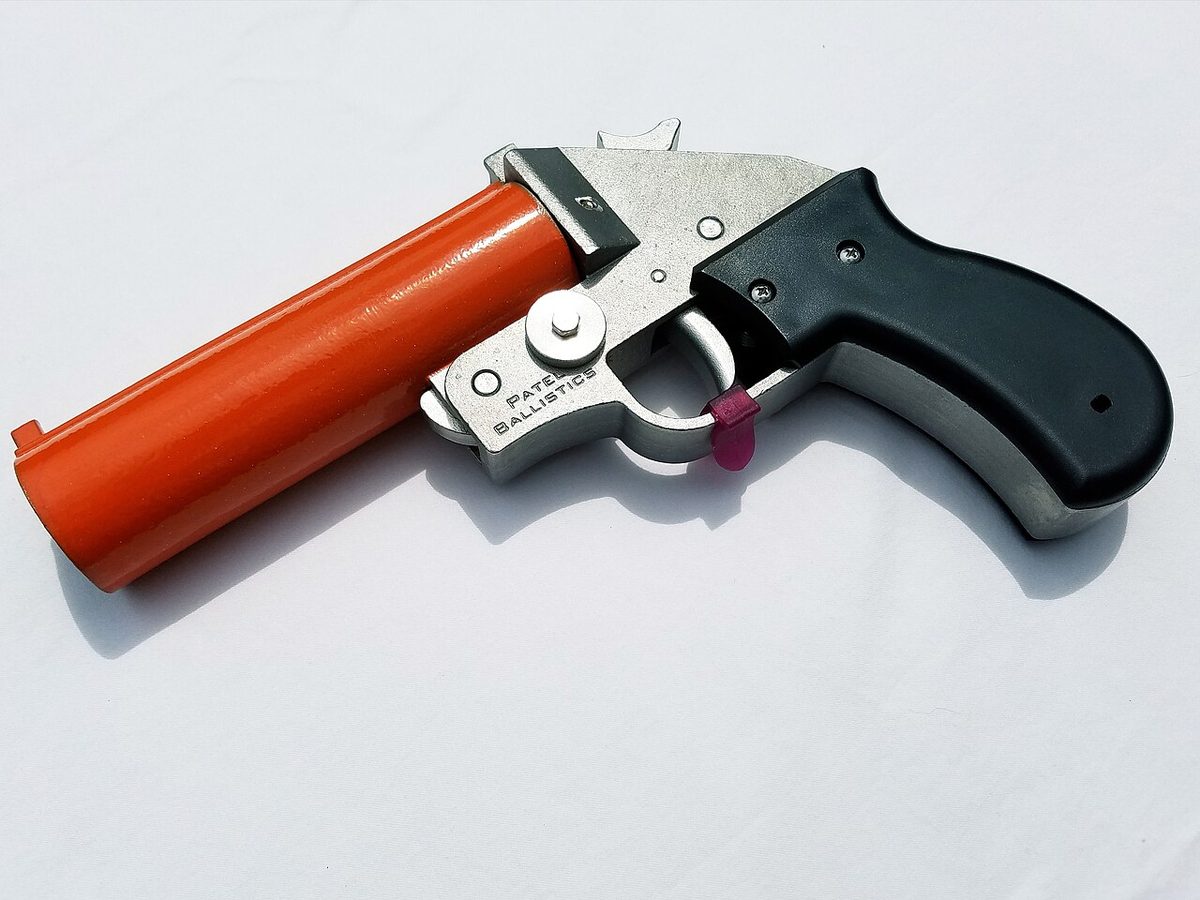
Beyond 30 minutes at cruising speed or 50 NM, whichever is less, from land suitable for an emergency landing, Part-NCO requires the pilot-in-command to assess the ditching risk and decide on carrying equipment for making distress signals, life-rafts and life-saving equipment. In the United States, 14 CFR 91.205 requires an aircraft operated for hire over water beyond power-off gliding distance from shore to carry flotation gear for each occupant and, outside Part 121 operations, at least one pyrotechnic signalling device.
Survivors on the ground use the ground-air visual signal code:
| Symbol | Meaning |
|---|---|
| V | Require assistance |
| X | Require medical assistance |
| N | No or negative |
| Y | Yes or affirmative |
| Arrow | Proceeding in this direction |
The symbols should be at least 2.5 m (8 ft) long and as conspicuous as possible, made with whatever contrasts with the surface. Supplies dropped to survivors are colour-coded by streamers: red for medical supplies and first-aid equipment, blue for food and water, yellow for blankets and protective clothing, and black for miscellaneous equipment such as stoves, axes and cooking utensils.
Exam tip: V asks for help, X asks for a doctor. Red on a dropped package is medical, blue is food and water.
International Code of Signals
The International Code of Signals is the maritime signalling code, published by the International Maritime Organization, that lets ships exchange important messages by flags, light, sound and radio when they share no language. To prevent confusion with it, ICAO Annex 7 bars five-letter combinations of the International Code of Signals from use as aircraft registration marks, together with SOS, PAN, XXX, TTT and combinations that could be mistaken for the Q code.
Frequently asked questions
What is the difference between a 406 MHz and a 121.5 MHz ELT?
A 406 MHz ELT sends a digital burst carrying a unique coded identity, which the Cospas-Sarsat satellites detect and pass to a rescue coordination centre with a computed position. A 121.5 MHz signal is a low-power tone with no identity, used by searchers to home on the beacon once they are close. Satellites stopped processing 121.5 MHz in 2009, so a 121.5-only ELT is heard only by someone listening nearby.
What is Cospas-Sarsat?
Cospas-Sarsat is the international satellite system that detects distress beacons on 406 MHz. Its satellites relay each burst to ground stations, which decode the beacon's identity, work out its position and send the alert to the rescue coordination centre responsible for the area. The identity is useful only if the beacon is registered, because that is how the centre finds out which aircraft, vessel or person it belongs to.
What is the difference between an ELT, an EPIRB and a PLB?
An emergency locator transmitter is fitted to or carried in an aircraft and is usually triggered automatically by a crash. An emergency position-indicating radio beacon is the maritime counterpart, carried by ships and boats. A personal locator beacon is a small beacon carried by a person and switched on by hand. All three alert through Cospas-Sarsat on 406 MHz, and Part-NCO accepts a PLB in place of an ELT in small aeroplanes.
How should an ELT be tested?
The FAA's AIM limits operational tests of 121.5 MHz ELTs to the first five minutes after any hour and to no more than three audible sweeps, so that a test is not taken for a real alert. A 406 MHz ELT is tested with its built-in self-test, following the manufacturer's instructions. After a hard landing, pilots listen on 121.5 MHz before shutting down to check for an accidental activation, and report any they find.
What does a V laid out on the ground mean to a search aircraft?
In the ground-air visual signal code a V means require assistance. An X means require medical assistance, N means no or negative, Y means yes or affirmative, and an arrow means proceeding in this direction. The symbols should be at least 2.5 m, about 8 ft, long and made with the strongest possible contrast against the ground, using anything available, such as trampled snow, oil on sand or burned grass.
Test yourself on Emergency Beacons and Search and Rescue Signals
The v1prep banks cover this topic in Communications (090), with a worked explanation for every answer. EASA ATPL, PPL, IR and CPL, the FAA written tests and A320/B737 type ratings.
Start practising →Sources and further reading
- ICAO Annex 12, Search and Rescue
- ICAO Annex 2, Rules of the Air (Appendix 1, distress and urgency signals)
- Cospas-Sarsat, International Satellite System for Search and Rescue
- FAA Aeronautical Information Manual, Chapter 6 Section 2, Emergency Services Available to Pilots
- 14 CFR 91.207, Emergency locator transmitters
- EASA Easy Access Rules for Air Operations (CAT.IDE.A.280, CAT.IDE.A.285 and NCO.IDE.A.170)
- AIP France, GEN 1.7, Differences from ICAO Standards, Recommended Practices and Procedures (Annex 6, ELT and PLB)
Library articles are written for study and exam preparation. They do not replace your aircraft's approved documentation, your operator's procedures or the regulations themselves.