Propeller Torque and Slipstream Effects
Propeller torque and slipstream effects are the rolling and yawing tendencies a propeller imposes on its aeroplane: the reaction to engine torque, the spiralling slipstream striking the fin, asymmetric blade effect (P-factor) and gyroscopic precession. With a propeller turning clockwise as seen from the cockpit, they turn the aeroplane to the left.
A propeller does more than pull. It reacts against the airframe that turns it, it throws a twisting column of air back over the fuselage and tail, it loads its blades unevenly when the aeroplane flies nose-high, and as a spinning mass it resists changes in the direction of its axis. Together these effects make a single-engine propeller aeroplane roll and yaw whenever power, airspeed or attitude changes.
For a propeller that turns clockwise as seen from the cockpit, the arrangement assumed throughout FAA and EASA training material, every one of them turns the aeroplane to the left, and FAA texts group them as the left-turning tendencies. They are strongest at high power, low airspeed and high angle of attack: on the take-off roll, in the climb, in the go-around and in a power-on stall. That is why the pilot's right foot works hardest just after take-off. For a propeller turning the other way, every direction below is reversed.
Left-turning tendencies
| Effect | What causes it | Result (clockwise propeller) | Strongest when |
|---|---|---|---|
| Torque reaction | Reaction to the engine turning the propeller | Roll to the left; on the ground, a swing to the left | High power, low airspeed |
| Spiralling slipstream | Rotating slipstream striking the fin | Yaw to the left | High power, low airspeed |
| P-factor (asymmetric blade effect) | Descending blade producing more thrust | Yaw to the left | High power, high angle of attack, low airspeed |
| Gyroscopic precession | Change of the propeller's axis | Yaw when pitching, pitch when yawing | Rapid attitude changes, raising the tail on take-off |
Exam questions describe the rotation in two ways. FAA material says "clockwise as seen from the flight deck"; many European texts say "clockwise viewed from the rear". Both describe the same propeller, because the pilot looks forward from behind it.
The expressions propeller torque effect and torque effect are often used loosely for the whole left-turning tendency. Strictly, torque reaction is only the rolling moment described next.
Torque reaction
By Newton's third law, an engine that turns its propeller clockwise pushes the airframe anticlockwise with an equal and opposite moment. The result is torque reaction, a rolling moment to the left about the longitudinal axis. It is the counterpart of the propeller torque, the aerodynamic resistance in the plane of rotation that the engine must overcome to turn the propeller (see propeller aerodynamics). It grows with engine power and matters most at low airspeed, when the ailerons have little authority to oppose it.
In flight, manufacturers compensate with aileron trim or by giving the left wing a slightly greater angle of incidence, so that it produces a little more lift. On the ground the aeroplane cannot roll, so the reaction presses the left main wheel harder onto the runway. The extra rolling friction on that wheel helps swing the aeroplane to the left during the take-off roll.
Exam tip: torque reaction is a rolling moment, not a yawing moment. The yaw felt in a slow, full-power climb comes chiefly from asymmetric blade effect.
Spiralling slipstream
The propeller gives the air behind it a rotation as well as a rearward velocity. This spiralling slipstream, spelt spiraling slipstream in the United States and also called the spiral slipstream effect or corkscrew effect, wraps round the fuselage in the direction of the propeller's rotation. With a clockwise propeller it strikes the left side of the fin and rudder. The side force pushes the tail to the right and yaws the nose to the left.
The effect is greatest when the spiral is tightly wound: at high power and low forward speed, as in the initial climb. At higher speeds the spiral stretches out, less of it meets the fin at an angle, and its influence fades. Designers counter it with an offset fin, a fixed tab on the rudder or a thrust line angled slightly to the right.
P-factor
P-factor, the asymmetric blade effect of European texts, appears when the propeller disc is inclined to the oncoming air. At a high angle of attack the propeller shaft points above the flight path, so the air arrives from slightly below the disc. The descending blade, on the right side of a clockwise propeller, meets that flow at a larger angle of attack and a higher relative speed than the ascending blade on the left. It produces more thrust, the centre of thrust moves to the right of the propeller shaft, and the nose yaws to the left.
P-factor depends on angle of attack, so it is negligible in level cruise, where the disc is nearly perpendicular to the airflow, and greatest in a slow, full-power climb or a power-on stall. It is the most pronounced of the four tendencies in those conditions, which is why a power-on stall needs substantial right rudder to keep the aeroplane in balance.
On a twin, the same shift of the thrust line decides which engine is critical. With both propellers turning clockwise, the right engine's thrust acts further from the centreline, so the loss of the left engine is the worse case (see asymmetric flight).
Gyroscopic precession
A spinning propeller is a gyroscope. When a force tries to tilt its axis, the effect appears 90° later in the direction of rotation: this is gyroscopic precession. For a propeller turning clockwise as seen from behind:
- pitching nose-up yaws the aeroplane to the right;
- pitching nose-down yaws it to the left;
- yawing to the left pitches it nose-up;
- yawing to the right pitches it nose-down.
Precession acts only while the attitude is changing, so it is a transient effect rather than a steady one. It is most noticeable in a tailwheel aeroplane when the pilot raises the tail on the take-off roll. Lowering the nose acts like a forward force on the top of the propeller disc; precession moves it to the right side of the disc, pushing the nose to the left just as torque and slipstream are also at work. The pilot anticipates it with right rudder. The same principle underlies the gyroscopic flight instruments (see gyroscopic principles).
Accelerated slipstream over the tail
The slipstream is faster than the free stream as well as rotating. Wherever it flows, over the inner wing, the fuselage and a conventional tail, the dynamic pressure is higher than the aeroplane's airspeed alone would give. This accelerated slipstream has several consequences:
- Control power. A tailplane and fin in the slipstream give more elevator and rudder authority at high power and low airspeed. At idle power, as in a glide or the flare, the same surfaces feel less effective. A T-tail sits above the slipstream in normal flight, which gives smoother elevator response but less pitch authority at low speed and high power (see tail configurations).
- Trim changes. Because the slipstream and the thrust line both change with power, a power change usually needs a pitch retrim, and often a change of rudder too.
- Lift. The slipstream raises the local dynamic pressure over the parts of the wing behind the propeller, and with the nose high part of the thrust supports the weight. The power-on stall speed is therefore lower than the power-off figure (see stall). The reverse matters in the flare: a sudden power reduction at low speed removes the slipstream lift and can cause a heavy landing.
- Stability. A propeller ahead of the centre of gravity, and the slipstream's effect on the downwash at the tail, are destabilising in pitch, most of all at high power and low airspeed (see longitudinal stability).
Contra-rotating propellers
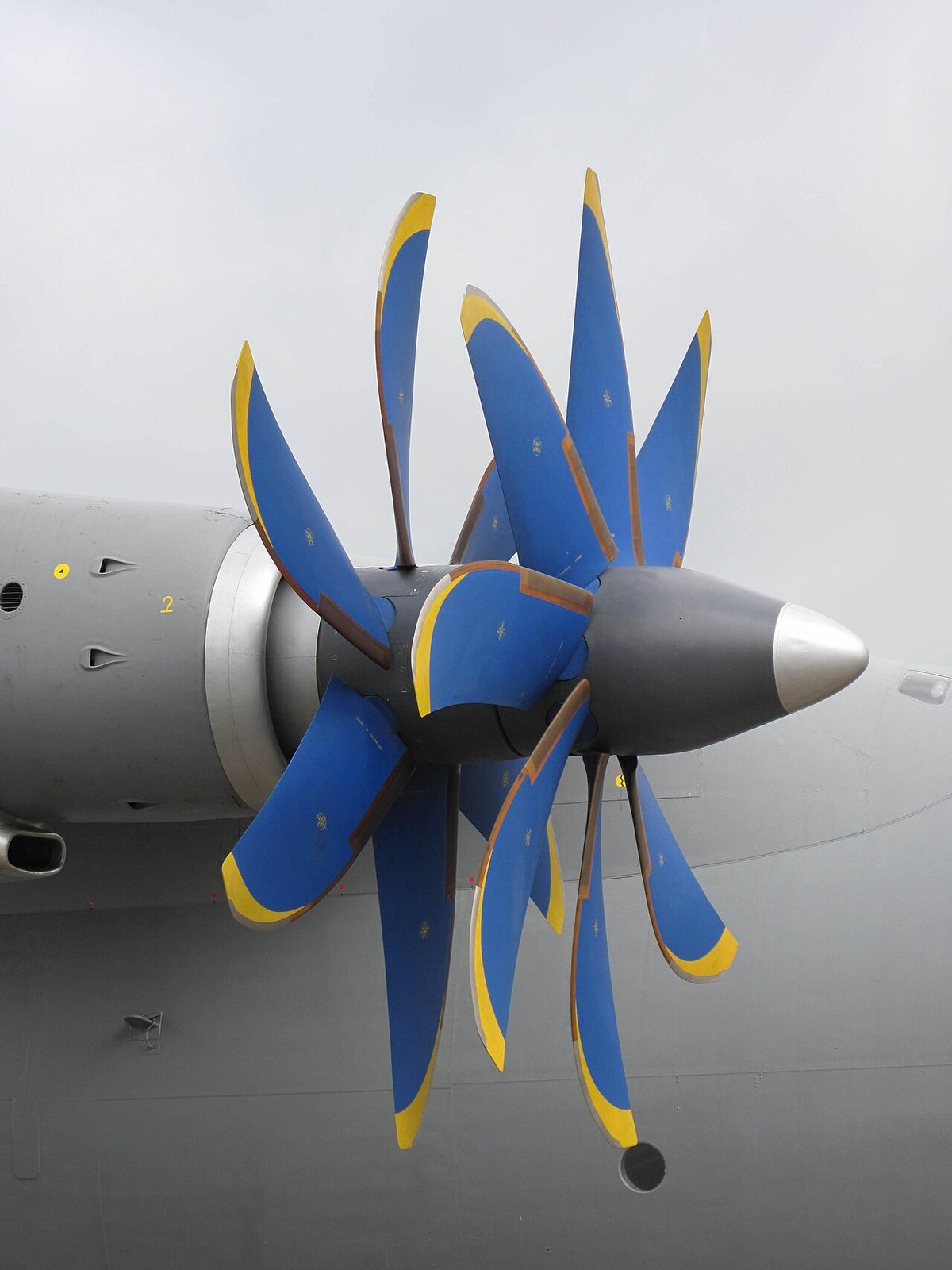
Contra-rotating propellers are two propellers mounted one behind the other on the same axis and turning in opposite directions. Their torque reactions cancel, so the torque effect is eliminated, and the rotation of the slipstream, with its effect on the fin, is reduced as well. Because the pair has a high solidity, the arrangement is used where a very high power must be absorbed without increasing diameter (see propeller aerodynamics).
Counter-rotating propellers are a twin-engine arrangement: the two engines turn their propellers in opposite directions, usually with the descending blades on the inboard side. Exam texts distinguish the two terms. Counter-rotation makes the effects of the two engines symmetrical: it reduces the torque effect of the pair and leaves neither engine critical. Each engine on its own still produces a torque reaction and an off-centre thrust line, so rudder is still needed after an engine failure.
Correcting on take-off and climb
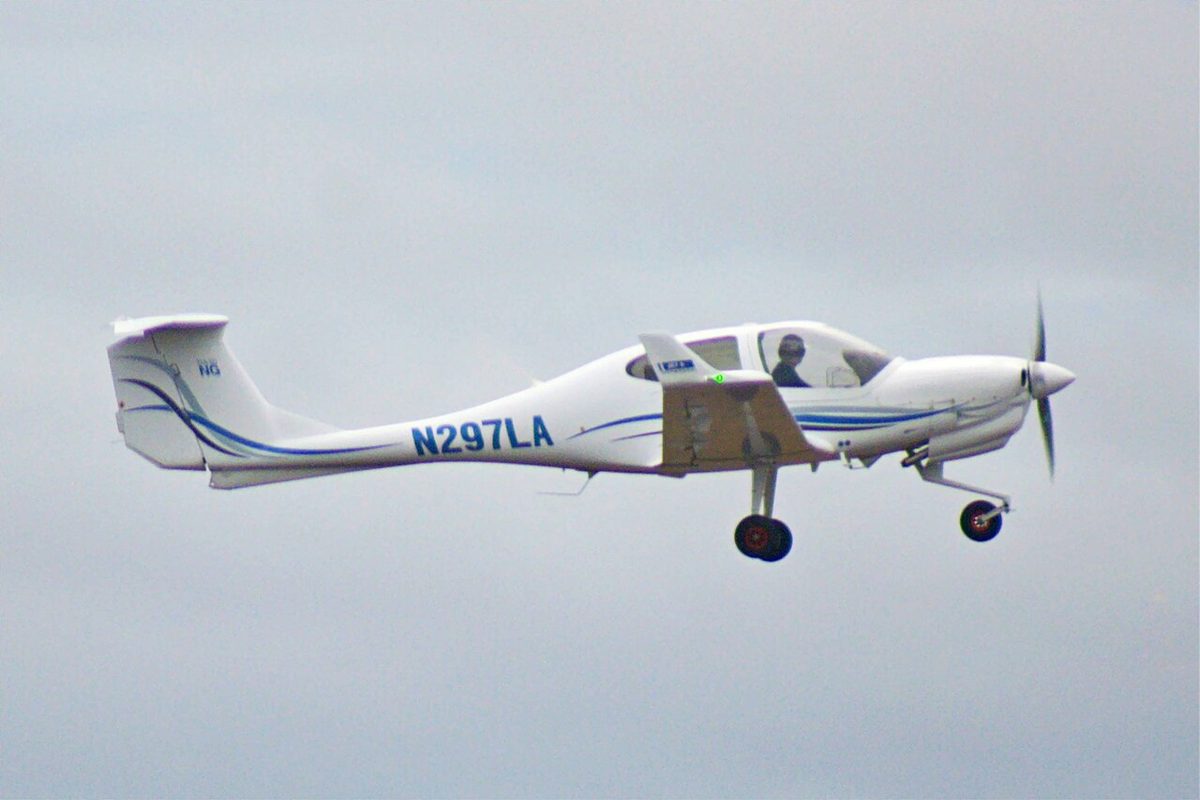
Designers remove as much of the tendency as they can for the condition in which the aeroplane spends most time. The fin may be offset, the engine canted slightly to the right, a fixed tab fitted to the rudder, and the wing incidence or aileron trim adjusted, so that the aeroplane flies in balance at cruise power and speed. Away from that condition the forces no longer cancel, and the pilot supplies the difference:
- Take-off roll. Apply power smoothly and keep straight with rudder, usually right rudder, increasing as power comes up. In a tailwheel aeroplane expect an extra swing to the left as the tail is raised.
- Lift-off and climb. The nose-high attitude adds P-factor while the airspeed is still low. Hold right rudder to keep the slip ball centred, and use rudder trim if fitted.
- Go-around. Full power at low speed brings all the effects back at once, and the power change also changes the pitch trim. Anticipate with rudder and hold the attitude.
- Power-on stall and slow flight. Keep the ball centred with rudder. An uncorrected yaw at the stall is the classic entry to a wing drop and a spin (see spins and spiral dives).
Warning: the need for right rudder grows as the airspeed falls and the power rises. A climbing turn at low speed with the ball out of the centre is exactly the combination that produces an unintended spin.
Frequently asked questions
What are the four left-turning tendencies?
For a propeller turning clockwise as seen from the cockpit, the four left-turning tendencies are torque reaction, which rolls the aeroplane left; the spiralling slipstream, which strikes the left side of the fin and yaws the nose left; P-factor or asymmetric blade effect, which moves the thrust line to the right at high angles of attack; and gyroscopic precession, which yaws the aeroplane when its pitch attitude changes. The first three are strongest at high power and low airspeed; precession acts only while the attitude is changing.
What is P-factor?
P-factor, called asymmetric blade effect in European texts, is the yaw caused when the propeller disc is inclined to the airflow at a high angle of attack. The descending blade then meets the air at a larger angle of attack and a higher speed than the ascending blade and produces more thrust. With a clockwise propeller the thrust line moves to the right and the nose yaws left. It is greatest in a slow, full-power climb and negligible in level cruise.
Why does a tailwheel aeroplane swing left when the tail is raised on take-off?
Raising the tail pitches the spinning propeller nose-down, which acts like a force applied to the top of the propeller disc. By gyroscopic precession the force takes effect 90 degrees later in the direction of rotation, on the right side of a clockwise propeller, pushing the nose to the left. The effect lasts only while the attitude is changing, but it comes on top of torque and slipstream, so the pilot anticipates it with right rudder.
What is the difference between contra-rotating and counter-rotating propellers?
Contra-rotating propellers are two propellers on the same axis, one behind the other, turning in opposite directions. Their torque reactions cancel, so the torque effect is eliminated. Counter-rotating propellers are fitted to twins: each engine's propeller turns the opposite way from the other. That makes the propeller effects symmetrical, so neither engine is critical, but each engine alone still produces its own torque reaction.
Test yourself on Propeller Torque and Slipstream Effects
The v1prep banks cover this topic in Principles of Flight (081), with a worked explanation for every answer. EASA ATPL, PPL, IR and CPL, the FAA written tests and A320/B737 type ratings.
Start practising →Sources and further reading
- FAA Pilot's Handbook of Aeronautical Knowledge (FAA-H-8083-25), Chapter 5, Aerodynamics of Flight (left-turning tendencies)
- FAA Airplane Flying Handbook (FAA-H-8083-3C), Takeoffs and Departure Climbs; Tailwheel Airplanes
- EASA, Explanatory Note to ED Decision 2018/001/R, Part-FCL theoretical knowledge learning objectives
- FAA AC 61-67C, Stall and Spin Awareness Training
Library articles are written for study and exam preparation. They do not replace your aircraft's approved documentation, your operator's procedures or the regulations themselves.