Primary Flight Controls
The primary flight controls are the surfaces that rotate an aeroplane about its three axes: the elevator or stabilator in pitch, the ailerons, often assisted by roll spoilers, in roll, and the rudder in yaw. The pilot moves them with the control column or side-stick and the rudder pedals.
The primary flight controls are the surfaces a pilot uses to rotate an aeroplane about its three axes: the elevator in pitch, the ailerons in roll and the rudder in yaw. Fore and aft movement of the control column works the elevator, sideways movement of the wheel or stick works the ailerons, and the pedals work the rudder. Whether the surfaces are driven by cables, hydraulic actuators or fly-by-wire computers, the principle does not change: a surface alters the aerodynamic force on part of the airframe, and that force, acting at a distance from the centre of gravity (CG), creates a moment that turns the aeroplane.
The subject goes well beyond the first flying lesson. Every control has side effects on another axis, every control weakens at low speed and becomes powerful enough to damage the structure at high speed, and some layouts merge two controls into one surface. The rudder has even been at the centre of an accident in which the pilot's own inputs overloaded the fin.
Primary and secondary flight controls
Primary flight controls rotate the aeroplane about its axes and so change its attitude and flight path. Secondary flight controls change its performance or relieve the pilot of control forces without directly rotating it: flaps and leading-edge devices, speed brakes and trim. The classification differs slightly between authorities. EASA ATPL texts treat roll-control spoilers as primary controls, since they roll the aeroplane, while the FAA's Pilot's Handbook of Aeronautical Knowledge lists spoilers among the secondary controls with flaps and trim.
| Control | Cockpit input | Surface movement | Axis | Result |
|---|---|---|---|---|
| Elevator or stabilator | Column back | Trailing edge up | Lateral | Nose pitches up |
| Ailerons, with roll spoilers | Wheel or stick right | Right aileron up, left aileron down | Longitudinal | Roll to the right |
| Rudder | Right pedal forward | Trailing edge to the right | Normal (FAA: vertical) | Nose yaws right |
The movements are instinctive: the aeroplane moves the way the pilot pushes. How the axes relate to stability is covered in aircraft axes and stability fundamentals.
How a control surface works
A control can change the force on an aerofoil in three ways. It can change camber, as a hinged trailing-edge surface does: deflecting it down increases the camber and lift coefficient of the aerofoil, deflecting it up reduces them. It can change incidence, as an all-moving tailplane does by pivoting as a whole. Or it can spoil the airflow, as a spoiler does by disturbing the flow over the upper surface of the wing. Most primary controls work by camber.
A deflected surface also changes the angle of attack of the section it is attached to, because it moves the effective chord line. That matters near the stall: a down-going aileron on a dropping wing raises that wing's angle of attack and can stall it completely, which is why a wing drop at the stall is first met by reducing the angle of attack (see stall).
The force a given deflection produces is proportional to dynamic pressure, and so to the square of the indicated airspeed. At low speed large deflections are needed and the controls feel soft and slow to respond, one of the classic signs of an approaching stall. Surfaces in the propeller slipstream keep more of their power at low airspeed and high power. On the Boeing 737 the rudder becomes aerodynamically effective between 40 and 60 kt during the take-off run. At high speed the same deflection produces very large loads, so large aeroplanes limit control travel, use powered controls with artificial feel and balance their surfaces aerodynamically, as described in control balance, tabs and trim.
Elevator and stabilator
The elevator is hinged to the trailing edge of the horizontal stabiliser. Pulling the column back raises it, which increases the tailplane's download, pushes the tail down and pitches the nose up; pushing does the reverse. Because it changes the pitch attitude, the elevator is in effect the angle of attack control, and with it the control of speed at a given power setting. Its travel is often greater upwards than downwards: the A320's elevators, for example, deflect up to 30° nose-up and 17° nose-down.
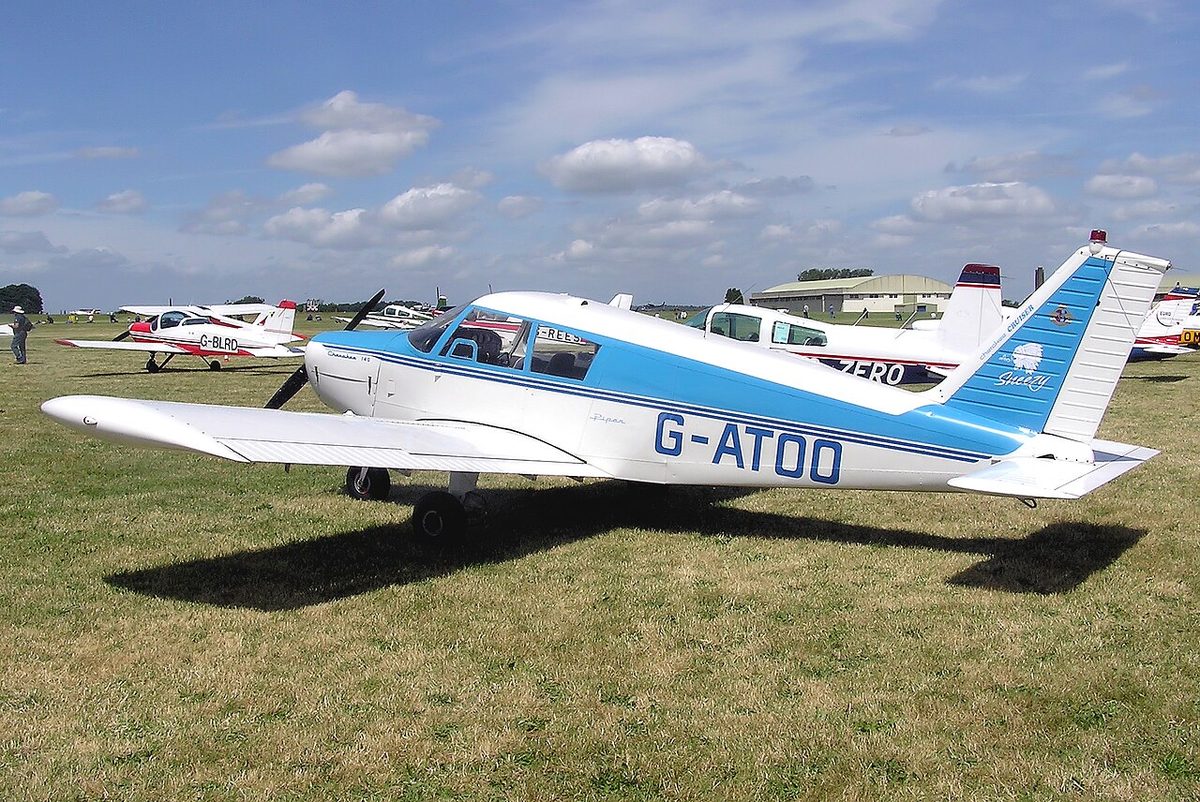
A stabilator is an all-moving tailplane that pivots as a single surface and combines the stabiliser and elevator, as on the Piper PA-28. Changing the incidence of the whole tail makes it very powerful, and all-moving surfaces keep their authority at high Mach numbers where a shock wave ahead of a hinged elevator would weaken it (see high-speed flight). Because a stabilator pivots close to its own aerodynamic centre, its hinge moments are small and it would feel dangerously light, so it carries an anti-servo tab (EASA: anti-balance tab) that moves in the same direction as its trailing edge and adds control force. On most jet transports the tailplane is a trimmable horizontal stabiliser: the whole surface moves slowly for trim while elevators hinged behind it provide manoeuvring control, as on the Boeing 737 with its two elevators and movable stabiliser. The layouts themselves are compared in tail configurations.
Ailerons
The ailerons are hinged to the outer trailing edge of each wing and move in opposite directions. Turning the wheel to the right raises the right aileron, which reduces the lift of the right wing, and lowers the left aileron, which increases the lift of the left wing, so the aeroplane rolls right. Placing them near the tips gives the largest rolling moment for a given force.
Aileron deflection sets a rate of roll, not a bank angle. Once the desired bank is reached the ailerons are returned to about neutral; in a steep turn slight opposite aileron may be needed, because the outer wing, moving faster, tends to steepen the bank. Rolling with ailerons also produces adverse yaw, the nose swinging away from the turn because the rising wing carries more induced drag. On large aeroplanes ailerons are supplemented by roll spoilers and often split into inboard and outboard surfaces; the A320 has one aileron and four roll spoilers on each wing, and the Boeing 737 two ailerons and eight flight spoilers in all. These refinements are the subject of roll control, adverse yaw and spoilers.
Rudder
The rudder is hinged to the fin. Pushing the right pedal deflects the rudder's trailing edge to the right; the side force on the fin pushes the tail to the left and the nose yaws right. Its main tasks are:
- Balance in turns, countering adverse yaw so that the slip ball stays centred;
- Crosswind take-offs and landings, keeping the aeroplane aligned with the runway;
- Asymmetric thrust after an engine failure on a multi-engine aeroplane, usually the most demanding case (see asymmetric flight);
- Propeller effects on single-engine aeroplanes, above all at high power and low speed;
- Spin recovery, where full opposite rudder stops the rotation.
The rudder is not a roll control, although yaw does produce roll as a secondary effect.
On large aeroplanes full rudder at high speed would overload the fin, so rudder authority is reduced as speed rises. A rudder ratio changer leaves the pedals their full travel but gives less rudder per unit of pedal; a variable stop system limits pedal and rudder travel together. The A320's rudder travel limit reduces the maximum deflection progressively with speed, and the Boeing 737 NG's rudder load limiter cuts the hydraulic pressure available to the main rudder actuator by about 25 % for each system above 137 kt, restoring full authority below 132 kt. A yaw damper also moves the rudder automatically to suppress Dutch roll; see lateral and directional stability.
Combined surfaces: ruddervator, elevon, taileron, flaperon
Some designs make one surface do the work of two. A mixer, mechanical or electronic, combines the pilot's inputs.
| Surface | Combines | Typical use | How it works |
|---|---|---|---|
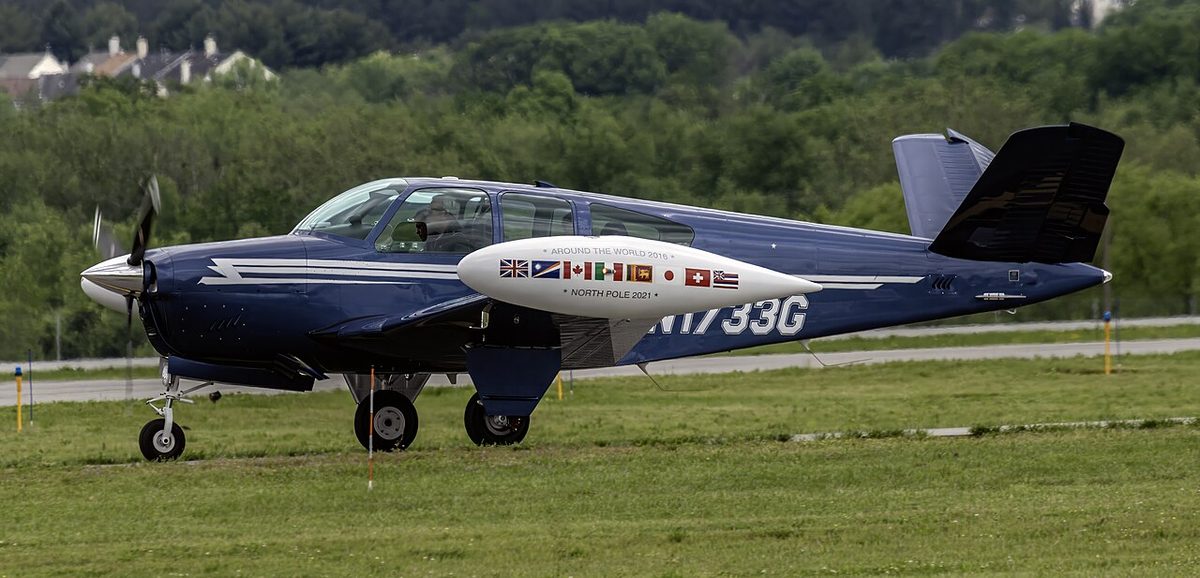
| Ruddervator | Rudder and elevator | V-tail, such as the Beechcraft Bonanza | Both surfaces together for pitch, in opposite directions for yaw |
| Elevon | Elevator and aileron | Tailless and delta-wing aircraft, such as Concorde | Both together for pitch, in opposite directions for roll |
| Taileron | All-moving tailplane and aileron | Some combat aircraft | Both tailplane halves together for pitch, differentially for roll |
| Flaperon | Flap and aileron | Wings with too little trailing edge for both | Both droop together as flaps, move differentially about the drooped position for roll |
The A320 uses a limited form of the flaperon idea: its ailerons droop 5° when the flaps are extended.
Exam tip: a "rudderon" is not a standard control surface. Elevons combine elevator and aileron, ruddervators combine rudder and elevator, and tailerons are slab tailplanes that also roll the aeroplane.
Secondary effects of controls
Roll and yaw are coupled, so the ailerons and rudder each produce a secondary effect on the other axis.
- Rudder: yaw, then roll. When the aeroplane yaws, the outer wing moves faster than the inner wing and produces more lift, and the sideslip adds a rolling moment through the dihedral effect. The aeroplane therefore rolls in the direction of the yaw: left rudder gives left yaw and then left roll. Held on, the bank steepens and the nose drops into a descending turn.
- Ailerons: roll, then yaw. As the roll starts, adverse yaw swings the nose away from the intended turn. If the bank is then held without rudder, the aeroplane slips towards the lower wing, the fin weathercocks the nose towards that wing and the nose drops.
Both effects are why turns are flown with aileron and rudder together; turning flight covers the co-ordination. They also explain the Dutch roll and spiral modes of an aeroplane left to itself.
Rudder reversal
A rudder reversal is a large rudder pedal input in one direction followed quickly by a large input in the other. It is more dangerous than it looks: rapid, large alternating rudder inputs can overload the fin even at speeds at which a single full input would be safe.
The design manoeuvring speed VA protects the structure against one full input in one direction on one axis, not against reversals or full inputs on several axes at once (see load factor and flight envelope). In November 2001 American Airlines Flight 587, an Airbus A300-600, lost its vertical stabiliser when repeated large, alternating rudder inputs, made after an encounter with a Boeing 747's wake, overloaded the fin. Since 2010, 14 CFR 25.1583 has required transport aeroplane flight manuals to state that rapid, large alternating control inputs, or full inputs on more than one axis, may cause structural failure at any speed, even below VA. Manufacturers say the same: Boeing's 737 limitations tell crews to avoid rapid and large alternating control inputs, the A320 limitations warn that such inputs may cause structural failure at any speed, and Airbus stresses that A320 flight envelope protections are not structural limit protections against opposite rudder pedal inputs; the A320 can also call out STOP RUDDER INPUT when it detects inappropriate pedal inputs in high-speed cruise.
Warning: in a wake encounter or other upset, roll the wings level with aileron and avoid large or alternating rudder inputs. Rudder is not a primary upset recovery control, and with a yaw damper failed, Dutch roll is damped with aileron, not rudder. See upset prevention and recovery.
Frequently asked questions
What are the three primary flight controls?
The elevator, the ailerons and the rudder. The elevator, or on some aeroplanes an all-moving stabilator, controls pitch about the lateral axis. The ailerons control roll about the longitudinal axis, and on jets they are assisted by roll spoilers. The rudder controls yaw about the normal axis, which FAA texts call the vertical axis. Flaps, slats, speed brakes and trim are secondary controls.
What is the difference between primary and secondary flight controls?
Primary flight controls rotate the aeroplane about its axes and so change its attitude and flight path: elevator, ailerons and rudder. Secondary flight controls change its performance or relieve control forces: flaps, leading-edge devices, speed brakes and trim. EASA ATPL texts count roll spoilers as primary controls, because they roll the aeroplane, while the FAA handbook lists spoilers with the secondary controls.
What are the secondary effects of the rudder and ailerons?
Yawing with the rudder makes the outer wing travel faster and produce more lift, so the aeroplane also rolls in the direction of the yaw. Rolling with the ailerons first produces adverse yaw away from the turn, because the rising wing has more induced drag; if the bank is held without rudder, the sideslip that follows swings the nose towards the lower wing and it drops.
What is a ruddervator?
A ruddervator is the control surface on each half of a V-tail, such as that of the Beechcraft Bonanza. When both ruddervators move up or down together they act as elevators and control pitch. When they move in opposite directions they act as a rudder and control yaw. A mixer in the control system combines the pilot's column and pedal inputs into the two surface movements.
Why are rudder reversals dangerous?
A rudder reversal is a large rudder input in one direction followed quickly by a large input in the other. The design manoeuvring speed VA protects the structure against a single full input on one axis, not against rapid alternating inputs, which can overload the fin and cause structural failure even below VA. Large alternating rudder inputs caused the loss of American Airlines Flight 587, an Airbus A300-600, in 2001.
Test yourself on Primary Flight Controls
The v1prep banks cover this topic in Principles of Flight (081), with a worked explanation for every answer. EASA ATPL, PPL, IR and CPL, the FAA written tests and A320/B737 type ratings.
Start practising →Sources and further reading
- FAA Pilot's Handbook of Aeronautical Knowledge (FAA-H-8083-25), Chapter 6, Flight Controls
- FAA Airplane Flying Handbook (FAA-H-8083-3C)
- EASA, Explanatory Note to ED Decision 2018/001/R, Part-FCL theoretical knowledge learning objectives
- NTSB AAR-04/04, In-Flight Separation of Vertical Stabilizer, American Airlines Flight 587
- 14 CFR 25.1583, Operating limitations
- EASA Easy Access Rules for Large Aeroplanes (CS-25)
Library articles are written for study and exam preparation. They do not replace your aircraft's approved documentation, your operator's procedures or the regulations themselves.