Pilot Endorsements and Additional Ratings
An endorsement is a signed entry by an authorised instructor in a pilot's logbook or training record certifying that specified training has been completed and the pilot is proficient. An additional rating is a privilege entered in the licence, such as the EASA night rating, gained through a defined course.
An endorsement is a signed entry by an authorised instructor in a pilot's logbook or training record. It certifies that specified training has been given and that the pilot is proficient, or ready for a test. In the United States, 14 CFR Part 61 uses endorsements for much of what the pilot certificate itself does not show: flying a complex, high-performance, pressurised high-altitude or tailwheel aeroplane, towing a glider, and every step from a student's first solo to the practical test. None of these appears on the certificate. The logbook is the evidence.
EASA works differently. Part-FCL records what a pilot may fly as ratings entered in the licence and handles variations within a class of aeroplane through differences training recorded in the logbook. Privileges not tied to an aircraft class, such as flying at night, aerobatics or towing, are additional ratings in Subpart I of Part-FCL. The two systems reach similar ends through different paperwork, and a pilot moving between them has to learn both vocabularies.
Logbook endorsements
Under Part 61 the instructor who gave the training signs the endorsement, stating what was covered and that the standard was met. The FAA publishes model wording in its advisory circular on pilot and instructor certification, and instructors normally use it. Common endorsements include:
- Student pilot endorsements for pre-solo training, solo flight and solo cross-country flight, and for solo flight in Class B airspace under 61.95, which must be dated within the preceding 90 days and be given by the instructor who gave the training.
- Knowledge test and practical test endorsements, certifying that the applicant is prepared (see knowledge tests and checkrides).
- The flight review of 61.56, needed every 24 calendar months.
- The additional training endorsements of 61.31: complex, high-performance, high-altitude and tailwheel aeroplanes.
- The glider towing endorsement of 61.69.
The 61.31 and 61.69 endorsements are signed once and do not lapse, although recent experience rules still apply to the flying they allow. Endorsements tied to a period, such as the flight review and the Class B solo endorsement, must be renewed. Who may sign them, and how instructors log the training they give, is covered in flight instructors and examiners.
Exam tip: An endorsement is not a rating. A private pilot with a complex endorsement still holds exactly the same certificate and ratings; the endorsement only removes a restriction on acting as pilot in command.
Complex airplane endorsement
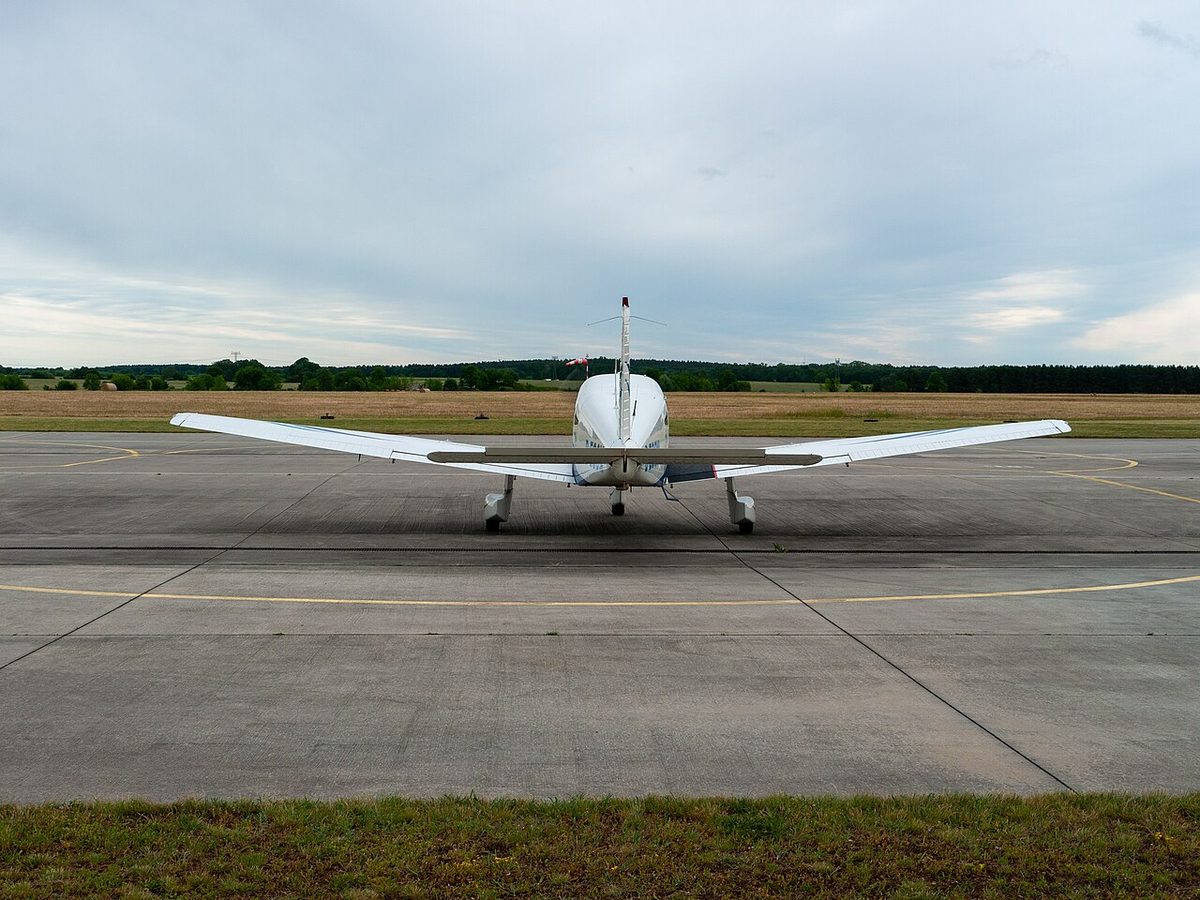
14 CFR 61.1 defines a complex airplane as one with retractable landing gear, flaps and a controllable-pitch propeller. An aeroplane whose engine and propeller are controlled by a digital computer, such as a full authority digital engine control (FADEC), counts as having the controllable-pitch propeller. A seaplane needs only flaps and a controllable-pitch propeller, since it has no wheels to retract.
Under 61.31(e) no one may act as pilot in command of a complex airplane without the complex airplane endorsement: ground and flight training from an authorised instructor, and a one-time logbook endorsement certifying proficiency. A pilot who logged pilot-in-command time in a complex airplane before 4 August 1997 is exempt.
The training concentrates on the systems that make the aeroplane complex: normal and emergency gear extension, the constant-speed propeller and its governor, manifold pressure, flap limits and the checks that prevent a gear-up landing. Two lessons stand out. With a constant-speed propeller, carburettor or induction icing does not show as falling RPM, because the governor flattens the blades to hold the set RPM; it shows as falling manifold pressure. And gear-up landings are best prevented by tying the gear check to a fixed point on the approach and a physical action, such as touching the selector and pointing at the three green lights, rather than to memory.
High-performance airplane endorsement
A high-performance airplane is one with an engine of more than 200 horsepower (61.31(f)). The limit applies to each engine and is exclusive: an aeroplane with a 200 hp engine is not high-performance, and nor is a twin with two 180 hp engines, whatever its total power.
The high-performance endorsement follows the same pattern as the complex one: ground and flight training from an authorised instructor, a finding of proficiency and a one-time logbook endorsement, with the same exemption for pilot-in-command time logged before 4 August 1997. The training deals with higher speeds and a faster pace on the approach, stronger left-turning tendencies at take-off power, and the management of a larger engine and its mixture, cowl flaps and, often, turbocharger.
Many aeroplanes need several endorsements at once. A Cessna 421, a pressurised twin cleared to about 30,000 ft with retractable gear and engines of more than 200 hp each, requires the complex, high-performance and high-altitude endorsements, plus a multi-engine class rating. It needs no type rating, because it is neither turbojet-powered nor heavier than 12,500 lb (see class and type ratings).
High-altitude endorsement
The high-altitude endorsement of 61.31(g) applies to a pressurised aircraft with a service ceiling or maximum operating altitude, whichever is lower, above 25,000 ft MSL. Before acting as pilot in command the pilot needs:
- Ground training in high-altitude aerodynamics and meteorology, respiration, hypoxia and its effects, the time of useful consciousness, the physiological effects of altitude and decompression, supplemental oxygen equipment, and pressurisation systems.
- Flight training in a pressurised aircraft, or a simulator representing one, covering normal cruise at high altitude and the emergency procedures for rapid decompression and emergency descent.
- A logbook endorsement from the authorised instructor.
The endorsement is about the aircraft, not the altitude. An unpressurised turbocharged aeroplane flown at high level needs supplemental oxygen under 14 CFR 91.211, but its pilot needs no high-altitude endorsement.
Glider towing endorsement
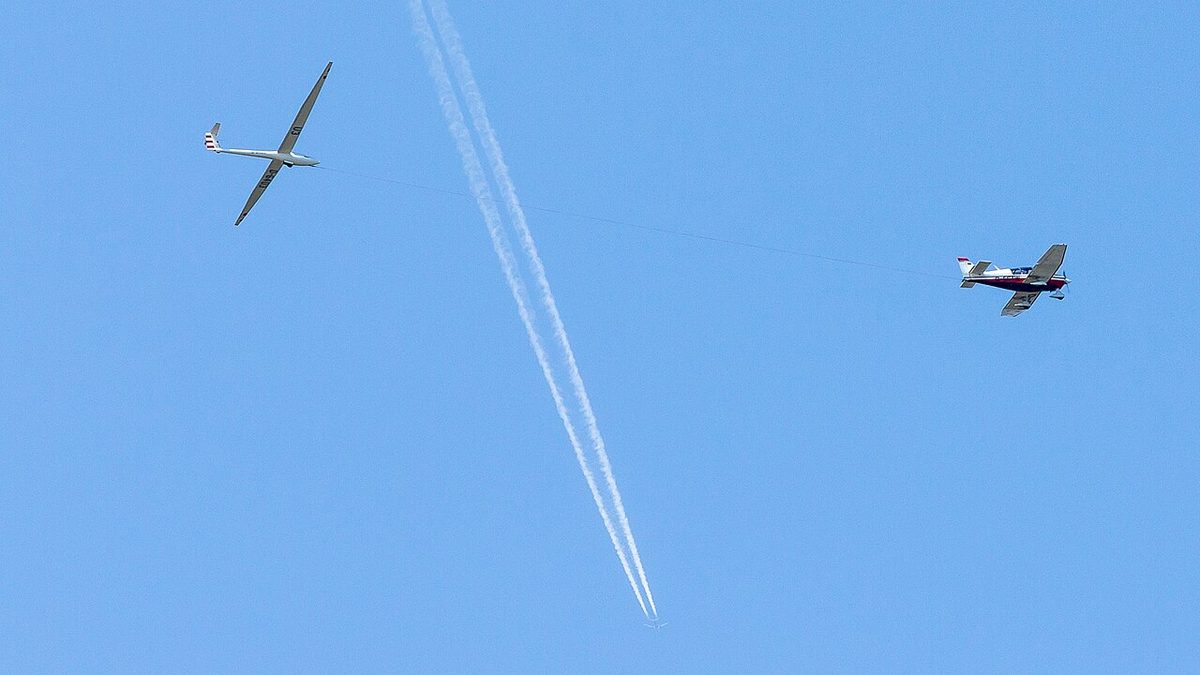
To act as pilot in command of an aircraft towing a glider, 14 CFR 61.69 requires:
- at least a private pilot certificate with a rating for the towing aircraft;
- at least 100 hours of pilot-in-command time in the aircraft category, class and, where a type rating is required, type of the towing aircraft;
- a logbook endorsement from an authorised instructor certifying ground and flight training in the procedures of towing;
- within the preceding 24 months, at least three actual or simulated glider tows accompanied by a qualified pilot, or three flights as pilot in command of a glider towed by an aircraft.
A commercial certificate is not needed to tow at a club without pay. Towing anything other than a glider or an unpowered ultralight, such as an advertising banner, is a different matter: 14 CFR 91.311 requires a certificate of waiver, and the glider towing endorsement does not cover it. The European equivalent is the sailplane towing rating of FCL.805, described below.
Technically advanced airplanes
A technically advanced airplane (TAA) is not an endorsement but a class of aeroplane defined for training credit in 14 CFR 61.129(j). It must have:
- an electronic primary flight display showing at least airspeed, turn co-ordinator, attitude, heading, altitude and vertical speed;
- an electronic multifunction display with at least a GPS moving map showing the aircraft's position;
- a two-axis autopilot integrated with the navigation and heading guidance;
- the primary flight display and multifunction display elements continuously visible.
The commercial pilot experience of 61.129 includes 10 hours of training in a complex airplane or a TAA, or in a turbine-powered aeroplane, so a TAA can replace a complex aeroplane for that purpose. Flying one needs no endorsement, but a TAA with retractable gear or a big engine still needs the complex or high-performance endorsement. The FAA's guidance on these aeroplanes stresses automation management: knowing what each autopilot mode will do, cross-checking raw data and keeping manual flying skills.
EASA differences training
Part-FCL has no complex, high-performance or high-altitude endorsement. A single-engine piston aeroplane of any power, with or without retractable gear, is flown on the same SEP class rating. Instead, FCL.710 requires a pilot to complete differences training or familiarisation training before flying a variant within the class that differs from those already flown. Familiarisation means acquiring additional knowledge; differences training adds training in the aircraft or a suitable device. EASA's guidance material lists the features that call for differences training: a variable-pitch propeller, retractable landing gear, a turbocharged or supercharged engine, a pressurised cabin, a tailwheel, an electronic flight instrument system and single-lever power control. The instructor enters the training in the pilot's logbook and signs it.
The effect is close to the FAA system: a pilot trained only on fixed-gear aeroplanes may not take a retractable-gear single on the strength of the class rating alone. The difference is in the thresholds. Part-FCL looks at the features of the aeroplane, not at its engine power or its certificated altitude, and it also covers features the FAA endorsements ignore, such as single-lever power control and electronic displays.
EASA night rating
Under FCL.810 a LAPL or PPL holder may exercise the licence privileges in VFR at night only with a night rating. The course, at an approved or declared training organisation, comprises theoretical knowledge instruction and at least 5 hours of flight time at night, including 3 hours of dual instruction with at least 1 hour of cross-country navigation and one dual cross-country flight of at least 50 km, plus 5 solo take-offs and 5 solo full-stop landings. Part-MED adds a medical condition: the holder of a night rating on a LAPL or PPL must be colour safe, able to identify the coloured lights used in aviation (see medical certification).
The rating is separate from recent experience. To carry passengers at night, one of the three take-offs, approaches and landings required in the preceding 90 days must have been at night, unless the pilot holds a valid instrument rating. The SERA rules for night VFR, including the flight plan and the minimum ceiling, are covered in VFR, IFR and meteorological conditions.
The FAA has no night rating. Night flying is part of the private pilot course, and carrying passengers at night requires three take-offs and three full-stop landings within the preceding 90 days, made between 1 hour after sunset and 1 hour before sunrise (61.57(b)).
Other additional ratings
The additional ratings of Subpart I of Part-FCL include:
| Rating | Part-FCL | What it allows |
|---|---|---|
| Aerobatic rating | FCL.800 | Aerobatic flight |
| Sailplane towing and banner towing ratings | FCL.805 | Towing sailplanes or banners |
| Night rating | FCL.810 | VFR flight at night on a LAPL or PPL |
| Mountain rating | FCL.815 | Operations to and from surfaces designated as requiring it |
| Flight test rating | FCL.820 | Test flights, within the category of flight tests held |
| Basic instrument rating (BIR) | FCL.835 | Limited IFR privileges, trained in modules |
The mountain rating matters in the Alps: the French AIP, for example, reserves the Megève altiport to aeroplane pilots with the mountain qualification or a site authorisation. The FAA has no aerobatic or mountain rating; banner towing is authorised through a certificate of waiver held by the operator rather than through a pilot rating.
Frequently asked questions
What is a complex airplane endorsement?
It is the one-time logbook endorsement required by 14 CFR 61.31(e) before a pilot acts as pilot in command of a complex airplane, meaning one with retractable landing gear, flaps and a controllable-pitch propeller, or FADEC. The pilot receives ground and flight training from an authorised instructor, who certifies proficiency in the logbook. Pilots who logged pilot-in-command time in a complex airplane before 4 August 1997 are exempt.
What makes an airplane high-performance under FAA rules?
Under 14 CFR 61.31(f) a high-performance airplane is one with an engine of more than 200 horsepower. The test applies to each engine, not to the total, so an aeroplane with a 200 hp engine is not high-performance, and neither is a twin with two 180 hp engines. A pilot needs ground and flight training and a one-time logbook endorsement from an authorised instructor before acting as pilot in command.
Who needs a high-altitude endorsement?
A pilot acting as pilot in command of a pressurised aircraft whose service ceiling or maximum operating altitude, whichever is lower, is above 25,000 ft MSL, under 14 CFR 61.31(g). It requires ground training in high-altitude physiology, aerodynamics, meteorology and pressurisation, flight training in such an aircraft or a representative simulator, and an endorsement. An unpressurised aeroplane flown high needs oxygen, but no endorsement.
Do I need a night rating to fly at night in Europe?
Yes, if you hold a LAPL or PPL and want to fly VFR at night. FCL.810 requires a course with theoretical instruction and at least 5 hours of night flight, 3 of them dual including 1 hour of cross-country navigation with a dual flight of at least 50 km, plus 5 solo take-offs and 5 solo full-stop landings. The holder must also be colour safe. The FAA has no night rating.
Is a technically advanced airplane the same as a complex airplane?
No. A technically advanced airplane, defined in 14 CFR 61.129(j), is one with an electronic primary flight display, a multifunction display with a GPS moving map and a two-axis autopilot integrated with the navigation and heading guidance. It can replace a complex airplane for the commercial pilot training requirement, but it needs no endorsement of its own. If it also has retractable gear or a big engine, those endorsements still apply.
Test yourself on Pilot Endorsements and Additional Ratings
The v1prep banks cover this topic in Air Law (010), with a worked explanation for every answer. EASA ATPL, PPL, IR and CPL, the FAA written tests and A320/B737 type ratings.
Start practising →Sources and further reading
- 14 CFR 61.31, Type rating requirements, additional training, and authorization requirements
- 14 CFR 61.69, Glider and unpowered ultralight vehicle towing, experience and training requirements
- 14 CFR 61.129, Aeronautical experience (commercial pilot), including (j) technically advanced airplane
- 14 CFR 61.1, Applicability and definitions (complex airplane)
- EASA Easy Access Rules for Aircrew (Regulation (EU) No 1178/2011), FCL.710 and Part-FCL Subpart I (FCL.800 to FCL.835)
- FAA Advanced Avionics Handbook (FAA-H-8083-6)
- FAA Airplane Flying Handbook (FAA-H-8083-3C)
Library articles are written for study and exam preparation. They do not replace your aircraft's approved documentation, your operator's procedures or the regulations themselves.