Restricted ATP Explained: 750, 1,000 or 1,250 Hours and Who Qualifies
The 1,500-hour rule has three doors cut into it. Under 14 CFR 61.160 a pilot can hold an ATP certificate with restricted privileges — the R-ATP — at 750 hours as a military pilot, 1,000 hours with a qualifying aviation bachelor’s degree, or 1,250 hours with an associate degree or a bachelor’s with fewer aviation credits, and at age 21 instead of 23. It lets you fly as a First Officer at a US airline up to two years earlier. Here is who qualifies, what “restricted” means, and how it becomes a full ATP.
Who qualifies
| Route | Total time | Cross-country | Other 61.159 items | Age |
|---|---|---|---|---|
| Full ATP (61.159) | 1,500 h | 500 h | 100 h night, 75 h instrument, 250 h PIC or SIC performing PIC duties, 50 h in class | 23 |
| Military pilot (61.160(a)) | 750 h | 200 h | Same night, instrument and PIC items | 21 |
| Bachelor’s with aviation major, 60 semester credits in aviation coursework, from an institution authorised under 61.169 (61.160(b)) | 1,000 h | 200 h | Same | 21 |
| Bachelor’s with aviation major, 30 credits (61.160(c)); or associate degree with aviation major, 30 credits (61.160(d)) | 1,250 h | 200 h | Same | 21 |
Two conditions ride along with the degree routes: the commercial pilot certificate and instrument rating must have been earned through the school’s own Part 141 programme (or its affiliated one), and the school must hold a letter of authorisation from the FAA. A degree from a university with a flight programme does not qualify on its own; the FAA maintains a list of authorised institutions and of how many credits each degree earns.
What “restricted” means
An R-ATP holder may act as Second in Command in Part 121 operations — a First Officer — but not as Pilot in Command. That is the whole restriction: no Part 121 Captain upgrade until you meet the full ATP minima. Everything else about the certificate is real: you take the same ATP-CTP, the same ATM written and the same practical test, and you get a type rating with it.
The degree has to be the right degree
Credits count only if they are aviation coursework approved in the institution’s letter of authorisation — aerodynamics, aviation weather, regulations, aircraft systems, flight training courses — not general education. A bachelor’s in business with a flying minor does not reach 60 credits. If you are choosing a school for the R-ATP, ask for the FAA authorisation letter and the credit count before you enrol; the difference between 1,000 and 1,250 hours is roughly a year of instructing.
From R-ATP to full ATP
When you meet 61.159 — 1,500 hours total, 500 cross-country, 23 years old, the rest already satisfied — you apply through IACRA for the unrestricted ATP. There is no new written and, in most cases, no new checkride: the airline’s training department or an inspector processes the upgrade on paper, and you become eligible for a Part 121 Captain upgrade when your seniority allows.
Why the regionals care
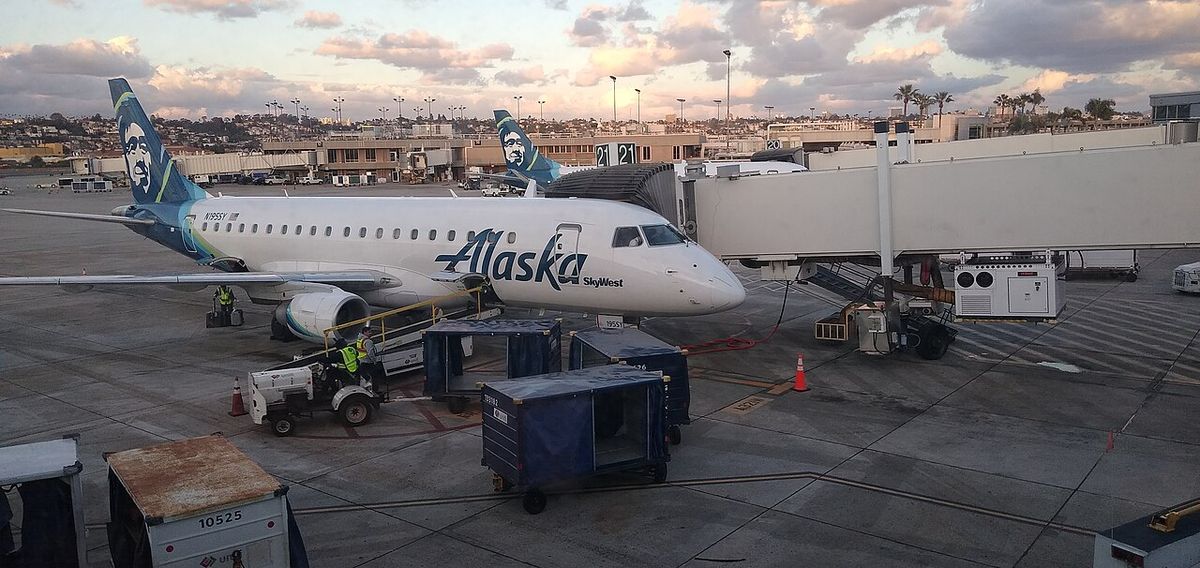
Every US regional publishes R-ATP minima beside the 1,500-hour figure — SkyWest lists them, Envoy advertises “R-ATP to 750” — because an R-ATP candidate is legally employable a year earlier than a Part 61 graduate with the same skill. For the pilot the arithmetic is simple: at a typical instructing pace of 60–80 hours a month, 250 hours saved is three to four months, 500 hours saved is six to eight. See the USA and Canada jobs board for who is hiring at which minimum.
Common questions
What is a restricted ATP? An ATP certificate with restricted privileges under 14 CFR 61.160: issued at 750, 1,000 or 1,250 hours (instead of 1,500) and age 21 (instead of 23) to military pilots and graduates of authorised aviation degree programmes. It allows Second in Command duties in Part 121 but not Pilot in Command.
How many hours for an R-ATP? 750 hours for military pilots; 1,000 hours with a bachelor’s degree with an aviation major and 60 semester credits of approved aviation coursework; 1,250 hours with a bachelor’s with 30 credits or an associate degree with 30 credits. All routes need 200 hours cross-country instead of 500.
Can I be a Captain with a restricted ATP? Not in Part 121. The restriction is exactly that: SIC only until you meet the full ATP requirements of 61.159 (1,500 hours, 500 cross-country, age 23), after which the certificate is upgraded to unrestricted.
Does any aviation degree qualify? No. The institution must hold an FAA letter of authorisation under 61.169, the degree must have an aviation major with the required approved credits, and your commercial certificate and instrument rating must have been earned through the school’s Part 141 programme.
Do I still need ATP-CTP and the written for an R-ATP? Yes. The R-ATP is the same certificate with a restriction: same ATP-CTP course, same ATM knowledge test, same practical test.
Prepare for the assessment, not just the application
Getting the interview is the easy half. v1prep has 16,000+ technical questions with every answer cited to its source — A320, B737, EASA ATPL theory and the FAA writtens.
Start practising free →