Required Instruments and Equipment
Required instruments and equipment are the items that the operating rules make mandatory for a given kind of flight, such as day VFR, night or IFR. In the United States they are listed in 14 CFR 91.205; in Europe, in the IDE subparts of the EASA air operations rules.
Every flight must be made in an aircraft that carries the instruments and equipment the rules require for that kind of operation. A day VFR flight in a light aeroplane needs very little: enough to know the aircraft's speed, height and heading and the state of its engine while the pilot flies by outside references. Night flight adds lights and a reliable electrical supply, and flight under instrument flight rules adds the gyroscopic instruments, radios and navigation equipment needed to fly with no view of the horizon.
These lists sit in the operating rules. In the United States, 14 CFR 91.205 sets them for aircraft operated under Part 91, with further requirements in Parts 121 and 135. In Europe, each operating Part of the EASA air operations regulation, Regulation (EU) No 965/2012, has its own IDE subpart. The lists matter most on the day something fails, when the question becomes whether the flight may still legally depart.
Why equipment is mandated
Required equipment follows the information the pilot needs. In daylight the natural horizon gives attitude, so the list is limited to airspeed, altitude, heading and the engine and fuel indications. At night the aircraft must be seen, so lights and adequate electrical power are added. In cloud the pilot depends on the instruments alone, and the list grows to include attitude, heading and turn information, an accurate clock and radios.
Two principles run through both rule sets. Required equipment must work: an inoperative item counts as missing unless a procedure such as a minimum equipment list allows the flight. And the requirement depends on the kind of operation, so the same defect may leave an aeroplane legal for day VFR and illegal for night or IFR flight.
FAA 91.205: day VFR, night VFR and IFR
14 CFR 91.205 builds the list in layers. Each layer adds to the one before, so an aeroplane flown under IFR at night must meet the day VFR, night VFR and IFR lists together.
Day VFR, 91.205(b). For powered civil aircraft the list includes an airspeed indicator, an altimeter, a magnetic direction indicator, a tachometer for each engine, oil pressure and oil temperature gauges, fuel gauges and, for retractable gear, a landing gear position indicator. It also requires an emergency locator transmitter where 91.207 calls for one, safety belts, shoulder harnesses for the front seats of aeroplanes manufactured after 18 July 1978, and an anti-collision light system on aeroplanes certificated after 11 March 1996. An aircraft operated for hire over water beyond power-off gliding distance from shore must carry approved flotation gear readily available to each occupant and, unless operating under Part 121, at least one pyrotechnic signalling device.
Night VFR, 91.205(c). Night flight adds approved position lights, an approved aviation red or white anti-collision light system, an adequate source of electrical energy for all installed equipment, and one spare set of fuses or three spare fuses of each kind required, accessible to the pilot in flight. An electric landing light is required only when the aircraft is operated for hire.
IFR, 91.205(d). Flight under IFR adds the items usually remembered as GRABCARD:
| Letter | Required item |
|---|---|
| G | Generator or alternator of adequate capacity |
| R | Radios: two-way communication and navigation equipment suitable for the route |
| A | Altimeter, sensitive and adjustable for barometric pressure |
| B | Ball: a slip-skid indicator |
| C | Clock showing hours, minutes and seconds, with a sweep-second pointer or digital presentation |
| A | Attitude indicator: gyroscopic pitch and bank indicator |
| R | Rate-of-turn indicator, gyroscopic, with limited exceptions |
| D | Directional gyro: gyroscopic direction indicator |
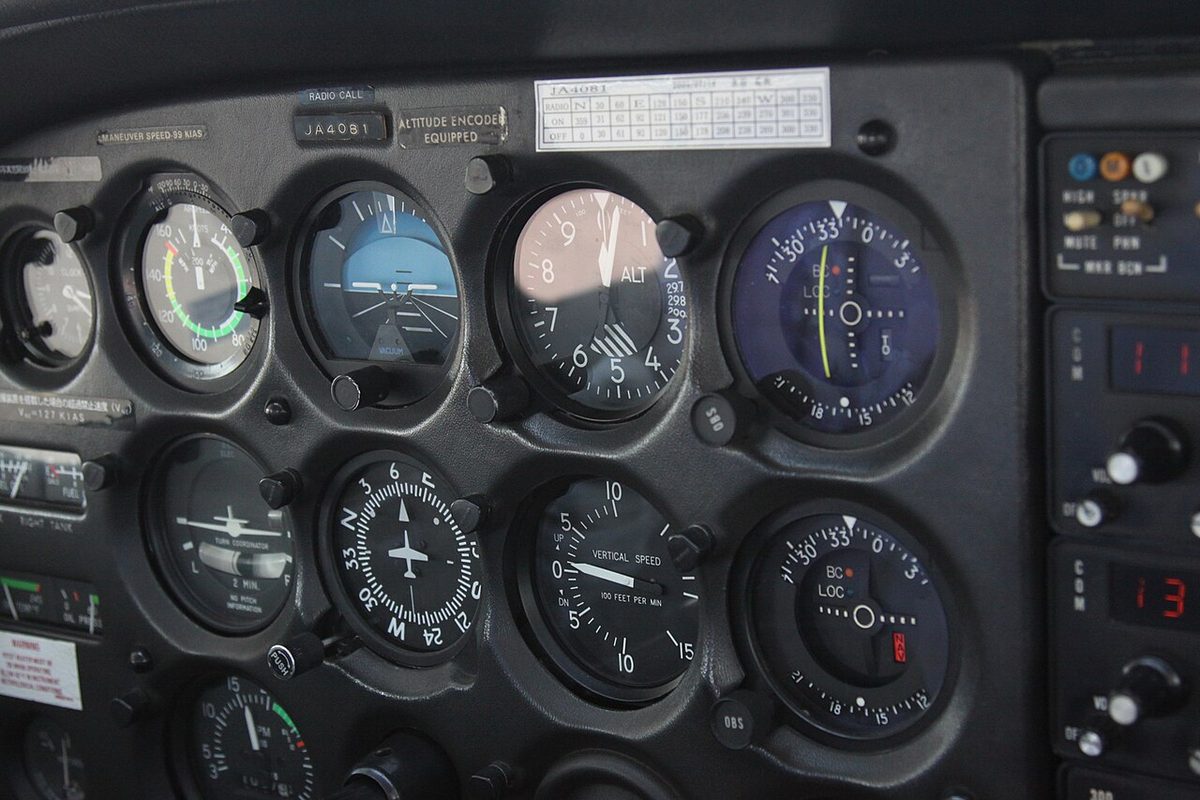
Exam tip: the attitude indicator, heading indicator and turn coordinator are not on the day VFR list. A question asking which instrument a Cessna 172 does not need for day VFR under 91.205(b) expects the attitude indicator. The IFR list also matters for a Special VFR clearance at night, which 91.157 allows only if the pilot meets the Part 61 instrument requirements and the aircraft is equipped under 91.205(d).
EASA IDE requirements
In the EASA system the equipment rules are spread across the operating Parts: CAT.IDE for commercial air transport, NCC.IDE for non-commercial operations with complex motor-powered aircraft, NCO.IDE for non-commercial operations with other-than-complex motor-powered aircraft, and SPO.IDE for specialised operations. The letter after IDE separates aeroplanes (A) from helicopters (H), so NCO.IDE.A.120 is the Part-NCO rule on flight and navigation instruments for aeroplanes flying VFR. Many IDE rules are written as functions, "a means of measuring and displaying" a quantity, which a glass cockpit can meet without separate dials.
For a light aeroplane flown privately under Part-NCO, day VFR needs only a means of measuring and displaying magnetic heading, time in hours, minutes and seconds, pressure altitude and indicated airspeed. Gyroscopic attitude and stabilised heading instruments and a turn and slip indicator become mandatory at night and under IFR. The IFR list also includes a means of displaying vertical speed and a means of preventing the airspeed indicating system from failing because of condensation or icing, in practice a heated pitot (see pitot-static system). Part-NCO does not require a radio altimeter, DME or a second altimeter, but the communication and navigation equipment carried must suit the route and airspace.
Other IDE rules cover emergency and survival equipment. Under NCO.IDE.A.170 an aeroplane with a maximum passenger seating configuration of six or fewer may carry a survival ELT, or a personal locator beacon carried by the pilot-in-command or a passenger, instead of an installed ELT; the beacon must transmit on 406 MHz and 121.5 MHz. Under the over-water rule, NCO.IDE.A.175, a single-engine landplane flying over water beyond gliding distance from land must carry a life-jacket for each occupant. Beyond 30 minutes at normal cruising speed or 50 NM from land suitable for an emergency landing, whichever is less, the pilot-in-command decides on life-rafts after assessing the ditching risk.
Operating with inoperative equipment
FAA, 91.213. An aircraft with an approved minimum equipment list (MEL) is operated in accordance with it. Under Part 91 the MEL is issued with a letter of authorisation and is treated as a supplemental type certificate for that aircraft. Most light aircraft have no MEL, and 91.213(d) then allows a flight with an inoperative instrument or item only if that item is not:
- part of the VFR-day type certification instruments and equipment;
- required by 91.205 or any other rule for the kind of flight intended;
- required by an airworthiness directive;
- shown as required on the aircraft's equipment list or its kinds of operations equipment list (KOEL).
If the item passes all four tests it must be removed, with a maintenance record entry, or deactivated and placarded INOPERATIVE, and a pilot or certificated mechanic must determine that it is no hazard. Otherwise it must be repaired, or the aircraft moved to a place of repair under a special flight permit (14 CFR 21.197). A failed vertical speed indicator therefore need not stop a day VFR flight in a Cessna 172, while a failed attitude indicator stops an IFR one.
EASA, the MEL. An operator establishes its MEL from the manufacturer's master minimum equipment list (MMEL). The MEL may be more restrictive, never less, and needs the competent authority's approval (ORO.MLR.105). It applies up to the commencement of flight, an airworthiness directive overrides it, and anything it does not list as deferrable must be serviceable, whatever the MMEL allows. Each deferred item has a rectification interval: category A as stated in the item, B three days, C ten days and D 120 days, counted from the day after the defect was found. The FAA uses the same categories for airline MELs. Missing secondary parts, such as a small fairing panel, are handled not by the MEL but by the configuration deviation list (CDL) in the flight manual, with any performance penalty applied.
Where no MEL has been established, the usual case for a light aeroplane under Part-NCO, a flight must not start with any instrument or item required for that flight inoperative. The choice is repair or a different kind of flight, for example VFR instead of IFR if the weather and the remaining equipment allow. Deferred defects are covered in technical log, MEL and deferred defects.
Supplemental oxygen
Unpressurised aircraft flown high, and pressurised aircraft that may lose pressurisation, both need supplemental oxygen, and the European and US figures differ.
| Case | EASA | FAA |
|---|---|---|
| Crew, private flights | NCO.OP.190: above 10,000 ft for more than 30 min; at all times above 13,000 ft | 91.211: above 12,500 ft up to 14,000 ft for the time beyond 30 min; at all times above 14,000 ft |
| Other occupants, private flights | NCO.OP.190: all occupants use oxygen above 13,000 ft | 91.211: each occupant provided with oxygen above 15,000 ft |
| Crew, commercial flights | CAT.OP.MPA.285: above 10,000 ft for more than 30 min; at all times above 13,000 ft | Part 121 (121.329): above 10,000 ft up to 12,000 ft for more than 30 min; at all times above 12,000 ft |
| Passengers, pressurised aeroplanes | CAT.IDE.A.235: 10 % after 30 min at 10,000 to 14,000 ft; 30 % at 14,000 to 15,000 ft; 100 % above 15,000 ft, never less than 10 min | 91.211(b): above FL250, a 10-minute supply for each occupant for the descent |
The Part-NCO figures are the firm minimum that applies when the pilot-in-command cannot judge how a lack of oxygen would affect those on board. For the flight crew of a pressurised aeroplane certified to fly above 25,000 ft, EASA requires at least 2 hours of oxygen and quick-donning masks. Under 91.211(b), above FL350 one pilot at the controls must wear a mask unless two pilots are at the controls with quick-donning masks, a relief that ends at FL410. Separately from the rules, the FAA's AIM recommends oxygen above 10,000 ft by day and above 5,000 ft at night, where night vision suffers first (see hypoxia and hyperventilation and decompression).
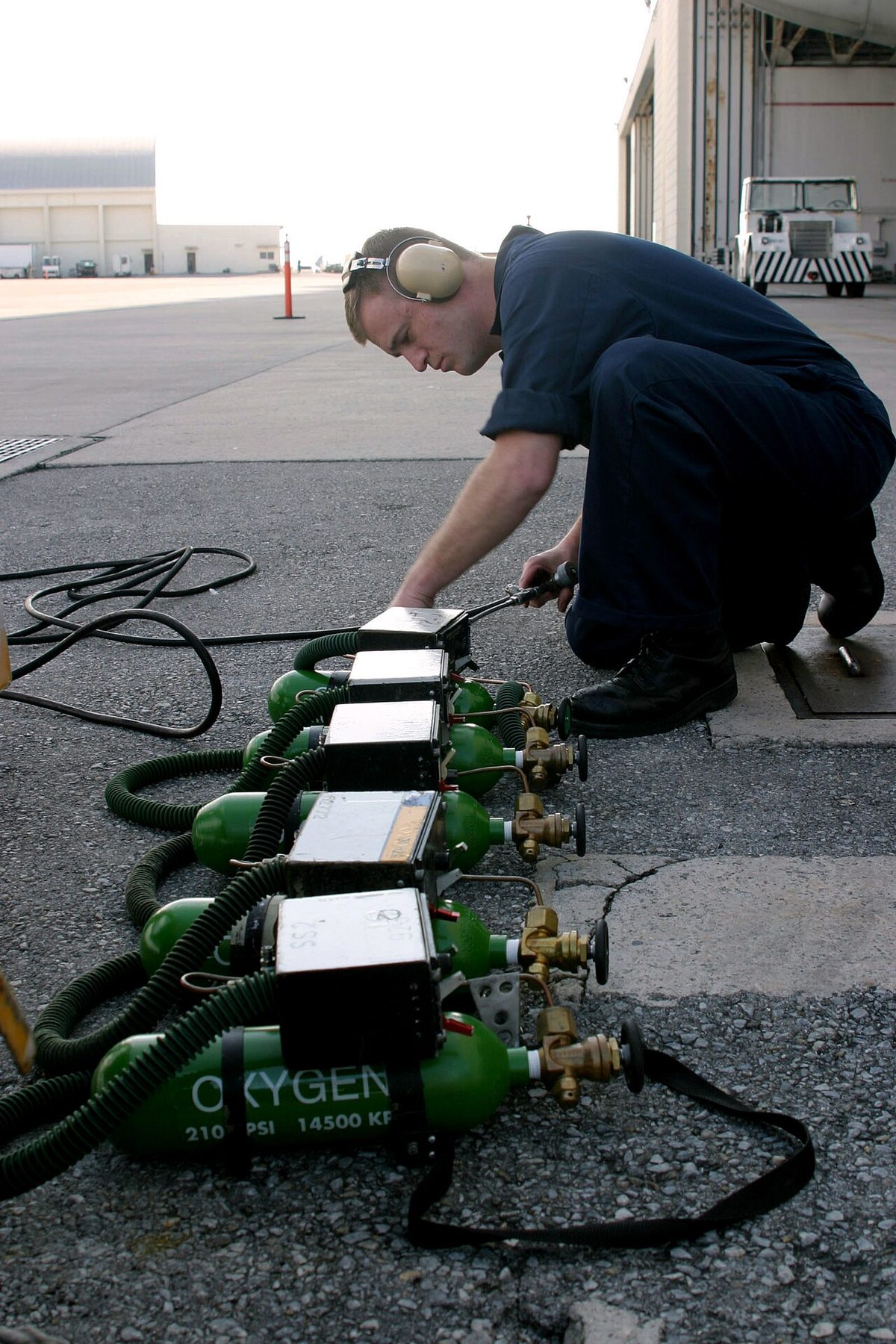
Exam tip: 10,000 and 13,000 ft are EASA figures; 12,500, 14,000 and 15,000 ft are the FAA's Part 91 figures. A European question that offers 12,500 ft is using the FAA rule as a distractor.
Flight into known icing
Ice protection is equipment in the same sense, but its limits come mainly from certification and the flight manual. An aircraft approved for flight into known icing (FIKI) has been shown to operate in the icing envelope of Appendix C to Part 25, applied to small aeroplanes through the Part 23 icing requirements, with a complete ice protection system: wing and tail de-icing or anti-icing, propeller de-icing, heated pitot and stall warning, windscreen protection and an ice inspection light for night flight. Many light aircraft carry some of these items only for inadvertent encounters; their flight manuals prohibit flight in icing, and they must leave any icing at once. Even FIKI approval normally excludes freezing rain and supercooled large droplets, which lie outside Appendix C unless the aircraft is also certified to Appendix O.
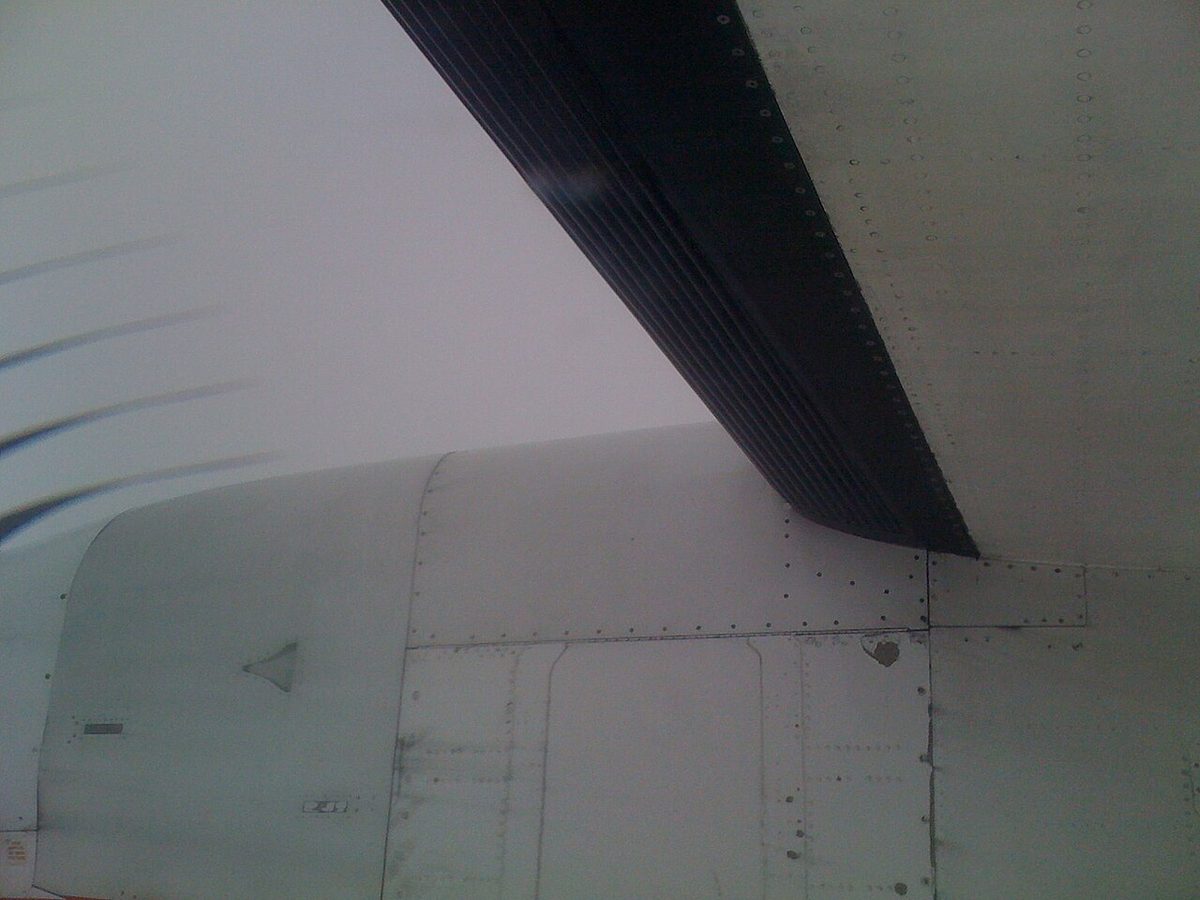
In its narrowest sense known icing means ice observed or detected in flight. The FAA's 2009 legal interpretation goes further: icing is known when a reasonable and prudent pilot would expect it from all the information available, including temperatures, visible moisture, forecasts such as a G-AIRMET for icing and pilot reports. The pilot does not have to wait to see ice form. EASA examinations test the same principle from the planning side: for an aeroplane whose flight manual prohibits flight in icing, forecast icing along the route is a limitation, and the route, levels or timing must change to stay clear of it. See airframe icing.
Spare fuses
Under Part 91 the FAA requires spare fuses for night flight: one spare set, or three spare fuses of each kind required, accessible to the pilot in flight (91.205(c)). EASA's commercial rule, CAT.IDE.A.110, requires spare fuses of the ratings needed for complete circuit protection, and its acceptable means of compliance sets the number at the greater of 10 per cent of the fuses of each rating installed or three of each rating. With twenty 5 A fuses installed, 10 per cent would be two, so three are carried.
Many aircraft use circuit breakers instead. With either device, a circuit that trips again after one replacement or reset points to a fault, which is investigated on the ground rather than cured by another fuse.
Frequently asked questions
What instruments are required for IFR flight under 14 CFR 91.205?
Beyond the day VFR list, and the night list when flying at night, 91.205(d) requires the items remembered as GRABCARD: a generator or alternator of adequate capacity, two-way radio and navigation equipment suitable for the route, a sensitive altimeter adjustable for pressure, a slip-skid indicator, a clock showing hours, minutes and seconds, a gyroscopic attitude indicator, a gyroscopic rate-of-turn indicator and a gyroscopic direction indicator.
Can you fly with an inoperative instrument if the aircraft has no MEL?
Under FAA rule 91.213(d), yes, if the item is not part of the VFR-day type certification equipment, is not required by 91.205 or another rule for the flight, is not required by an airworthiness directive and is not listed as required on the equipment list or KOEL. It must then be removed or deactivated and placarded inoperative. Under EASA Part-NCO without an MEL, no required item may be inoperative.
What instruments does EASA require for day VFR in a light aeroplane?
Under Part-NCO, NCO.IDE.A.120 requires only a means of measuring and displaying magnetic heading, time in hours, minutes and seconds, pressure altitude and indicated airspeed. Gyroscopic attitude and stabilised heading instruments and a turn and slip indicator are added for night and IFR flight, and the IFR list also needs vertical speed and protection of the airspeed system against icing.
When must pilots use supplemental oxygen?
Under EASA rules the flight crew must use oxygen whenever the cabin altitude exceeds 10,000 ft for more than 30 minutes, and at all times above 13,000 ft. Under the FAA's 91.211 the required crew must use it above 12,500 ft for any time beyond 30 minutes and at all times above 14,000 ft, and every occupant must be provided with it above 15,000 ft.
What does flight into known icing mean?
It means flying into conditions where ice is observed or detected, or where the information available to a reasonable pilot shows that it is to be expected. Only aircraft certified for flight in icing, with a complete and working ice protection system, may do so. An aircraft whose flight manual prohibits flight in icing must be planned clear of forecast icing and must leave any icing it meets at once.
How many spare fuses must an aircraft carry?
For night flight the FAA's 91.205(c) requires one spare set of fuses, or three spare fuses of each kind required, accessible to the pilot in flight. For EASA commercial air transport, the acceptable means of compliance to CAT.IDE.A.110 requires the greater of 10 per cent of the fuses of each rating installed or three of each rating.
Test yourself on Required Instruments and Equipment
The v1prep banks cover this topic in Air Law (010), with a worked explanation for every answer. EASA ATPL, PPL, IR and CPL, the FAA written tests and A320/B737 type ratings.
Start practising →Sources and further reading
- 14 CFR 91.205, Powered civil aircraft with standard U.S. airworthiness certificates, instrument and equipment requirements
- 14 CFR 91.213, Inoperative instruments and equipment
- 14 CFR 91.211, Supplemental oxygen
- EASA Easy Access Rules for Air Operations (Regulation (EU) No 965/2012), IDE subparts of Parts CAT and NCO, CAT.OP.MPA.285 and NCO.OP.190
- FAA Pilot's Handbook of Aeronautical Knowledge (FAA-H-8083-25), Chapter 8, Flight Instruments
- FAA AC 91-74B, Pilot Guide, Flight in Icing Conditions
Library articles are written for study and exam preparation. They do not replace your aircraft's approved documentation, your operator's procedures or the regulations themselves.