Control Balance, Tabs and Trim
Control balance is the set of design features, such as inset hinges, horns and tabs, that adjust the hinge moment of a control surface and so the force the pilot must apply. Trim removes the steady force needed to hold a surface in place, so that the aeroplane holds its attitude hands-off.
Every control surface is pushed by the airflow. The pilot, or on a large aeroplane a hydraulic actuator, must hold it against that push, and the force needed depends on the size of the surface, the speed and where the hinge is. Control balance is the collection of design features that set this force: set-back hinges, horns and internal balances that lighten a control, and tabs that lighten it, weight it or even move it. Trim is the separate task of removing the steady force altogether, so the aeroplane flies hands-off at the chosen condition.
The two topics decide how an aeroplane feels. Forces that are too heavy tire the pilot and make precise flying impossible; forces that are too light let a pilot overstress the aeroplane, and a control that is balanced too far can snatch out of the pilot's hand. They also explain several walk-round checks and one of the most common exam questions: which way does the trim tab move?
Hinge moments and control forces
The hinge moment of a control surface is the aerodynamic force on it multiplied by the distance from the hinge line to the surface's centre of pressure. It tries to rotate the surface back into line with the airflow, and on a manual control the pilot must oppose it through the linkage, so the stick force is proportional to the hinge moment. The hinge moment comes both from the deflection of the surface and from the angle of attack of the aerofoil it belongs to.
The aerodynamic force is proportional to dynamic pressure, ½ρV², so on a manual control the force for a given deflection varies with the square of the indicated airspeed: doubling the speed quadruples it. That rise gives natural feel, but on a large or fast aeroplane it produces forces beyond what a pilot can apply, and certification standards such as CS-25 set the maximum control forces a pilot may be expected to exert. Designers have two answers: reduce the hinge moment by balancing the surface aerodynamically, or power the controls with hydraulic actuators and give the pilot artificial feel (see powered flying controls).
Aerodynamic balance: inset hinge and internal balance
Aerodynamic balance reduces the hinge moment without reducing the force the surface produces, so the control becomes lighter while remaining just as effective. There are three common forms.
- Inset hinge, or set-back hinge. The hinge line is moved aft from the leading edge of the surface, shortening the distance to the centre of pressure. The part of the surface ahead of the hinge carries a force that opposes the rest.
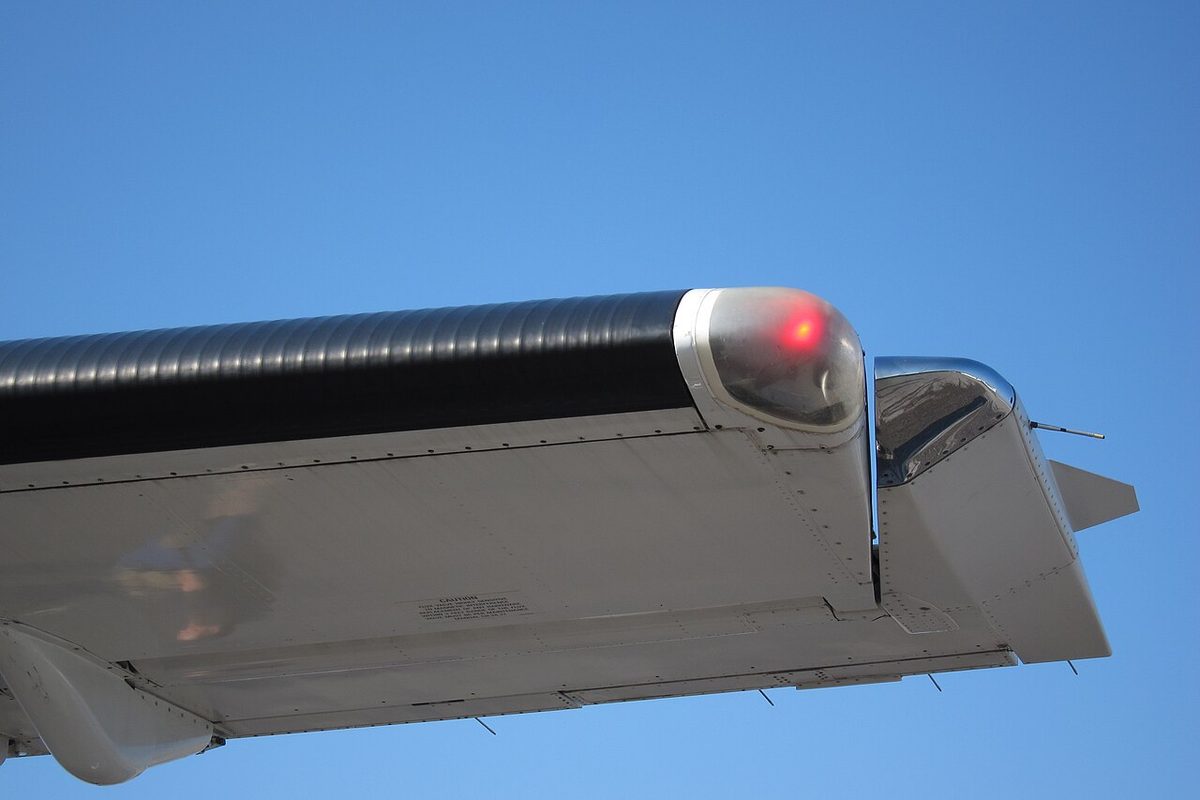
- Horn balance. A portion of the surface, usually at its outer end, extends forward of the hinge line into a cut-out in the wing, tailplane or fin. The air load on the horn acts against the load on the main surface.
- Internal balance. A balance panel ahead of the hinge sits inside the wing or fin, sealed between its upper and lower cavities. Slots let it feel the pressure difference between the upper and lower surfaces, which produces a moment opposite to the main hinge moment. Being hidden, it adds no drag.
The same features change how far a released control floats with the airflow, which is why they also shape the aeroplane's stick-free stability (see longitudinal stability). A horn may also carry the surface's mass balance weight, but that serves a different purpose, the prevention of flutter.
Overbalance
There is a limit to how much area can be put ahead of the hinge. If the centre of pressure of the surface moves forward of the hinge line, the hinge moment reverses: instead of resisting deflection, the air load drives the surface further, the control force changes sign and the surface can snatch to full travel. This is overbalance, and it is dangerous because the pilot suddenly has to hold the control against the direction of movement. Designers therefore keep the balance area small enough that the centre of pressure stays behind the hinge at all deflections and angles of attack.
Contamination can upset the balance. On the ATR 72 lost near Roselawn in 1994, a ridge of ice behind the de-icing boots reversed the aileron hinge moments and led to an uncommanded roll, as described in airframe icing.
Balance and anti-balance tabs
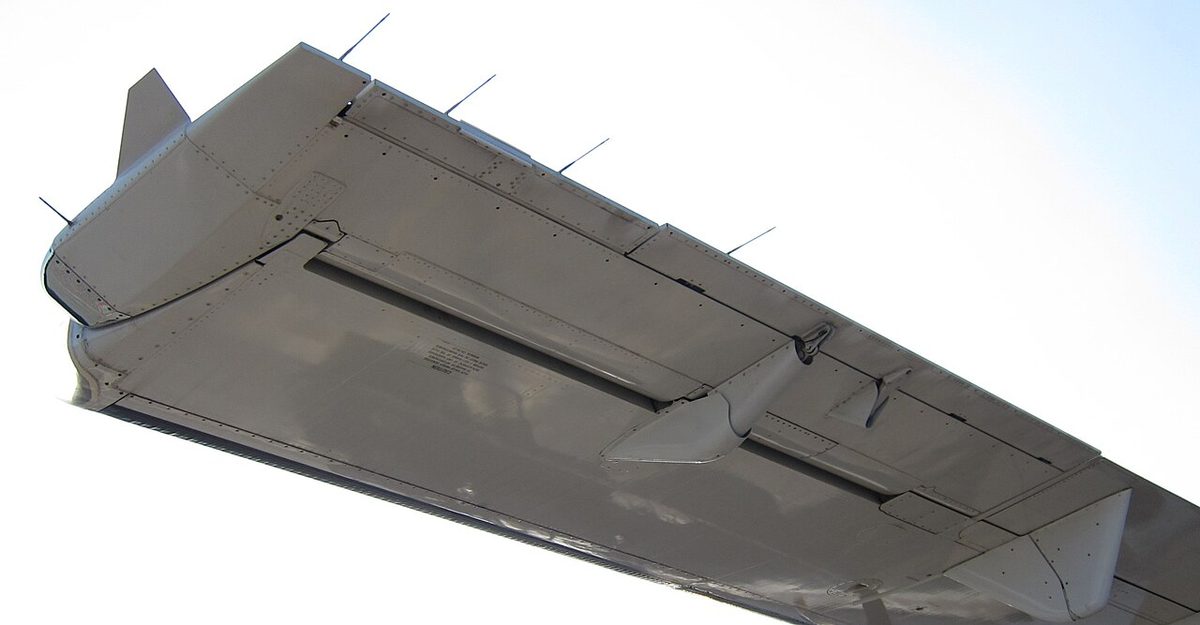
A tab is a small hinged surface at the trailing edge of a control surface. Its own air load acts a long way behind the control's hinge, so a small tab force produces a large hinge moment.
A balance tab (geared tab) is linked so that it moves opposite to the control surface: when the surface goes down, the tab goes up. The tab's force opposes the main surface's hinge moment and lightens the control. Because the tab's lift acts against the surface's, control effectiveness falls slightly.
An anti-balance tab, which FAA texts call an anti-servo tab, moves in the same direction as the surface. It increases the hinge moment and the control force, and slightly increases effectiveness. It is fitted to stabilators, all-moving tailplanes that pivot close to their own aerodynamic centre and would otherwise feel dangerously light. The extra force gives a sensible relationship between stick force and load factor, raising the stick force per g, and on light aeroplanes such as the Piper PA-28 the same tab is moved by the trim wheel to serve as the trim tab (see tail configurations).
Servo and spring tabs
A servo tab takes the idea further: the pilot's controls are connected to the tab only, and the main surface is free on its hinge. Pushing the column forward moves an elevator servo tab up; the air load on the tab pushes the elevator's trailing edge down, and the elevator floats to a new position where the moments balance. Tab and surface move in opposite directions. The pilot's effort is small, but at low airspeed the tab's force is small too, so control is weak just when large deflections are needed. Servo tabs were used on older large aeroplanes with manual controls.
A spring tab combines the two behaviours. A spring in the linkage connects the pilot's control to the surface and the tab. At low speed the hinge moment is small, the spring hardly compresses and the pilot moves the surface directly, with full effectiveness. At high speed the hinge moment resists, the spring compresses and the tab deflects to do much of the work, so the assistance is greatest when the forces are greatest.
Warning: with a servo tab, and to a lesser extent a spring tab, the cockpit control can still move with an external gust lock fitted to the surface, because it only moves the tab or compresses the spring. Full and free movement of the controls in the cockpit does not prove that the external locks have been removed; check them on the walk-round.

Trim tabs and spring bias trim
An aeroplane is in trim when the moments about all three axes are zero with no force on the controls. Trimming removes a steady force the pilot is holding, and it must be repeated whenever speed, power, configuration or CG change; pitch trim is the one used most.
A trim tab is a tab set from the cockpit by a trim wheel or switch. It moves opposite to the deflection it holds: to hold the elevator up for nose-up trim, the tab goes down. The air load on the tab then holds the elevator where the pilot was holding it and the stick force falls to zero. The mechanism is irreversible, through a screw jack or worm gear, so the air load cannot move the tab and the trim setting does not drift. Trim does not change the attitude or add control power; the pilot flies the attitude first and then trims. A trim tab slightly reduces the effectiveness of its surface, because part of the surface's force is spent opposing the tab.
Aileron trim and rudder trim remove steady forces in roll and yaw, by a tab or, on powered controls, through the feel system. On the Boeing 737 the aileron trim switches reposition the aileron neutral control position, and the limitations prohibit aileron trim with the autopilot engaged, because the autopilot hides the out-of-trim condition, which then appears as an abrupt roll when the autopilot is disengaged. The A320 has no aileron trim control at all; its control laws handle lateral trim.
Spring bias trim needs no tab. An adjustable spring in the control circuit applies a force equal and opposite to the one the pilot would otherwise hold, and the trim control changes the spring's tension. On fully powered controls the pilot feels only the artificial feel, so artificial feel trim moves the datum of the feel unit instead: the A320's rudder trim, for example, moves the neutral point of the rudder's artificial feel.
Variable-incidence trimming tailplane
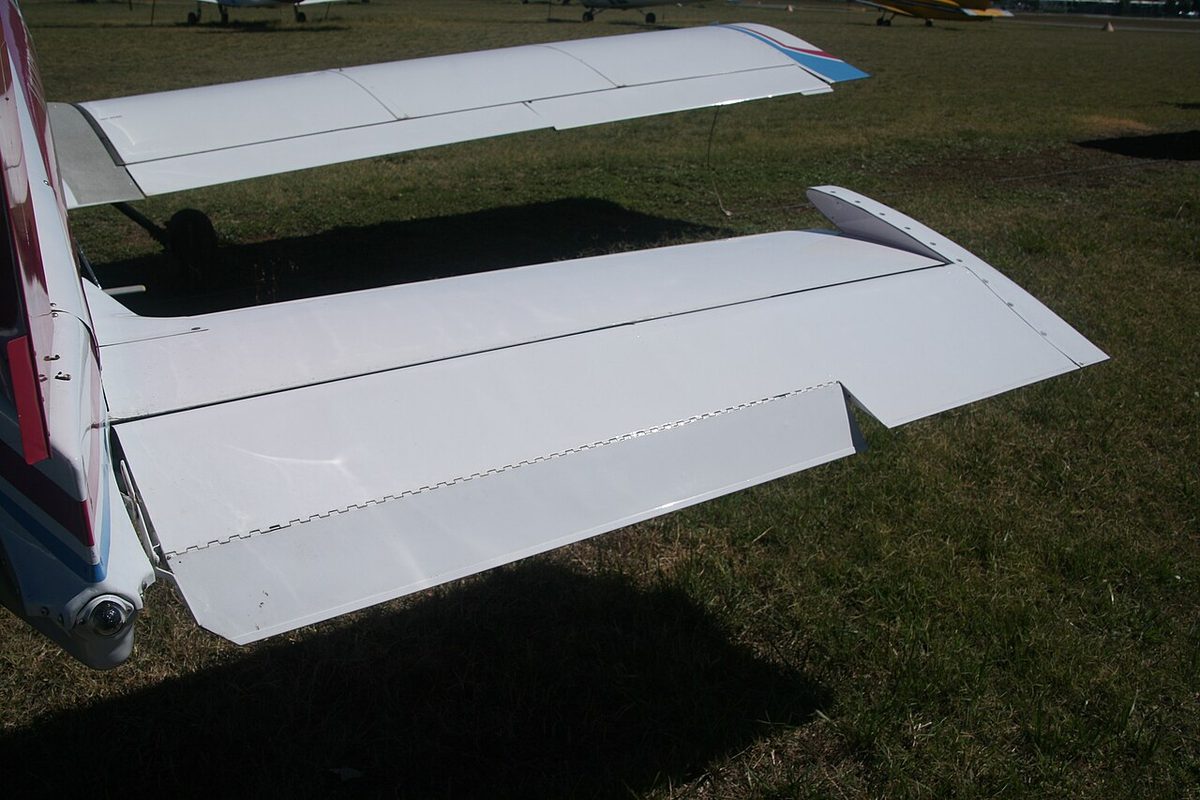
A variable-incidence trimming tailplane, the trimmable horizontal stabiliser (THS) of jet transports, trims in pitch by changing the incidence of the whole tailplane, while the elevators hinged to it provide manoeuvring control. Because the elevator stays close to neutral in trimmed flight, it keeps its full travel in both directions and produces less drag than an elevator held deflected by a tab.
On the Boeing 737 the stabiliser is driven electrically from switches on the control wheels or by the autopilot, and manually by the stabiliser trim wheels, which override all other trim inputs. The take-off setting must lie within a green band, and a horn sounds if a take-off is attempted outside the take-off trim range. On the A320 the THS moves up to 13.5° nose-up and 4° nose-down; the flight control computers trim it automatically in normal and alternate law, and the trim wheel, which takes priority, drives it mechanically whenever the green or yellow hydraulic system is working.
The power of a THS brings its own hazard. A runaway stabiliser, an uncommanded trim movement, builds up a pitch force that the pilot must hold on the control column. On the Boeing 737 the recall items begin by holding the column firmly and disengaging the autopilot; if the runaway continues, the stabiliser trim cutout switches are set to CUTOUT and, as a last resort, the trim wheel is grasped and held. See trim systems.
Trim drag
Trim drag is the drag caused by producing the trimming load. On a conventional aeroplane the tailplane normally carries a download that the wing must add to the weight, costing induced drag, and a deflected elevator adds profile drag of its own. A forward CG needs a larger download and more trim drag, raising fuel burn and reducing range, while a CG towards the aft limit reduces it. That is why some long-range aircraft trim in cruise by transferring fuel between tanks to move the CG, reducing the load the tail must carry. A trimmable stabiliser reduces trim drag compared with an elevator and tab.
Trim also compensates for effects the pilot should not have to fight. As Mach number rises, the centre of pressure moves aft and the aeroplane tucks nose-down; a Mach trim system adds nose-up trim automatically, on the Boeing 737 above M 0.615 by moving the elevator relative to the stabiliser. It is described in high-speed flight.
Frequently asked questions
What does a trim tab do?
A trim tab is a small adjustable surface on the trailing edge of a control surface, set from the cockpit with a trim wheel or switch. The air load on the tab acts a long way behind the control's hinge and holds the surface at the deflection the pilot was holding, so the control force falls to zero. Trimming does not change the attitude or make the control more powerful: the pilot sets the attitude first, then trims.
Which way does a trim tab move?
Opposite to the control surface it serves. To trim nose-up the elevator must be held up, so the trim tab is deflected down; the airflow pushes the tab up, and that holds the elevator's trailing edge up. The exception is the anti-servo tab of a stabilator, which moves in the same direction as the surface and usually doubles as its trim tab.
What is an anti-servo tab?
An anti-servo tab, called an anti-balance tab in EASA texts, is geared to move in the same direction as the control surface. Its air load adds to the surface's hinge moment, so the control feels heavier. It is fitted to stabilators, all-moving tailplanes that pivot near their own aerodynamic centre and would otherwise feel dangerously light, and it raises the stick force per g. On many light aeroplanes it also serves as the trim tab.
What is the difference between a servo tab and a balance tab?
Both move opposite to the main surface and use the air load on the tab to help move it. A balance tab is geared to the surface: the pilot moves the surface directly and the tab reduces the force needed. With a servo tab the pilot's controls move only the tab, and the air load on the tab then drives the free-floating surface. A servo tab is therefore weak at low airspeed, and the cockpit control can move even with an external gust lock fitted.
Why do jet airliners trim with the whole stabiliser?
A trimmable horizontal stabiliser changes the incidence of the whole tailplane to produce the tail load needed, leaving the elevator close to neutral with its full travel available for manoeuvring. That creates less trim drag than a deflected elevator held by a tab, which is why jet transports such as the Boeing 737 and the Airbus A320 family use it. On both types the trim wheels can drive the stabiliser directly and override electric trim.
Test yourself on Control Balance, Tabs and Trim
The v1prep banks cover this topic in Principles of Flight (081), with a worked explanation for every answer. EASA ATPL, PPL, IR and CPL, the FAA written tests and A320/B737 type ratings.
Start practising →Sources and further reading
- FAA Pilot's Handbook of Aeronautical Knowledge (FAA-H-8083-25), Chapter 6, Flight Controls
- EASA, Explanatory Note to ED Decision 2018/001/R, Part-FCL theoretical knowledge learning objectives
- EASA Easy Access Rules for Large Aeroplanes (CS-25)
- FAA Advisory Circular AC 91-74B, Pilot Guide - Flight in Icing Conditions
Library articles are written for study and exam preparation. They do not replace your aircraft's approved documentation, your operator's procedures or the regulations themselves.