Climb Performance
Climb performance describes how steeply and how quickly an aeroplane can gain height. The climb gradient, height gained per distance flown, depends on excess thrust; the rate of climb, height gained per unit of time, depends on excess power.
Climb performance answers two different questions. How steeply can the aeroplane climb, and so which obstacles can it clear? And how fast can it climb, and so how soon does it reach its cruising level? The first is the climb gradient, the second the rate of climb. They peak at different speeds, depend on different quantities, and are affected differently by wind.
Every climb is paid for by a surplus: the thrust or power the engines can give beyond what is needed to hold level flight at the same speed. Anything that eats into that surplus, such as mass, altitude, heat, drag or the loss of an engine, reduces both angle and rate. The underlying curves are covered in power curves and speed stability.
Climb gradient and rate of climb
The climb gradient is the height gained divided by the horizontal distance travelled, usually given as a percentage. A 3.3 per cent gradient means 3.3 ft of height for every 100 ft travelled. Because a nautical mile is about 6,076 ft, 1 per cent is about 60 ft per nautical mile. Instrument departures state gradients either way: PANS-OPS departure procedures are designed for a standard 3.3 per cent, and the FAA's TERPS criteria assume at least 200 ft per nautical mile unless a higher figure is published.
The rate of climb (ROC) is the vertical speed, in feet per minute. The two are linked by speed:
ROC (ft/min) = gradient (ft/NM) × groundspeed (kt) ÷ 60
A SID that requires 300 ft per nautical mile flown at a groundspeed of 100 kt therefore needs 500 ft/min. In the other direction, 500 ft/min at a groundspeed of 75 kt is a gradient of 400 ft per nautical mile, about 6.6 per cent. A quick mental check is that the gradient in per cent is roughly the rate of climb in ft/min divided by the speed in knots: 400 ft/min at 100 kt is about 4 per cent.
The same rate of climb at a higher speed gives a shallower gradient. A jet climbing at 2,000 ft/min at a groundspeed of 300 kt is on a gradient of about 6.6 per cent, flatter than a light aeroplane climbing at 700 ft/min at 70 kt, which is on about 10 per cent.
Excess thrust and excess power
In a steady, straight climb at angle γ, thrust must overcome drag and also lift a component of the weight up the slope. Resolving along the flight path:
sin γ = (T − D) ÷ W
The climb angle depends on excess thrust, thrust available minus drag, divided by the weight. For small angles the gradient is simply (T − D) ÷ W. The rate of climb is the true airspeed multiplied by sin γ:
ROC = (T − D) × TAS ÷ W = (power available − power required) ÷ W
The rate of climb therefore depends on excess power. In a steady climb lift is slightly less than weight, because it balances only W cos γ, and the thrust carries part of the weight.
The two engine types supply the surplus differently. A jet's thrust available is roughly constant with speed, so its power available rises almost in proportion to speed. A propeller aeroplane delivers roughly constant shaft power, so its thrust available falls as speed rises. On the demand side, power required is drag multiplied by true airspeed.
The surplus shrinks with:
- Mass. More weight means more induced drag and a larger divisor, so both gradient and rate fall.
- Altitude and temperature. Thrust and power fall with air density: jet thrust roughly in proportion to density, and a normally aspirated piston engine by about 3 per cent per 1,000 ft of density altitude. A turbocharged engine holds its rated power up to its critical altitude. A colder day improves the climb.
- Drag. Flaps, landing gear and ice add drag. So does bank, because the wing must produce more lift in a turn and so more induced drag.
- Engine failure. A twin that loses one engine loses half its thrust but keeps almost all its drag, plus the drag of the failed engine and of the controls holding the asymmetry. On a typical light twin its excess thrust, and with it the climb, falls by around 80 per cent (see asymmetric flight).
Vx and Vy
VX, the best angle of climb speed, gives the greatest height for the distance flown. It is the speed of maximum excess thrust. VY, the best rate of climb speed, gives the greatest height in a given time. It is the speed of maximum excess power, and it is always higher than VX.
| Jet | Propeller aeroplane | |
|---|---|---|
| VX (maximum excess thrust) | Close to VMD, since thrust hardly varies with speed | Below VMD, since thrust falls with speed |
| VY (maximum excess power) | Above VX | Above VX; EASA exam material takes it as about VMD |
For the propeller aeroplane, simple theory with constant power available would put VY at the minimum power speed, about 0.76 VMD. Propeller efficiency rises with speed through the climb range, which moves the peak of excess power up towards VMD.
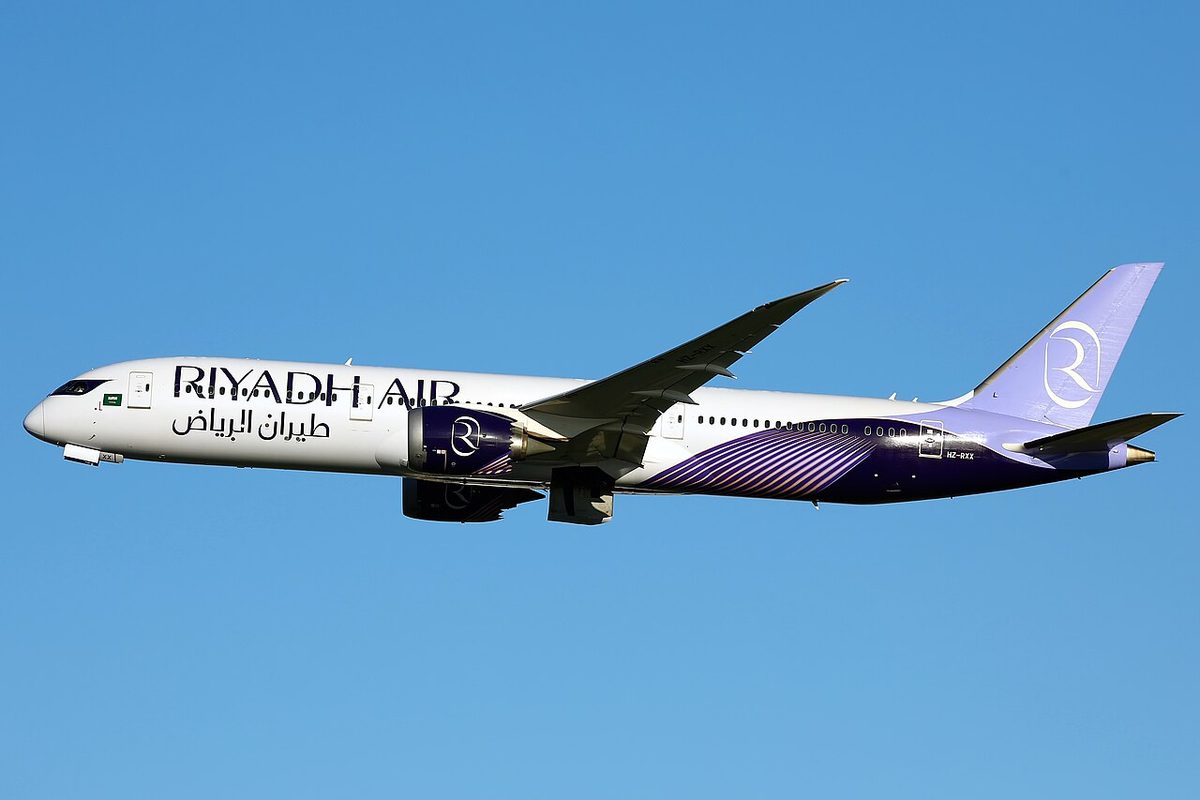
VX is the speed for clearing an obstacle after a short-field take-off; once it is cleared, the pilot accelerates to VY or the normal climb speed, which also cools the engine better. On the Airbus A320, green dot speed, the clean best lift-to-drag speed, is the speed for the maximum climb gradient. The speed for the maximum rate of climb lies between the ECON climb speed and green dot.
As altitude increases, the margins shrink and the two speeds converge. For a light piston aeroplane, the indicated VX rises slightly and VY falls by about 1 kt per 1,000 ft, until they meet at the absolute ceiling, where the maximum rate of climb is zero and level flight is possible at one speed only. The service ceiling lies lower, where the best rate of climb has fallen to 100 ft/min for a piston aeroplane; EASA texts use 500 ft/min at maximum continuous thrust for a jet. For light twins the FAA defines a one-engine-inoperative service ceiling at 50 ft/min.
Exam tip: angle comes from excess thrust, rate from excess power. VX is always the slower of the two speeds, the two converge at the absolute ceiling, and a steady wind changes neither VY nor the rate of climb.

Air and ground gradient
The gradient calculated from thrust and drag is the air gradient, the path through the air mass. Obstacles are fixed to the ground, so what matters for clearing them is the ground gradient. A steady wind leaves the rate of climb unchanged but alters the groundspeed:
ground gradient ≈ air gradient × TAS ÷ groundspeed
A headwind steepens the path over the ground and a tailwind flattens it. An aeroplane with an air gradient of 8 per cent at 85 kt TAS and a 10 kt tailwind has a groundspeed of 95 kt and a ground gradient of about 8 × 85 ÷ 95, or 7.2 per cent. A downwind departure towards rising ground is therefore doubly penalised: a longer take-off run and a flatter climb.
Hot and high aerodromes are penalised twice. The engines produce less thrust while the drag at a given indicated airspeed is unchanged, so the gradient itself falls. And because the same indicated airspeed is a higher true airspeed in thin air, the take-off run is longer and the climb begins closer to the obstacles. The higher true airspeed does not by itself flatten the path: in still air the ground gradient equals the air gradient at any speed, and the higher speed only raises the rate of climb for that gradient.
Certification and operating rules for transport aeroplanes use gross and net gradients. The gross gradient is what the aeroplane is shown to achieve; the net gradient is the gross gradient reduced by a fixed decrement and is used for obstacle clearance. In the second segment of the take-off climb, a twin-engined aeroplane with one engine inoperative must achieve a gross gradient of at least 2.4 per cent, and its net gradient is 0.8 per cent lower (see take-off climb segments).
Climb speed schedule and crossover altitude
Jet transports climb on a climb speed schedule: a constant indicated airspeed, then a constant Mach number. A typical schedule is 250 kt below 10,000 ft, where the speed limit applies, then an IAS of about 290 to 300 kt, then the climb Mach number. With a flight management system, the ECON climb speeds follow from the cost index (see cost index and cruise economics).
Climbing at constant IAS keeps the dynamic pressure, lift coefficient and angle of attack nearly constant, close to the aeroplane's efficient design point. But as the aeroplane climbs at constant IAS, its true airspeed rises and the local speed of sound falls, so the Mach number rises. Unchecked, it would reach MMO. The crossover altitude (cross-over altitude) is where the chosen IAS and the chosen Mach number correspond to the same true airspeed, and the aeroplane changes from flying IAS to flying Mach.
- Below the crossover, at constant IAS: TAS and Mach number both increase with height.
- Above the crossover, at constant Mach: IAS falls with height. TAS falls as the temperature falls in the troposphere, and stays constant in the isothermal layer above the tropopause.
- A higher IAS schedule gives a lower crossover altitude, and a lower IAS a higher one.
A schedule of 300 kt and Mach 0.78 crosses over at a pressure altitude of about 29,000 ft. Calibrated airspeed is computed from the impact pressure alone, and Mach number from the ratio of impact pressure to static pressure, with no temperature term in either. A given pair therefore meets at one static pressure, so the crossover altitude does not change with temperature; what temperature changes is the true airspeed at which it happens. Above it the falling IAS brings the aeroplane closer to its low-speed buffet margin. Speed also matters for the transition to cruise: Airbus advises A320 crews not to reduce to green dot at high altitude, particularly at heavy weight, because it can take a long time to accelerate back to the ECON Mach number.
Time, fuel and distance to climb
For planning, flight manuals give the time, fuel and distance to climb in tables or graphs for a stated climb speed schedule and thrust setting. They are entered with the mass at the start of the climb and the temperature deviation from ISA. A heavier aeroplane, or one in air warmer than standard, climbs more slowly, so all three values increase.
The data are cumulative from mean sea level. For a departure from an elevated aerodrome, the values for the aerodrome's pressure altitude are subtracted from those for the cruising level. The distances are still-air distances, so the wind correction must be applied before the top of climb is placed on the route. The method, with worked examples from the CAP 697 reference aircraft, is in climb and descent planning.
Frequently asked questions
What is the difference between climb gradient and rate of climb?
Climb gradient is height gained per unit of horizontal distance, given as a percentage or in feet per nautical mile; it decides obstacle clearance. Rate of climb is height gained per unit of time, in feet per minute; it decides how quickly a level is reached. They are linked by speed: rate of climb in feet per minute equals the gradient in feet per nautical mile multiplied by the groundspeed in knots, divided by 60.
Why is Vx lower than Vy?
Vx, the best angle of climb speed, is where excess thrust is greatest. Vy, the best rate of climb speed, is where excess power, excess thrust multiplied by speed, is greatest. Because the speed factor keeps rising, excess power peaks at a higher speed than excess thrust. For a propeller aeroplane, whose thrust falls as speed rises, Vx lies below the minimum drag speed; for a jet it lies close to it.
What is crossover altitude?
Crossover altitude is the altitude at which a chosen climb indicated airspeed and a chosen climb Mach number are the same true airspeed. A jet climbs at constant IAS below it, with Mach number rising, and at constant Mach above it, with IAS falling. A higher IAS schedule gives a lower crossover altitude. 300 kt and Mach 0.78 cross over at a pressure altitude of about 29,000 ft, whatever the temperature.
How does wind affect climb performance?
A steady wind does not change the rate of climb, which depends on excess power and true airspeed, or the gradient through the air. It changes the gradient over the ground. A headwind lowers the groundspeed, so the same height is gained over a shorter distance and the ground gradient is steeper; a tailwind makes it shallower. Obstacle clearance depends on the ground gradient.
What is the difference between service ceiling and absolute ceiling?
The absolute ceiling is the altitude at which the maximum rate of climb has fallen to zero, where level flight is possible at only one speed and Vx and Vy coincide. The service ceiling is lower: for a piston aeroplane the altitude at which the best rate of climb has fallen to 100 ft per minute. EASA texts give 500 ft per minute at maximum continuous thrust for a jet.
Test yourself on Climb Performance
The v1prep banks cover this topic in Performance (032), with a worked explanation for every answer. EASA ATPL, PPL, IR and CPL, the FAA written tests and A320/B737 type ratings.
Start practising →Sources and further reading
- FAA Pilot's Handbook of Aeronautical Knowledge (FAA-H-8083-25), Chapter 11, Aircraft Performance
- FAA Airplane Flying Handbook (FAA-H-8083-3C), Takeoffs and Departure Climbs; Transition to Multiengine Airplanes
- EASA, Explanatory Note to ED Decision 2018/001/R, Part-FCL theoretical knowledge learning objectives (032 Performance)
- EASA Easy Access Rules for Large Aeroplanes (CS-25.119 and CS-25.121)
- UK Civil Aviation Authority, CAP 697, JAR-FCL Examinations Flight Planning Manual
- FAA Instrument Procedures Handbook (FAA-H-8083-16B), Departures
Library articles are written for study and exam preparation. They do not replace your aircraft's approved documentation, your operator's procedures or the regulations themselves.