Communications at Non-Towered Aerodromes
Communications at a non-towered aerodrome are the radio practices that take the place of clearances where no control tower is operating: pilots report their position and intentions on a common frequency, to an advisory or air/ground station where one exists or by self-announce broadcasts where it does not, while keeping a lookout for aircraft without radio.
At an aerodrome without an operating control tower no one clears an aircraft to take off or land. Keeping clear of other traffic is the pilots' own job, done by seeing and avoiding and by telling each other, on a common frequency, where they are and what they intend. The radio practices that make this work are among the first a student learns and among the least forgiving: a call on the wrong frequency, or one that names the wrong aerodrome, leaves the rest of the circuit unaware of an aircraft whose pilot believes it has been announced.
The United States has a single, well-defined system built around the common traffic advisory frequency (CTAF), described in the FAA's Aeronautical Information Manual (AIM) and Advisory Circular 90-66C. Europe has no single equivalent: depending on the State and the aerodrome, the pilot may talk to an aerodrome flight information service, to an air/ground radio operator, or only to other pilots. Everywhere, some aircraft have no radio at all, so the radio supports the lookout and never replaces it.
Non-towered aerodrome communications
An airport may have a full-time or part-time tower or flight service station (FSS), a UNICOM station, or no aeronautical station at all. The AIM gives three ways for a pilot to announce intentions and obtain information where no tower is operating: talk to an FSS, talk to a UNICOM operator, or self-announce. FSS airport advisories are now given only in Alaska, so elsewhere in the United States the choice is between UNICOM and self-announcing. Two things make every system work: all radio-equipped aircraft transmit and receive on one common frequency, and every call uses the airport's correct published name.
When a part-time tower closes, its Class D airspace reverts to Class E or Class G, as the Chart Supplement states, and the tower frequency normally becomes the CTAF. An IFR arrival is released by ATC with "change to advisory frequency approved". The pilot then changes promptly to the CTAF and follows the same practices as VFR traffic, since the instrument approach may not be aligned with the runway in use. The IFR clearance stays in force until the pilot cancels it with ATC or Flight Service, by radio, through a remote outlet or by telephone after landing; until then no other IFR aircraft can be cleared into or out of the airport.
Common traffic advisory frequency
The CTAF is a frequency designated for carrying out airport advisory practices at an airport without an operating control tower. It may be a UNICOM, MULTICOM, FSS or tower frequency. It is published in the Chart Supplement, on instrument approach and departure charts and on sectional charts, where a circled C follows it in the airport data block; a star and a C after a tower frequency mean that the part-time tower's frequency is the CTAF when the tower is closed.
The AIM sets the times to be on it:
- inbound aircraft monitor and communicate on the CTAF from 10 miles to landing;
- departing aircraft do so from start-up, during taxi and until 10 miles from the airport;
- aircraft doing anything else within 10 miles at the altitudes used by arriving and departing traffic, such as parachute dropping, practising manoeuvres or passing through, monitor it too.
In Alaska a CTAF may also be designated for a whole area with a high volume of VFR traffic rather than for one airport. Radio-equipped vehicles on the movement area monitor the CTAF and keep their transmissions to safety matters. At many airports the lights are also switched on the CTAF, so that the pilot never has to leave it.
UNICOM and MULTICOM
UNICOM is a non-government air/ground radio station that may provide airport information at a public-use airport where there is no tower or FSS. On request its operator may pass the weather, the wind, the recommended runway or other information, but cannot clear anyone. UNICOM may be used for ATC purposes only to pass a revised departure time, a take-off, arrival or flight plan cancellation time, or an ATC clearance where the ATC facility and the UNICOM licensee have arranged it. Many airports now run an automated UNICOM that gives the weather, a radio check and airport advisories in response to microphone clicks.
MULTICOM is 122.9 MHz: the frequency on which pilots self-announce where there is no tower, FSS or UNICOM, also used for temporary, seasonal and emergency activities and search and rescue. Nobody answers on it; the pilots talk to each other.
| Use, as designated by the FCC | Frequency, MHz |
|---|---|
| UNICOM, airports without an operating control tower | 122.700, 122.725, 122.800, 122.975, 123.000, 123.050, 123.075 |
| MULTICOM: no tower, FSS or UNICOM; temporary, seasonal, emergency and search and rescue activities | 122.900 |
| MULTICOM: forestry, fire suppression, fish and game, environmental monitoring | 122.925 |
| UNICOM, airports with a control tower or FSS | 122.950 |
Nearby airports often share a UNICOM frequency, which is one reason every call names the airport. Wind and runway information may not be available on 122.950 MHz.
Exam tip: no tower, no FSS and no UNICOM means MULTICOM, 122.9 MHz. With a UNICOM, the UNICOM frequency is the CTAF; with a closed part-time tower, the tower frequency usually is.
Air/ground communication services
European practice uses different words for similar ideas, and the call sign suffix tells the pilot what kind of station is answering (see air traffic control units):
- TOWER is aerodrome control, with clearances.
- INFORMATION at an aerodrome is an aerodrome flight information service (AFIS). The officer gives information useful for the safe and efficient conduct of flights, including known traffic, but no clearance: decisions to take off and land stay with the pilot.
- RADIO is an air/ground station, called in the United Kingdom an air/ground communication service (AGCS). The operator only passes information, much of it reported by other pilots, and has no ATC authority.
- Where there is no ground station, pilots announce themselves to each other.
France shows the last case clearly. Its charts give aerodromes without air traffic services, or outside ATS hours, an A/A (air-to-air) frequency on which pilots make self-announce calls, called auto-information; at some aerodromes the calls are in French only, and the chart says so. Where no channel has been assigned to an aerodrome without ATS, the common self-announce frequency 123.500 MHz is used. At Lyon-Bron, for example, an AFIS can be provided on 118.100 MHz outside tower hours if requested 12 hours in advance; otherwise pilots use the same frequency air-to-air, in French only.
Whatever the service, the SERA circuit rule applies: turns are made to the left when approaching to land and after take-off unless ground signals or ATS indicate otherwise. Joining procedures are covered in aerodrome traffic and circuits.
Self-announce broadcasts
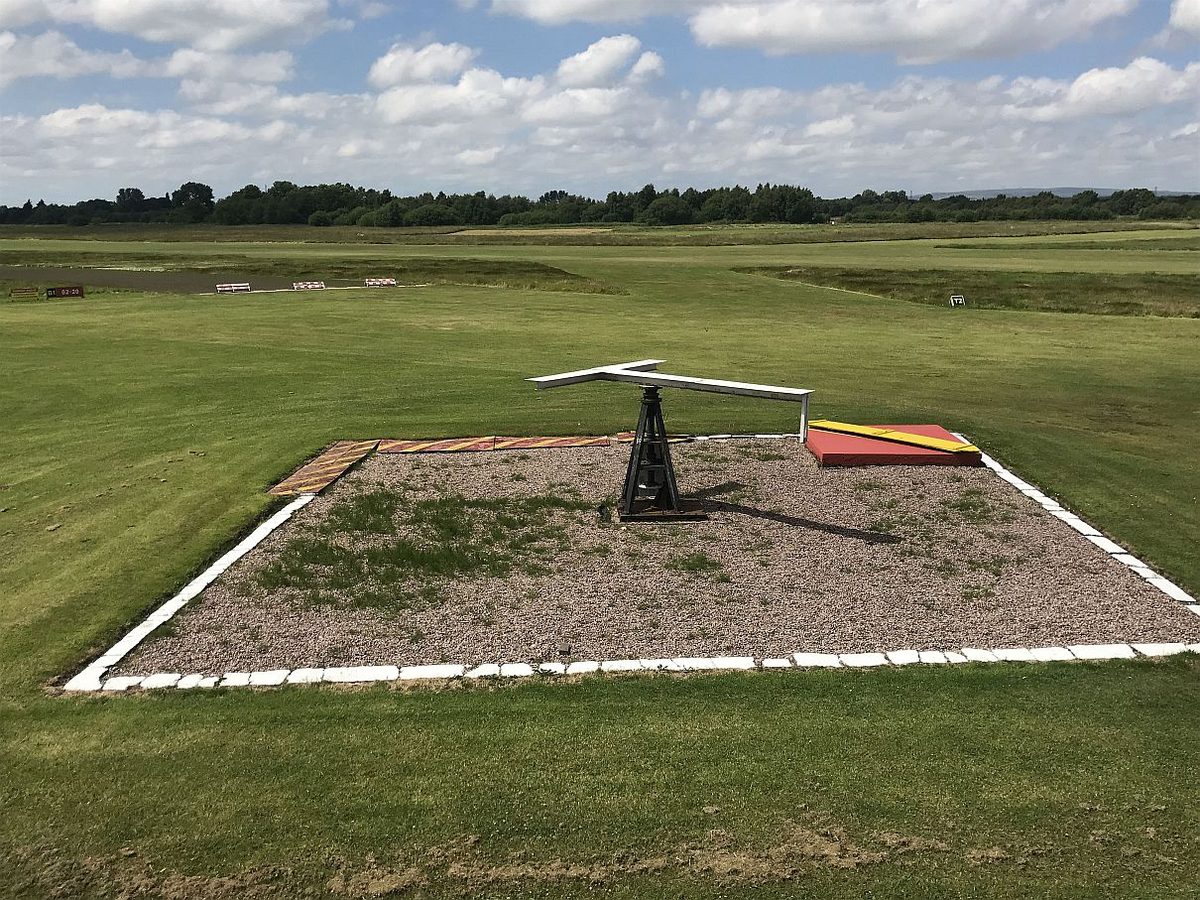
A self-announce broadcast is a transmission of position or intended activity on the CTAF, addressed to all traffic rather than to a station. It is used where there is no FSS or UNICOM, where they cannot be raised, and when a tower or FSS is closed. The AIM's rules are few:
- begin and end each call with the airport name, because aircraft at nearby airports may be on the same frequency;
- give call sign and type, position, altitude and intentions;
- name the runway by its number, never "the active runway";
- never ask "traffic in the area, please advise", which the AIM says is not a recognised phrase and should not be used.
| Phase | Recommended calls |
|---|---|
| Departure | Before taxiing; before taxiing onto the runway; on departure, with the direction and altitude of departure |
| Arrival | About 10 miles out; entering downwind, base and final; clear of the runway |
| Straight-in approach | About 8 to 10 miles out, then coordinate with traffic in the pattern |
| Practice instrument approach | Leaving the final approach fix or outer marker inbound, or when established on the final segment; on completing or terminating the approach; on starting the missed approach |
A typical inbound call: "Strawn traffic, Apache Two Two Five Zulu, one zero miles south, two thousand five hundred, landing runway one seven, Strawn." When calling UNICOM instead, the pilot names the station, reports about 10 miles out and asks for the wind and runway: "Frederick UNICOM, Cessna Eight Zero One Tango Foxtrot, one zero miles southeast, descending through three thousand, landing Frederick, request wind and runway information, Frederick."
The FAA discourages VFR straight-in approaches because of the collision risk, and an aircraft flying one, IFR or VFR, has no priority over aircraft in the pattern. Practice approaches need particular care, since they can point the aircraft at traffic departing in the opposite direction. Where no pattern altitude is published, AC 90-66C recommends 1,000 ft above the airport for piston aeroplanes and 1,500 ft for large and turbine-powered aeroplanes.
Warning: a self-announce call informs; it reserves nothing. Aircraft without radio, pilots on the wrong frequency and calls blocked by simultaneous transmissions are normal at an uncontrolled field. Treat silence as a lack of information, not a lack of traffic.
Air-to-air frequency
Pilots also need to talk to each other away from any aerodrome, to coordinate a flight in company, pass weather or, over the ocean, relay a message. The frequencies differ by region:
- in the United States the FCC designates 122.750 MHz for air-to-air communication between private fixed-wing aircraft and 123.025 MHz for helicopters, which also use it for air traffic control operations;
- over the oceans and remote areas beyond the reach of VHF ground stations, 123.450 MHz is the air-to-air channel, and aircraft in the North Atlantic monitor it together with 121.5 MHz (see oceanic and North Atlantic operations);
- in the United States 123.450 MHz is otherwise assigned to flight test stations and is not for air-to-air use, except by aircraft operating in an oceanic FIR;
- the French A/A frequencies are air-to-air in the literal sense, used for self-announce calls at aerodromes.
None of these is an emergency frequency; distress and urgency calls belong on the frequency in use or on 121.5 MHz (see distress and urgency communications).
Aerodrome beacons and pilot-controlled lighting
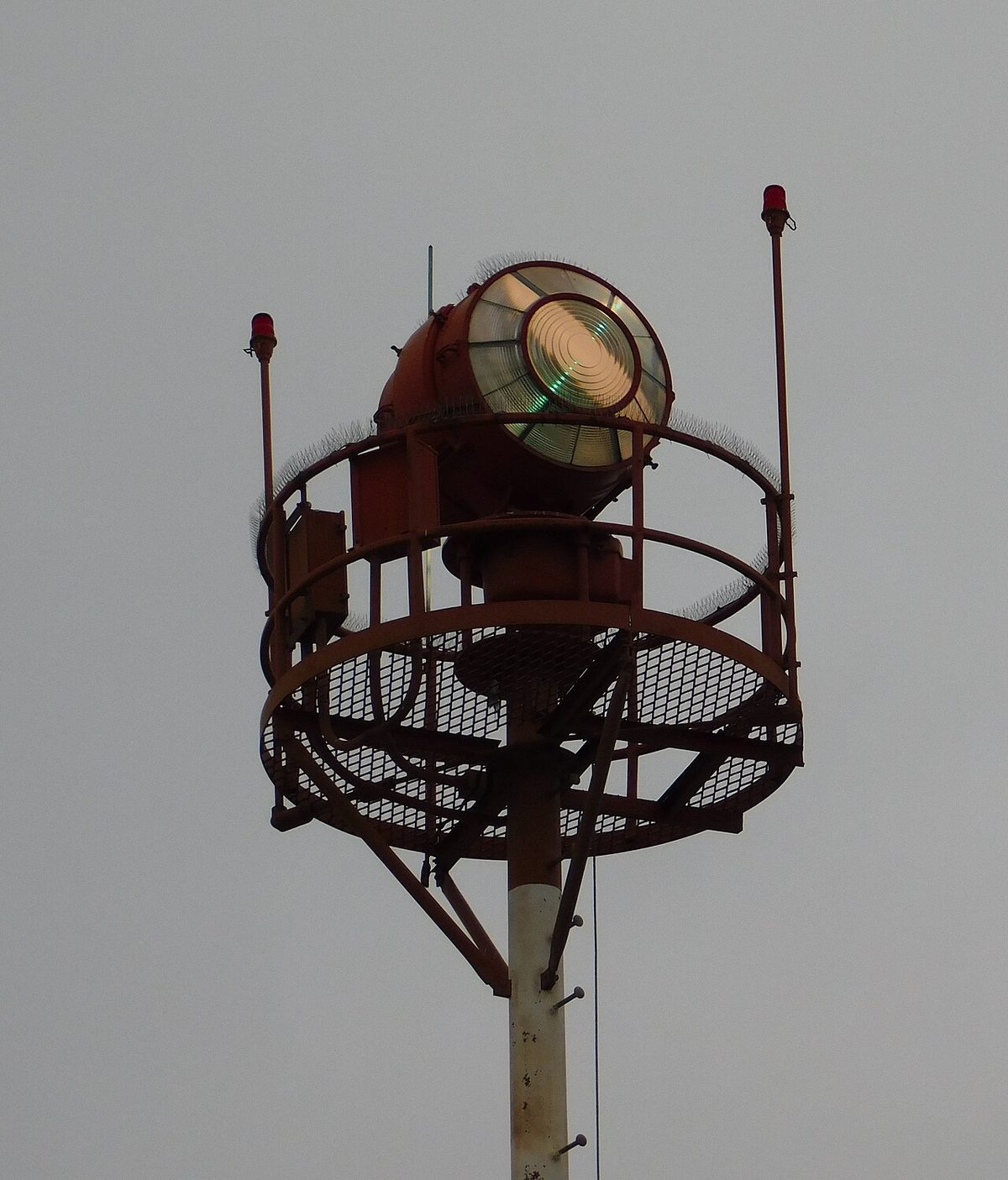
The aerodrome rotating beacon helps a pilot find the aerodrome at night. The FAA's colour codes are white and green flashes for a lighted civil land airport, white and yellow for a water airport, and green, yellow and white for a heliport; a military airport alternates white and green but shows two quick white flashes between the green ones. Beacons marking airports flash 24 to 30 times a minute. On a sectional chart a star above the airport symbol marks a beacon operating from sunset to sunrise.
In Class B, C, D and E surface areas a beacon lit in daylight often indicates a ground visibility below 3 miles and/or a ceiling below 1,000 ft, so that an ATC clearance is needed to take off, land or fly in the pattern. Many beacons are switched by photocells or time clocks, however, and daylight operation is not required by regulation, so the beacon is no substitute for checking the weather.
Pilot-controlled lighting is switched from the air by keying the microphone on the published frequency, often but not always the CTAF; the Chart Supplement and approach charts give it. On the FAA standard system, seven clicks within five seconds select the highest intensity available, five a medium or lower setting and three the lowest, and the lights stay on for 15 minutes from the most recent activation. The AIM advises keying seven times first, so that every controlled light comes on, then adjusting, and keying again when overflying the airport or just before the final approach segment: receivers are often set to low sensitivity so that aircraft at neighbouring airports on the same frequency do not trigger them.
Frequently asked questions
What is a CTAF?
A common traffic advisory frequency is the frequency designated for airport advisory practices at an airport without an operating control tower. It may be a UNICOM, MULTICOM, FSS or tower frequency and is published in the Chart Supplement, on approach charts and on sectional charts, where a circled C marks it. Pilots monitor it from 10 miles out to landing and, when departing, from start-up until 10 miles away.
What is the difference between UNICOM and MULTICOM?
UNICOM is a non-government air/ground station at a public-use airport without a tower or FSS that can pass weather, wind and the recommended runway on request, on frequencies such as 122.7, 122.8 or 123.0 MHz. MULTICOM, 122.9 MHz, is used where there is no tower, FSS or UNICOM: nobody answers, and pilots self-announce to each other. Neither can issue a clearance.
What should a self-announce call at a non-towered airport contain?
Start and end with the airport name, then give call sign and type, position, altitude and intentions, naming the runway by its number. For example: Strawn traffic, Apache Two Two Five Zulu, one zero miles south, two thousand five hundred, landing runway one seven, Strawn. The FAA says the phrase traffic in the area, please advise is not recognised and should not be used.
What is the air-to-air frequency?
It depends on where you are. In the United States the FCC designates 122.75 MHz for air-to-air communication between private fixed-wing aircraft and 123.025 MHz for helicopters. Over the oceans and remote areas beyond VHF ground coverage, 123.45 MHz is used, and aircraft in the North Atlantic monitor it with 121.5 MHz. In the United States 123.45 MHz is otherwise a flight test frequency.
What does an airport beacon operating in daylight mean?
In Class B, C, D and E surface areas, a beacon lit in daylight often indicates a ground visibility below 3 miles and/or a ceiling below 1,000 ft, in which case an ATC clearance is needed to take off, land or fly in the traffic pattern. Many beacons are switched by photocells or timers, however, and daylight operation is not required by regulation, so the pilot must confirm the actual weather.
What is the difference between AFIS and an air/ground radio station?
An aerodrome flight information service, call sign Information, gives information useful for the safe and efficient conduct of flights, including known traffic, but issues no clearances. An air/ground station, call sign Radio, called an air/ground communication service in the United Kingdom, only passes information, much of it reported by other pilots. With both, decisions to take off and land stay with the pilot.
Test yourself on Communications at Non-Towered Aerodromes
The v1prep banks cover this topic in Communications (090), with a worked explanation for every answer. EASA ATPL, PPL, IR and CPL, the FAA written tests and A320/B737 type ratings.
Start practising →Sources and further reading
- FAA Aeronautical Information Manual, Chapter 4 Section 1 (4-1-9 to 4-1-12, airports without operating control towers, UNICOM and MULTICOM)
- FAA Aeronautical Information Manual, Chapter 2 Section 1 (2-1-8 pilot control of airport lighting, 2-1-9 airport beacons)
- FAA AC 90-66C, Non-Towered Airport Flight Operations
- EASA Easy Access Rules for Standardised European Rules of the Air (SERA)
- AIP France, AD 1.1, Aerodrome availability and conditions of use (common self-announce frequency 123.500 MHz)
- AIP France, AD 1.6, Radiocommunication facilities (VFR aerodromes only)
- UK CAA, CAP 413 Radiotelephony Manual
Library articles are written for study and exam preparation. They do not replace your aircraft's approved documentation, your operator's procedures or the regulations themselves.