Accident and Incident Investigation
Accident and incident investigation is the independent safety process, set out in ICAO Annex 13, of gathering and analysing information about an accident or serious incident, determining its causes and contributing factors and making safety recommendations, with the sole aim of preventing future occurrences rather than apportioning blame.
Accident and incident investigation is how aviation learns from its failures. When an aircraft crashes, or comes close to it, an independent authority reconstructs what happened and why, and publishes recommendations so that the same chain of events is broken next time. The international rules are in ICAO Annex 13 (Aircraft Accident and Incident Investigation), which defines what counts as an accident, says which State investigates and who takes part, and governs the final report.
For pilots the subject matters twice. The definitions decide whether an event must be notified and investigated, and they are examined in every air law syllabus. The principles, above all the separation of safety investigation from blame, underpin the reporting culture on which modern safety management depends. European States apply Annex 13 through Regulation (EU) No 996/2010; in the United States, notification rules are in 49 CFR Part 830, issued by the National Transportation Safety Board (NTSB).
- Purpose of Annex 13
- Definition of an Accident
- Fatal and Serious Injury
- Substantial Damage
- Serious Incidents and Airprox
- States Involved in an Investigation
- Investigation Authorities (AAIB, NTSB)
- Final Report and Safety Recommendations
- EU Regulation 996/2010
- NTSB Part 830 Notification
- Frequently asked questions
Purpose of Annex 13
Annex 13 states that the sole objective of an investigation is the prevention of accidents and incidents. It is not the purpose of the activity to apportion blame or liability. Annex 13 defines an investigation as a process conducted for accident prevention that includes the gathering and analysis of information, the drawing of conclusions, including the determination of causes and contributing factors, and, when appropriate, the making of safety recommendations.
That separation is what allows crews, controllers and engineers to speak openly to investigators. Any judicial or administrative proceedings to apportion blame or liability are separate from the safety investigation, and Annex 13 protects certain records, such as cockpit voice recordings, from being used for purposes other than the investigation except in narrowly defined circumstances.
Definition of an Accident
An accident is an occurrence associated with the operation of an aircraft which, for a manned aircraft, takes place between the time any person boards the aircraft with the intention of flight until all such persons have disembarked, and in which:
- a person is fatally or seriously injured as a result of being in the aircraft, of direct contact with any part of it, including parts that have become detached, or of direct exposure to jet blast, except when the injuries are from natural causes, self-inflicted or inflicted by other persons, or are suffered by stowaways hiding outside the areas normally open to passengers and crew; or
- the aircraft sustains damage or structural failure that adversely affects its structural strength, performance or flight characteristics and would normally require major repair or replacement of the affected component; or
- the aircraft is missing or completely inaccessible. An aircraft is considered missing when the official search has been terminated and the wreckage has not been located.
The time window matters: an injury during boarding with the intention of flight counts, whereas a passenger who dies of natural causes on board is not an accident.
Fatal and Serious Injury
A fatal injury is one that results in death within 30 days of the date of the accident. A serious injury is one sustained in an accident which:
- requires hospitalisation for more than 48 hours, commencing within 7 days of the date the injury was received;
- results in a fracture of any bone, except simple fractures of fingers, toes or nose;
- involves lacerations that cause severe haemorrhage or nerve, muscle or tendon damage;
- involves injury to any internal organ;
- involves second or third degree burns, or any burns affecting more than 5% of the body surface; or
- involves verified exposure to infectious substances or injurious radiation.
The NTSB's definition in 49 CFR 830.2 uses the same tests, except that it has no item on infectious substances or radiation. A cabin crew member hospitalised for three days after turbulence has therefore been in an accident, even if the aircraft is undamaged.
Exam tip: 48 hours in hospital, starting within 7 days; death within 30 days for a fatal injury; burns over 5% of the body. Simple fractures of fingers, toes or nose are the only fractures that do not qualify.
Substantial Damage
The damage criterion excludes damage that does not threaten the aircraft's integrity. Annex 13 leaves out, among other things, engine failure or damage limited to a single engine, its cowlings or accessories, and damage limited to propellers, wing tips, antennas, tyres, brakes, fairings, or small dents or puncture holes in the skin.
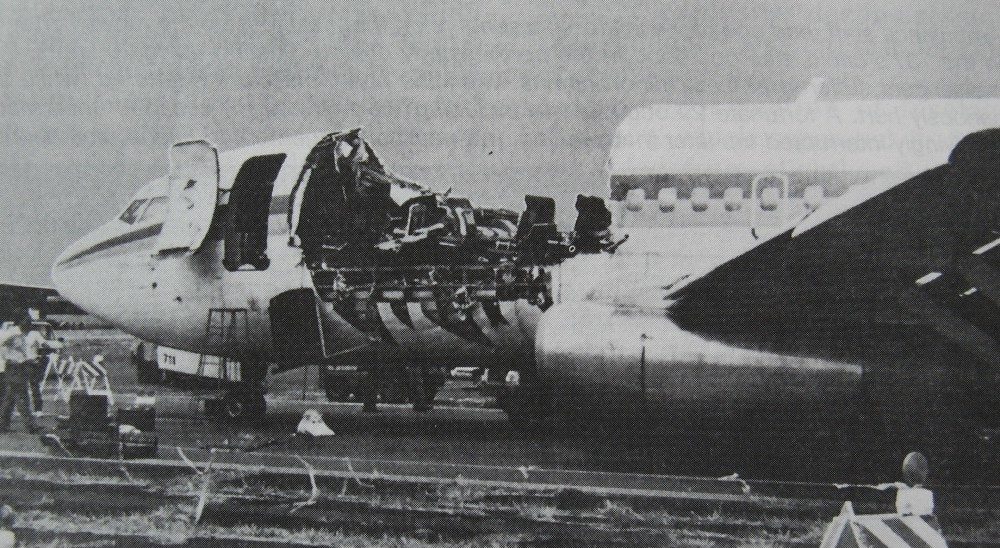
The FAA and NTSB call the same idea substantial damage. Part 830.2 defines it as damage or failure that adversely affects structural strength, performance or flight characteristics and would normally require major repair or replacement, and excludes engine failure or damage limited to one engine, bent fairings or cowling, dented skin, small punctured holes, ground damage to propeller blades, and damage to landing gear, wheels, tyres, flaps, engine accessories, brakes or wingtips. A bent wingtip and a collapsed gear leg after a ground loop are therefore not an accident on their own, whereas a bent wing spar or a buckled firewall is.
Serious Incidents and Airprox
An incident is an occurrence, other than an accident, associated with the operation of an aircraft that affects or could affect the safety of operation. A serious incident is an incident whose circumstances indicate a high probability of an accident; older texts put it as an accident having nearly occurred. Annex 13 notes that the difference between an accident and a serious incident lies only in the result. Its list of examples includes:
- near collisions requiring an avoidance manoeuvre, and controlled flight into terrain only marginally avoided;
- take-offs or landings on a closed or engaged runway, and aborted take-offs on such a runway;
- gross failure to achieve predicted performance during take-off or initial climb;
- fires and smoke on board, and events requiring emergency use of oxygen;
- structural failures or engine disintegrations not classified as accidents, and multiple system malfunctions;
- flight crew incapacitation, and fuel situations requiring the pilot to declare an emergency.
A serious incident must be notified and investigated like an accident, which is why regulations speak of a reportable serious incident. A near collision between aircraft is also reported to ATS as an Airprox, the code word PANS-ATM uses in air traffic incident reports for aircraft proximity: a situation in which, in the opinion of a pilot or ATS personnel, the distance between aircraft and their relative positions and speeds were such that the safety of the aircraft involved may have been compromised. Airprox reports are classified as risk of collision, safety not assured, no risk of collision, or risk not determined.
States Involved in an Investigation
Annex 13 distributes the work among the States connected with the aircraft:
- The State of Occurrence, in whose territory the accident or serious incident happens, institutes the investigation. It may delegate all or part of it to another State.
- If the occurrence is outside the territory of any State, over the high seas for example, the State of Registry institutes it. In the territory of a non-Contracting State that does not investigate, the State of Registry should endeavour to do so, and if the State of Occurrence declines, the State of Registry or the State of the Operator may take it on.
- The States of Registry, of the Operator, of Design and of Manufacture are each entitled to appoint an accredited representative, supported by advisers. The State of Manufacture is the one with jurisdiction over the organisation responsible for final assembly; the State of Design over the organisation responsible for the type design.
- A State whose citizens suffered fatalities or serious injuries may appoint an expert, who can visit the scene, see the relevant factual information, help identify victims and question surviving citizens, and receives a copy of the final report.
ICAO is notified of accidents and serious incidents to aircraft with a maximum mass over 2,250 kg, and receives the final report for aircraft over 5,700 kg.
Investigation Authorities (AAIB, NTSB)
Annex 13 requires each State to have an accident investigation authority independent of the State aviation authorities and of anyone whose interests could conflict with its task. In the EU this is the safety investigation authority (SIA) of each Member State, such as France's BEA; the United Kingdom's is the Air Accidents Investigation Branch (AAIB). In the United States the National Transportation Safety Board (NTSB) is an independent federal agency, separate from the FAA, which takes part in its investigations.
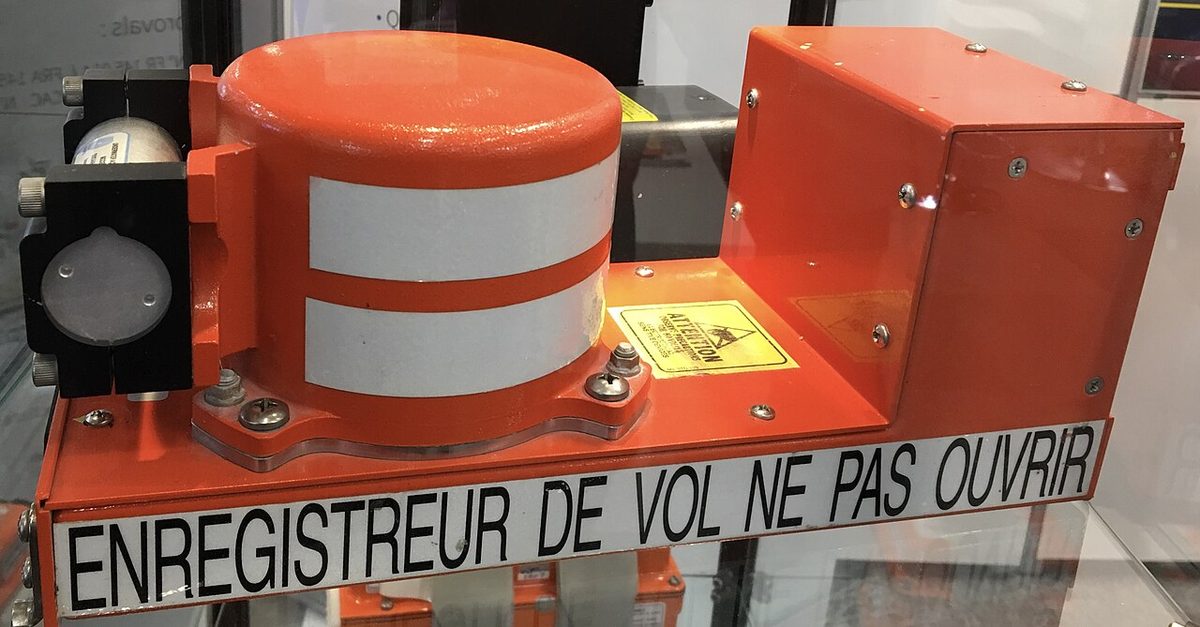
The evidence must be protected from the start. The State of Occurrence secures the wreckage and the flight recorders, and the operator preserves recorded data. Under EU air operations rules the operator must keep flight data and cockpit voice recordings for 60 days after an accident or serious incident unless the investigating authority directs otherwise. Under 49 CFR 830.10, the operator preserves the wreckage, cargo, mail and records until the NTSB takes custody, and may disturb them only to remove injured or trapped persons, to protect the wreckage from further damage or to protect the public from injury, recording the original positions whenever something must be moved.
Final Report and Safety Recommendations
The investigation ends with a final report, normally structured as factual information, analysis, conclusions and safety recommendations. The conclusions set out the findings and the causes or contributing factors. The State conducting the investigation sends the report to the State that instituted it, the States of Registry, the Operator, Design and Manufacture, States whose citizens suffered fatalities or serious injuries, and States that provided relevant information, significant facilities or experts, and makes it public as soon as possible, if possible within twelve months. Otherwise it publishes an interim statement on each anniversary of the occurrence, giving the progress of the investigation and any safety issues raised.
A safety recommendation is a proposal of an accident investigation authority, based on information from an investigation, made to prevent accidents or incidents. It never creates a presumption of blame or liability. It may be addressed to an authority, a manufacturer or an operator, and the addressee is expected to say what action it has taken or proposes. Recommendations can be issued at any stage; urgent ones do not wait for the final report.
EU Regulation 996/2010
Regulation (EU) No 996/2010 applies Annex 13 in the EU, with the same definitions. It requires every Member State to have a permanent civil aviation SIA, independent of the aviation authorities, and makes a safety investigation compulsory for accidents and serious incidents within its scope. The SIAs work together in a European network, and the regulation protects the witness statements, recordings and other sensitive safety information that investigations rely on.
Alongside it, Regulation (EU) No 376/2014 requires mandatory occurrence reports within 72 hours of the reporter becoming aware of the occurrence, under a just culture: the information is used to improve safety, not to attribute blame (see occurrence reporting). EU air operations rules (ORO.GEN.160) also require the operator to report accidents, serious incidents and other occurrences to its competent authority within 72 hours of identifying the condition, as EU-OPS required before them.
NTSB Part 830 Notification
In the United States, 49 CFR 830.2 defines an aircraft accident, serious injury and substantial damage in terms close to Annex 13, with the same boarding-to-disembarkation window. Under 830.5 the operator must notify the nearest NTSB office immediately, by the most expeditious means, of any accident and of the listed immediately reportable incidents, which include:
- flight control system malfunction or failure;
- inability of a required flight crewmember to perform duties because of injury or illness;
- failure of an internal turbine engine component that lets debris escape other than through the exhaust path;
- in-flight fire, and collision of aircraft in flight;
- damage to property other than the aircraft estimated to exceed $25,000;
- on large multi-engine aircraft, in-flight failure of electrical or hydraulic systems requiring sustained use of emergency systems, sustained loss of thrust from two or more engines, and an evacuation using an emergency egress system;
- release of all or part of a propeller blade in flight, other than by ground contact;
- complete loss of information from more than 50% of the cockpit displays;
- an ACAS resolution advisory under IFR when compliance was needed to avert a collision, and a runway incursion requiring evasive action;
- an overdue aircraft believed to have been involved in an accident.
Under 830.15 the operator files a report on NTSB Form 6120.1 within 10 days after an accident, or after 7 days if an overdue aircraft is still missing. For an incident, a written report is filed only if the NTSB requests it.
Frequently asked questions
What is the ICAO definition of an aircraft accident?
Under Annex 13 an accident is an occurrence associated with the operation of an aircraft, between the time any person boards it with the intention of flight and the time all such persons have disembarked, in which a person is fatally or seriously injured, the aircraft sustains damage or structural failure that adversely affects its strength, performance or flight characteristics and would normally require major repair, or the aircraft is missing or completely inaccessible.
What counts as a serious injury in an aircraft accident?
A serious injury requires hospitalisation for more than 48 hours, starting within 7 days of the injury, or involves a fracture of any bone except simple fractures of fingers, toes or nose, lacerations causing severe haemorrhage or nerve, muscle or tendon damage, injury to an internal organ, second or third degree burns or any burns over more than 5% of the body, or verified exposure to infectious substances or injurious radiation.
What is the difference between an accident and a serious incident?
A serious incident is an incident whose circumstances indicate a high probability of an accident; older texts say an accident nearly occurred. Annex 13 notes that the difference between the two lies only in the result. Near collisions, controlled flight into terrain only marginally avoided, take-offs or landings on a closed or occupied runway, fires and crew incapacitation are typical examples. Both are notified and investigated in the same way.
Which State investigates an aircraft accident?
The State of Occurrence, in whose territory the accident happens, institutes the investigation, although it may delegate all or part of it. If the accident happens outside the territory of any State, for example over the high seas, the State of Registry investigates. The States of Registry, of the Operator, of Design and of Manufacture are each entitled to appoint an accredited representative to take part.
When must an accident be reported to the NTSB?
Under 49 CFR 830.5 the operator notifies the nearest NTSB office immediately, by the most expeditious means, of an accident or of any listed serious incident, such as a flight control failure, crew incapacitation, an in-flight fire or collision, or property damage over $25,000. A written report on NTSB Form 6120.1 follows within 10 days of an accident, and for an incident only if the NTSB asks for one.
Test yourself on Accident and Incident Investigation
The v1prep banks cover this topic in Air Law (010), with a worked explanation for every answer. EASA ATPL, PPL, IR and CPL, the FAA written tests and A320/B737 type ratings.
Start practising →Sources and further reading
- ICAO Annex 13, Aircraft Accident and Incident Investigation (ICAO Store)
- Regulation (EU) No 996/2010 on the investigation and prevention of accidents and incidents in civil aviation (EUR-Lex)
- Regulation (EU) No 376/2014 on the reporting, analysis and follow-up of occurrences in civil aviation (EUR-Lex)
- 49 CFR Part 830, Notification and Reporting of Aircraft Accidents or Incidents
- ICAO Doc 4444, Procedures for Air Navigation Services, Air Traffic Management (PANS-ATM), 16th edition, as published by Airservices Australia
- EASA Easy Access Rules for Air Operations (Regulation (EU) No 965/2012)
Library articles are written for study and exam preparation. They do not replace your aircraft's approved documentation, your operator's procedures or the regulations themselves.