TAP Air Portugal Pilot Interview Prep: Process, Sim, Questions (2026 Guide)
LAST UPDATED: 28 SEPTEMBER 2026
TAP Air Portugal recruits First Officers through periodic public competitions that open, close, and then vanish from the website, taking their published entry requirements with them. Most of what circulates about TAP — hours minimums, English levels, MCC — is therefore either out of date or was never published by the airline at all. This guide separates what TAP's own competition regulation states from what only third parties report, and builds the technical preparation around the fleet it actually flies.
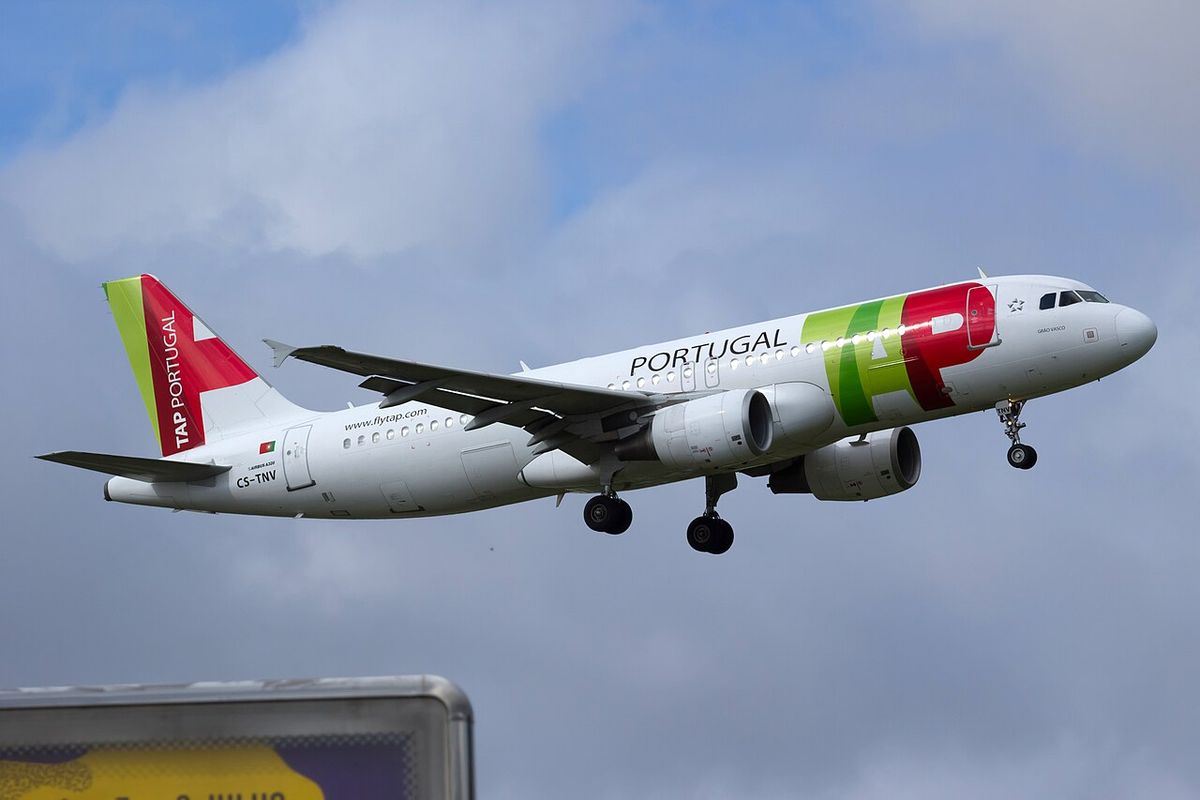
As at 25 August 2026 TAP had no pilot vacancies open on its own recruitment portal and was not accepting spontaneous First Officer applications, its last campaign having been filled — that position changes with each competition, so check our airline pilot jobs page for where it stands now.
TAP Air Portugal: fleet and bases
TAP's published mainline fleet is entirely Airbus: A319-100, A320-200, A321-200 in the ceo generation, A320-200neo, A321-200neo, A321-200LR in the neo generation, and A330-200 and A330-900neo as widebodies. Two more types wear TAP colours — the Embraer 190 and 195 — flying as TAP Express under Portugalia, a separate entity. TAP lists types but publishes no fleet numbers, so any count elsewhere is an estimate.
Entry is an A320-family job: TAP's regulation describes a Company Integration Course then an A320-family type rating or conversion, so that is what your technical preparation is built around. TAP also flies the A330, but publishes no fleet-progression or bidding policy — treat a narrowbody-to-widebody move inside TAP as unconfirmed, not as a career path on offer. The Embraers sit outside TAP's own competition — Portugalia is a distinct employer. Whether Portugalia recruits on its own cycle is not covered here.
Lisbon (LIS) is the primary hub and main pilot base. Porto (OPO) is a secondary hub that third-party sites list as a pilot base; TAP confirms it nowhere, so ask rather than assume.
Entry requirements
TAP maintains no standing published set of pilot entry requirements. They are published per competition, in an announcement annexed to a numbered regulation, both withdrawn when it closes. Everything below describes the closed November 2025 competition, ref. OP6NOV2025 — the best guide to the next campaign, not criteria binding today.
| Item | Position | Source |
|---|---|---|
| Licence | EASA CPL(A) with valid ME and IR, held at application and kept valid until the contract is signed during LIFUS | Regulation cl. 3.4 |
| ATPL theory / MCC | Absent from the regulation — the words ATPL, MCC and Multi Crew appear nowhere | Third-party only; unverified |
| Total hours | Not published by TAP. Third parties reported 500 h; the 2024 campaign gave none | Unverified |
| Hours on type | Not published as a minimum. The eligibility bar lives in the offline announcement, so a threshold cannot be ruled out. In the regulation A319/A320/A321 hours appear only as a ranking score: 12 points above 1,500 h, 10 above 800 h in the last 24 months, 5 above 400 h | Cl. 6.1 for the score; absence of a minimum unverified |
| Type rating | Provided and bonded — three years from line release; leaving earlier without just cause costs at least EUR 20,500, pro rata | Regulation |
| Medical | EASA Class 1 held at application and maintained to contract signature, plus TAP's eliminatory medical through UCS | Regulation |
| English | Level 4 reported as the floor; the regulation gives ranking points for Level 5 (1 pt) and Level 6 (2 pts) | Points confirmed; floor unverified |
| Education | 12th grade or official equivalent, recognised in Portugal | Third-party only; unverified |
| UPRT | Advanced UPRT reported, said to be waived if you already hold a type rating | Third-party only; unverified |
| Right to work | Not published; no visa-sponsorship statement. A non-ANAC licence must be transferred to ANAC by the Operator Proficiency Check, at your cost. Portuguese was also reported | Cl. 3.5; language unverified |
| Age | Not published. Read that as unpublished, not as no limit | Unverified |
Two rules bite hard. Every requirement must be met on the closing date — no later updates are accepted. And failure is time-barred: a nao apto in the psychological assessment bars you 12 months, elimination in type-rating training two years.
The selection process
Every stage below comes from TAP's own competition regulation — none of it is forum material. The process is documented; the thresholds, which sat in a withdrawn announcement, are not. TAP recruits First Officers through periodic public competitions; as at 25 August 2026 its portal stated that spontaneous First Officer applications are not accepted. No cadet or direct-entry Captain route appears on its own site.
- Online application with all mandatory documentation by the closing date, at which eligibility is frozen.
- Pre-selection — documentary screening by the Talent Attraction team; rejected candidates are told what was missing and may appeal.
- Phase 1: CV scoring and ranking on your file alone — points for A319/A320/A321 experience and recency, hours weighted by aircraft complexity (high-performance types at 0.003 per hour, others 0.001), degrees, and English Level 5 or 6. The provisional ranked list is appealable within two working days.
- Phase 2: three sequential eliminatory assessments, each graded only apto or nao apto — a written Aeronautical Assessment from Flight Operations and Training at a 75% pass mark, a Psychological Assessment from HR, a Medical Assessment from UCS. Previous or external equivalents are not accepted.
- Phase 3: full-flight simulator check with a theoretical evaluation, then the final interview with the Selection Jury — Flight Operations Director, Training Director, Chief Pilot, HR Director — which decides.
- Post-selection, all eliminatory: Company Integration Course, A320-family type rating or conversion, LIFUS and a Line Check. The contract is signed during LIFUS, and seniority follows a weighted score across questionnaire, simulator, evaluation, LIFUS and line check.
The consequence most candidates miss: the 75% written exam sits before the simulator, so systems knowledge decides whether you fly at all. Our interview guide.
The simulator assessment
TAP publishes that Phase 3 is a full-flight simulator check with a theoretical evaluation, and nothing more — no aircraft type, no duration, no profile, no location. Anyone quoting a ninety-minute detail with a named sequence is repeating hearsay. Nothing is published about the profile, so prepare the content any European sim check draws on rather than a TAP script. Reason from the fleet: entry is into the A320 family, and the ceo and neo decks are close enough that the handling task is the same.
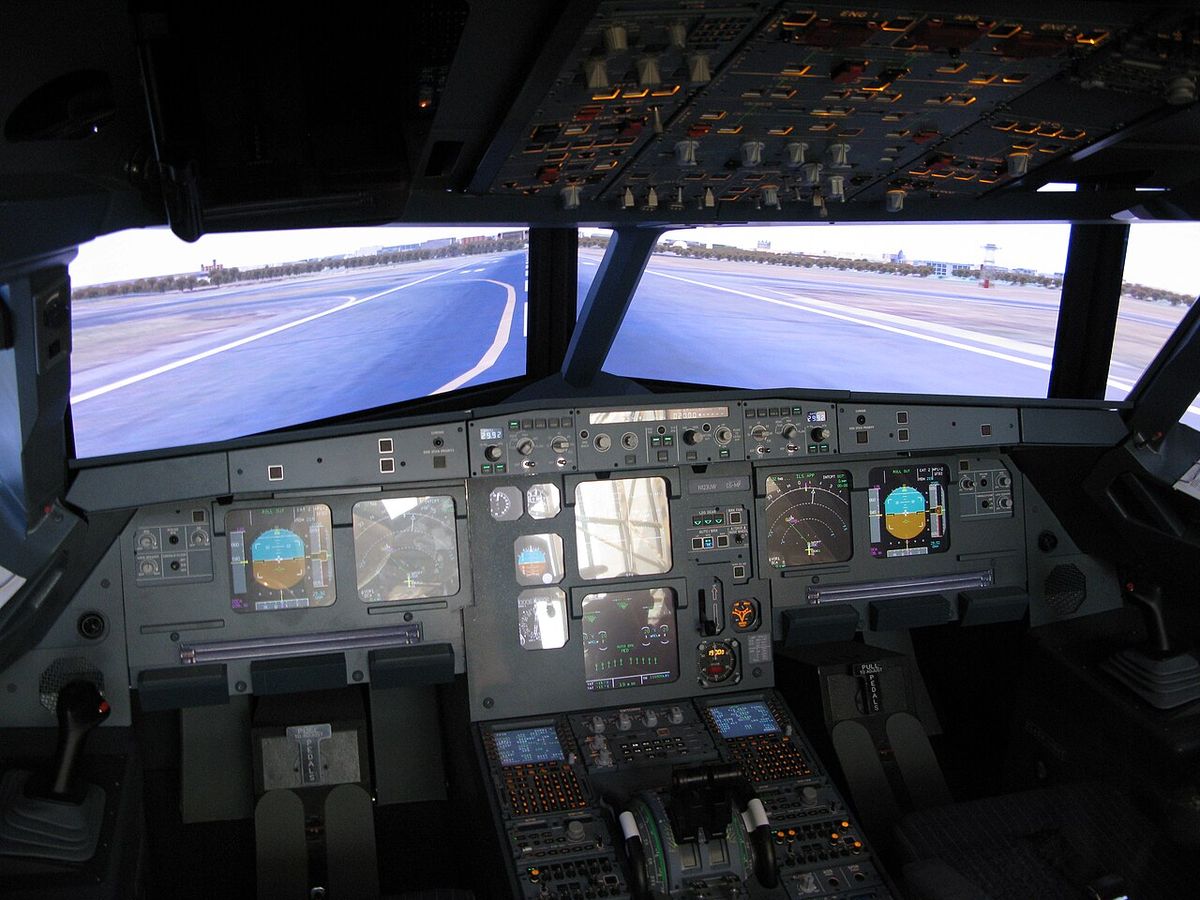
Scan first — heading, altitude and speed held on raw data with the flight directors gone, and a scan that survives rising workload; a scan that collapses the moment a radio call arrives is a classic sim-check weakness, though no one publishes what actually fails TAP candidates. Manual handling next: pitch, power and trim as one habit, small inputs, anticipation rather than correction. The classic sidestick error is over-controlling under observation — in Normal Law the computers trim for you, so a candidate who keeps hunting is fighting a stable aeroplane. Standard calls and CRM — brief out loud, call mode changes and deviations, hand over control explicitly. (The order and weighting here are ours, not TAP's: no profile is published.)
A stabilised-approach decision is standard fare in that content, so have it ready. EASA's air operations rules require an operator to define stabilised approach criteria and a go-around policy; the conventional gates are 1,000 ft in IMC and 500 ft in VMC, on profile, configured, at target speed. In any operator's check the go-around decision is what an assessor is watching for — TAP publishes no criteria of its own. Numbers to have ready: our V-speeds and performance guides.
Technical questions, with answers
Technical knowledge here is a published, eliminatory gate: Phase 2 opens with a written Aeronautical Assessment at a 75% pass mark, and Phase 3 adds a theoretical evaluation. TAP publishes no syllabus — but it publishes the fleet, and that says A320 family.
Walk me through the hydraulics, and what does the PTU actually do?
Three independent systems — Green, Blue and Yellow — at 3,000 psi. Green is driven by an engine-driven pump on engine 1, Yellow by one on engine 2 plus an electric pump, Blue by an electric pump with the ram air turbine as emergency source. The PTU transfers power, not fluid: a bidirectional motor-pump pair that lets Green and Yellow drive each other — Blue is not connected to it — running automatically once the differential exceeds roughly 500 psi. FCOM hydraulics; our hydraulic guide.
What are the flight control laws, and what moves you between them?
Normal Law has ground, flight and flare modes; in flight the sidestick commands load factor in pitch and roll rate in roll, with auto trim, protected for load factor, pitch attitude, angle of attack, high speed and bank angle. Alternate Law follows a loss of redundancy in air data, inertial or computer sources, keeping load factor protection but losing attitude and bank protection. Direct Law is stick-to-surface; beneath it, mechanical backup — pitch trim wheel and rudder. FCOM flight controls; our laws guide.
What is a FLEX takeoff, and when may you not use one?
The assumed temperature method. Find the highest temperature at which the aeroplane still meets every takeoff requirement for that runway, enter it as FLEX TEMP, and the FADEC delivers that thrust. Certification caps the reduction at 25% below full rated thrust, and it must exceed both the actual OAT and the engine's flat-rating reference temperature. Not permitted on a contaminated runway or with anticipated windshear. FCOM and FCTM performance; our FLEX guide.
Engine failure at V1 — talk me through it to acceleration altitude.
V1 is the maximum speed for the first stopping action and the minimum from which the takeoff can be continued on one engine — so at V1 you go. Centreline with rudder, rotate at VR at a slower rate than normal, towards about 12.5 degrees, then fly the SRS bar rather than a memorised attitude. Target V2 if the failure came before V2; if later, the speed at failure limited to V2 plus 15. Positive rate, gear up. At 400 ft, ECAM actions. Accelerate at the engine-out acceleration altitude. Straight FCTM; our V1 guide.
Describe the electrical system — and what if you lose both generators?
Two engine-driven generators, each through an integrated drive unit, supply 115 V 400 Hz three-phase AC to their own side; the two never parallel. The APU generator can replace either, and external power supplies the aircraft on stand. Transformer rectifiers give 28 V DC. Lose both main generators and the APU and the ram air turbine extends automatically above about 100 kt, driving the Blue system, which drives the emergency generator; the static inverter feeds the AC essential bus across the gap. FCOM electrical; our electrical guide.
Where does bleed air come from, and what uses it?
Each engine taps compressor air at two points — an intermediate tap and a high-pressure tap on the HP compressor, stage 5 and stage 9 on the CFM56-5B, different stages on other powerplants; TAP does not publish which engines it operates. The HP valve opens at low power when intermediate pressure is insufficient. A bleed valve regulates pressure, a precooler cooled by fan air regulates temperature. Users: the packs, wing anti-ice, engine start, hydraulic reservoir and water tank pressurisation. FCOM air bleed; our pneumatic and APU guides.
Take me through the fuel system on the A320 family.
Fuel sits in a centre tank and two wing tanks, each wing split into an inner and an outer cell. Two pumps feed each engine from its own wing inner tank; the centre tank pumps run first, so centre fuel is burned before wing fuel, and outer cell fuel transfers inboard once the inner cell falls to its transfer level. A crossfeed valve lets one tank feed both engines — that is the tool for a lateral imbalance: open the crossfeed, switch off the pumps in the lighter tank, and burn the heavy side down. Fuel also cools the IDG oil through the fuel-oil heat exchanger, which is why fuel temperature sits on the ECAM fuel page. Our top 50 A320 questions.
How does pressurisation work, and what tells you it has failed?
Two cabin pressure controllers run it, one active and one standby, swapping over between flights; the active one drives the outflow valve to schedule cabin altitude against the cruise level and the landing elevation. Air comes from the packs, and safety valves cap the differential mechanically. Maximum differential on the A320 family is about 8.6 psi, and the excessive cabin altitude warning triggers at 9,550 ft cabin altitude. That warning is a memory-item drill — crew masks on and communication established, signs on, then an emergency descent. Our memory items guide.
What does the ECAM do for you, and where does it stop helping?
It shows warnings, memos and engine parameters above, synoptics and status below, sequences the drill line by line, and clears to a STATUS page listing what is inoperative and the limitations you carry. The limits matter more in an interview: ECAM handles the failures it detects, is weak on unannunciated and multiple unrelated failures, and is too slow for anything needing immediate action — hence memory items. Fly first: after takeoff, nothing before 400 ft; on approach, nothing below 1,000 ft until you are stable. Our ECAM guide and memory items.
The A330 is a twin. What does extended-range operation require? (General EASA knowledge — TAP publishes nothing about its route network or its ETOPS approvals.)
Any twin operated beyond a threshold distance from an adequate aerodrome needs a specific approval. EASA's air operations rules (CAT.OP.MPA.140) set that threshold at 60 minutes at one-engine-inoperative cruise speed in still air for large aeroplanes such as the A330 — smaller twins have a longer threshold; beyond it you need an ETOPS approval stating a maximum diversion time. The vocabulary a panel wants: an adequate aerodrome meets runway and rescue requirements, a suitable one also has acceptable weather at the time of use; fuel is checked against a critical fuel scenario. Our air law questions.
What is alpha floor, and when is it not available to you?
An autothrust protection, not a control law. When angle of attack exceeds the alpha floor threshold the autothrust commands TOGA thrust automatically, whatever the levers are doing, then latches as TOGA LK until the crew disconnects it. It exists only in Normal Law — unavailable in Alternate and Direct — and it is available only between lift-off and 100 ft RA on approach, so it is gone in the flare, and no substitute for a go-around decision. FCOM auto flight; our top 50 A320 questions.
HR and motivation questions
The final interview is with the Selection Jury — Flight Operations Director, Training Director, Chief Pilot, HR Director. Three of the four are operational, so every answer needs an operational spine and a plain-language ending. TAP publishes nothing about format or language, so treat any script you are shown as guesswork.
- Why TAP, and why through a competition? Show you understand the mechanism — TAP opens and closes competitions rather than taking spontaneous applications — and what you did with the wait. A320-family entry in an operator that also flies the A330 is concrete — put it as your ambition, not as a published progression, because TAP publishes no bidding or fleet-transfer policy.
- Are you prepared to commit? The rating is bonded: three years from line release, at least EUR 20,500 for leaving earlier without just cause, no contract until LIFUS. Say the numbers back, and give a real reason your next three years fit Lisbon.
- What is your Portuguese, honestly? Portuguese as well as English was reported last time. Do not inflate it — the jury includes TAP's Chief Pilot and an overstated level unravels fast. The interview language is not published either way. Give your real level and your plan.
- A time you disagreed with a captain or instructor. They want the escalation, not the harmony: what you said, in what order, and what happened.
- A decision made with incomplete information. Show structure — assess, options, constraints, decide, communicate, review.
- A failure, and what changed. An answer that ends before the change is not finished.
- Relocation and licence. A non-ANAC licence must be transferred to ANAC by the Operator Proficiency Check, at your cost — knowing that unprompted is itself a signal.
Common mistakes
- Waiting to send a spontaneous application. TAP did not accept them when its portal was checked on 25 August 2026 — it announces a competition instead, so build the file now and watch for the announcement.
- Submitting an incomplete application. Eligibility is frozen at the closing date and no later updates are accepted — assemble licence, medical and logbook proofs early.
- Treating aggregator numbers as TAP's standard. The 500-hour figure, the ATPL and MCC items and the English Level 4 floor all come from third-party reproductions of an announcement now offline — ATPL and MCC appear nowhere in TAP's own regulation — so apply against the next real announcement.
- Leaving ranking points on the table. Phase 1 is scored on your file alone — upgrade the English endorsement to Level 5 or 6 and present hours on type cleanly.
- Preparing the sim and neglecting the written exam. The Aeronautical Assessment is the first of Phase 2's three eliminatory assessments — a full phase before the simulator — and it carries a 75% pass mark, so drill systems and theory first.
- Overstating your Portuguese. The requirement is third-party sourced and the interview language is not published — give your real level and a plan rather than a claim you cannot hold.
- Ignoring the bond. Three years from line release, at least EUR 20,500 indemnity, no contract until LIFUS — read both terms and budget before accepting.
- Sitting a stage underprepared to see what it is like. A nao apto in the psychological assessment bars you 12 months, elimination in type-rating training two years.
Practice the technical bank
v1prep covers 9,600+ A320 and ATPL questions.
Practice the full bank →