A320 Hydraulic System: The Complete Pilot's Guide
LAST UPDATED: 24 MAY 2026
The hydraulic system is the most-tested topic in A320 type-rating orals — and the one candidates most often get half-right. This guide walks through the three circuits (Green, Yellow, Blue), the PTU, the RAT, the brake architecture, and what actually happens when each system fails. Sourced from FCOM DSC-29 with the level of detail your check captain expects.
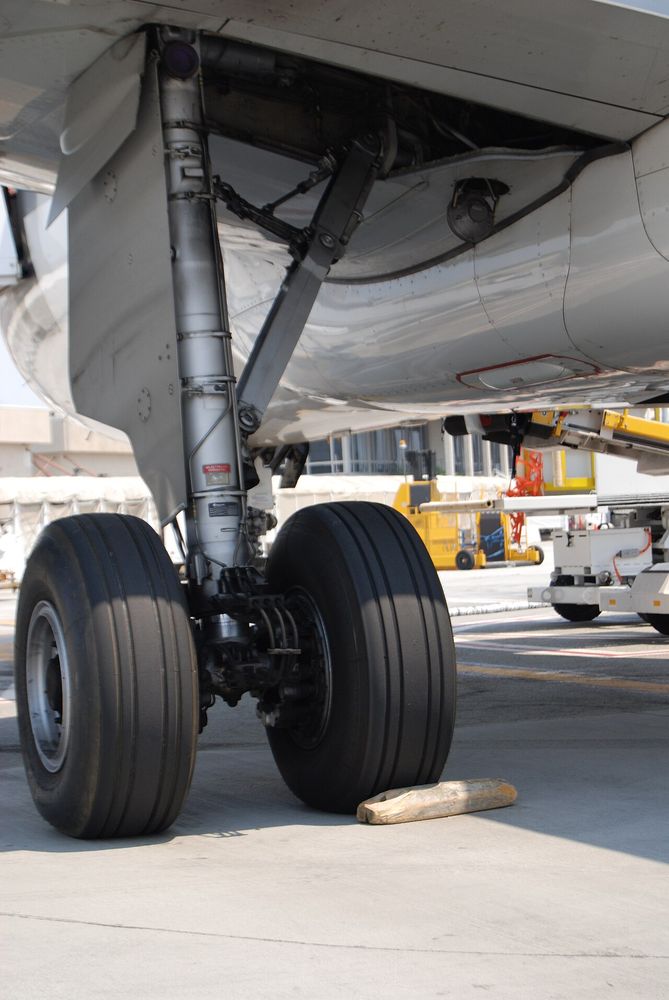
The 3-system architecture
The A320 has three independent hydraulic systems, each operating at 3,000 PSI:
| System | Primary source | Backup source | Reservoir capacity |
|---|---|---|---|
| GREEN | Engine 1 EDP (engine-driven pump) | PTU (driven by Yellow) | ~14 L |
| YELLOW | Engine 2 EDP | Electric pump + hand pump | ~12 L |
| BLUE | Electric pump | RAT (Ram Air Turbine) | ~6 L |
The fluid in all three is the same type (Skydrol or equivalent fire-resistant phosphate ester), but the systems are physically isolated — fluid never crosses between them. Loss of fluid in one system has no effect on the other two. The PTU is mechanical, not hydraulic — it's a back-to-back motor and pump that transfers power across the systems while keeping fluid separate.
Why three? Redundancy plus asymmetry. With three systems, no single failure (engine, pump, leak) can disable more than one circuit. The asymmetric sourcing — Green from engine 1, Yellow from engine 2, Blue from electrics — means losing one engine doesn't disable a second hydraulic system.
Green system
The GREEN system is normally pressurised by the Engine 1 EDP (Engine Driven Pump). It's the primary system for the heavy-traffic users: landing gear, normal brakes, normal nose wheel steering. If Green fails, you lose a lot, but you keep flying.
What Green powers
- Landing gear — normal extension and retraction (gravity backup if Green is lost)
- Normal brakes — primary brake source
- Normal nose wheel steering — the tiller and rudder pedal steering
- Half the elevators (one elevator per side has Green/Yellow servos in parallel; the other has Yellow/Blue — split varies by model)
- Inner ailerons
- Half the spoilers (typically spoilers 3 and 4)
- Engine 1 thrust reverser
- Yaw damper 1
Backup logic
If Engine 1 is shut down or its EDP fails, the PTU automatically activates when Yellow pressure is available — the PTU motors off Yellow and pumps Green fluid, restoring Green pressure to most users. Note: the PTU's pumping rate is lower than the EDP's, so during high-demand events (gear retraction) you may see momentary pressure dips on the ECAM hydraulic page.
Yellow system
The YELLOW system mirrors Green's role on the right side, with one major difference: it has an electric pump as a backup, plus a hand pump for cargo door operation. This makes Yellow operationally independent of engine 2 in many ground scenarios.
What Yellow powers
- Alternate brakes — the Yellow brake source, automatic backup if Green fails
- Cargo door operation — both FWD and AFT cargo doors
- Half the elevators
- Outer ailerons
- Half the spoilers (typically spoilers 1, 2, 5)
- Engine 2 thrust reverser
- Yaw damper 2
- PTU input — Yellow drives the PTU to pressurise Green when needed
- Flap and slat motor 2 (one of two parallel motors)
Yellow electric pump
The Yellow electric pump can pressurise the system on the ground without engine 2 running — used during cargo loading/unloading (the cargo doors are powered by Yellow). It's also a backup if the Yellow EDP fails. The electric pump is automatically inhibited if the Yellow reservoir is overheating, low on fluid, or air-locked.
Yellow hand pump
Tucked in the wheel well, the Yellow hand pump can pressurise the system manually — slow and laborious, but it lets ground crew operate the cargo doors when no electrical power is available. You'll never use this in flight, but type-rating examiners ask about it because it's a tell that you've actually read DSC-29 rather than skimmed it.
Blue system
The BLUE system is the smallest and the most differently-sourced. It has no engine pump in normal operations — it runs entirely off an electric pump. The backup is the RAT (Ram Air Turbine), which only deploys in extremis. Blue's role is to keep flight controls working when both engines or both AC buses are lost.
What Blue powers
- Half the elevators (the side that doesn't share Green/Yellow)
- Slat motor 1
- Engine 1 thrust reverser pilot valve (control only, not actuation)
- Emergency generator — Blue drives the EMER GEN via a hydraulic motor, providing AC ESS power in EMER ELEC
- Yaw damper 1 backup
Blue electric pump logic
The Blue electric pump runs continuously in flight (engaged when at least one engine is running and no fault detected). On the ground, it runs only when needed for ground tests or as part of the cockpit preparation flow. BLUE PUMP OFF light on the overhead can be selected to manually de-pressurise.
The PTU
The Power Transfer Unit is the most-asked single component on the A320 hydraulic system. It's a back-to-back hydraulic motor and pump, mechanically coupled. One side acts as a motor (driven by the higher-pressure system), the other as a pump (delivering pressure to the lower system).
Activation logic
The PTU activates automatically when the differential pressure between Green and Yellow exceeds approximately 500 PSI. It transfers power in either direction — Green can pressurise Yellow or vice versa. It does not transfer fluid; the two reservoirs remain separate. This is critical safety — a leak in one system cannot drain the other.
When you'll hear it
- On the ground, engines stopped. The yellow electric pump runs → Yellow up, Green down → the PTU pressurises Green from Yellow. You hear the characteristic high-pitched "barking" through the floor.
- Second engine start. The PTU is automatically tested; the green HYD PTU memo appears briefly, and that is normal.
- Engine or EDP failure. Lose Engine 1 or its EDP → Green pressure drops → the PTU motors off Yellow to keep Green pressure for the surviving Green users. It works the other way round if Engine 2 fails.
Inhibit conditions
The PTU does not transfer power:
- During the first engine start, when it is inhibited (it is then tested automatically during the second)
- During cargo door operation: the cargo door selector starts the yellow electric pump automatically, and the other yellow functions, the PTU among them, are inhibited except alternate braking and engine 2 reverse
- With the PTU pushbutton OFF: both PTU valves close. Its amber FAULT light (with an ECAM caution) means a green or yellow reservoir overheat, low air pressure or low level
The RAT
The Ram Air Turbine is a wind-driven propeller stowed in the right wing-to-fuselage fairing. When deployed, it spins up in the airstream and drives a hydraulic pump that pressurises the Blue system. Blue, in turn, drives the EMER GEN, providing AC ESS power. The RAT is the airframe's last-ditch power source.
Auto-deploy logic
The RAT deploys automatically if both AC BUS 1 and AC BUS 2 are lost in flight AND speed is above 100 kt. Below 100 kt the deploy is inhibited because the RAT can't generate useful power at low airspeed. The deploy time is approximately 3 seconds.
Manual deploy
Pilots can manually deploy the RAT via the RAT MAN ON pushbutton on the overhead panel (guarded). Use case: an electrical fault that doesn't auto-trigger the deploy logic but where you want the EMER GEN online preemptively.
Once deployed, can it be retracted in flight?
No. Once the RAT is deployed, it cannot be stowed in flight. Maintenance must retract it on the ground. This is intentional — re-stowing in flight risks a partial deploy that drags but doesn't generate, which is worse than fully deployed.
Brake architecture
The braking system is the most operationally-important hydraulic user. Three sources, in priority order:
| Source | System | Mode | Notes |
|---|---|---|---|
| Normal brakes | GREEN | BSCU controlled, anti-skid active | Default. AUTO BRK and pedal braking both work via this path. |
| Alternate brakes | YELLOW | BSCU controlled, anti-skid active | Automatic if Green pressure < 1500 PSI. No AUTO BRK on Yellow. |
| Accumulator brakes | Yellow accumulator | No anti-skid, pedal braking only | ~7 brake applications stored. Last resort. |
The BSCU (Brake and Steering Control Unit) automatically transitions between Green and Yellow without crew input. The transition is seamless — most pilots never know it's happened unless they look at the ECAM hydraulic page.
What's lost on Green-only failure
Green failure means: no AUTO BRK (it's a Green-system function on the A320), no normal nose wheel steering (you switch to alternate via the body steering wheel input), and degraded landing distance because of the manual-only braking. The QRH walks you through it but the headline is: plan for a longer landing distance and consider a wider runway.
Failure scenarios
Green system failure
Lose: normal brakes, normal nose wheel steering, AUTO BRK, half the elevators, inner ailerons, half the spoilers, engine 1 reverser, normal landing gear extension/retraction. Keep: Yellow alternate brakes, gravity gear extension, all flight controls (degraded but flyable), engine 2 reverser. QRH "HYD G SYS LO PR". PTU activates automatically if Yellow is good — partial Green pressure restored to some users.
Yellow system failure
Lose: alternate brakes (you fall back to accumulator only ~7 stops), outer ailerons, half the spoilers, engine 2 reverser, FWD/AFT cargo door operation, and Yellow's contribution to flap/slat speed. Keep: Green normal brakes, all primary flight controls, engine 1 reverser. PTU activates to feed Yellow from Green if needed. QRH "HYD Y SYS LO PR".
Blue system failure
Lose: half the elevators (one side), slat motor 1 (slats run on remaining motor — slower), EMER GEN unavailable. Keep: primary flight controls (Green/Yellow handle the rest), normal flap/slat operation (slower extension). Blue failure is the least-impactful single hydraulic loss — the QRH "HYD B SYS LO PR" is mostly procedural.
Dual hydraulic failure (G + Y)
Now you're on Blue only. Loss of: all reverse thrust (both engines), normal and alternate brakes (you have only the Yellow accumulator's ~7 stops), most of the flight control surfaces (only Blue-fed elevators and yaw damper), no normal landing gear extension. Land ASAP. The QRH for dual-hydraulic loss is a serious abnormal.
Triple hydraulic failure
Loss of all three hydraulic systems is essentially a structural failure case. Mechanical backup remains: pitch via the THS trim wheel (mechanically cabled), yaw via direct rudder pedal-to-rudder cables. NO roll control. This is the "land ASAP at any suitable surface" condition. Realistically, multiple events would have to fail simultaneously to reach this state.
10 interview questions
- How many hydraulic systems are on the A320 and why? — Three, for redundancy. Asymmetric sourcing means one engine failure doesn't disable two systems.
- What pressure do they operate at? — 3,000 PSI, all three.
- What does the PTU do? — Mechanically transfers power between Green and Yellow without mixing fluids. Activates at ~500 PSI differential.
- Can you ever transfer fluid between systems? — No. Fluid is physically isolated. Only power is transferred.
- When does the RAT auto-deploy? — Both AC buses lost AND speed above 100 kt.
- Once deployed, can the RAT be stowed in flight? — No. Ground-only retraction.
- What system powers the cargo doors? — Yellow. Hand pump backup for engine-off operations.
- What's the order of brake sources? — Green normal → Yellow alternate (automatic via BSCU) → Yellow accumulator (~7 stops, no anti-skid).
- What do you lose with Green failure? — AUTO BRK, normal brakes (Yellow alternate available), normal NWS, half the spoilers, half the elevators, inner ailerons, normal gear extension, engine 1 reverser.
- Why is the architecture asymmetric (Green-engine1, Yellow-engine2, Blue-electric)? — Single engine failure can never take out two hydraulic systems. Single AC bus failure can never take out two systems. The asymmetry is the redundancy.
Drill 120 A320 hydraulic questions
v1prep's hydraulic bank is the deepest publicly available — every threshold, every interlock, every failure mode you'll be tested on. FCOM-sourced explanations. Free to start.
Practice the full bank →