A320 Flight Control Laws Explained: Normal, Alternate, Direct, Mechanical Backup
LAST UPDATED: 24 MAY 2026
The A320's fly-by-wire system is the single most-tested topic in any A320 type-rating oral, and the source of half the trick questions in airline interviews. This guide explains each of the four control laws, what protections each provides, what triggers transitions between them, and how to think about them operationally — beyond the textbook list.
If you walk away knowing one thing: the FBW laws are about protection, not handling. The aircraft flies essentially the same in Normal, Alternate, and Direct — the difference is which protections are active.
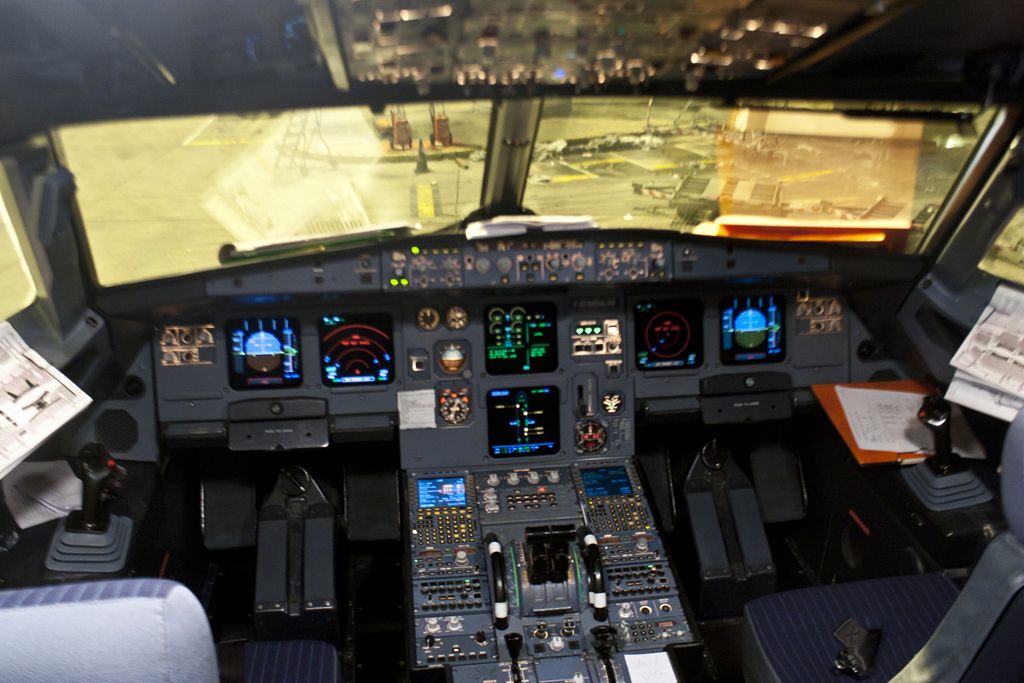
The FBW philosophy
Conventional aircraft give the pilot direct mechanical or hydraulic linkage to the control surfaces. The A320, like all subsequent Airbus aircraft, replaces that linkage with two flight control computers (ELACs and SECs) that interpret pilot inputs and command the surfaces. The pilot's sidestick is an electrical input device — there's no mechanical connection between sidestick and elevator.
This is the foundation that makes protections possible. Because the computer is between the pilot and the surfaces, the computer can refuse to allow inputs that would overstress the airframe, stall the wing, or roll the aircraft past 67°. The protections create an envelope inside which the aircraft cannot be broken — Airbus calls this "hard protections" as opposed to soft protections (Boeing 777-style) where the pilot can override with sufficient force.
The control laws define which protections are active. As you lose redundancy (sensors, computers, hydraulics), the system progressively reverts through Alternate → Direct → Mechanical, dropping protections at each stage. The goal: keep the aircraft flyable even when most of the system has failed.
Normal Law
Normal Law is the active law in nearly every flight you'll ever fly. Both ELAC and at least one SEC are operational, all ADIRUs are valid, hydraulics are normal. The aircraft has every protection available.
Pitch in Normal Law
The sidestick commands a load factor (g-demand), not a pitch attitude. Centred sidestick = 1g (level flight). Pull back = positive g. Push forward = less than 1g (slight nose-down). The C* law (read "C-star") blends pitch rate and load factor to provide handling that feels natural across the speed range.
When you release the sidestick, the aircraft maintains the current flight path — not the current pitch attitude. That's a key handling difference from older Airbus and Boeing types: trim is largely automatic, and you don't need to retrim during gentle manoeuvres.
Roll in Normal Law
The sidestick commands a roll rate, not bank angle. Full deflection = ~15°/sec roll rate. Centre the sidestick and the bank holds — up to 33°. Above 33°, the aircraft auto-rolls back to 33° if you release the stick, but you can hold higher banks (up to 67°) by holding the stick out.
Protections in Normal Law
- Load factor protection — +2.5g/-1g clean, +2.0g/0g flaps. The computer simply won't apply more.
- High AoA protection — at high angle of attack, the FBW transitions through "alpha prot" → "alpha max" → "alpha floor" (autothrust kicks in). Stalling is essentially impossible.
- Pitch attitude protection — limited to +30° nose up, -15° nose down.
- Bank angle protection — limited to 67°, auto-recovery to 33° when sidestick released.
- High speed protection — at high Mach or above VMO, the aircraft pitches up automatically to bleed speed.
Alternate Law
Alternate Law triggers when redundancy is lost: dual ADR failure, dual IR failure, certain ELAC/SEC combinations. The aircraft flies, but with reduced protection.
What's preserved
- Load factor protection — same as Normal Law. The aircraft still won't let you overstress it.
- Pitch handling — still C*-law-like. Sidestick commands g-demand.
- Direct roll — sidestick now commands roll rate proportional to deflection (no auto-trim, no bank protection).
What's lost
- High AoA protection — replaced by low-speed stability. At low speeds the aircraft develops a nose-down tendency that requires you to pull back. Stalling is now possible.
- Bank angle protection — gone. You can roll past 67°. Spiral dive is theoretically possible.
- Pitch attitude protection — gone.
- High speed protection — replaced by high-speed stability (similar nose-up tendency at VMO+).
Direct Law
Direct Law triggers on landing gear extension in Alternate Law, or when even more redundancy is lost. The sidestick now commands surface deflection directly — there's no envelope protection, no auto-trim, no g-limit. It handles like a conventional aircraft.
For most pilots, Direct Law feels surprisingly normal — the A320 was designed so that even in degraded mode, basic flying is intuitive. The key behavioural difference: you must trim manually. As you change configuration (gear, flaps), the pitch demand changes, and you need to trim it out with the trim wheel.
Landing in Direct Law: the aircraft is flyable but you'll feel more "alive." Flare gently, trim is sensitive, and any abrupt input goes straight to the surface. Land ASAP per the QRH.
Mechanical Backup
Mechanical Backup is what's left when both flight control computer paths fail. Pitch via the THS trim wheel (mechanical cables to the trimmable horizontal stabiliser). Yaw via the rudder pedals (direct cable connection to the rudder). NO roll control.
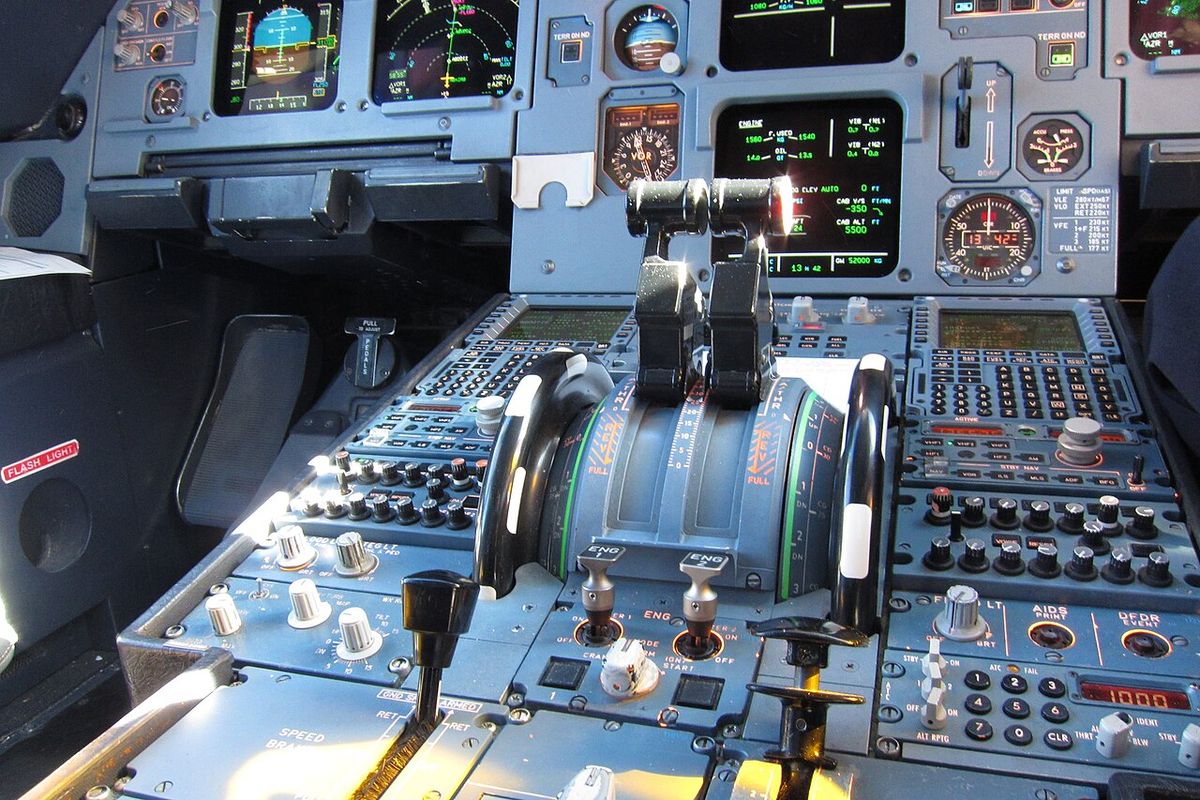
You can keep the aircraft upright with rudder and trim — the rudder provides limited roll via secondary effect of yaw — but precision is gone. The QRH calls for "Land ASAP at any suitable surface." Mechanical backup is a survivable but extreme condition.
What triggers each transition
| Failure | Result |
|---|---|
| Single ADR or single IR fault | Normal Law preserved |
| Dual ADR fault | Alternate Law (no protections) |
| Dual IR fault | Alternate Law (no protections) |
| Loss of one ELAC | Normal Law preserved (other ELAC + SECs cover) |
| Loss of both ELACs | Alternate Law (SECs only — degraded) |
| Loss of all engines | Alternate Law |
| Landing gear extended in Alternate | Direct Law |
| Specific computer combinations | Direct Law |
| Loss of all flight control computers | Mechanical Backup |
Alpha floor: autothrust protection
Alpha floor is an autothrust function, not a flight control law per se — but it's tested constantly. When AoA exceeds a threshold (varies with flap config, typically 9-15°), TOGA thrust is automatically commanded, regardless of A/THR engagement state. The aim: prevent stall by adding thrust before the aircraft reaches alpha max.
Alpha floor is active in Normal Law only, between liftoff and 100 ft RA on go-around. Once triggered, it locks TOGA into the autothrust ("TOGA LK" on the FMA) and persists until the pilot manually disconnects the autothrust (push the instinctive disconnect button on the thrust lever).
10 FBW questions you'll get
- Name the four control laws. Normal, Alternate, Direct, Mechanical Backup.
- What protections does Normal Law provide? Load factor, high AoA, pitch attitude, bank angle, high speed.
- What's preserved in Alternate Law? Load factor protection. (Sometimes pitch handling characteristics in protected variant.)
- What's lost in Alternate Law? High AoA (replaced by low-speed stability), bank angle protection, pitch attitude protection.
- What triggers Direct Law from Alternate? Landing gear extension. Or specific further failures.
- What handles in Mechanical Backup? Pitch (THS trim wheel) and yaw (rudder pedals). No roll control.
- What is alpha floor? Autothrust protection — auto-TOGA when AoA exceeds threshold. Normal Law only.
- What's the bank angle protection limit? 67° max with full sidestick. Auto-roll to 33° when sidestick released.
- What's "USE MAN PITCH TRIM" telling you? You're in Alternate Law without auto-trim; manage trim manually with the trim wheel.
- Can you stall in Alternate Law? Yes — high AoA protection is replaced by stability tendency, not active prevention.
Master FBW with the v1prep bank
Every law transition, every protection, every trigger condition — drilled with FCOM-sourced explanations.
Practice the full bank →