Top 30 ATPL Air Law Questions (with EASA-Sourced Answers)
LAST UPDATED: 24 MAY 2026
Air Law is widely considered the most boring of the 14 ATPL theory subjects — and the one most candidates underperform on simply because they don't drill it enough. These are 30 questions covering the topics that actually appear: ICAO Annexes, airspace classes, EU 965/2012, EASA flight crew licensing, registration, ATM, accident reporting. Sourced from the EASA syllabus and standard reference texts, with answers that explain the why, not just the rule.

ICAO Annexes & Conventions
1. What is the Chicago Convention? The 1944 international agreement that established ICAO and the framework for international civil aviation. 193 contracting states. Defines sovereignty over national airspace, lays out the freedoms of the air, and authorises ICAO to publish Standards and Recommended Practices (SARPs).
2. How many ICAO Annexes are there, and what do they cover? 19 annexes. The big ones to know: Annex 1 (Personnel Licensing), Annex 2 (Rules of the Air), Annex 6 (Operation of Aircraft), Annex 8 (Airworthiness), Annex 11 (ATS), Annex 13 (Accident Investigation), Annex 14 (Aerodromes), Annex 17 (Security), Annex 19 (Safety Management).
3. What are the freedoms of the air? Five "fundamental" freedoms (1-5) plus four additional (6-9) covering rights to overfly, technical stop, carry traffic, fifth-freedom (carrying traffic between two foreign states), and beyond. Most commercial flights operate under freedoms 1-4 between specific country pairs, governed by bilateral air services agreements.
4. What's the difference between SARPs and PANS? SARPs (Standards and Recommended Practices) are in the Annexes — Standards are mandatory, Recommended Practices are not. PANS (Procedures for Air Navigation Services) are detailed operational procedures, e.g. PANS-OPS for instrument flight procedure design.
5. Which annex covers Air Operator Certification? Annex 6 (Operation of Aircraft), Part I for international commercial air transport. EU 965/2012 is the EASA implementation that supersedes national rules in EU/EEA states.
6. What's the difference between ICAO and EASA? ICAO is the global UN body setting standards. EASA is the EU regulator that implements ICAO standards (and sometimes goes beyond) for EU/EEA member states. UK now has CAA post-Brexit, with EASA recognition agreement for some aspects.
Airspace classes & ATM
7. Name the seven ICAO airspace classes. Class A (IFR only, ATC clearance and separation), B (IFR + VFR with ATC clearance, separation between all), C (IFR + VFR, separation between IFR and IFR-VFR), D (IFR + VFR, separation between IFR-IFR only, traffic info between others), E (IFR + VFR, separation IFR-IFR), F (advisory service), G (uncontrolled).
8. What's the difference between Class A and Class C? Class A: IFR only, no VFR allowed, ATC separates all aircraft. Class C: both IFR and VFR allowed, ATC clearance required for both, ATC separates IFR-IFR and IFR-VFR but provides only traffic info between VFR-VFR.
9. What's RVSM and where does it apply? Reduced Vertical Separation Minimum: 1,000 ft vertical separation between FL290 and FL410 (reduced from 2,000 ft pre-2002). Aircraft must be RVSM-approved. Applies in most Class A airspace globally above FL290.
10. What is FUA? Flexible Use of Airspace — a European concept allowing civil-military airspace sharing dynamically rather than via fixed segregation. Implemented via three levels: ASM Level 1 (strategic, national), Level 2 (pre-tactical), Level 3 (tactical, real-time).
11. What's FIR vs UIR? Flight Information Region (FIR) — provides ATS up to a defined upper level. Upper Information Region (UIR) — covers higher airspace. Some areas combine both into a single FIR (e.g. London FIR includes upper); others split them (Maastricht Upper Area Control covers upper Europe).
12. What's the difference between an AIP, NOTAM, and AIC? AIP (Aeronautical Information Publication) — permanent reference for a state's aeronautical info. NOTAM — temporary information critical to operations (closures, hazards, navaid outages). AIC — Aeronautical Information Circular, less time-critical advisory information.
EASA Flight Crew Licensing
13. What's an ATPL(A) and what does it allow? Airline Transport Pilot Licence (Aeroplane). Highest professional pilot licence. Allows acting as PIC on multi-pilot, multi-engine commercial air transport aircraft. Requires 1,500 hrs total (with specific PIC, multi-engine, instrument requirements).
14. What's an MPL? Multi-Crew Pilot Licence. Ab-initio licence specifically for airline operations on multi-crew aircraft. Issued only with a type rating already attached. Approximately 240 hrs flight time (most as MCC training in the type) — much less hand-flying time than ATPL traditional route.
15. What recency requirements apply for line operations? Within preceding 90 days: 3 takeoffs and 3 landings on the type; or simulator training. For passenger ops: those 3 takeoffs/landings must be on the type, not just sim. Specific currency for low-vis operations, autoland, and ETOPS as per OM-A.
16. What's the medical certificate validity for an ATPL holder? Class 1 medical: 1 year for under 60, 6 months for 60+. Single-pilot commercial ops over 40 require 6-month renewal.
17. What's the maximum age limit? EASA: 65 years for multi-crew commercial ops. Above 60, the other crew member must be under 60. ICAO global standard same.
18. Can a UK CAA ATPL holder fly an EU-registered aircraft? Post-Brexit, requires the appropriate validation/conversion. The EU-UK aviation safety agreement preserves some rights but specific licence acceptance varies. Operators handle the licensing administration; pilots verify their licence is endorsed for the AOC they fly under.
EU 965/2012 Operations
19. What does CAT stand for in EASA regs? Commercial Air Transport. CAT.OP.MPA.* are the operational requirements for multi-pilot aircraft commercial operations.
20. What's the takeoff alternate requirement? A take-off alternate is required when the departure airport weather is below landing minima (i.e. you couldn't return immediately if you had to). Twin-engine: within 1 hour at OEI cruise speed in still air. 3-4 engines: within 2 hours.
21. What's the destination alternate fuel requirement? Fuel to fly from the destination missed approach point to the alternate, fly a holding pattern at 1,500 ft above the alternate for at least 5 minutes (or as per OM-A), and execute an approach and landing. Plus the standard contingency, final reserve, and taxi.
22. What's a "isolated aerodrome" in EU 965 terms? An aerodrome where no alternate is available within reasonable distance. Special fuel rules apply — typically requires fuel for 2 hours of holding at standard holding speed plus reserves.
23. What's the MEL? Minimum Equipment List — operator's approved list of equipment that may be inoperative for dispatch, with associated operational and maintenance limitations. Based on the manufacturer's MMEL (Master MEL) but customised per operator.
24. What's the difference between MEL and CDL? MEL covers equipment failures. CDL (Configuration Deviation List) covers physical missing/damaged components (panels, fairings) that don't affect airworthiness. CDL also has performance penalties.
Accidents & Reporting
25. What's the definition of an "accident" per ICAO Annex 13? An occurrence with injury, fatal injury, substantial damage, or aircraft missing/inaccessible — between the time someone boards with intent to fly and the time everyone has disembarked.
26. What's a "serious incident"? An occurrence involving circumstances that an accident nearly occurred — but didn't. Examples: near mid-air collision, runway incursion with collision avoidance, controlled flight into terrain narrowly avoided.
27. Who investigates accidents in the EU? EU 996/2010 governs accident investigation. Each state has a Safety Investigation Authority (e.g. UK AAIB, French BEA, German BFU). The state of occurrence leads, with participation rights for state of registry, operator, manufacturer, and design state.
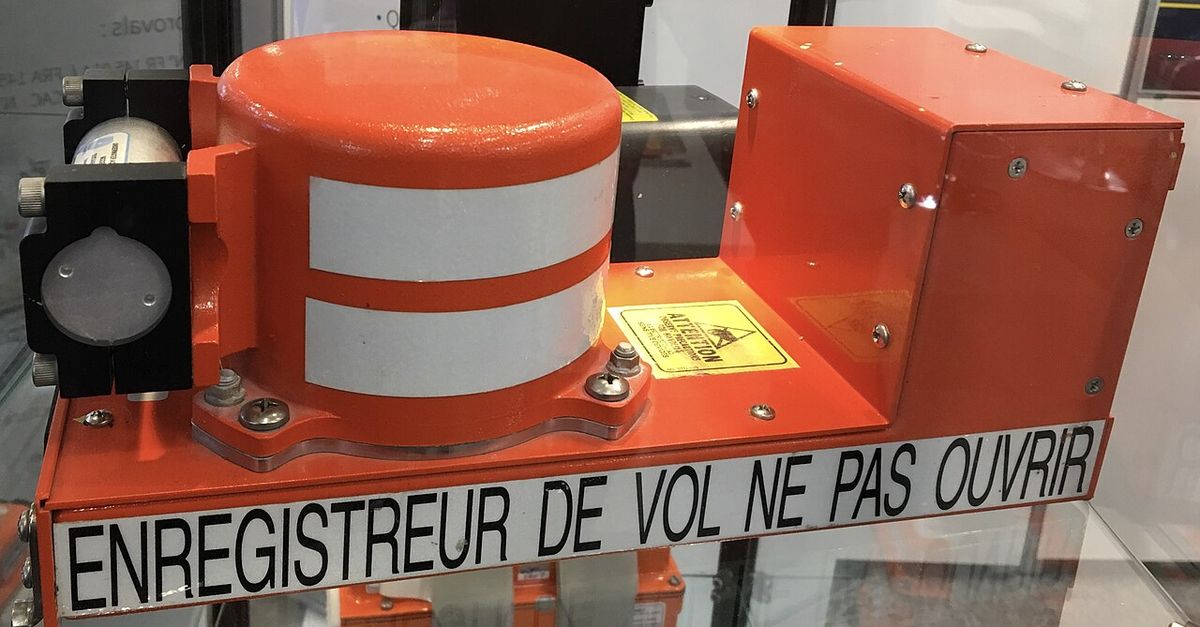
28. What's the purpose of an accident investigation per Annex 13? Solely to prevent future accidents — NOT to apportion blame or liability. Investigators have access to records that legal proceedings cannot touch (CVR, FDR, witness statements protected by "just culture" provisions).
29. What's "just culture"? An organisational culture where individuals are not punished for actions, omissions, or decisions that are commensurate with their experience and training — unless gross negligence is involved. Foundation of modern aviation safety reporting.
30. What's the time limit for filing a Mandatory Occurrence Report? Per EU 376/2014: within 72 hours of the occurrence. The reporter is protected (just culture). Anonymity is maintained outside the safety reporting system.
Drill all 527 ATPL Air Law questions
v1prep's Air Law bank covers every topic in the EASA syllabus with exam-style explanations.
Practice the full bank →