A320 FLEX Takeoff Explained: Limits, Procedure, Common Mistakes
LAST UPDATED: 28 SEP 2026
Almost every A320 takeoff you'll ever do is a FLEX takeoff. It's so routine that pilots often gloss over the why — and that's exactly where interviewers and check captains test you. This guide explains how FLEX actually works, the four limits you must know cold, what happens if you forget to enter FLEX TEMP, and the sim-check questions that catch candidates out.
What is FLEX takeoff?
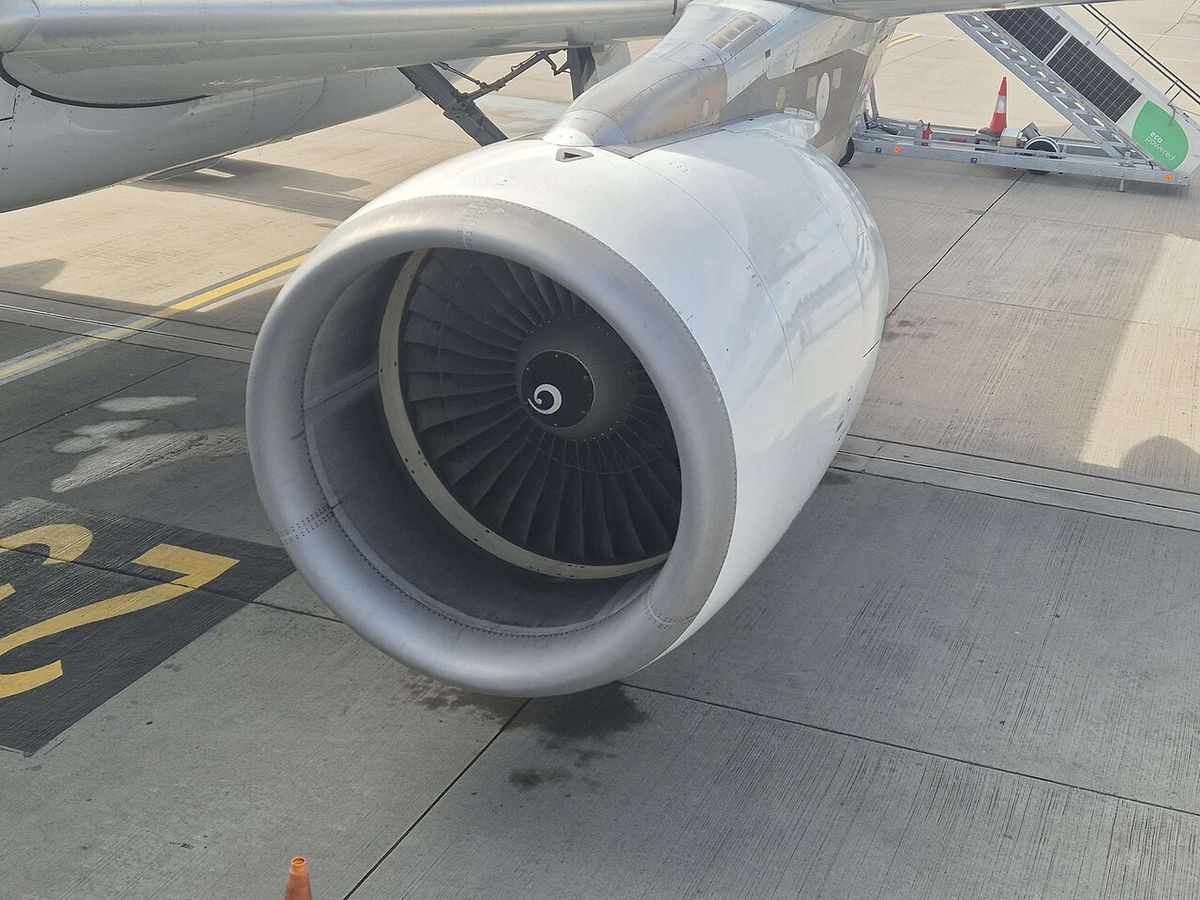
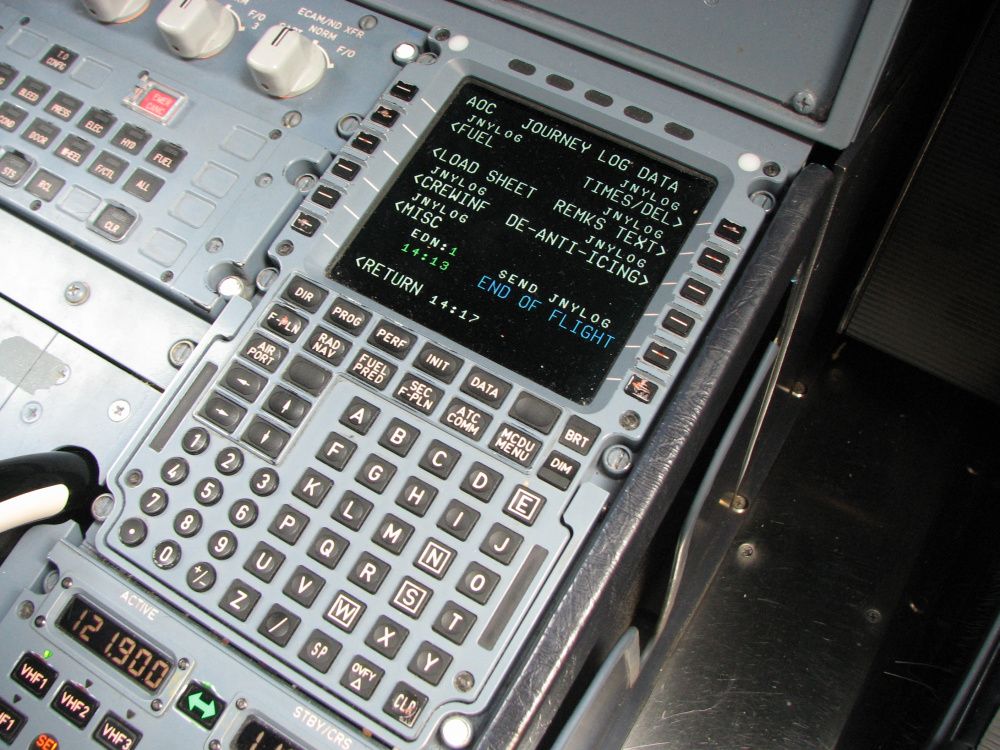
FLEX takeoff (Flexible Thrust takeoff, also called reduced-thrust takeoff) is a takeoff procedure where the FADEC produces less than the engine's full-rated thrust by being told to assume a hotter day than the actual conditions. The pilot enters a FLEX TEMP on the MCDU PERF TAKEOFF page, sets the thrust levers to the FLX/MCT detent, and the engines deliver the thrust appropriate for that hotter assumed temperature.
Concretely: if it's actually 15°C outside but you've calculated that you can safely take off with the thrust you'd get at 50°C, you enter FLEX TEMP 50°. The engines produce ~85-90% of TOGA thrust. You burn less fuel during takeoff, the engines wear less, and noise abatement requirements are easier to meet.
Why airlines use it
Airlines mandate FLEX takeoffs whenever performance allows because of three converging benefits:
- Engine wear. Hot section components (turbine blades, combustor liners) age dramatically with EGT. A 10% reduction in takeoff thrust extends time-on-wing significantly — a CFM56 or V2500 may go an extra 1,000+ cycles before shop visit, which translates to millions of euros over a fleet's life.
- Fuel. Lower thrust = lower fuel flow during takeoff and initial climb. The savings per takeoff are small, but multiplied by 600+ takeoffs per aircraft per year across a 320-aircraft fleet, it's substantial.
- Noise. Lower thrust = quieter. Many European airports (LCY, GVA, ZRH, FRA) have strict noise regulations and surcharges. FLEX takeoff helps stay within the noise budget.
For pilots, FLEX is also nicer to fly. The aircraft accelerates more gradually, rotation is less aggressive, and the climb-out feels more controlled. TOGA on a light A320 is borderline violent.
How it actually works
Engines are flat-rated. From a cold day up to a corner-point temperature (typically ISA + 15°C or so), they produce the same maximum thrust. Above that temperature, thrust declines as ambient heat reduces engine efficiency. The CFM56-5B and V2500 both have this characteristic — full thrust below about 30°C OAT, declining linearly thereafter.
The FLEX procedure exploits this curve. You ask the FADEC: "how much thrust would you give me if it were 50°C outside?" The FADEC reads the assumed temperature from the MCDU, computes the corresponding thrust along the flat-rate curve, and delivers it. From the engine's perspective, it has no way of knowing whether it's "really" 15°C or "really" 50°C — it just produces the thrust it was asked for.
The aircraft performance calculation, meanwhile, is done at actual OAT. Runway length, V-speeds, obstacle clearance — all calculated for the real day. Only the thrust uses the assumed temperature.
The 4 hard limits
Per Airbus FCOM DSC-70, four constraints govern when FLEX can be used and how much reduction is allowed:
| Limit | Value | Why |
|---|---|---|
| Minimum FLEX TEMP | Not below the flat-rating temperature (TREF) and not below the actual OAT | Below TREF the engine gives full rated thrust anyway. A minimum of OAT + 5°C is an operator convention, not an Airbus limit |
| Maximum FLEX TEMP | ≤ ISA + 53°C (≈ 68°C SL) | Aircraft certification limit; FADEC won't accept higher |
| Performance compliance | Aircraft must still meet ALL CS-25 requirements at actual conditions with the reduced thrust | Safety floor — runway, V-speeds, climb gradient, obstacle clearance must all be satisfied |
| Runway condition | Prohibited on contaminated runways (standing water, slush, snow, ice); permitted on a wet runway with wet-runway performance data | Maximum thrust may be needed for contaminated-runway performance and to handle reduced friction |
Some airline operators add stricter internal policy: minimum +10°C above OAT, prohibition with anti-ice ON below certain temperatures, mandatory TOGA with specific MEL items. Always check your company OM-A — the FCOM is the floor, not the ceiling.
5 common mistakes
1. Forgetting to enter FLEX TEMP
If you select the FLX/MCT thrust lever detent on the ground without a FLEX TEMP entered in the MCDU, the FADEC defaults to TOGA — full takeoff thrust. There is no warning. The engines just produce maximum thrust and the takeoff feels much more aggressive than expected. Always verify the FLEX TEMP is entered and the SRS-FLX mode shows on the FMA.
2. Changing FLEX TEMP during the takeoff roll
If you (or the F/O) change the FLEX TEMP value in the MCDU during the takeoff roll, the engines will continue producing thrust based on the original FLEX TEMP. The change has no effect mid-roll. The new value would only apply to the next takeoff.
3. Confusing FLEX TEMP with assumed altitude
A handful of legacy methods use assumed pressure altitude. Airbus uses assumed temperature. Don't mix them up — the MCDU PERF TAKEOFF page asks for FLEX TO TEMP, not "assumed altitude." If you've come from a Boeing fleet, this is one of the muscle-memory traps.
4. Using FLEX with anti-ice on at the limits
Wing or engine anti-ice consumes bleed air, which reduces available thrust. If you're already at the upper end of the FLEX envelope and you turn anti-ice on, you may compromise the performance margin the calculation was based on. Some operators prohibit FLEX with anti-ice ON below specific OATs. Re-check the calculation if conditions change.
5. Selecting FLX/MCT after V1
FLEX is a takeoff rating. After takeoff, the FLX/MCT detent keeps giving FLEX thrust; it provides MCT (Maximum Continuous Thrust) only once the levers have been moved to TOGA or CL and back. If you forget and leave the levers in FLX/MCT after takeoff, the FADEC keeps giving FLEX thrust, which burns more fuel than CL during normal climb. Move to CL detent at thrust reduction altitude.
FLEX vs derate
Both reduce takeoff thrust. They're different in legal and operational terms:
| Aspect | FLEX (assumed temperature) | Derate (TO-1, TO-2) |
|---|---|---|
| Method | Pilot enters higher assumed temp | Operator-certified lower thrust rating, selected by configuration |
| V-speeds | Calculated for actual conditions | Calculated as if the engines were the lower-rated version |
| Reversion to TOGA | Available at any time during takeoff (advance levers fully) | TOGA not permitted, except when an abnormal or emergency procedure calls for it |
| Use case | Most takeoffs — flexible thrust margin | Engine certification benefit; less common on A320 |
On the A320 family, FLEX is dominant. Derate (also called fixed derated thrust) is offered but rarely used in line operations. The two cannot be combined: FLEX is not permitted with a derated takeoff.
Engine failure at V1 with FLEX
This is the question every interviewer asks. Memorise the answer:
On engine failure recognised at or after V1, no thrust lever action is required. The FADEC on the operating engine keeps the FLEX rating: the takeoff performance was computed for an engine failure at V1 with FLEX thrust on the remaining engine. The rating changes to MCT (Maximum Continuous Thrust) only when the thrust lever is moved to TOGA or CL and then back to the FLX/MCT detent, normally at green dot when LVR MCT flashes on the FMA. TOGA remains available if more thrust is needed.
What you do is fly the aircraft: pitch to V2 (or current speed if greater), maintain runway track, gear up at positive rate, follow the engine-out SID. Don't touch the thrust levers — they're already doing the right thing. Don't go to TOGA unless windshear is suspected or terrain demands it. Moving levers around in a single-engine takeoff is how pilots end up with crossed-controls or unintended A/THR transitions.
FLEX questions you'll get
- What is FLEX takeoff and why is it used? — Reduced thrust via assumed temperature; engine wear, fuel, noise.
- What's the maximum FLEX TEMP? — ISA + 53°C, approximately 68°C at sea level.
- Must FLEX TEMP be at least 5°C above OAT? — Not as an Airbus limit. FLEX TEMP may not be below TREF or the actual OAT; OAT + 5°C is an operator convention, because a smaller reduction isn't worth the calculation overhead.
- Can you use FLEX on a wet runway? — Yes, with wet-runway performance data. FLEX is prohibited only on contaminated runways (standing water, slush, snow, ice).
- What happens if you select FLX/MCT without entering FLEX TEMP? — Engines produce TOGA thrust by default. No warning given.
- If you change FLEX TEMP during the takeoff roll, what happens? — Nothing. The original value is used for the takeoff. The change applies only to the next takeoff.
- Engine failure at V1 with FLEX — what do you do with the thrust levers? — Nothing. The live engine keeps FLEX thrust, which the takeoff performance already assumes; TOGA remains available if needed.
- What's the difference between FLEX and TOGA on the FMA? — In FLEX takeoff, the FMA shows SRS - FLX 50 (or whatever temperature you entered). In TOGA takeoff, the FMA shows SRS - TOGA.
- Can you combine FLEX with derate? — No. On the A320, FLEX is not permitted with a derated takeoff.
- Why does FLEX require performance to be calculated at actual OAT? — Because the runway, V-speeds, climb gradient, and obstacle clearance must all be valid for the real conditions; only the thrust uses the assumed value.
Test yourself on 11,700+ MCQs across A320, B737 and ATPL
FLEX is just one topic. The full v1prep bank covers every system, SOP, and ATPL theory subject pilots are tested on. FCOM-sourced explanations. No credit card required.
Practice the full bank →