Etihad Pilot Interview Prep: Stages, Sim, Questions (2026 Guide)
LAST UPDATED: 5 OCTOBER 2026
Etihad Airways, the national airline of the UAE, flies a mainly wide-body fleet of Boeing 787s and 777s and Airbus A350s and A380s from Abu Dhabi, with a sizeable A320 family (46 of 128 aircraft in February 2026) for regional and medium-haul flying, and it recruits for both. Its 2026 adverts are unusual in one way: each First Officer route offers two alternative sets of minimums, so a pilot who misses one may meet the other. This guide sets out every published route, the selection as candidates report it (Etihad does not publish it), and the questions particular to Etihad.
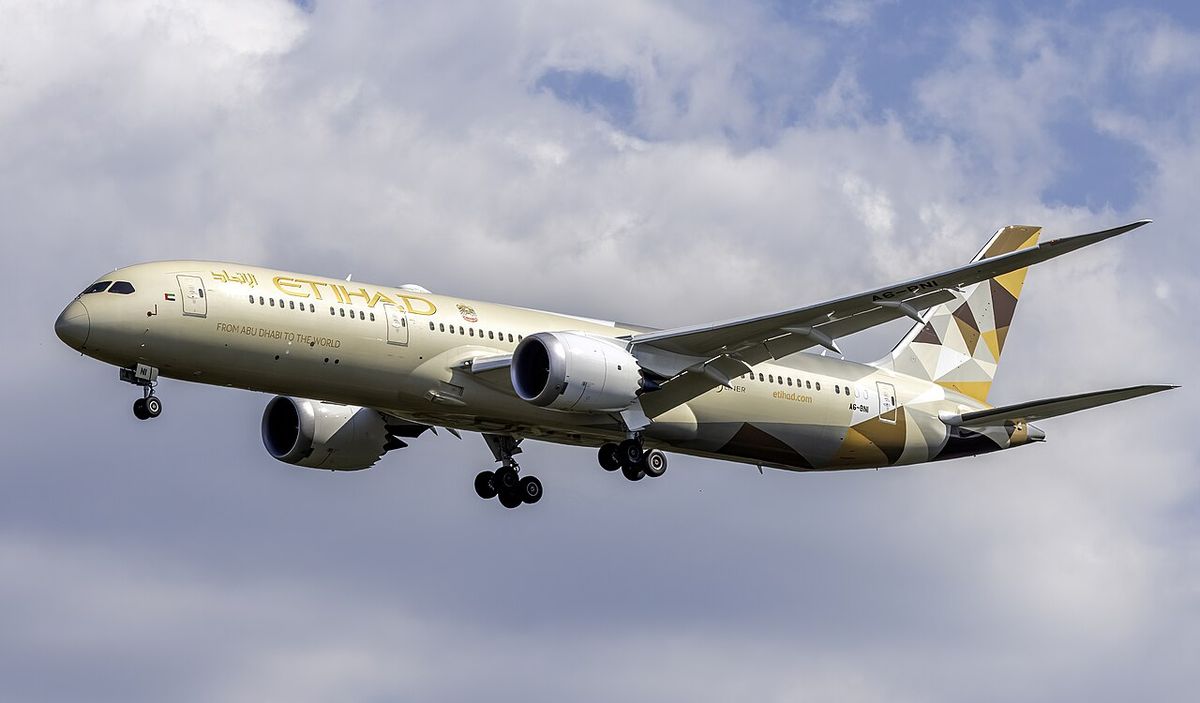
On 25 August 2026 Etihad’s own recruitment system listed five experienced-pilot vacancies released on 31 July 2026 (First Officer A320, First Officer Airbus Wide Body, Captain A320, Captain Airbus Wide Body and Captain A320 Instructor) and a UAE National Cadet Pilot Programme. Its pilot careers page advertised recruitment events in Helsinki (8 September), Stockholm (10 September), Munich (13 October), Frankfurt (15 October), Athens and online (20 October) and Hong Kong (28 October). Check the airline pilot jobs board for the current position.
About Etihad
Etihad, founded in 2003 and wholly owned by ADQ since October 2022, flew to 110 destinations in 2025 from a single hub at Zayed International Airport (AUH), Abu Dhabi, and posted a record profit after tax of AED 2.6 billion, its fourth consecutive profitable year. At the end of February 2026 the fleet was 128 aircraft: 48 787-9s and 787-10s, 10 A350-1000s, 9 777-300ERs, 7 A380s (back in service since July 2023), 2 A330s and 6 777 freighters, alongside 20 A320s, 15 A321s and 11 A321LRs. The target is about 200 aircraft by 2030, with 787s and 777Xs ordered in May 2025 and A330-900s, A350-1000s and A350Fs in November 2025.
2026 tested that plan. On 28 February 2026, as the conflict involving Iran closed airspace across the region, Etihad suspended all flights at Abu Dhabi; a limited schedule restarted from 6 March, the UAE lifted its remaining restrictions in early May, and in early June Etihad expected to exceed its pre-conflict capacity by mid-June. In September 2026 the chief executive said the airline expected roughly to break even in 2026, but that hiring continues: more than 600 people, including pilots and cabin crew, were hired between March and May, with about 600 more planned for the second half.
Every Etihad pilot is based in Abu Dhabi; there are no outstations. The adverts describe relocation support (a shipping allowance, settling-in help and family travel benefits) and a tax-free package set by your individual contract under UAE law. The package is real, but reciting it is a weak answer to “why Etihad?”
Entry routes: Criteria A or B
| Route | Criteria A | Criteria B |
|---|---|---|
| First Officer, A320 family | 2,000 h total, 1,500 h multi-crew glass cockpit, 500 h on type | 1,500 h total, 1,000 h on any A320 family aircraft |
| First Officer, Airbus or Boeing wide-body | 2,500 h total, 1,500 h multi-crew glass cockpit, 1,000 h on an Airbus fly-by-wire or Boeing wide-body | 3,000 h total, 2,000 h on an Airbus fly-by-wire or Boeing wide-body |
| Captain, A320 family | 5,500 h total, 2,500 h in command on multi-crew glass cockpit aircraft, 1,500 h in command on the A320 family; hours flown with in-flight relief count at 75% | |
| Captain, wide-body | 7,000 h total; 2,500 h in command on multi-crew jets, 2,000 of them on wide-bodies above 140 t, and 1,500 h in command on an Airbus fly-by-wire or Boeing wide-body | 7,000 h total; 3,000 h in command on multi-crew jets, 2,500 of them on wide-bodies above 140 t |
| Captain A320, Instructor | As for the A320 Captain, plus 3 years as an A320 TRI or TRE, 1,000 h of simulator training given and 1,000 h of line training | |
| UAE National Cadet Pilot Programme | UAE nationals aged 18 to 29, at least 160 cm tall, a high school diploma at 80% or more with maths and physics, IELTS 5.5 or EmSAT English 1250; a two-year funded programme | |
A candidate needs only one of the two criteria plus the general eligibility list: an unrestricted ICAO ATPL (or, for First Officers, a frozen ATPL with ATPL exam results and an integrated course completion certificate), an unrestricted Class 1, ICAO English Level 4 or better, the relevant type flown within the last 12 months, and a type rating still valid for at least two months at joining. Our study-guide research also found an undated listing for non-type-rated 777 and 787 First Officers (1,500 h multi-crew glass cockpit or high-performance military jet, 500 h on Boeing, current on any Boeing); it was not among the vacancies open on 25 August 2026.
What sets Etihad apart for a pilot
- Hard age limits. First Officers must not have reached 50 on the day of joining, Captains 59. The limit applies at joining, not at application, so count forward from the likely start date.
- Lower minimums than the aggregators say. Prep sites still quote 2,500 hours for the A320 First Officer route; the July 2026 advert asks for 2,000, or 1,500 under Criteria B.
- Narrow-body and wide-body under one roof. The A320 family is a real recruiting fleet, not a footnote: Etihad has held A320 First Officer assessment events in Rome, Milan and London Gatwick, and the A321LR, first delivered in July 2025, flies long, thin routes on a narrow-body.
- Events you can attend before you qualify. Etihad says candidates who do not yet meet every criterion are welcome at its recruitment events to meet the team and register interest.
- Its own training organisation. Etihad Aviation Training in Abu Dhabi describes itself as the first UAE organisation approved as an EASA training organisation, with simulators for the A320, A330/A340, A350, A380, 777-300ER and 787-9.
- A published fraud warning. Etihad will never ask for payment, bank details or personal information during recruitment. Anyone charging a fee for an Etihad interview is not Etihad.
The selection, as candidates report it
Etihad’s former recruitment-process page now returns an error, and the only assessment wording in its adverts (“interviews are conducted face-to-face or via video/telephone before any formal offer”) sits inside its fraud warning. Everything below comes from candidate reports on pilot forums in 2025 and from preparation providers, and order and format vary by campaign.
| Stage | Format (commonly reported) |
|---|---|
| 1. Online application | Careers portal: CV, logbook summary and licence details against the criteria |
| 2. Video interview and online aptitude | Video: self-introduction, HR questions and some technical questions. Aptitude: COMPASS modules reported in 2025 (memory, task management, aircraft orientation, flight-director coordination); some providers name Aon (cut-e) |
| 3. Assessment days in Abu Dhabi | A timed technical written exam (pass/fail), a group exercise, a panel interview and personality questionnaires |
| 4. Simulator assessment | Part of the assessment days; the device reportedly follows your fleet stream (A320 or 787) |
| After an offer | GCAA Class 1 medical, background checks, licence conversion, induction and type training |
What is consistent across reports is that the on-site assessment is condensed into consecutive days, so arrive a day early if you can: a jet-lagged candidate flies the simulator badly. Prepare a two-minute career summary, because the video interview reportedly opens with it.
The simulator session
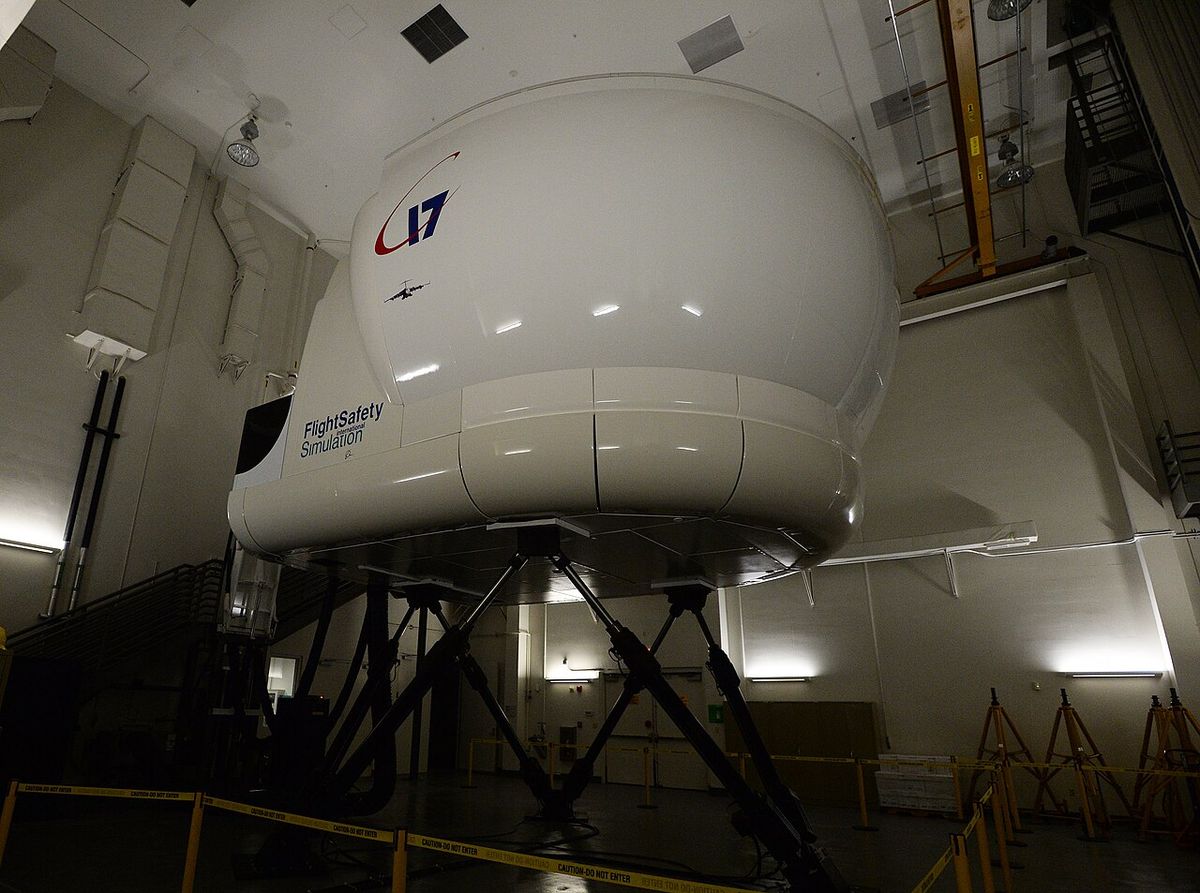
Preparation providers report that the device follows your fleet stream: an A320 for narrow-body, a 787 for Boeing wide-body, so confirm it in your invitation. The reported format is a briefing and then a session in which you fly as both pilot flying and pilot monitoring, with failures and abnormal situations one after another, described by candidates as intense but nothing beyond a normal recurrent check.
- In the brief: if you are non-rated, ask for the pitch and thrust settings, speeds and configurations, then fly those numbers.
- As pilot monitoring: your monitoring is scored as much as your flying, so call deviations, run the checklist at the pace the other pilot can follow, and offer options rather than commands.
- Under a stream of failures: prioritise out loud. Fly, navigate, communicate, then manage, and say which one you are doing.
Group discussion and panel interview
Candidates describe a group discussion observed by HR and fleet management, scoring logic, communication and leadership, and a panel interview mixing technical and HR questions in STAR format. In the group, make sure everyone understands the task, keep time, summarise and bring quieter members in; the candidate who talks most rarely scores best.
Questions particular to Etihad
- Why Etihad? The turnaround from heavy losses to four profitable years, the growth to about 200 aircraft by 2030, the mixed narrow-body and wide-body fleet, and how it kept hiring through 2026. If your answer would work for another Gulf carrier, it is not finished.
- Flights at Abu Dhabi were suspended this year. How do you feel about basing yourself here? Answer calmly and factually, show you followed events, and offer no political opinion.
- Which fleet do you want, and would you accept another? Say what you applied for and why, then that you would take the fleet offered.
- You fly short-haul today. How will you cope with long-haul? Night departures, time zones, augmented crews and in-flight rest, and what you will change in how you sleep.
- Have you applied to other airlines in the Gulf? Answer honestly, then give a reason only Etihad can satisfy.
The written exam and technical questions
Candidates and preparation providers report a timed multiple-choice exam at the start of the assessment days, treated as pass/fail: ATPL-type questions for Boeing applicants, and type-technical plus ATPL questions for Airbus applicants (2025 reports; one provider’s figure of about 100 questions is unconfirmed). If you fly the A320, your Airbus systems knowledge is part of the core of this exam: our top 50 A320 interview questions cover the classics.
Examples in the style candidates report
- What is the ITCZ, and why does it matter on routes from Abu Dhabi towards South-East Asia and Australia? (drill this with our ATPL meteorology questions)
- What is the difference between a derated take-off and an assumed-temperature take-off, and when would you use each?
- The 787 has almost no bleed air system: what powers its pressurisation and wing anti-ice instead?
- On an A321LR sector, what changes in your fuel planning compared with a short A320 flight?
Topics to refresh
- Your current type’s systems, which are reported for Airbus applicants
- Performance in high temperatures, and derate and flex logic
- Tropical meteorology: the ITCZ, convective weather and sandstorms
- EDTO, and long-range fuel planning with decision points
- RVSM, contingency procedures and air law (see our ATPL air law questions)
Where Etihad candidates go wrong
- Totalling the logbook wrongly. Count hours by the advert’s categories: multi-crew glass cockpit, on type, in command, and, for A320 Captains, in-flight relief at 75%.
- Missing the other criterion. A pilot below the Criteria A total may still meet Criteria B. Read both before deciding you are ineligible.
- An expiring rating. The type rating must still be valid for two months at joining, and the type flown within the last 12 months.
- Rusty ATPL theory. The reported written exam is pass/fail and comes first.
- A recycled Gulf-carrier answer. Interviewers can tell when Abu Dhabi is a backup plan.
- Paying anyone. Etihad states it never asks for payment during recruitment.
Etihad pilot recruitment: common questions
What is the Etihad pilot interview process?
Etihad does not publish a syllabus. Candidates and preparation providers report an online application; a video interview with a self-introduction, HR questions and some technical questions; online aptitude tests (COMPASS modules reported in 2025, though some providers name Aon cut-e); then consecutive assessment days in Abu Dhabi with a timed technical written exam, a simulator session, a group exercise, a panel interview and personality questionnaires. Order and format vary by campaign.
What are the minimum hours to fly for Etihad?
Each First Officer route has two alternatives. A320 First Officer: 2,000 hours total with 1,500 multi-crew glass cockpit and 500 on type, or 1,500 hours total with 1,000 on the A320 family. Wide-body First Officer: 2,500 hours with 1,000 on an Airbus fly-by-wire or Boeing wide-body, or 3,000 hours with 2,000 on one. Captains need 5,500 hours (A320) or 7,000 hours (wide-body). These are the figures in the vacancies released on 31 July 2026.
Is there an age limit to join Etihad as a pilot?
Yes. The 2026 adverts say First Officers must not have reached 50 on the day of joining and Captains must not have reached 59. The UAE National Cadet Pilot Programme takes applicants aged 18 to 29.
What aircraft is the Etihad sim assessment on?
Preparation providers report that the device follows your fleet stream: an A320 for narrow-body applicants and a 787 for Boeing wide-body applicants, so confirm it in your invitation. The reported format is a briefing, then a session flying as both pilot flying and pilot monitoring, with failures and abnormal situations one after another but nothing beyond a normal recurrent check.
Does Etihad hire A320 pilots?
Yes. At the end of February 2026 Etihad had 46 A320-family aircraft in service (20 A320s, 15 A321s and 11 A321LRs) out of 128, and on 25 August 2026 it had A320 First Officer, A320 Captain and A320 Captain Instructor vacancies open. Etihad has also held A320 First Officer assessment events in Rome, Milan and London Gatwick.
Drill ATPL theory, interview & CRM
v1prep covers 9,900+ questions across ATPL theory, interview, CRM, and A320 systems banks. Etihad's written exam tests ATPL fundamentals and, for Airbus applicants, your type. Make yours bulletproof.
Practice the full bank →