easyJet Pilot Interview Prep: Process, Sim, Questions (2026 Guide)
LAST UPDATED: 5 OCTOBER 2026
easyJet is one of the most active pilot recruiters in European aviation: 356 A320-family aircraft at 30 September 2025, bases from the UK and Switzerland to Portugal and Morocco, and a stated drive (2024) to recruit more than 1,000 new pilots by 2028. It publishes more about its selection than most airlines: five stages, minimums for each route, where the assessment centres are, and how long to wait before reapplying. This guide puts all of that in one place, with what candidates report about the simulator and the interview.
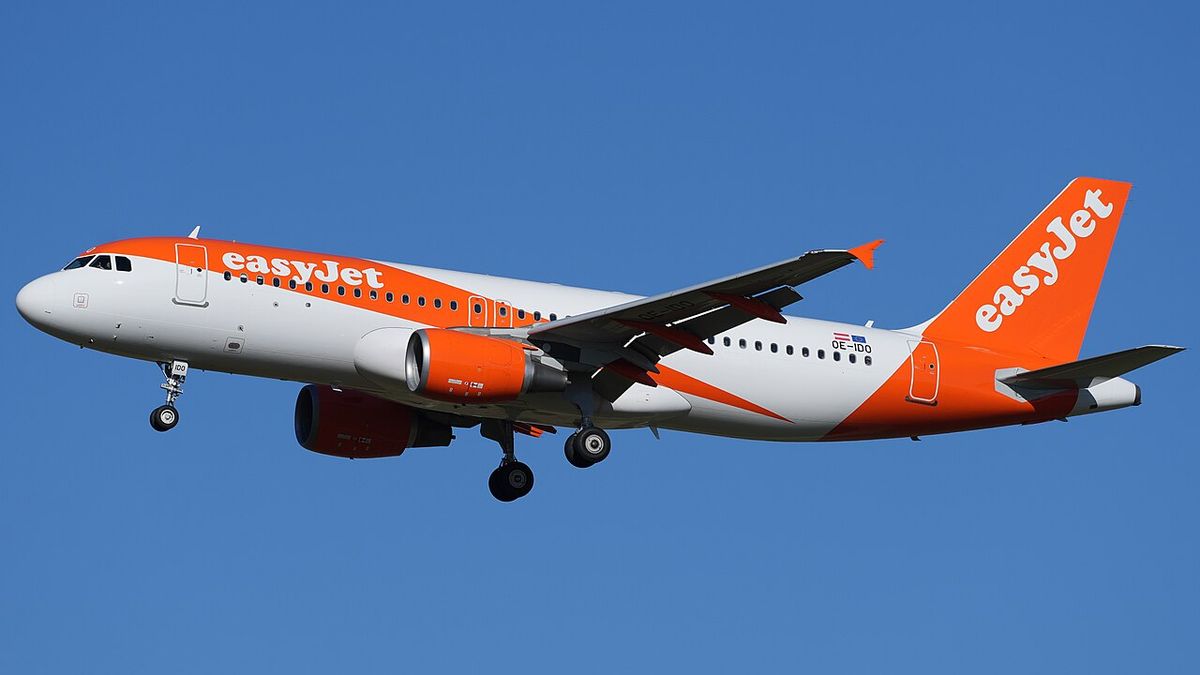
On 25 August 2026 easyJet’s own vacancy system carried Captain roles only: type-rated and non-type-rated Captains for London Gatwick (both titled “2027”) and a two-year fixed-term A320 Captain role in Marrakesh contracted through Storm Global. No direct-entry co-pilot or cadet vacancy was open on easyJet’s system. Check the airline pilot jobs board for the current position.
- About easyJet’s pilot operation
- Entry routes and minimums
- What sets easyJet apart for an applicant
- The five published stages
- Online application and review
- Online tests
- Group exercise and competency interview
- The simulator assessment
- Technical questions
- Where easyJet applicants go wrong
- Common questions
About easyJet’s pilot operation
easyJet is an all-A320-family operator. At 30 September 2025 the fleet was 82 A319s, 180 A320ceos, 75 A320neos and 19 A321neos (356 aircraft; 359 after the 100th neo-family delivery in June 2026). A 290-aircraft firm orderbook runs to 2034, and in May 2026 the airline brought forward the exit of the last A319 to the end of September 2029. One type rating covers the fleet, so you may fly a 156-seat A319 in the morning and a 235-seat A321neo in the afternoon (seat counts from published seat maps), with different speeds, weights and handling.
The group runs three airlines, each with its own air operator certificate: easyJet UK, easyJet Europe (an Austrian certificate, based in Vienna) and easyJet Switzerland. Public base lists for 2026 show eleven UK bases led by Gatwick, Geneva and Basel in Switzerland, EU bases in France, Italy, Germany, the Netherlands, Spain and Portugal, and Marrakech, the first base in Africa, from April 2026. The certificate your base sits under decides your employer, your contract and your licensing authority, which is why the live Gatwick vacancies ask for a UK CAA licence and the Marrakesh one for an EASA licence that you convert to Austro Control before the conversion course.
The FY2025 results describe about 1,200 routes to more than 160 airports in 38 countries: short-haul, point-to-point and return-to-base, with fast turnarounds and several sectors a day. Expect questions on turnaround discipline, fatigue on high-sector days and punctuality against safety, not long-haul topics.
Entry routes and minimums
| Route | Published minimum | Notes |
|---|---|---|
| Cadet: Generation easyJet (MPL, with CAE) or FlightCrew Futures (integrated ATPL with the A320 rating, with Skyborne) | No flying experience; at least 18 at the start of the course, no upper age limit | GCSE grades 4 to 9 in English, maths and science plus two other subjects; able to hold an EASA or CAA Class 1; ICAO Level 4; the right to live and work in the UK, EU or Switzerland |
| Co-pilot, type-rated | At least 500 h on the A320 | Recent adverts also asked for A320 passenger flying in the last 12 months; no live vacancy on 25 August 2026 |
| Co-pilot, non-type-rated | At least 1,000 h, including 500 h on aircraft above 10 t | You join as Second Officer, First Officer or Senior First Officer depending on experience; earlier adverts made the type rating self-funded |
| UK low-hours Second Officer (as relayed by job boards) | UK CAA CPL and IR, A-UPRT and an APS MCC course | No more than 5 ATPL exam resits and 20 h of remedial flight training; self-funded A320 type rating |
| Captain, type-rated, Gatwick | 4,000 h total, 500 h on the A320 family, 500 h in command on jets above 30 t | UK CAA licence with a valid A320 licence proficiency check at induction |
| Captain, non-type-rated, Gatwick | 4,000 h total, 1,000 h in command on jets above 30 t | Commercial passenger Captain on such jets within the last 12 months; A320 rating at the start of employment, with “funding options” |
| Captain, Marrakesh (via Storm Global) | 4,000 h total, 1,000 h in command on the A320 family | Two-year fixed-term engagement, not an easyJet contract; EASA licence; assessment at London Gatwick |
Read the live vacancy, not only the careers-page panel: easyJet publishes both, and they disagree. The panel asks type-rated Captains for 1,000 hours in command on the A320, while the live Gatwick vacancy asks for 500 hours on the A320 family and 500 hours in command on jets above 30 tonnes, so a Captain who rules themselves out on the panel figure may meet the vacancy.
What sets easyJet apart for an applicant
- One base at a time. You can apply for only one base; other base preferences can be raised at the assessment centre. If a base is not listed as a vacancy, easyJet says it is not recruiting there.
- A complete file or no review. The vacancies ask for your passport photo page, a CV with a full breakdown of flying hours, licence, Class 1 medical and the last three pages of your logbook, and say the application will not be reviewed until all are submitted.
- You pay your own way to the assessment. easyJet’s FAQ says that, as a low-cost airline, it does not offer any travel or accommodation costs.
- Waiting periods are published, and inconsistent. The careers FAQ says 12 months after an unsuccessful simulator or non-technical assessment, and 6 months for a cadet who fails the non-technical assessment; the applicant privacy agreement on easyJet’s vacancy system says two years for pilot roles. Plan on the longer one.
- Cadet courses are “tagged”. easyJet says they lead directly into a co-pilot role on completion, and cadet assessment runs online on Microsoft Teams. Graduates of partner schools such as CAE, Skyborne, Acron, FTEJerez, Leading Edge and Urbe Aero may be offered places “should we have additional vacancies”, which easyJet states are not guaranteed.
The five published stages
| Stage | Published by easyJet | Reported by candidates |
|---|---|---|
| 1. Online application | Choose a vacancy, check the minimums, apply with details, documents and a series of questions | |
| 2. Online test | Aptitude tests in verbal, numerical and spatial reasoning, plus a personality questionnaire required under EASA rules | Aon (formerly cut-e) in most accounts; some mention Symbiotics ADAPT |
| 3. Application review | Checks that you meet the requirements and answered the questions fully, then an invitation to the next assessment centre | |
| 4. Non-technical assessment | Virtually or at a simulator centre: a group exercise, a company presentation and a competency-based interview | About an hour of motivational and competency questions |
| 5. Technical assessment | A simulator assessment for direct-entry Captains and co-pilots, with a full briefing beforehand | An A320 flown on raw data with no autopilot or autothrust |
easyJet’s FAQ places the assessment centres for direct-entry co-pilots and Captains at its training centres at London Gatwick or Milan, and the live Gatwick Captain vacancies describe a single assessment centre at a simulator centre combining the non-technical and technical parts.
Online application and review
The review stage checks two things: that you meet the minimums and that you answered every question fully. Two areas decide most applications.
- Hours laid out the way the vacancy counts them. Total, multi-crew, jet, A320 family, time on aircraft above 10 or 30 tonnes, time in command, and the date of your last A320 sector. A reviewer who has to calculate your eligibility will not do it generously.
- A reason for the base. You can apply for only one, so explain why that one: where you live, family, a long-term plan. A reason that shows commitment beats convenience; if you are genuinely flexible, say so and mean it.
Online tests
easyJet publishes the content: verbal, numerical and spatial reasoning, and a personality questionnaire that it says is required to comply with EASA regulations. Preparation providers and candidates report that the tests come from Aon (formerly cut-e), and some accounts mention Symbiotics ADAPT; check which one your invitation names, because the practice material differs. Cadets take a separate technical selection; for Generation easyJet, CAE’s ADAPT day covers hand-eye coordination, motor skills, spatial awareness, technical reasoning and a dynamic multi-task test.
Short daily practice for two to three weeks beats cramming, and mental arithmetic under time pressure is the most improvable skill. In the questionnaire, answer consistently and honestly: a profile built to look like an ideal pilot is flagged, which is worse than an average one.
Group exercise and competency interview
The group exercise is typically a prioritisation or planning task against the clock. Assessors watch how you contribute, by listening, building on other people’s ideas, bringing in a quieter member and keeping an eye on time, not whether your group reaches the best answer. Candidates describe the interview as about an hour of motivational and competency questions, answered in situation, task, action and result.
Read the “Life at easyJet” pages before you go: the airline describes safety as its number one priority and everyone’s responsibility, and calls its culture the “Orange Spirit”. Tell stories that show the behaviour rather than reciting the words.
Questions particular to easyJet
- Why easyJet, why this base, and what if we offer you another?
- How do you manage fatigue across a block of early starts and multi-sector days?
- Tell me about a time you were under time pressure on a turnaround. How did you keep standards?
- The captain wants to continue an approach below your stable approach criteria on the last sector of a long day. What do you do?
- Describe a time you did the right thing for a customer, and a mistake you reported.
The simulator assessment
easyJet says the purpose of the simulator assessment is to see your technical standard of flying, and that you get a full briefing to prepare. Candidate reports on pilot forums describe an A320 flown on raw data with no autopilot or autothrust, with time to prepare the profile and no separate technical oral. Reported profiles combine a manual departure and level-off, turns, climbs and descents, an engine failure with single-engine handling, a raw-data ILS or non-precision approach, and a go-around.
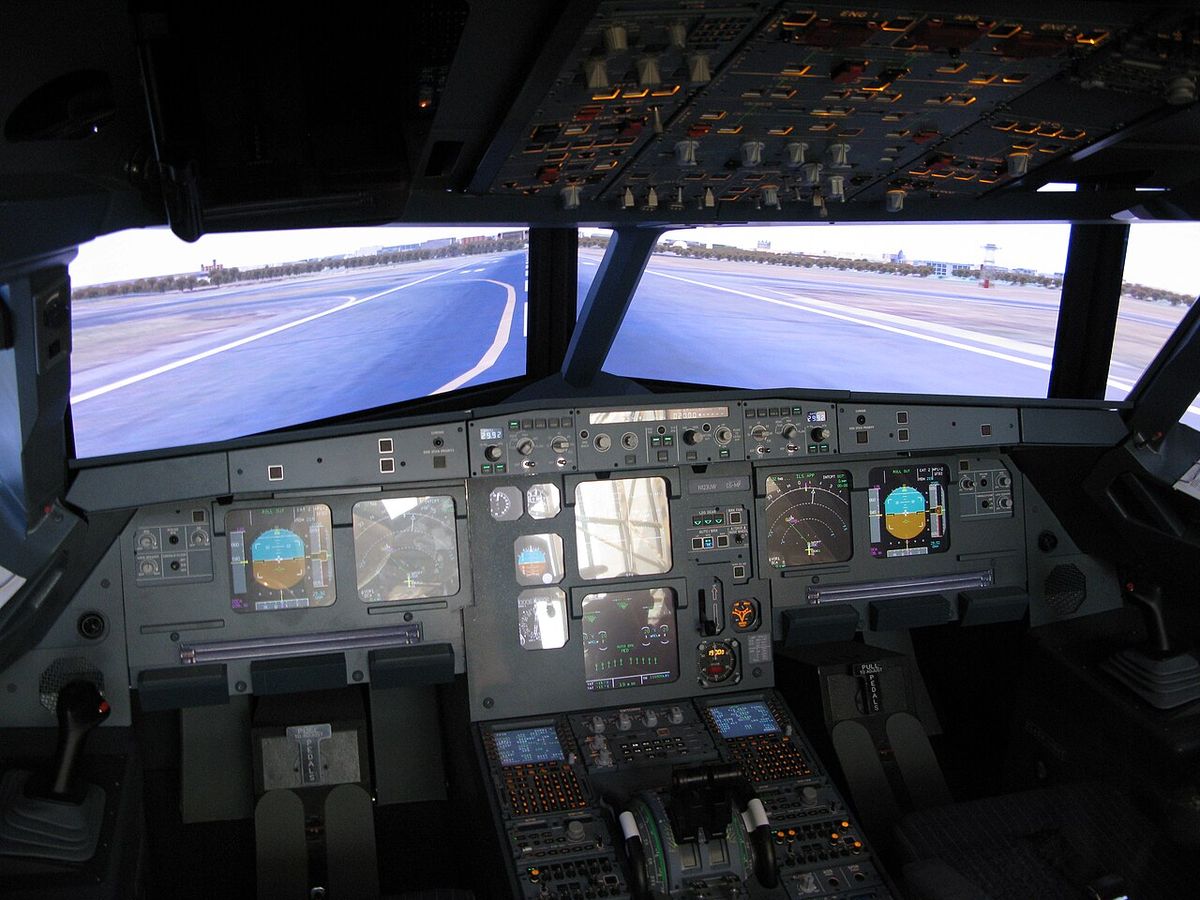
With no automation, the session exposes three things: pitch and thrust coordination with trim, a scan that holds up without a flight director, and whether you brief and call out loud as if the assessor were your other pilot. If you can reach a school simulator or FNPT II, drill a raw-data climb to a level-off, a single-engine ILS and a go-around until pitch, power and trim are automatic.
Technical questions
Candidate reports describe the interview as competency-based, with no separate technical oral at the simulator. Type-rated candidates should still know their A320 systems well enough to use them in scenario answers, and non-type-rated candidates their ATPL theory. Classics worth having ready:
- The three flight control laws and what moves you between them (see our flight control laws guide)
- Green, Blue and Yellow hydraulics and what the PTU does
- FLEX take-off and its limits, which matter on a fleet that runs from A319 to A321neo (see our FLEX take-off guide)
- Engine failure at V1: the first 400 feet (see our engine failure at V1 guide)
- A double bleed fault in the cruise: what happens and what you do
More in our top 50 A320 interview questions.
Where easyJet applicants go wrong
- The wrong licence for the certificate. The Gatwick Captain vacancies ask for a UK CAA licence; an EASA-only licence does not meet them.
- An incomplete file. Missing logbook pages or medical copies stop the review altogether.
- Ruling yourself out on the panel figures. The live vacancy can ask for less, or for something different, than the careers-page panel.
- Raw-data handling. Over-controlling, poor trim and pitch and thrust out of step show up immediately without automation.
- A base chosen for convenience. With one base per application, an unconvincing reason is costly.
- Arriving exhausted. Travel is at your own cost, so candidates cut it fine; arrive the day before Gatwick or Milan and rest.
- Reapplying on the wrong date. Check the waiting period that applies to you; easyJet publishes 12 months in one place and two years in another.
easyJet pilot recruitment: common questions
What is the easyJet pilot interview process?
easyJet publishes five stages: an online application with documents; online tests in verbal, numerical and spatial reasoning with a personality questionnaire; an application review; a non-technical assessment, virtually or at a simulator centre, with a group exercise, a company presentation and a competency-based interview; and a simulator assessment for direct-entry co-pilots and Captains. Its FAQ places the assessment centres at its training centres at London Gatwick or Milan.
What aircraft is the easyJet sim assessment on?
easyJet says the purpose is to see your technical standard of flying and that you get a full briefing to prepare. Candidate reports describe an A320 simulator flown on raw data with no autopilot or autothrust, with a manual departure and level-off, turns, an engine failure with single-engine handling, a raw-data ILS or non-precision approach, and a go-around.
Does easyJet pay for the type rating?
Not as a rule. Earlier non-type-rated co-pilot adverts and the UK low-hours Second Officer route made the A320 type rating self-funded. For non-type-rated Captains, easyJet says the rating is done with an approved training organisation at the start of employment and that funding options will be available, which is not the same as free. For cadets, easyJet says the FlightCrew Futures course includes the A320 type rating.
How long do I have to wait to reapply to easyJet?
easyJet’s careers FAQ says 12 months after an unsuccessful simulator or non-technical assessment, and 6 months for a cadet who is unsuccessful at the non-technical assessment. The applicant privacy agreement on its vacancy system says two years for pilot roles, so ask the recruitment team and plan on the longer period.
Can I choose my base at easyJet?
You choose it when you apply, because you can apply for only one base at a time; other preferences can be raised at the assessment centre. The base decides which of easyJet’s three airlines employs you, and so your contract and licence authority. easyJet says that if a base is not listed as a vacancy, it is not recruiting there.
Drill the technical bank before your sim
The sim assessor wants smooth handling — and your scenario answers need real systems knowledge. v1prep covers 9,500+ A320 and ATPL questions sourced from the FCOM and the EASA syllabus. Use the bank to drill until your answers are reflexive.
Practice the full bank →