Upset Prevention and Recovery
Upset prevention and recovery covers the knowledge, skills and procedures pilots use to avoid unintended excursions from the normal flight envelope and, if an upset occurs, to return the aeroplane to safe, controlled flight before it becomes a loss of control.
Upset prevention and recovery is the discipline of keeping an aeroplane inside its normal flight envelope and, when it leaves that envelope unintentionally, bringing it back to safe flight. It combines energy and flight path awareness, correct handling of automation, and a small set of recovery actions that must be performed correctly under stress, often after a moment of surprise.
The subject exists because loss of control in-flight (LOC-I) kills more people in commercial aviation than any other accident category. Regulators responded after accidents such as Colgan Air 3407 and Air France 447 by making Upset Prevention and Recovery Training (UPRT) mandatory for airline pilots, and by standardising the recovery techniques taught across the industry.
Loss of control in flight
LOC-I describes accidents in which the crew could not keep the aircraft on its intended flight path and the deviation became unrecoverable. IATA's analyses show that LOC-I events are rare but exceptionally lethal: about nine in ten involve fatalities, and the category accounts for more fatalities than controlled flight into terrain or runway excursions. Upsets have three broad sources:
- Environmental: wake turbulence, clear air turbulence, mountain wave, windshear, airframe icing and thunderstorms.
- Aircraft: unreliable air data, autoflight or flight control malfunctions, and asymmetric thrust.
- Pilot: inappropriate control inputs, mismanaged automation, distraction, low-energy states and spatial disorientation.
ICAO Doc 10011 defines an aeroplane upset as an unintentional exceedance of the parameters normally experienced in line operations or training. As a guide, the industry training aid lists pitch attitudes above 25° nose up or 10° nose down, bank angles above 45°, or flight within those limits at an airspeed inappropriate for the conditions. The FAA's instrument training material speaks of an unusual attitude, meaning any attitude not normally required for instrument flight. The meaning is similar, but "upset" is the term used by ICAO, EASA and the airline training aids.
UPRT training and training aids
ICAO amended Annex 1 and Annex 6 with effect from 13 November 2014. UPRT became mandatory for multi-crew pilot licence and multi-pilot type rating courses and for commercial air transport operators' training programmes, and on-aeroplane UPRT was recommended for the commercial pilot licence. Doc 10011 provides the guidance material. The Airplane Upset Prevention and Recovery Training Aid (AUPRTA), Revision 3 of 2017, was written by Airbus, ATR, Boeing, Bombardier and Embraer with ICAO support. It extended the earlier jet-only aid to turboprops and regional jets, placed prevention first and contains the industry recovery templates.
EASA and the FAA implement these requirements differently:
| EASA | FAA | |
|---|---|---|
| Licensing | Regulation (EU) 2018/1974: UPRT elements in CPL, ATPL and MPL courses; advanced UPRT course (FCL.745.A) before the first multi-pilot type rating, applicable from 20 December 2019 | No equivalent on-aeroplane course; the ATP Certification Training Program (14 CFR 61.156) includes upset recovery in simulators |
| Advanced course | At least 5 h theory and 3 h dual flight in an aeroplane with a UPRT-qualified instructor | Not applicable |
| Type and operator | Type-specific UPRT in the type rating; conversion and recurrent UPRT under ORO.FC.220 and ORO.FC.230 | Extended envelope training (14 CFR 121.423) in a Level C or higher simulator, required by 12 March 2019; guidance in AC 120-111 and AC 120-109A |
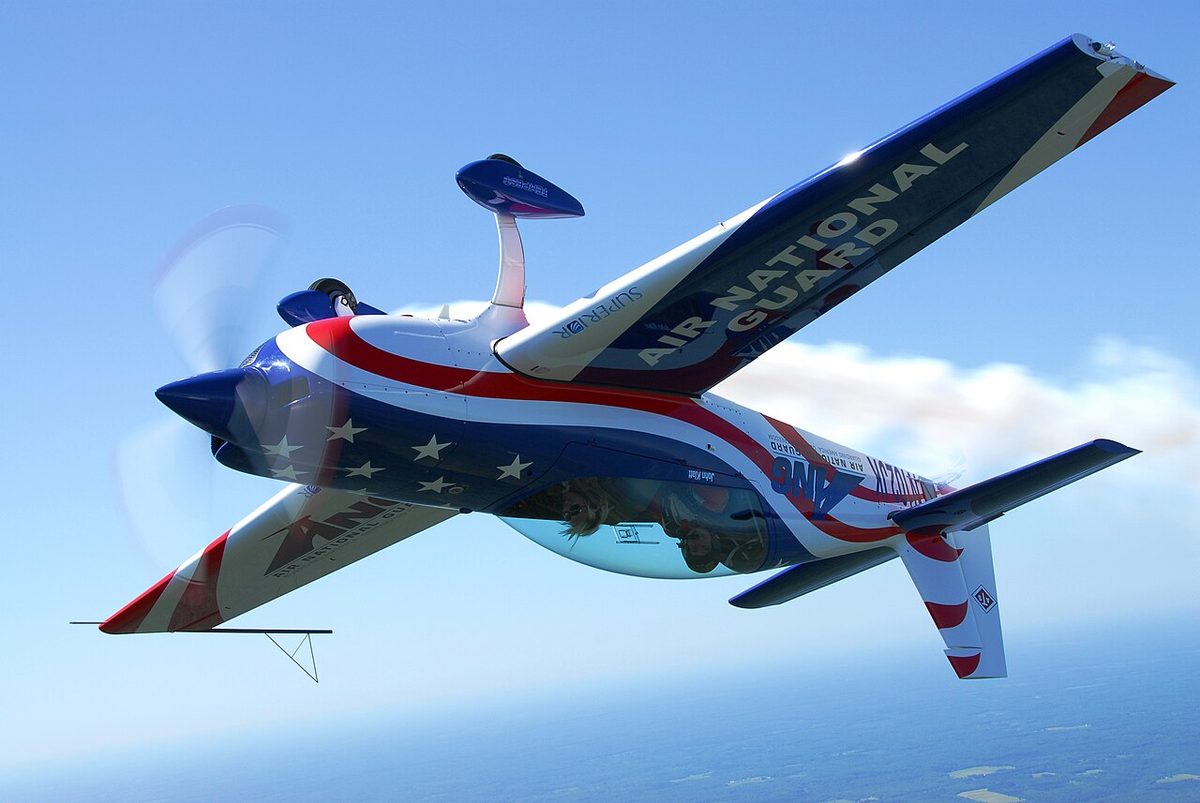
Simulators cannot sustain real g loads, and their data may not be valid far outside the normal envelope. On-aeroplane training therefore concentrates on the physical and psychological side of an upset. UPRT guidance from ICAO, EASA and the FAA stresses startle and surprise. Startle is the involuntary reflex response to a sudden event. Surprise is the realisation that what is happening differs from what was expected. Either can delay or distort the first control input for several seconds.
Recognising an upset
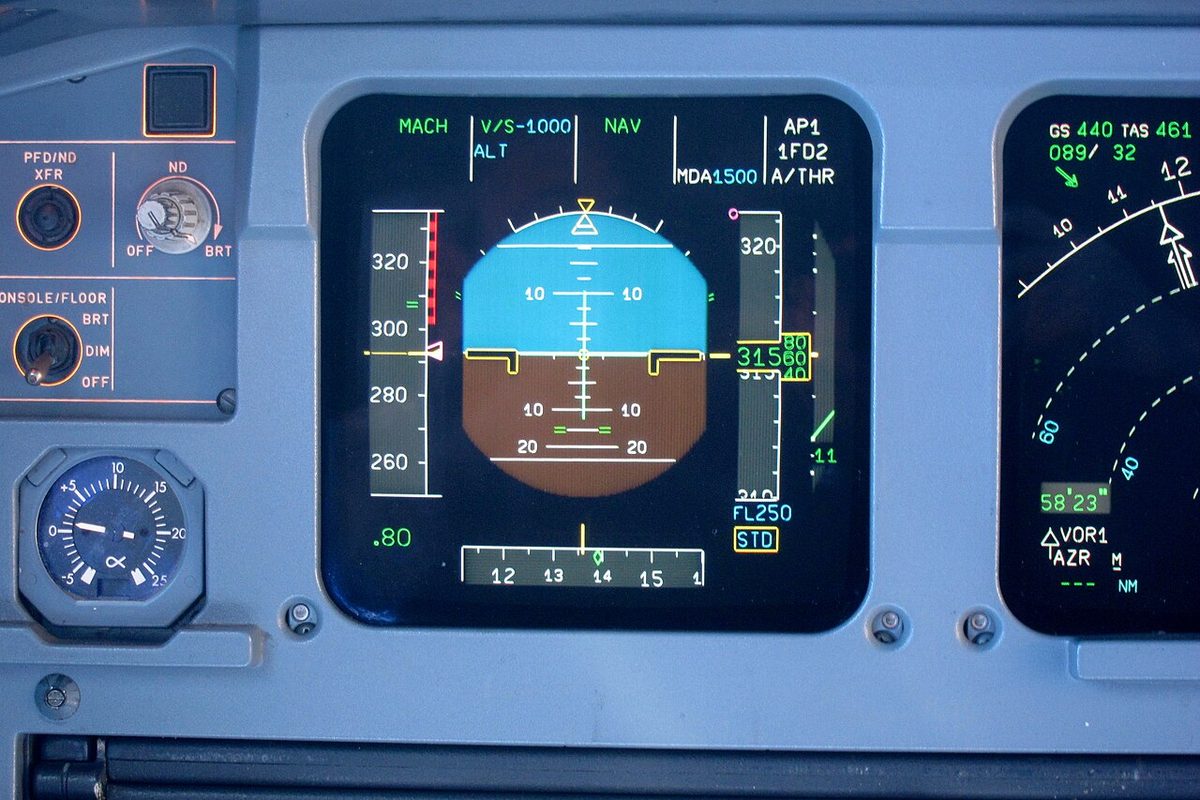
Prevention depends on noticing the divergence early: a speed trend towards the amber band, an attitude that does not match the phase of flight, or an autopilot holding increasing control deflection. Once an upset is suspected, the pilot flying confirms it on the attitude indicator, cross-checks with speed, altitude and vertical speed, and announces "nose high" or "nose low". The pilot monitoring calls out continuing divergence.
The airline templates begin by disconnecting the autopilot and the autothrust or autothrottle. The automation may have caused the upset, and it may fight the recovery. Recovery then follows two rules: reduce the angle of attack before anything else, and orient the lift vector before pulling.
Note: the recovery templates in AUPRTA and AC 120-111 are an industry consensus, not a type procedure. Where the aircraft manufacturer publishes a procedure, the manufacturer's procedure takes precedence.
Nose-high recovery
A nose-high recovery deals with high pitch and decaying speed, where the risk is a stall. The standard sequence is:
- Recognise and confirm the situation; autopilot disconnect, autothrust or autothrottle off.
- Apply as much nose-down elevator as needed, up to full, to achieve a nose-down pitch rate. This is the push to unload, which reduces angle of attack. Nose-down trim may help but must be used with care.
- Adjust thrust if required. On aircraft with underwing engines, reducing thrust removes a nose-up pitching moment.
- If pitch control alone is not enough, roll to a moderate bank so that the lift vector pulls the nose towards the horizon.
- As the nose approaches the horizon, roll wings level, check airspeed, adjust thrust and establish the required pitch attitude.
Excessive trim or rudder can aggravate an upset. Rudder is not a primary recovery control, and large alternating rudder inputs can overload the fin.
Nose-low recovery
A nose-low recovery deals with the aircraft pointing below the horizon, usually with high or increasing speed:
- Recognise and confirm; autopilot disconnect, autothrust or autothrottle off.
- Recover from the stall if required. An aircraft can be stalled with the nose at or below the horizon, and no pull-out will work until the angle of attack is reduced.
- Roll in the shortest direction to wings level. Beyond 90° of bank, unloading first improves roll rate, and full aileron and spoiler may be needed.
- Adjust thrust and drag: reduce thrust and use speedbrakes if speed is high, or add thrust if it is low.
- Recover to level flight with nose-up elevator, respecting load limits and avoiding a secondary stall.
Pulling before the wings are level only tightens a descending spiral and raises the load factor. For light aircraft on instruments, the FAA handbook sequence for a nose-low attitude is to reduce power, level the wings and then raise the nose. For a nose-high attitude it is to add power, lower the nose and level the wings.
Stall recovery template
A wing stalls at its critical angle of attack, not at a particular speed, so an aeroplane can stall at any airspeed and in any attitude. Approach-to-stall recovery begins at the first warning (buffet, stick shaker or aural alert) and stall recovery after a full stall. Both begin the same way.
FAA AC 120-109A gives the stall recovery template:
- Autopilot and autothrottle or autothrust disconnect.
- Apply nose-down pitch control until stall warning and other stall indications stop; apply nose-down trim as needed.
- Roll wings level.
- Adjust thrust as needed.
- Retract speedbrakes or spoilers.
- Return to the desired flight path.
This replaced the older approach of powering out with minimum height loss. Thrust is secondary because underwing engines add a nose-up moment, and at high altitude they have little excess thrust to offer. Two 2009 accidents showed the cost of the wrong reflex. On Colgan Air 3407 the captain pulled back when the stick shaker activated. On Air France 447, after unreliable airspeed at cruise altitude, predominantly nose-up inputs kept the A330 stalled for about three and a half minutes until it struck the sea. Manufacturers' stall recovery procedure follows the same order as the template. The stall recovery technique needs a positive, sustained push, not a token one, then a gradual return to level flight without pulling so hard that a secondary stall follows.

Spin recovery (PARE)
A spin is an aggravated stall with autorotation. Both wings are stalled, the down-going wing more deeply, and it needs a stall plus yaw to develop. The FAA's PARE spin recovery, from the Airplane Flying Handbook, is: Power to idle, Ailerons neutral, Rudder full opposite to the rotation, Elevator briskly forward to break the stall. When rotation stops, the pilot centralises the rudder and eases out of the dive.
The standard spin recovery taught in European and UK training follows the same logic: throttle closed, ailerons neutral, full opposite rudder, then the control column moved forward until the rotation stops. Power tends to flatten a spin, aileron can aggravate it, and an aft centre of gravity makes recovery slower or impossible. The flight manual procedure prevails over any generic sequence. Transport aeroplanes are not certified for spinning, so for them stall recovery is the only defence.
Exam tip: EASA question banks may describe the elevator step as "briskly to about neutral", while the FAA handbook says "briskly forward". Both aim to reduce the angle of attack once anti-spin rudder has taken effect.
Overspeed recovery
High-speed upsets usually come from a nose-low attitude, strong turbulence or mountain wave, or mismanaged automation. Transport aircraft must give an aural warning above VMO + 6 kt or MMO + 0.01 under CS/14 CFR 25.1303(c)(1). Beyond MMO, the effects described in high-speed flight appear: Mach tuck, buffet and reduced control effectiveness.
Overspeed recovery depends on attitude. A nose-low overspeed is a nose-low upset and follows that template. When the attitude is near normal, the crew reduces thrust, extends speedbrakes as the manufacturer allows and raises the nose gently. Abrupt pitch inputs at high speed can overstress the structure and, at altitude, trigger high-speed buffet. In turbulence, manufacturers advise against chasing brief speed excursions with large thrust or pitch changes. Fly-by-wire aircraft with envelope protection command nose-up automatically in normal law. In degraded laws this becomes a weaker stability function or is lost altogether.
Unreliable airspeed and pitch-power
Unreliable airspeed usually results from blocked pitot or static systems, caused by ice crystals, water, insects, or covers or tape left in place, or from radome damage. The signs include disagreement between speed sources, a speed that does not fit the attitude and thrust, simultaneous stall and overspeed warnings, and erratic autopilot or autothrust behaviour. Two sources can fail the same way and outvote the good one.
The unreliable airspeed procedure starts with memory items when the safe conduct of the flight is affected: disconnect the autopilot, autothrust and flight directors, then set memorised pitch and power settings. On the A320 family these are 15° and TOGA below thrust reduction altitude, 10° and climb thrust above it up to FL100, and 5° and climb thrust above FL100. Once the flight path is stable, the crew levels off at a safe altitude and uses the quick reference handbook tables of pitch and N1 or EPR for weight, altitude and configuration. They then cross-check against GPS ground speed and any angle-of-attack-based speed display.
This is pitch and power flying: a known attitude with a known thrust setting gives a predictable speed. It is the same skill that underlies every recovery above.
Frequently asked questions
What is UPRT and who has to complete it?
Upset Prevention and Recovery Training teaches pilots to avoid, recognise and recover from aeroplane upsets. Under EASA Part-FCL, UPRT is built into commercial licence courses, an advanced on-aeroplane course is required before a first multi-pilot type rating, and type-specific UPRT is part of the type rating. Operators add recurrent simulator UPRT. In the United States, Part 121 airline pilots receive upset and extended envelope training in full flight simulators.
What is the difference between a nose-high and a nose-low upset recovery?
In a nose-high upset speed is decaying, so the priority is to push to unload and get a nose-down pitch rate, using bank and a thrust reduction if pitch control alone is not enough, then roll wings level as the nose reaches the horizon. In a nose-low upset the priorities are to recover from any stall, roll wings level by the shortest way, manage thrust and drag, and only then pull out of the dive.
What does push to unload mean in upset recovery?
Pushing to unload means moving the pitch control forward to reduce the angle of attack and the load factor on the wing. It is the first control action in a stall and in most upsets, because a wing near its critical angle cannot produce more lift. Unloading also restores roll authority, so the aircraft can then be rolled towards wings level effectively. The push should be as large as required, but not excessive.
What is the PARE spin recovery?
PARE is the FAA mnemonic for the generic light-aeroplane spin recovery in the Airplane Flying Handbook: Power to idle, Ailerons neutral, Rudder full opposite to the rotation, Elevator briskly forward to break the stall. When rotation stops the rudder is neutralised and the pilot recovers from the dive smoothly, avoiding a secondary stall or overstress. The procedure in the aeroplane's flight manual always takes precedence where it differs.
What should a pilot do when airspeed indications become unreliable?
If the safe conduct of the flight is affected, the crew disconnects the automatics and sets a memorised pitch attitude and thrust from the type's unreliable airspeed procedure. Once the flight path is stable, the crew uses the pitch and power tables in the quick reference handbook, cross-checks against ground speed and other independent data, and works to identify which air data source, if any, remains reliable.
Test yourself on Upset Prevention and Recovery
The v1prep banks cover this topic in Operational Procedures (070), with a worked explanation for every answer. EASA ATPL, PPL, IR and CPL, the FAA written tests and A320/B737 type ratings.
Start practising →Sources and further reading
- ICAO Doc 10011, Manual on Aeroplane Upset Prevention and Recovery Training
- Airplane Upset Prevention and Recovery Training Aid, Revision 3 (ICAO and manufacturers)
- FAA AC 120-111, Upset Prevention and Recovery Training
- FAA AC 120-109A, Stall Prevention and Recovery Training
- EASA, Upset Prevention and Recovery Training FAQ
- FAA Airplane Flying Handbook (FAA-H-8083-3C), Chapter 5, Maintaining Aircraft Control
- IATA, Loss of Control In-flight (LOC-I)
- BEA, Final Report on the accident on 1 June 2009 to the Airbus A330-203, flight AF 447
Library articles are written for study and exam preparation. They do not replace your aircraft's approved documentation, your operator's procedures or the regulations themselves.