A320 Pneumatic System: The Complete Pilot's Guide
LAST UPDATED: 24 MAY 2026
The A320 pneumatic system supplies high-pressure air for five critical consumers: air conditioning, engine starting, wing anti-icing, water pressurisation, and hydraulic reservoir pressurisation. This guide walks through the architecture, the IP/HP bleed selection logic, the X-bleed valve, the BMC (Bleed Monitoring Computer), and the ECAM warnings with their exact thresholds.
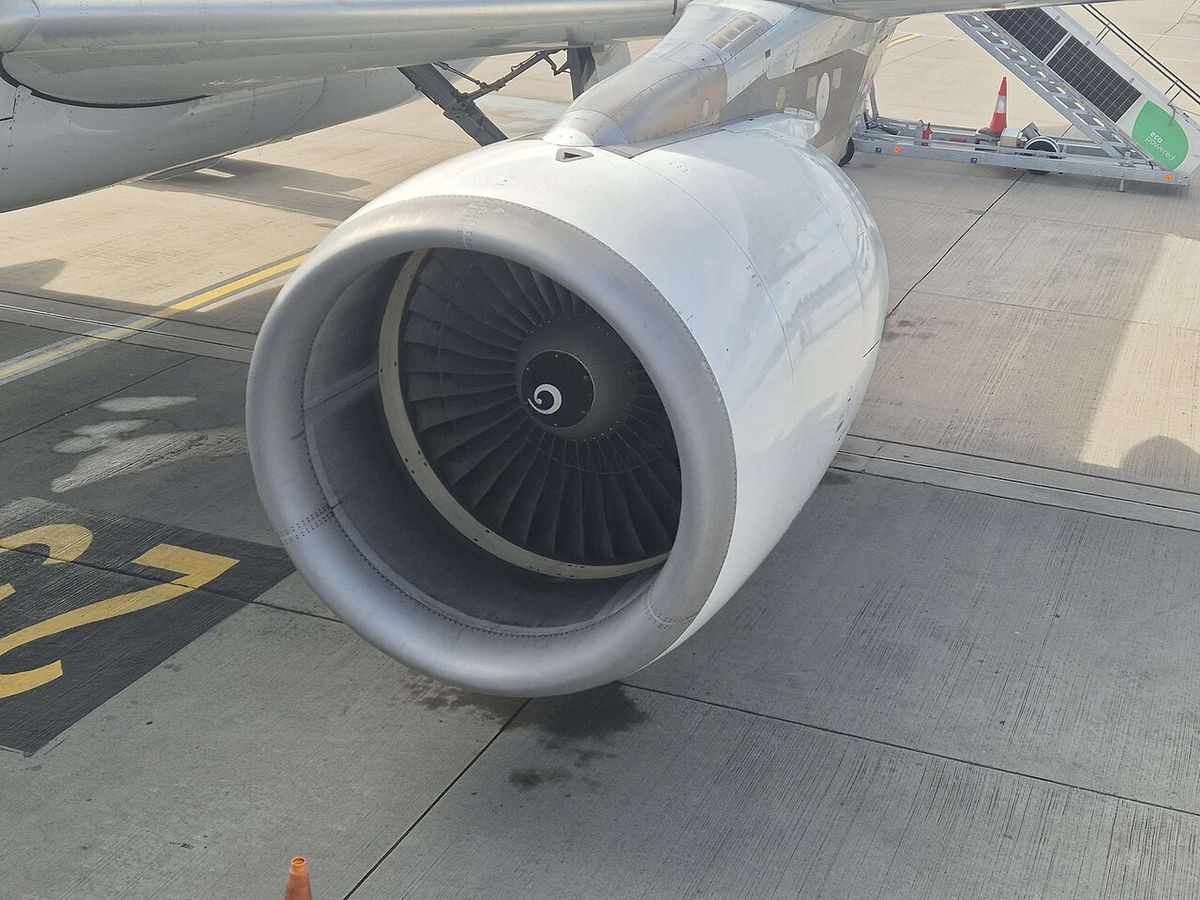
5 consumers of bleed air
- Air conditioning packs — primary cabin air supply
- Engine starting — bleed drives the engine starter motor
- Wing anti-icing — hot bleed flows through slats 3, 4, 5
- Water pressurisation — galley water tanks
- Hydraulic reservoir pressurisation — keeps hydraulic fluid above cavitation threshold
Bleed sources
Three sources of bleed air, in operational priority:
- Engine bleeds — primary in flight; either engine can supply both packs via the X-bleed
- APU bleed — used on ground (no engines running) and as in-flight backup; limited to FL200 with two packs / FL225 with one
- HP ground connection — air cart, used when both APU and engines are unavailable (rare)
The system automatically prioritises sources: with engine bleeds available, APU bleed is normally OFF. When the APU bleed pushbutton is selected ON, the engine bleeds close automatically (to give the APU exclusive supply).
IP vs HP bleed selection
Each engine has two bleed ports on the HP compressor:
- IP (Intermediate Pressure) — used at high engine power. Lower pressure, less compression work, less fuel penalty.
- HP (High Pressure) — used at low engine power when IP pressure is insufficient. Regulated to 36 ± 4 PSI.
The system automatically switches between sources. At cruise power, IP is sufficient. At descent idle, the system switches to HP. The pilot doesn't manage this — the BMC handles it transparently.
The bleed valve
Each engine has one bleed valve, which:
- Pneumatically operated, electrically controlled by the associated BMC
- Regulates downstream pressure at 45 ± 5 PSI at the precooler inlet
- Closes pneumatically if upstream pressure < 8 PSI or return flow detected
- Closes electrically (BMC commanded) on overtemperature, overpressure, leak, open starter valve, or APU bleed ON
The crossbleed valve
The X-bleed valve connects left and right pneumatic manifolds. Three rotary positions: AUTO (default), OPEN (manual), SHUT.
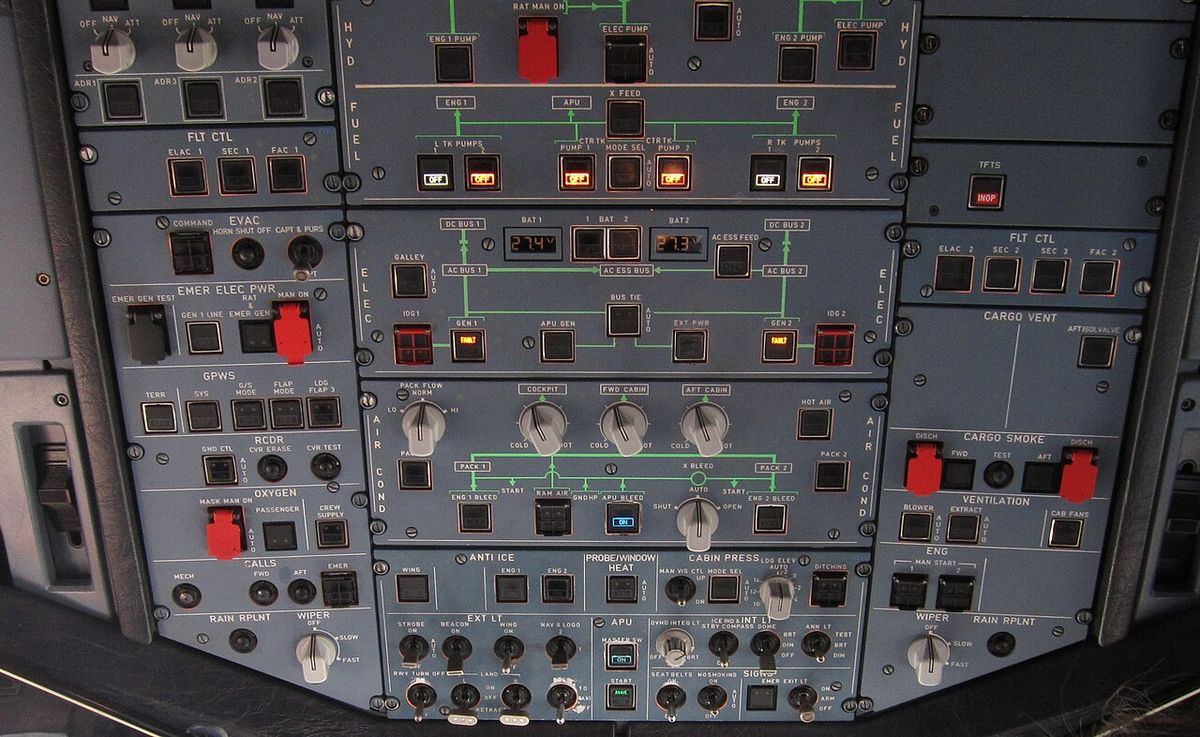
In AUTO mode:
- Opens when APU bleed valve is open (so APU bleed reaches both sides)
- Closes when APU bleed valve closes OR an air leak is detected (except during engine start)
The X-bleed valve does not auto-open for engine bleeds — it only opens for APU bleed in AUTO. If you need bleed cross-flow with engines running (e.g. one engine bleed failed, want to feed both packs from the good engine), select X-BLEED to OPEN manually.
BMC — Bleed Monitoring Computers
Two BMCs, one per engine side, monitor and control the entire pneumatic system. Each BMC handles:
- Bleed valve open/close logic
- HP/IP source selection
- Pressure regulation
- Overheat detection
- Leak detection (BMC1 also handles APU leak detection)
- ECAM messages and indications
If one BMC fails, the surviving BMC takes over most monitoring. What's lost: the FAULT light on the failed side, automatic bleed valve closure on the failed side, ENG BLEED LEAK warning for the failed engine. If both BMCs fail, BLEED MONITORING FAULT — manual operation required.
Leak detection
Detection loops monitor temperature along bleed ducts and detect leaks via heat signature. Architecture:
- Pylons — single loop each (L pylon, R pylon)
- APU — single loop
- Wings — double loop (loops A and B per wing) for redundancy
Leak triggers per FCOM thresholds: Wing leak at 124°C, engine bleed leak (pylon area) at 204°C, APU leak at 124°C. The wing/APU threshold is lower because those zones run cooler in steady state.
On leak detection: the affected-side bleed valve closes, the FAULT light illuminates, the X-bleed valve closes (except during engine start), and APU bleed valve closes if the leak concerns the LEFT wing or the APU loop.
ECAM warnings — exact thresholds
| Warning | Trigger | Level |
|---|---|---|
| ENG BLEED FAULT | Pressure > 57 PSI; or temp > 257°C/55s, 270°C/15s, 290°C/5s | 2 (Single Chime + Master Caut) |
| L(R) WING LEAK | Temp > 124°C in wing loops | 2 |
| ENG 1(2) BLEED LEAK | Temp > 204°C in pylon loop, engine running | 2 |
| APU BLEED LEAK | Temp > 124°C in APU loop | 2 |
| ENG BLEED NOT CLSD | Bleed valve fails to close during engine start or with APU bleed ON | 2 |
| ENG BLEED LO TEMP | Temp < 150°C in flight with wing anti-ice ON | 2 |
| BLEED MONITORING FAULT | Both BMCs failed | 2 |
Interview questions
- Where does engine bleed normally come from? — IP stage at high power, HP stage at low power (regulated to 36 PSI)
- What pressure does the bleed valve regulate to? — 45 ± 5 PSI at precooler inlet
- What's the max altitude for APU bleed with two packs? — FL200
- Can APU bleed be used for wing anti-ice? — Never (insufficient pressure)
- When does the X-bleed open in AUTO? — When APU bleed valve is open
- What temperature triggers wing leak warning? — 124°C in wing loops
- What if one BMC fails? — Surviving BMC handles most functions; failed side loses FAULT light, auto-close, and that engine's bleed leak warning
- How does the bleed valve close? — Pneumatically (low pressure or return flow) or electrically (BMC command on overheat/overpress/leak/start valve open/APU bleed ON)
- Does the X-bleed open for engine bleeds? — Only manually. AUTO only opens for APU bleed.
- What's WING A. ICE OPEN ON GND? — Wing anti-ice valves remained open > 35 sec on ground after WING ANTI-ICE selected ON; protects slat structure from overheat
Drill the pneumatic system bank
v1prep's pneumatic bank covers 91 questions on every threshold, ECAM message, and operational implication.
Practice the full bank →