Takeoff Speeds: V1, VR and V2
Take-off speeds are the calibrated airspeeds calculated for each departure of a large aeroplane. V1 is the latest speed at which a stop can be begun, VR the speed at which rotation starts, and V2 the one-engine-inoperative climb speed to be reached by 35 ft.
Every take-off in a large aeroplane is planned around a few speeds worked out before the aeroplane leaves the stand. They tell the crew how late a take-off can still be abandoned and stopped on the runway, when to raise the nose, and what speed to fly if an engine fails once airborne. The three that are briefed and set as bugs on the speed tape are V1, VR and V2. Behind them sit several certification speeds that the crew rarely sees but which fix the limits the three must respect.
The rules come from the certification codes for large aeroplanes, CS-25 in Europe and 14 CFR Part 25 in the United States; EASA operating rules place such aeroplanes in Performance Class A. The two codes are harmonised, so the definitions and factors below apply to both unless a difference is noted.
V-speeds overview
V-speeds are the reference speeds that define an aeroplane's limits and procedures. The flight manual schedules take-off speeds as calibrated airspeed, and they change with mass, flap setting, pressure altitude, temperature, wind, runway slope and surface, and thrust rating. They are therefore calculated for every departure, by electronic flight bag or from charts, and cross-checked by both pilots.
| Speed | Name | Meaning |
|---|---|---|
| VMCG | Minimum control speed on the ground | Lowest speed at which a sudden failure of the critical engine can be controlled on the runway using the rudder alone, without nosewheel steering |
| VMCA | Minimum control speed in the air | Lowest airborne speed at which control can be kept with the critical engine inoperative and no more than 5° of bank |
| VEF | Engine failure speed | Speed at which the critical engine is assumed to fail |
| V1 | Take-off decision speed | Latest speed for the first action to stop; lowest speed from which the take-off can be continued after a failure at VEF |
| VR | Rotation speed | Speed at which the pilot begins to raise the nose |
| VMU | Minimum unstick speed | Lowest speed at which the aeroplane can safely lift off and continue the take-off |
| VLOF | Lift-off speed | Speed at which the aeroplane first becomes airborne |
| V2 | Take-off safety speed | One-engine-inoperative climb speed, reached by 35 ft above the take-off surface |
Both control speeds, covered in minimum control speeds, act as floors under the take-off speeds.
Engine failure speed and recognition time
The engine failure speed (VEF) is the calibrated airspeed at which the critical engine is assumed to fail in the certified take-off calculations. The manufacturer chooses it, but it may not be less than VMCG. A failure any earlier could leave the aeroplane uncontrollable on the runway if the crew tried to continue.
Between the failure and the first stopping action there is always a delay while the crew notices the yaw and the instruments and then acts. This engine failure recognition time is measured in flight test. The rule sets V1 no lower than VEF plus the speed gained, with the critical engine inoperative, between the failure and the pilot's first action to stop, such as applying the brakes, reducing thrust or deploying the speed brakes. FAA flight-test guidance (AC 25-7) uses the demonstrated time or 1 second, whichever is greater, when the flight manual data are produced. V1 is therefore always a few knots above VEF.
The stop itself also takes time to set up. Since FAA Amendment 25-92 of 1998, mirrored in CS-25, the accelerate-stop distance includes a further distance equal to 2 seconds at V1. The FAA explains that this is not extra thinking time at V1. It covers the normal variation in how quickly crews complete the stopping actions. Aeroplanes certified to earlier standards used a set of individual time delays instead, so their stopping margins are not identical.
Exam tip: some questions say V1 is VEF plus a 1-second delay. More precisely, V1 is VEF plus the speed gained during the demonstrated recognition time, and 1 second is the minimum the FAA accepts for flight manual data. The 2 seconds at V1 is a distance added to the stop, not part of the interval between VEF and V1.
V1: the take-off decision speed
CS-Definitions and 14 CFR Part 1 define V1 in essentially the same two-part wording. It is the maximum speed in the take-off at which the pilot must take the first action to stop the aeroplane within the accelerate-stop distance. It is also the minimum speed at which, after a failure of the critical engine at VEF, the take-off can be continued to the required height within the take-off distance.
The old name "take-off decision speed" survives, but the definition turns on action, not thought. The FAA Takeoff Safety Training Aid (AC 120-62) stresses that the decision must already have been made by the time the aeroplane reaches V1. A stop begun above V1 is no longer covered by the certified distance.
V1 has to satisfy several limits at once:
- It may not be less than VEF plus the recognition increment, so it is always above VMCG.
- It may not exceed VR.
- It may not exceed VMBE, the maximum brake energy speed, above which the brakes cannot absorb the energy of a stop (see brake energy and tyre speed limits).
- The stop from V1 must fit within the accelerate-stop distance available, and the continued take-off after a failure at VEF must fit within the take-off distance available.
Raising V1 lengthens the accelerate-stop distance and shortens the one-engine-inoperative take-off distance. The V1 at which the two are equal gives the balanced field length, the shortest runway for a given mass when there is no stopway or clearway. Where a stopway or clearway makes the available distances unequal, V1 can be chosen within a range. A lower V1 gives more stopping margin and a higher one favours the continued take-off. On a wet runway the reduced friction pushes V1 down (see wet and contaminated runways).
The Takeoff Safety Training Aid found about one rejected take-off in every 3,000 take-offs, and one overrun accident or incident in every 4.5 million. Of the 74 rejected take-off accidents in the study behind it, 58 per cent were begun above V1, and only slightly more than a quarter involved any loss of engine thrust. Manufacturers therefore split the roll into a low-speed regime, up to 80 kt on Boeing types and 100 kt on Airbus types, in which the take-off is rejected for any significant failure, and a high-speed regime in which only major failures such as engine failure or fire justify a stop.
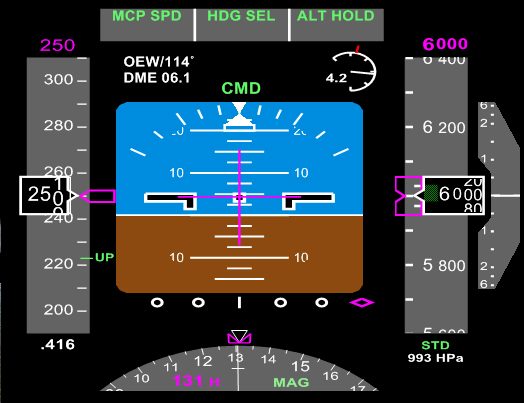
Rotation speed and technique
VR is the speed at which the pilot starts to raise the nose. Under CS and 14 CFR 25.107(e) it may not be less than:
- V1;
- 105 per cent of VMCA;
- a speed that allows V2 to be reached before 35 ft above the take-off surface;
- a speed that, with rotation at the maximum practicable rate, gives a VLOF of at least 110 per cent of VMU with all engines operating and 105 per cent of VMU at the one-engine-inoperative thrust-to-weight ratio. Where tail contact limits the VMU attitude, the factors are 108 and 104 per cent.
Certification also checks that rotating 5 kt early does not lengthen the one-engine-inoperative take-off distance beyond the scheduled figure. Reasonable variations in service, such as over-rotation or an out-of-trim stabiliser, must not produce unsafe characteristics or marked increases in distance.
Good rotation technique is a smooth, continuous pitch-up at the manufacturer's rate towards the target attitude. Boeing recommends an average of 2 to 3° per second. The A320 manual calls for about 3° per second towards 15° of pitch, or 12.5° with one engine inoperative, after which the pilot follows the flight director. Rotating late or slowly lengthens the take-off distance. Rotating early or too fast can cause a tail strike, because the aeroplane reaches the pitch attitude at which the tail touches before the wheels leave the ground. Boeing data identify early rotation and excessive rotation rate as the commonest causes.
Wrong data do the same damage. On 20 March 2009 an Emirates Airbus A340-500 departing Melbourne struck its tail and overran the runway after a take-off weight nearly 100 tonnes below the actual figure was entered into the electronic flight bag, which produced speeds far too low for the aeroplane (ATSB AO-2009-012). Independent calculation by both pilots and a gross-error check of the speeds against the aeroplane's mass are the defences.
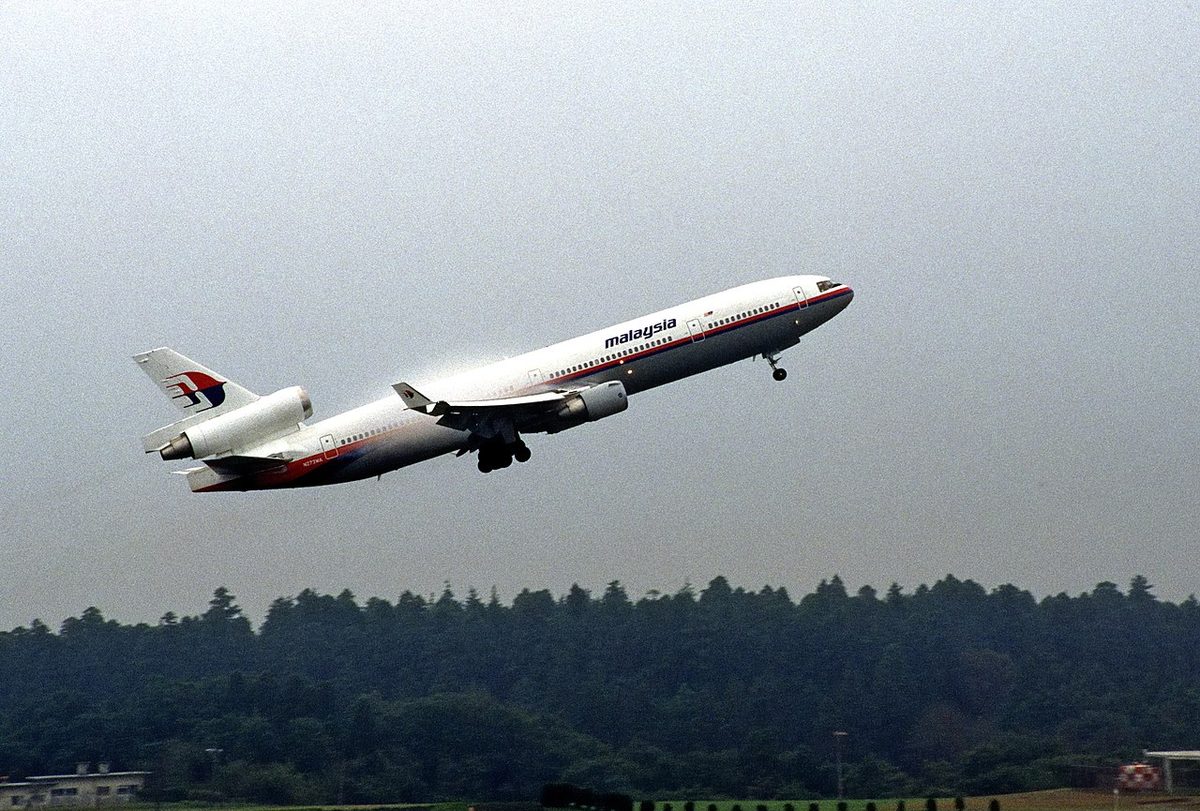
Minimum unstick and lift-off speed
The minimum unstick speed (VMU) is the calibrated airspeed at and above which the aeroplane can safely lift off and continue the take-off. It is found in flight test by rotating to a high pitch attitude early in the run and letting the aeroplane fly itself off, with a protective skid under the tail on types where the tail would touch. It is determined for the all-engines case and for one-engine-inoperative thrust-to-weight ratios. On many long-bodied aeroplanes VMU is geometry-limited: the tail reaches the runway before the wing reaches its maximum useful lift.
The lift-off speed (VLOF) is the speed at which the aeroplane first becomes airborne. Older texts call the moment of lift-off "unstick", and lift-off speed the unstick speed. The margins of VLOF over VMU keep the aeroplane from leaving the ground at so high an angle of attack that it could not continue safely. VLOF also has an upper limit: tyres are rated for a maximum ground speed, which a hot, high or tailwind departure can approach.
Take-off safety speed V2
V2 is the speed flown with one engine inoperative from the 35 ft screen through the early take-off climb segments. The minimum take-off safety speed (V2min) may not be less than:
- 1.13 VSR for two- and three-engined turboprop and piston aeroplanes, and for jets without provisions to reduce the one-engine-inoperative stall speed significantly, which covers most jets;
- 1.08 VSR for propeller aeroplanes with more than three engines and for jets that have such provisions;
- 1.10 VMCA.
VSR is the reference stall speed, based on the 1-g stall. V2 itself must also be at least VR plus the speed gained before 35 ft, and high enough to allow a coordinated 30° banked turn with the critical engine inoperative without stall warning.
Exam tip: older textbooks give V2 as at least 1.2 VS and the landing reference speed as 1.3 VS0. Those factors used a stall speed taken from the minimum speed reached in the stall manoeuvre, which is lower than the 1-g value. Current CS-25 and Part 25 use 1.13 VSR for V2 and 1.23 VSR0 for VREF.
If an engine fails at or after V1, the pilot rotates at VR and climbs at V2, or at the speed reached if that is higher, up to a limit set by the manufacturer. On Airbus types the SRS take-off guidance targets V2 + 10 kt with all engines operating. After an engine failure it holds V2 or the speed at the failure, whichever is higher, up to V2 + 15 kt.
Where the climb gradient rather than runway length limits the mass, a long runway allows an improved climb (increased V2) take-off. V2, and with it VR and V1, is raised so that the aeroplane climbs closer to its best one-engine-inoperative gradient speed, which allows a higher climb-limited mass. Brake energy and tyre speed limits cap the gain.
Relationships between take-off speeds
Put together, the speeds fall in a fixed order:
- VMCG ≤ VEF < V1 ≤ VR < VLOF, with V1 ≤ VMBE;
- VR ≥ 1.05 VMCA, and VLOF at least 1.10 VMU with all engines or 1.05 VMU with one inoperative;
- V2 ≥ V2min, the greater of 1.13 VSR (for most jets) and 1.10 VMCA, and V2 is reached by 35 ft.

A heavier aeroplane needs higher VR and V2, and usually a higher V1. More take-off flap lowers them at the cost of climb gradient. On a short runway at light mass the lower limits can bind instead: V1 cannot fall below the VMCG floor, and V2 cannot fall below 1.10 VMCA. A certified derated take-off thrust carries its own lower minimum control speeds, which can relieve these limits. An assumed-temperature reduction does not, because full thrust remains available (see reduced and derated take-off thrust).
EASA and the FAA define these speeds in the same words, and CS-25 and Part 25 use the same factors. The operating rules that apply them to each departure also match closely: CAT.POL.A.205 in Part-CAT and 14 CFR 121.189 require the accelerate-stop distance, take-off distance and take-off run to fit within the distances available.
Frequently asked questions
What is the difference between V1, VR and V2?
V1 is the highest speed at which the crew can begin a rejected take-off and still stop within the accelerate-stop distance. VR is the speed at which the pilot starts to raise the nose. V2 is the take-off safety speed, the climb speed with one engine inoperative, which must be reached by 35 ft above the runway. V1 can never exceed VR, and V2 is always above VR.
Can you reject a take-off after V1?
The certified accelerate-stop distance assumes the first stopping action no later than V1, so a stop begun above V1 may not end on the runway. Crews are trained to continue after V1 unless the aeroplane appears unable to fly. The FAA Takeoff Safety Training Aid found that 58 per cent of the rejected take-off accidents it studied were begun above V1.
Why is V1 higher than the engine failure speed?
The engine is assumed to fail at VEF, but the pilot needs time to recognise the failure and take the first action to stop, and the aeroplane keeps accelerating meanwhile. V1 is VEF plus the speed gained during that demonstrated recognition time. FAA flight-test guidance uses the demonstrated time or 1 second, whichever is greater.
What is balanced field length?
Raising V1 lengthens the distance needed to stop and shortens the distance needed to continue after an engine failure. The balanced V1 is the speed at which the accelerate-stop distance equals the one-engine-inoperative take-off distance. That common distance is the balanced field length, the shortest runway that satisfies both cases at a given mass when there is no stopway or clearway.
How is the minimum V2 calculated?
Under CS-25 and 14 CFR 25.107, V2min for most jets and for twin-engined propeller aeroplanes is the greater of 1.13 times the reference stall speed VSR in the take-off configuration and 1.10 times VMCA. Jets with provisions to reduce the one-engine-inoperative stall speed, and propeller aeroplanes with more than three engines, may use 1.08 VSR.
Test yourself on Takeoff Speeds: V1, VR and V2
The v1prep banks cover this topic in Performance (032), with a worked explanation for every answer. EASA ATPL, PPL, IR and CPL, the FAA written tests and A320/B737 type ratings.
Start practising →Sources and further reading
Library articles are written for study and exam preparation. They do not replace your aircraft's approved documentation, your operator's procedures or the regulations themselves.