A320 Electrical System: The Complete Pilot's Guide
LAST UPDATED: 24 MAY 2026
The A320 electrical system is the foundation under everything else — FBW computers, FADECs, hydraulic pumps, fuel pumps, all need power. Pilots typically learn it in pieces (IDGs in one lesson, EMER ELEC in another), but the integrated picture is what gets tested in interviews. This guide walks through the whole system end-to-end.
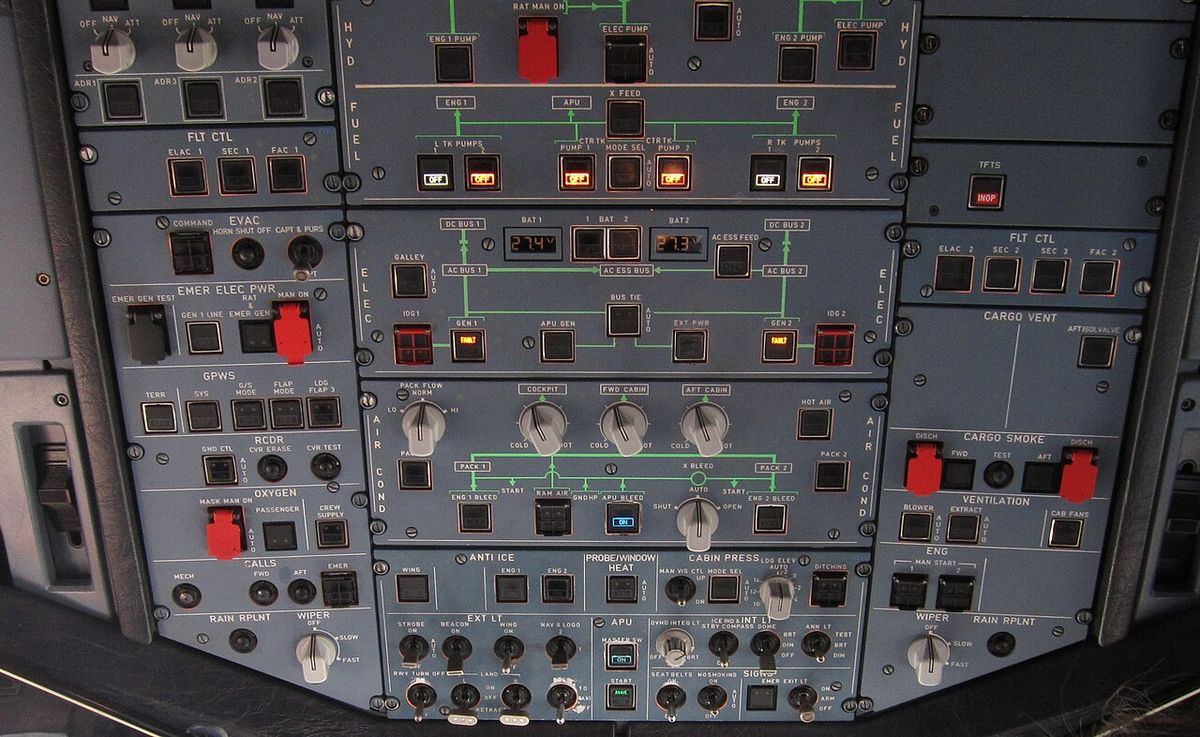
Architecture overview
The A320 has two AC main buses (AC BUS 1, AC BUS 2) and two DC main buses (DC BUS 1, DC BUS 2), plus essential buses, hot buses, and battery buses. Three primary AC sources: two IDGs (Integrated Drive Generators) and the APU generator. External ground power can replace any of them on the ground.
The fundamental design principle: asymmetric redundancy. No single failure (engine, IDG, AC bus, DC bus, battery) can disable a critical function. The asymmetry is what makes EMER ELEC possible.
AC system
Sources
- IDG 1, IDG 2 — engine-driven, 115V/400Hz, ~90 kVA each. Each IDG normally feeds its associated AC bus (IDG 1 → AC BUS 1, IDG 2 → AC BUS 2)
- APU GEN — APU-driven, same spec. Can replace either IDG and feed both AC buses simultaneously
- External GND PWR — standard plug at front of aircraft. Same spec, ground use only
Bus tie
The BTC (Bus Tie Contactor) connects the two AC buses. Normally OFF (each bus on its own source). Closes if one source fails — the surviving source then feeds both buses.
Generator priority
Priority order: (1) own-side IDG, (2) external power, (3) APU generator, (4) opposite-side IDG via bus tie. The system auto-selects based on availability.
DC system
Sources
- TR1 (Transformer Rectifier 1) — fed from AC BUS 1, produces 28V DC for DC BUS 1
- TR2 — fed from AC BUS 2, produces 28V DC for DC BUS 2
- ESS TR — fed from AC ESS bus, produces 28V DC for DC ESS bus
- BAT 1, BAT 2 — two batteries, each ~23 Ah, kept charged when AC is available
If AC fails, the batteries continue to feed the HOT BAT BUSes (always live) and provide DC power for at least 30 minutes (or until the RAT spins up the EMER GEN).
Essential buses
Beyond the main AC and DC buses, certain priority buses keep flight-critical equipment alive:
- AC ESS bus — feeds the captain's primary instruments, FAC1, ELAC1, key avionics. Normally fed from AC BUS 1; can be re-routed from AC BUS 2 via the AC ESS FEED switch
- DC ESS bus — DC equivalent. Fed from ESS TR (which is fed from AC ESS)
- HOT BAT BUSes — directly battery-fed, always live (no switch). Powers items that must survive even total electrical failure
The point of the AC ESS / DC ESS architecture: even with one main AC bus lost, the captain still flies normally because AC ESS is preserved.
EMER ELEC configuration
If both AC BUS 1 and AC BUS 2 are lost in flight, the system enters Emergency Electrical Configuration:
- RAT auto-deploys (if speed > 100 kt). Drives Blue hydraulic system.
- Blue system drives the EMER GEN (a hydraulic-driven AC generator), producing AC ESS power.
- Static Inverter bridges the gap — converts DC battery power to AC ESS until RAT/EMER GEN is up to speed.
- Most equipment is shed: F/O instruments, second pack, autopilot 2, most lighting, etc.
- Captain's primary instruments survive on AC ESS / DC ESS.
- APU start is inhibited for 45 seconds after entering EMER ELEC, then permitted.
Battery duration: approximately 30 minutes minimum if the RAT/EMER GEN is inoperative. With RAT operating, batteries are kept charged and the duration is essentially flight-length-limited. The QRH "EMER ELEC" procedure mandates landing within 30 minutes for this reason.
Common failures
Single IDG failure
IDG 1 fails → BTC closes → IDG 2 feeds both AC buses. Or, alternative: APU started, APU GEN feeds both buses. Pilot action: ECAM-driven, may include IDG disconnection (orange guarded button — note this is permanent for the flight).
Loss of TR1 or TR2
One TR fails → BTC on the DC side closes → other TR feeds both DC buses. Limited cross-feed capacity may cause amber CAUT on some loads.
Static Inverter
If both AC buses lost AND RAT not yet at speed, the Static Inverter converts DC battery to AC ESS — bridging the ~3 second gap until EMER GEN comes online. Critical: AC ESS power is never zero, even momentarily.
Total electrical failure (theoretical)
Loss of both engines AND APU AND RAT failed AND batteries depleted = no electrical power anywhere. The aircraft survives via mechanical backup (pitch trim wheel, rudder pedals — see our FBW laws guide). This scenario is essentially impossible in practice but tested in theory.
Interview questions
- What's the architecture? — Two AC buses + two DC buses. Two IDGs (115V/400Hz). APU GEN as backup. Two TRs make DC. Two batteries for backup.
- What does an IDG produce? — 115V AC at 400 Hz, ~90 kVA
- What feeds AC ESS bus? — AC BUS 1 normally; can be re-routed from AC BUS 2 via AC ESS FEED switch
- What does the BTC do? — Bus Tie Contactor; connects the two AC buses, closes when one source fails
- What's EMER ELEC? — Both AC buses lost. RAT deploys, drives Blue, drives EMER GEN, feeds AC ESS only
- How long do batteries last? — At least 30 minutes minimum without RAT/EMER GEN. Effectively unlimited with EMER GEN running.
- What does the Static Inverter do? — Converts DC battery power to AC ESS during the gap before EMER GEN is up
- Why is the IDG disconnect permanent? — Mechanical disconnect that requires ground maintenance to reset
- Can you start the APU in EMER ELEC? — Yes, after 45-second inhibit. Once running, APU GEN can replace EMER GEN for power
- What survives EMER ELEC? — Captain's primary instruments, basic flight controls, ELAC1, FAC1, essential lighting
Drill the electrical system bank
v1prep covers 230 electrical questions with FCOM-sourced explanations on every bus, every failure mode, and every EMER ELEC implication.
Practice the full bank →