Qatar Airways Pilot Interview Prep: Process, Sim, Questions (2026 Guide)
LAST UPDATED: 25 SEP 2026
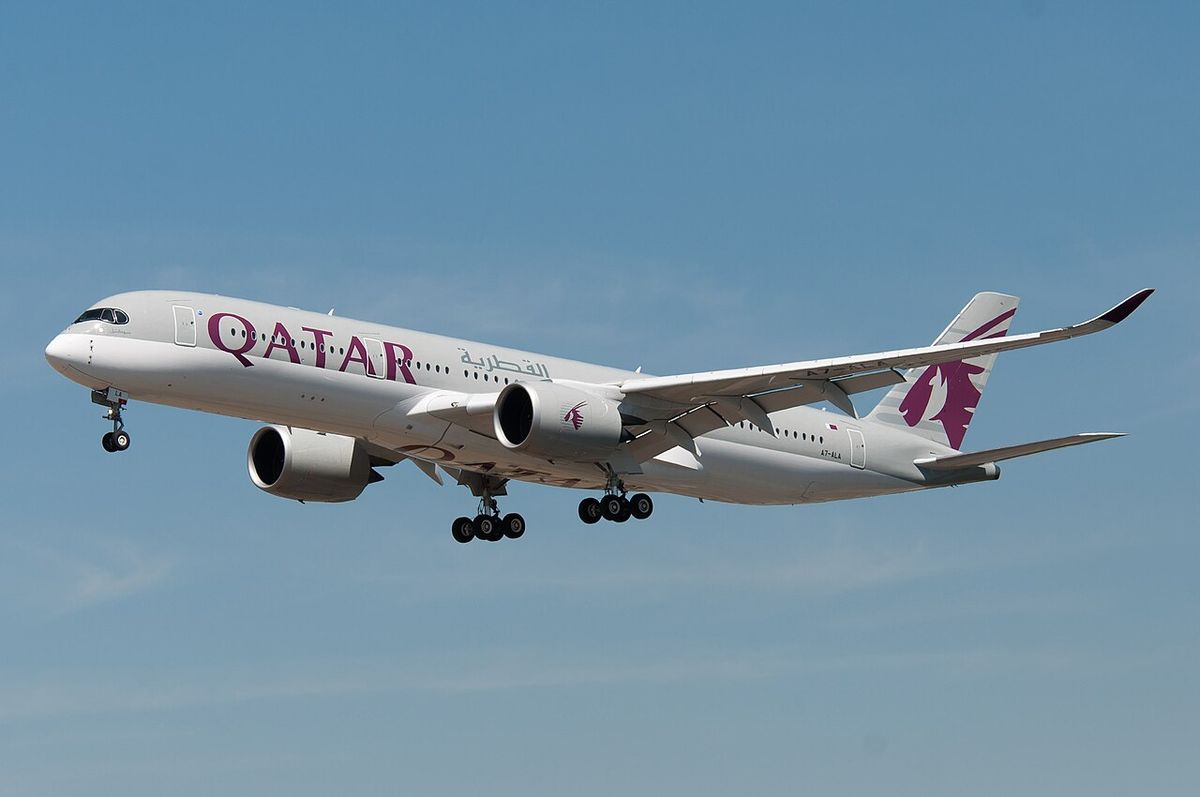
Qatar Airways is the state-owned flag carrier of Qatar, hubbed at Hamad International Airport (DOH) in Doha and running a global long-haul network — more than 160 destinations advertised for summer 2026. This guide covers what is genuinely known about the selection process, how to prepare for the sim and the interviews, and the structural fact most applicants miss: alongside its famous widebody fleet, Qatar Airways also flies the A320 family — which makes A320 systems knowledge directly relevant, not just "transferable".
This isn't a copy of the careers page. It's the working pilot's view: what each stage typically tests, what candidates commonly report, and where preparation actually pays off — with honest hedges where the airline doesn't publish specifics.
About Qatar Airways
Qatar Airways is built around a single megahub: Hamad International Airport (DOH). The network is global — more than 170 destinations before the 2026 conflict, more than 160 advertised for summer 2026 — and the airline is a member of the oneworld alliance, holds minority stakes in IAG, LATAM, Cathay Pacific and others, and was named Skytrax World's Best Airline for 2025, its ninth time. Qatar Airways Cargo carried 1.43 million billable tonnes in FY2025/26, and the group reported a QAR 7.08 billion (US$1.94 billion) net profit for that year.
The fleet is widebody-dominated but not widebody-only. The backbone of the long-haul operation is Boeing 777s, 787s, and Airbus A350s — Qatar Airways was launch customer for both the A350-900 and the A350-1000 — plus the A380, with 130 787s and 30 777-9s on firm order since May 2025 (first 777X delivery now due in 2027). The remaining A330s were permanently retired in September 2026. Alongside the widebodies, the airline operates A320s, now joined by A321neos in an all-economy layout. That matters for your prep: an A320-rated First Officer is applying to an airline that genuinely operates the type, and a non-rated joiner's rating has been offered on the A320, A350, 777 or 787 fleet (January 2026 job-board summary). Ask how fleet allocation is decided for new joiners.
2026 is the year you have to be able to talk about. On 28 February 2026, after US and Israeli strikes on Iran, Qatari airspace closed and Qatar Airways suspended all flights to and from Doha; a limited schedule restarted from 18 March, and aviation press reported about a fifth of the fleet parked by late May. In September 2026 Reuters reported the A330 retirement and that a group of pilots, some of whom had not flown commercially since the war began, had been seconded voluntarily and short-term to RwandAir. The same month the airline said traffic had recovered to 90–95% of the previous year's level and announced 138 new aircraft over five years.
Hiring runs through the airline's official careers portal and follows the schedule: campaigns open and close. As of late August 2026 no mainline direct-entry First Officer advert was visible on the careers portal, and the previous rated adverts (Boeing and Airbus) were not live — confirm that your campaign is live before you prepare around it. Recent rated adverts asked for 1,000 hours multi-crew jet time on aircraft of 30,000 kg or more with 500 hours on a listed type and recency within 12 months; requirements vary between campaigns — verify the current posting. All pilots are Doha-based: aviation press and career sites describe the package as tax-free, with accommodation or a housing allowance, education support and medical cover, but confirm every figure in the offer.
The selection stages
Qatar Airways does not publish its selection syllabus, and the order changes between campaigns. What follows is what candidates and preparation sites have reported; your invitation is the authority:
| Stage | Commonly reported format |
|---|---|
| 1. Online application | Via the careers portal: CV, licence, medical, logbook totals, recency |
| 2. Screening | Against the campaign's stated requirements; shortlisted candidates invited onward |
| 3. Aptitude / psychometric testing | Online: a personality questionnaire and a timed cognitive reasoning test, reported as 36 questions in 30 minutes (supplier variously named as Symbiotics ADAPT or Aon cut-e) |
| 4. Technical knowledge exam | In Doha: an ATPL knowledge multiple-choice paper, described by preparation sites as about 50 questions with a 70% pass mark (verify) |
| 5. HR & technical interview | In Doha: a scenario-led technical interview, usually with two training captains, and an HR and psychologist panel |
| 6. Simulator assessment | In Doha: most often a 787 simulator, sometimes an A320, about 60 minutes |
Candidates report the Doha stages as about four days including arrival and departure, with a group exercise in some campaigns, followed by a Qatari Class 1 medical in Doha and document and background checks. PPRuNe candidates reported that the airline rewrote its technical examination and scenarios, so memorised lists from older question banks no longer help. Treat the order above as indicative, not gospel.
Sim assessment
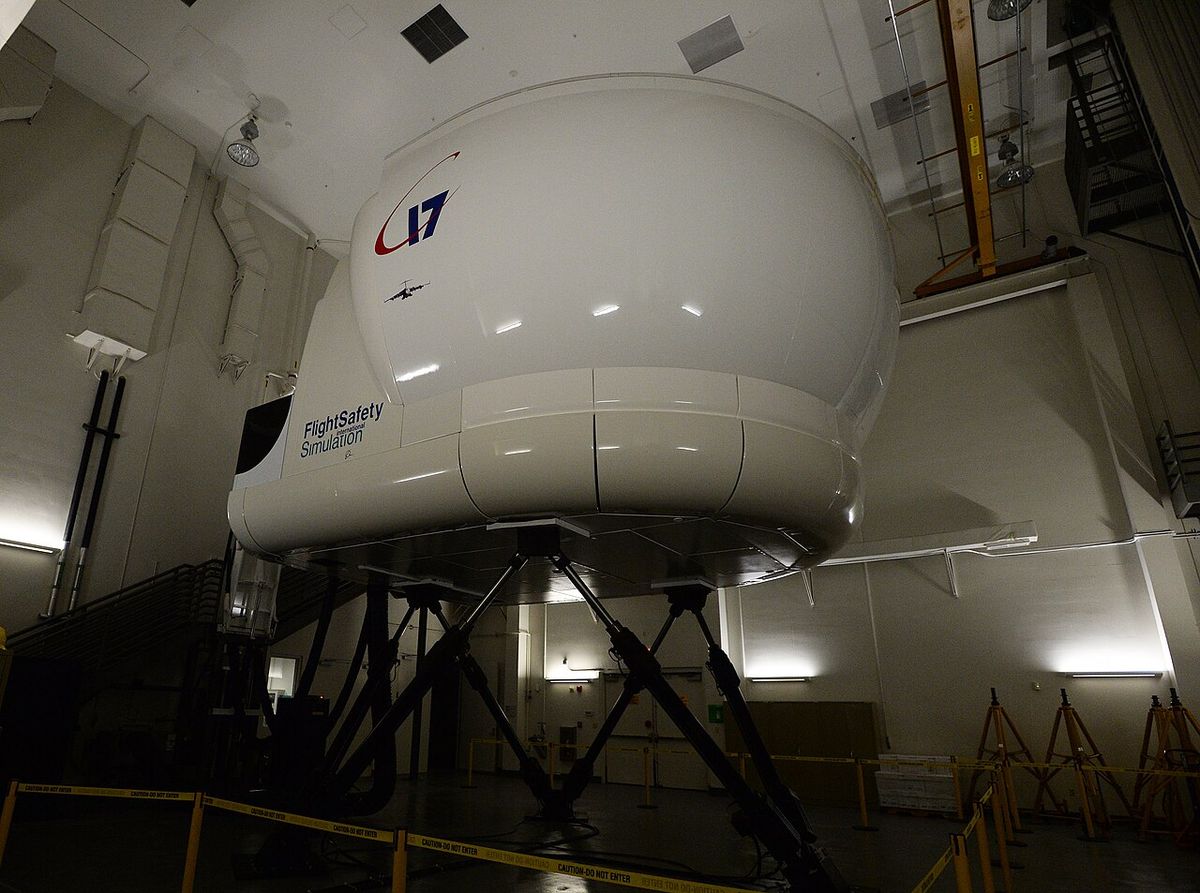
The airline doesn't publish which simulator type assessments use. Candidates most often report a 787 simulator, sometimes an A320, for about 60 minutes. If the simulator is a type you have never flown, the assessors are not scoring type knowledge — but learn the basics beforehand: the attitude for the initial climb, the thrust-lever and autothrottle logic, and where the trim is. Ask the recruitment team which type it will be, and get whatever exposure you can.
What a typical airline sim assessment looks like
- Departure — brief it; know the profile, the SOPs you'll apply, and your role split
- Manual handling — perhaps some general handling: turns, climbs, descents
- ILS approach — vectors to an ILS, often raw data
- Non-normal — a second take-off with an engine failure around V1; some reports add a cargo fire and a go-around from minimum
- CRM throughout — brief, call and use the other pilot; the assessor is watching the crew, not just the flight path
What discriminates is the same everywhere: smooth manual handling, a disciplined instrument scan, and audible CRM. Fly attitude and power, trend the corrections, keep talking. A technically adequate profile flown in silence scores worse than a slightly scruffier one flown as a crew.
HR & technical interview
Candidates report two panels in Doha: a technical interview, usually two training captains, and an HR and psychologist panel, where the psychologist may use your personality-questionnaire profile as a starting point — be ready to discuss it without becoming defensive. Three themes deserve Qatar-specific preparation:
- Why Qatar Airways? — generic praise is weak everywhere, and this airline hears "world-class airline" from every single candidate. You have real material: a global network from a single hub, the A350 launch-customer story, the largest widebody order Boeing has ever taken, and how the airline absorbed the 2026 airspace closure and is recovering. Use specifics.
- Relocation to Doha — the operation lives in Doha, and interviewers will want realistic, thought-through answers about basing your life (and family, if applicable) there: climate, culture, distance from home, spouse's work. Vague enthusiasm reads as a resignation risk.
- Multicultural crews — the airline recruits pilots internationally, so you may fly with a captain from a different continent and training culture, and with cabin crew of many nationalities. Expect CRM questions framed around communication across cultures and gradients, and have real examples ready. ICAO English Level 4 is the regulatory floor; at an operation this international, precise spoken English is worth deliberate practice.
Beyond that, expect the standard set: STAR-format competency examples (a disagreement in the flight deck, a decision under pressure, an error you made and caught), scenario questions (candidates report weather briefings, NOTAM reading, MEL interpretation and diversion planning, often with one scenario carried forward), and — for widebody applicants — questions touching long-haul realities like fatigue management and augmented-crew operations. For each STAR answer: one specific real example, ~90 seconds, and the R is what changed and what you learned.
Technical questions
Candidates report an ATPL knowledge exam that one debrief calls more technical than ATPL theory, with systems knowledge essential, so treat your own type's systems as part of the written preparation as well as the interview. Because Qatar Airways operates the A320 family alongside its widebodies, A320-rated applicants should go deep on their own type — it's a fleet you could genuinely be assigned to — and everyone should be sharp on the fundamentals. Real bank-style examples:
If you're A320-rated
- You lose the Green hydraulic system in flight — what do you lose, and what does the PTU do for you?
- What are the conditions for reverting to Alternate Law, and what protections remain in it? (see our flight control laws guide)
- Walk through a FLEX takeoff — what is the assumed temperature actually doing to your thrust? (see our FLEX takeoff guide)
- Engine failure at V1 — talk me through the immediate actions and the profile
ATPL theory for everyone
- What are V1, VR and V2 — and what moves V1 on a wet runway? (see our V-speeds guide)
- Decode a METAR with TEMPO, CB and wind-shear groups
- What are the RVSM equipment requirements and contingency procedures?
- ILS categories — minima and requirements for CAT I / II / III
Top reasons candidates fail
- Weak manual handling — the universal killer; raw-data ILS practice pays off more than anything else you can do before a sim assessment
- Generic motivation — "a world-class airline with a great reputation" is what every candidate says. Specifics about the hub model, the fleet, and your realistic career path there win
- Unrealistic Doha answers — interviewers notice when a candidate hasn't genuinely thought through relocating their life to Doha; it reads as a future resignation, and airlines don't hire those
- Technical rustiness — the ATPL exams may be years behind you, but ATPL-level theory is commonly reported in both the written test and the interview. Rebuild it before the assessment, not on the plane over
- Silent sim flying — flying accurately without briefing, verbalising or monitoring is failed CRM at every carrier
- Imprecise English — at an operation flying globally with multinational crews, explaining a system badly in your second language is the classic stumble. Practise talking through technical topics out loud, in English
- Not knowing the operation — arriving unaware that the airline flies A320s as well as widebodies, vague on the hub-and-spoke model, or unable to talk about the 2026 disruption and recovery, reads as low effort
Realistic timeline
Qatar Airways doesn't publish selection timelines, and reports vary widely by campaign — treat everything below as indicative, not promised:
| Phase | Commonly reported |
|---|---|
| Application to first contact | Varies — campaigns open and close with the schedule; none visible for mainline direct-entry First Officers in late August 2026 |
| Testing & interviews | Online assessment, then about four days in Doha including arrival and departure |
| Assessment to outcome | Offer and course date; ask the typical gap between offer and course |
| Offer to joining | Depends on visas, licence conversion and the training schedule |
| Licence conversion | To a Qatari licence after joining, including an air law and operational procedures exam (QCAA PIL.03/23) |
| Type rating (if needed) | Provided for non-rated joiners, who report a bond — get the terms in writing |
The honest summary: from application to the right-hand seat in Doha is a matter of months, not weeks — and because relocation, visas and medicals stack on top of the selection itself, patience is part of the process. Use the waiting time: the technical bar doesn't move while you do.
Drill the A320 bank + ATPL theory before Doha
Qatar Airways assessments are commonly reported as compact — testing, interviews and sim grouped into days, not months. v1prep covers 9,500+ A320 and ATPL questions sourced from the FCOM and the EASA syllabus, so your technical answers are reflexive before you fly out.
Practice the full bank →