A320 Memory Items: The Critical Ones Every Pilot Must Know Cold
LAST UPDATED: 28 SEP 2026
Memory items are the actions a pilot must carry out without referring to the QRH, because there isn't time, or because situational awareness can't be sacrificed to read a checklist. On the A320 they are set by Airbus and marked [MEM] in the FCOM: they are applied at once, by memory, and everything else is read and done from the ECAM or the QRH. There are only a few of them, and this guide groups them into seven drills.
Note: Always defer to your operator's FCOM and QRH, which are customised to its fleet, and to any drills your operator adds in its own manuals. The actions below follow the Airbus FCOM wording.
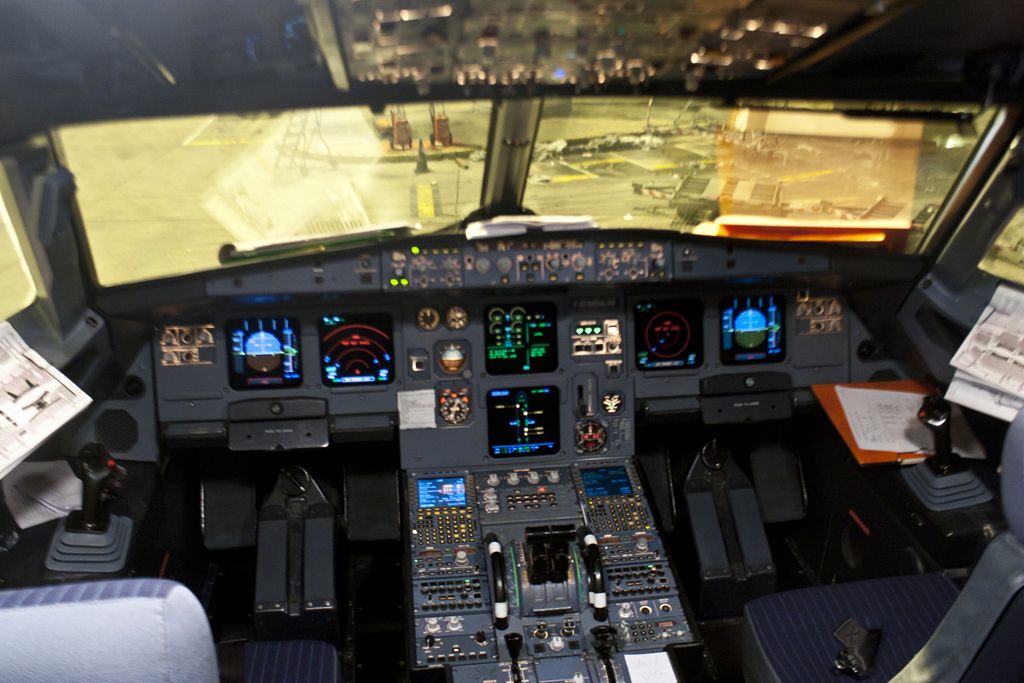
1. Emergency descent
Triggered by a loss of cabin pressure that the crew cannot stop: the cabin altitude warning (the ECAM shows cabin altitude in red from 9,550 ft) or a rapid decompression. The memory items are the first three lines:
- CREW OXY MASKS: USE. Nothing comes before this. The mask comes out of its box set to 100%. Make sure the two pilots can hear each other through the masks, but avoid continuous use of the interphone, which adds the breathing noise.
- SIGNS: ON
- EMER DESCENT: INITIATE
The procedure then continues:
- THR LEVERS: IDLE, only if the A/THR is not active. With the A/THR active there is no thrust lever action.
- SPD BRK: FULL
- When the descent is established, SPEED: MAX/APPROPRIATE. If structural damage is suspected, manoeuvre with care and consider extending the landing gear.
- ENG MODE SEL: IGN
- ATC: NOTIFY the nature of the emergency and your intentions (by CPDLC if voice contact cannot be established), and announce the emergency descent to the cabin on the PA
- ATC XPDR 7700: CONSIDER: squawk 7700 unless ATC has specified another code
- CREW OXY MASKS DILUTION: NORM: set the selector to N to save oxygen. Left at 100%, the crew oxygen may not last the whole emergency descent profile.
- MAX FL: 100/MEA-MORA: level off at FL100, or at the MEA or MORA if that is higher
- If the cabin altitude is above 14,000 ft, OXYGEN PAX MASK MAN ON: PRESS, which makes sure the passenger masks are released
The principle: protect the crew first, then get the aircraft down to a breathable altitude (FL100, or the MEA/MORA if higher) as fast as the airframe safely allows. ATC, the transponder code and the cabin come after the descent is initiated, not before.
2. Stall recovery
Triggered by any stall indication: the aural stall warning, the red stall message on the PFD, or buffet. Recovery is the same in all flight laws (Normal, Alternate, Direct). Memory actions:
- NOSE DOWN PITCH CONTROL: APPLY, to reduce the angle of attack. If there is not enough nose-down authority, reducing thrust may be necessary.
- BANK: WINGS LEVEL
- When out of the stall (no more stall indications), THRUST: INCREASE SMOOTHLY AS NEEDED. With one engine inoperative, compensate the thrust asymmetry progressively with rudder.
- SPEEDBRAKES: CHECK RETRACTED
- FLIGHT PATH: RECOVER SMOOTHLY. If there is a risk of ground contact, establish a positive climb gradient smoothly, but only once clearly out of the stall.
- If in the clean configuration and below 20,000 ft, FLAP 1: SELECT
Thrust is not the first action: a stall is an angle-of-attack problem, and the underwing engines add a nose-up moment when thrust is increased. Common error: pulling up too aggressively after the stall warning ceases, causing a secondary stall. The recovery is gentle and progressive.
Stall warning at lift-off
A separate memory item with the opposite pitch action. If the stall warning triggers at lift-off, do all three at the same time:
- THRUST: TOGA
- PITCH ATTITUDE: 15°
- BANK: WINGS LEVEL
Do not mix the two up: the stall recovery lowers the nose to reduce the angle of attack, while the stall warning at lift-off holds 15° nose up at TOGA.
3. EGPWS PULL UP
Triggered by the EGPWS warnings "PULL UP", "TERRAIN AHEAD, PULL UP" and "OBSTACLE AHEAD, PULL UP". Memory actions, all at the same time:
- AP: OFF
- PITCH: PULL UP: pull to full back stick and hold it there
- THRUST LEVERS: TOGA
- SPEED BRAKES lever: CHECK RETRACTED
- BANK: WINGS LEVEL or ADJUST. The best climb comes with the wings as level as possible; bank may be adjusted while climbing if turning is the safest action.
Then do not change the configuration (slats, flaps, gear) until clear of the obstacle, and keep climbing until the warning stops and terrain clearance is assured.
Critical principle: climb at the maximum rate the aircraft can produce, not a comfortable rate. The EGPWS algorithm has already calculated that this manoeuvre is required to avoid impact. Don't pause to evaluate. The same pull-up applies to the terrain cautions ("TERRAIN, TERRAIN", "TOO LOW TERRAIN", "TERRAIN AHEAD", "OBSTACLE AHEAD") at night or in IMC; only in daylight VMC, with the terrain and obstacles clearly in sight, may a caution be handled by adjusting the flight path.
4. Windshear
Predictive windshear ("WINDSHEAR AHEAD")
The weather radar's predictive windshear function scans 5 NM ahead below 2,300 ft. A red W/S AHEAD on the PFD is a warning, called "WINDSHEAR AHEAD" on take-off and "GO AROUND, WINDSHEAR AHEAD" on approach. An amber W/S AHEAD with "MONITOR RADAR DISPLAY" is a caution: no escape manoeuvre, but watch the radar display and be ready to act. For a warning:
- Before take-off: delay the take-off, or choose a more suitable runway.
- During the take-off roll: reject. Predictive alerts are inhibited from 100 kt until 50 ft, so a warning in the roll comes below 100 kt.
- Airborne after take-off: TOGA and follow the SRS orders, as in the reactive drill below.
- On approach: go around, as the alert says.
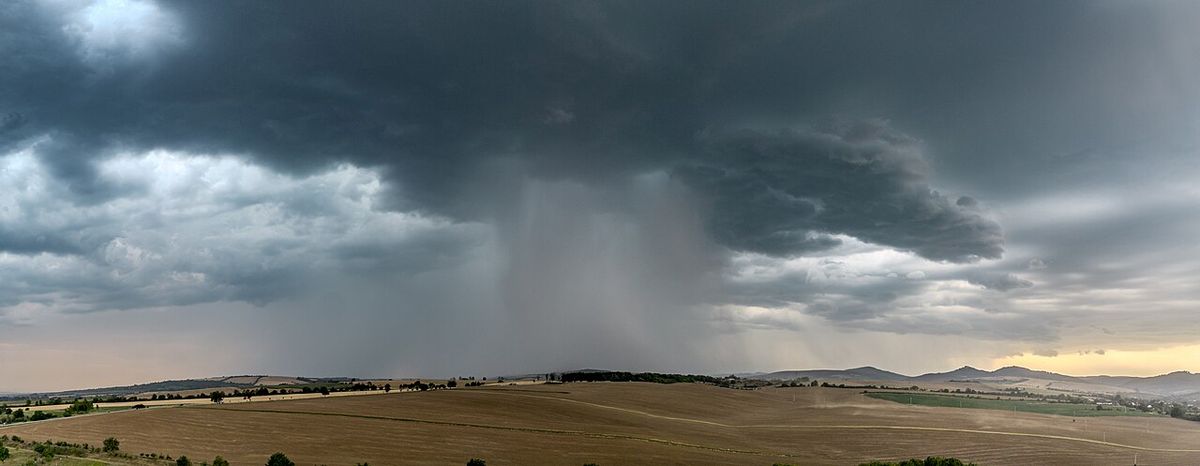
Reactive windshear ("WINDSHEAR, WINDSHEAR, WINDSHEAR")
Triggered by the red WINDSHEAR message on both PFDs with the aural "WINDSHEAR" three times, or by significant airspeed variations during the take-off roll. Memory actions:
- Take-off, before V1: with significant variations in airspeed and airspeed trend below the indicated V1, reject the take-off, making sure enough runway remains to stop. Windshear in the roll can make V1 come later, or sooner, than expected.
- Take-off, after V1: THR LEVERS: TOGA; reaching VR, ROTATE; SRS ORDERS: FOLLOW
- Airborne, initial climb or landing: THR LEVERS AT TOGA: SET OR CONFIRM; AP (if engaged): KEEP ON; SRS ORDERS: FOLLOW
- Do not change the configuration (slats, flaps, gear) until out of the windshear. Closely monitor the flight path and speed, then recover smoothly to a normal climb once out of the shear.
Full back stick is allowed if necessary; it is not a fixed step. Without the FD bars, fly towards an initial pitch attitude of 17.5°, then more if needed to stop a loss of height. The autopilot disconnects by itself if the angle of attack goes above α prot. Note the difference from the EGPWS drill: in windshear the autopilot stays on if engaged, while a PULL UP warning takes it off.
The principle: maximum thrust, trade airspeed for altitude by following the SRS orders, ride out the shear, recover. Reducing thrust or changing config during windshear can lose critical energy.
5. Unreliable airspeed
Triggered when the speed indications cannot be trusted: the CAPT, F/O and STBY speeds disagree, fluctuate or do not match the attitude and thrust. They can also agree and still all be wrong. The memory items apply if the safe conduct of the flight is impacted:
- AP OFF, A/THR OFF, FD OFF
- Establish a known pitch attitude and thrust setting:
- Below thrust reduction altitude: 15° pitch up, TOGA thrust
- Above thrust reduction altitude, below FL100: 10° pitch up, CLB thrust
- Above thrust reduction altitude, above FL100: 5° pitch up, CLB thrust
- Keep the current flap setting (select CONF 3 if in CONF FULL), speedbrakes checked retracted, gear up
Then, from the QRH:
- At or above the MSA or circuit altitude, level off for troubleshooting. Hold the altitude: if the pitch is above the table value, increase thrust; if it is below, reduce thrust; once it settles on the target, adjust thrust to keep it there. Respect the stall warning.
- Identify the affected ADR, starting with PROBE/WINDOW HEAT: ON. The standby airspeed is not an independent third source: ADR 3 and the standby airspeed use the same probe, so their agreement proves nothing, and two ADRs that agree can both be wrong.
- If at least one ADR is confirmed reliable, use it and switch the unreliable ADRs off. If none can be identified, keep one ADR on above FL250 (two switched off); below FL250, if the speed is still unreliable, switch all three off, and the PFD shows the back-up speed scale (BUSS: fly the green) and GPS altitude.
The pitch+thrust combination produces a known, safe flight regime regardless of what the unreliable instruments are showing. Build muscle memory for these numbers: they're flight-critical.
6. Loss of braking
Triggered when there is no braking after touchdown. Memory actions:
- REV MAX. Maximum reverse may be kept until the aircraft stops, if needed.
- Brake pedals RELEASE, before the anti-skid is switched off
- A/SKID OFF: the PF orders it, the PM sets the A/SKID & N/W STRG switch OFF. Braking passes from the BSCU to the ABCU (alternate braking).
- Brake pedals PRESS, maximum brake pressure 1,000 PSI (watch the BRAKES PRESS triple indicator)
- If still no braking: PARK BRAKE, in short successive applications
Releasing the pedals first avoids a brutal brake application when alternate braking takes over. Note that the A320 has no runaway stabiliser memory item: the pitch trim wheel has priority over electric trim, and moving it disconnects the autopilot, not the ELACs.
7. TCAS traffic and resolution advisories
A traffic advisory (TA, "TRAFFIC, TRAFFIC") is a caution: look out and get ready, but do not manoeuvre on a TA alone. A resolution advisory (RA) is a warning. Memory actions for any RA, except a CLIMB RA on approach in CONF 3 or FULL:
- AP (if engaged): OFF
- BOTH FDs: OFF
- Respond promptly and smoothly
- VERTICAL SPEED: ADJUST or MAINTAIN: reach the green area and keep out of the red area of the vertical speed scale, without excessive manoeuvres. If necessary, use the full speed range between Vαmax and VMAX.
- ATC: NOTIFY
For a CLIMB RA on approach in CONF 3 or FULL: GO-AROUND: PERFORM, follow the SRS go-around mode, and monitor the vertical speed, taking over if it enters the red area.
Always follow the RA, even if it means crossing the intruder's altitude: the intruder may have TCAS too and be manoeuvring in response to a coordinated RA. Stall, GPWS and windshear warnings still come first. At "CLEAR OF CONFLICT", notify ATC, return to the ATC clearance, and re-engage the AP and FDs as required.
How to drill memory items
- Verbalise daily: recite the actions out loud during commute, taxi, or downtime. Repetition is everything.
- Cockpit familiarity: practise the physical actions on an A320 cockpit poster. The hand movements matter as much as the words.
- Sim sessions: request additional sim time to drill memory scenarios; don't wait for the recurrent check.
- Cross-pilot brief: brief memory items aloud with your F/O before challenging departures (high terrain, weather, complex airports).
- Specific triggers: drill the recognition of the stall warning sound, the pull-up callout, the WINDSHEAR aural, a TCAS RA and the cabin altitude warning. Recognition speed matters.
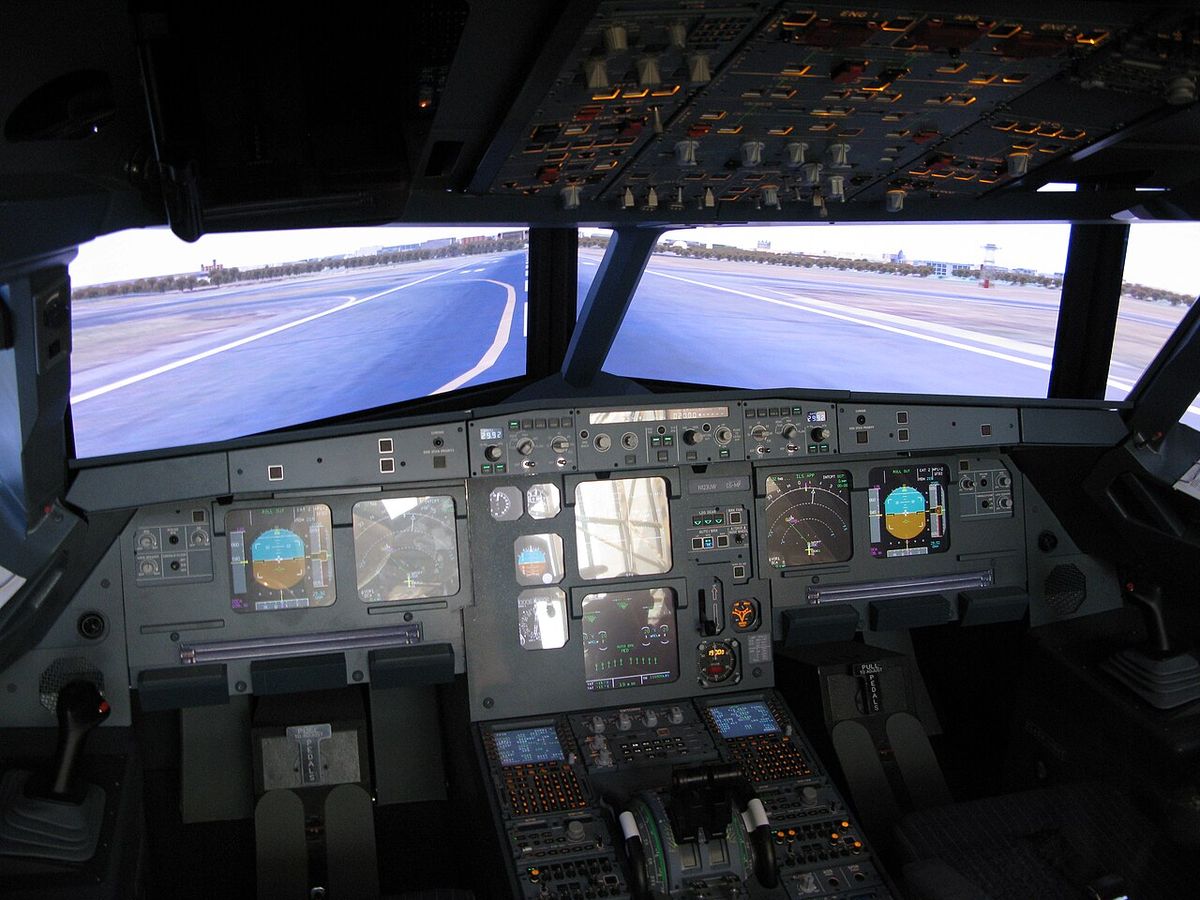
Memory items are tested in every recurrent check, every type rating, and every airline interview. The expectation is verbatim recall under pressure. There's no acceptable level of "I think it goes...": either you know it cold or you don't.
Drill emergency procedures in v1prep
v1prep covers 9,600+ questions across A320 systems and ATPL, with focused content on emergency procedures, ECAM, and abnormals.
Practice the full bank →