Lufthansa Pilot Interview Prep: Process, Sim, Questions (2026 Guide)
LAST UPDATED: 20 AUG 2026
Lufthansa is Europe's flag-carrier heavyweight — hubs in Frankfurt and Munich, an A320-family short-haul operation feeding a widebody long-haul network, and pilot recruitment that runs on two very different tracks: the ab-initio cadet route through Lufthansa Aviation Training, and periodic direct-entry campaigns for licensed pilots. This guide covers what each selection stage typically involves, what to actually prepare, and where candidates commonly lose marks.
One honest caveat up front: Lufthansa does not publish its selection process in detail, and it varies by programme and intake. What follows is the well-established shape plus what candidates commonly report — treat your official invitation as the final word on stages, order, and content.
- About Lufthansa's pilot operation
- The stages of the selection process
- Stage 1: Application & choosing your route
- Stage 2: Aptitude testing (Aon/cut-e style & DLR)
- Stage 3: Simulator assessment
- Stage 4: HR & technical interview
- Technical questions to expect
- Top 7 reasons candidates fail
- Realistic timeline & next steps
About Lufthansa's pilot operation
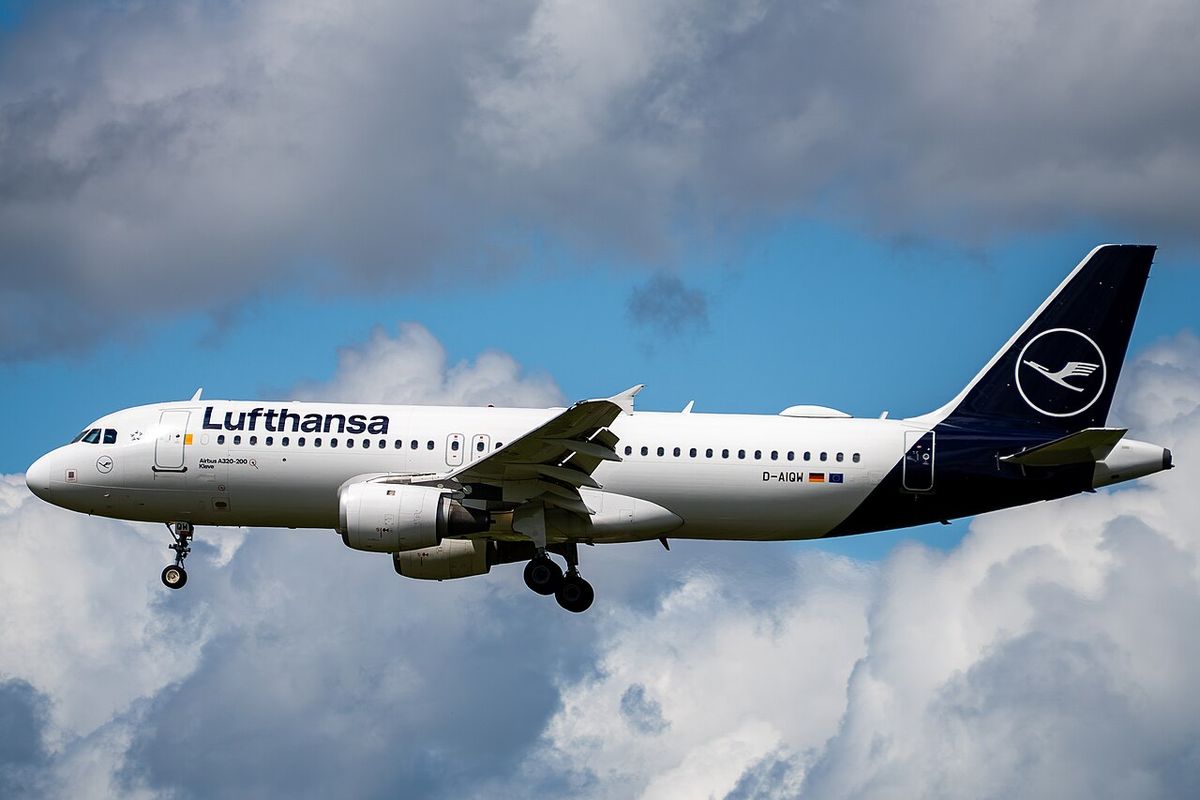
Lufthansa's short-haul and European network out of Frankfurt (FRA) and Munich (MUC) is flown by the A320 family — A319, A320ceo/neo, and A321ceo/neo. Long-haul is widebody territory, with a fleet that includes the A350 and the 747-8. For interview prep the practical consequence is simple: new First Officers typically start on the short-haul fleet, so the A320 family is the aircraft your technical prep should be built around.
Lufthansa mainline sits inside the wider Lufthansa Group, which also includes SWISS, Austrian Airlines, Brussels Airlines, Eurowings, Discover Airlines, and — following the stake purchase completed in 2025 — ITA Airways. That matters for two reasons: cadets have historically been trained with Group placement in mind rather than a guaranteed mainline seat, and aptitude testing methods are broadly shared across Group carriers. If ITA interests you too, see our ITA Airways interview guide.
Language: German proficiency is commonly required or strongly preferred for mainline cockpit roles, alongside ICAO English. Requirements differ between mainline, the cadet programme, and other Group carriers — check the specific posting before you apply, and be honest about your level. Overstating it unravels quickly in a German-language interview.
The stages
| Stage | Typical format | What it tests |
|---|---|---|
| 1. Online application | Web form, CV, licence & hours details (route-dependent) | Eligibility, presentation, motivation |
| 2. Aptitude testing | Aon/cut-e-style online tests; DLR screening for some German cadet programmes | Capacity: reasoning, memory, multitasking |
| 3. Simulator assessment | Handling check, device type varies by programme | Manual flying, scan, CRM |
| 4. HR & technical interview | Structured interview; group exercises reported on some cadet intakes | Competencies, judgement, systems knowledge |
Stage order and exact content vary by route and intake — cadet selection and direct-entry campaigns are run differently, and candidates commonly report the interview and sim in either order. Lufthansa doesn't publish pass rates, and anyone quoting you exact ones is guessing. What's consistent across reports: the aptitude testing is a genuine filter, and the later stages reward preparation over improvisation.
Stage 1: Application & choosing your route
Your first real decision isn't the CV — it's the route:
- Cadet / ab-initio. The flagship path runs through Lufthansa Aviation Training (its flight school operates under the European Flight Academy brand). You apply with little or no flying experience and, if selected, train towards a Group cockpit. A personal contribution to training costs has historically applied on this route — check the current terms on the official site rather than forum folklore.
- Direct entry. Lufthansa has historically filled most mainline seats from its own cadet pipeline, but has run direct-entry campaigns for licensed pilots in recent years as fleets and retirements demanded. These postings appear when they appear — set up alerts and have your paperwork ready.
For the application itself, the classics apply: clean hours breakdown (Total, PIC, P2, IFR, ME, sim), accurate licence and medical details, and a motivation statement that shows research. "Lufthansa is a prestigious airline" is what every applicant writes. Better: why the Group structure, the fleet, and the base reality — Frankfurt or Munich, in German operational culture — actually fit you.
Stage 2: Aptitude testing
Two testing worlds show up in Lufthansa selection, and which one you face is programme-dependent:
- Aon/cut-e-style online testing is widely associated with the Lufthansa Group. Timed subtests typically cover numerical and verbal reasoning, spatial orientation, memory, monitoring/multitasking, and English. The format is learnable — practice materials for the Aon (cut-e) style are easy to find, and candidates who drill the multitasking format consistently report it as the biggest single gain.
- DLR screening — run by the German Aerospace Center at its Hamburg selection centre — has historically been the gate for Lufthansa's German cadet programmes: multi-day, psychologically rigorous, covering aptitude, coordination, personality, and group behaviour. Candidates commonly describe it as a two-part structure (a basic screening followed by a company-specific qualification stage), but treat any stage-by-stage account as historical unless your invitation confirms it.
Preparation is the same either way: months of little-and-often practice on timed aptitude formats beats a cramming week. Speed-arithmetic, mental rotation, n-back-style memory drills, and multitasking trainers all transfer. And sleep — these batteries measure spare capacity, and fatigue is the fastest way to have none.
Stage 3: Simulator assessment
Details of the sim stage vary by programme, and Lufthansa doesn't publish the device type — don't assume a specific aircraft until your invitation says so. Cadet-stream candidates commonly report generic jet-style devices testing raw aptitude; type-rated direct-entry candidates may reasonably expect something closer to an A320 environment. Either way, the assessment logic is the near-universal one: can you fly, and can you fly while communicating?
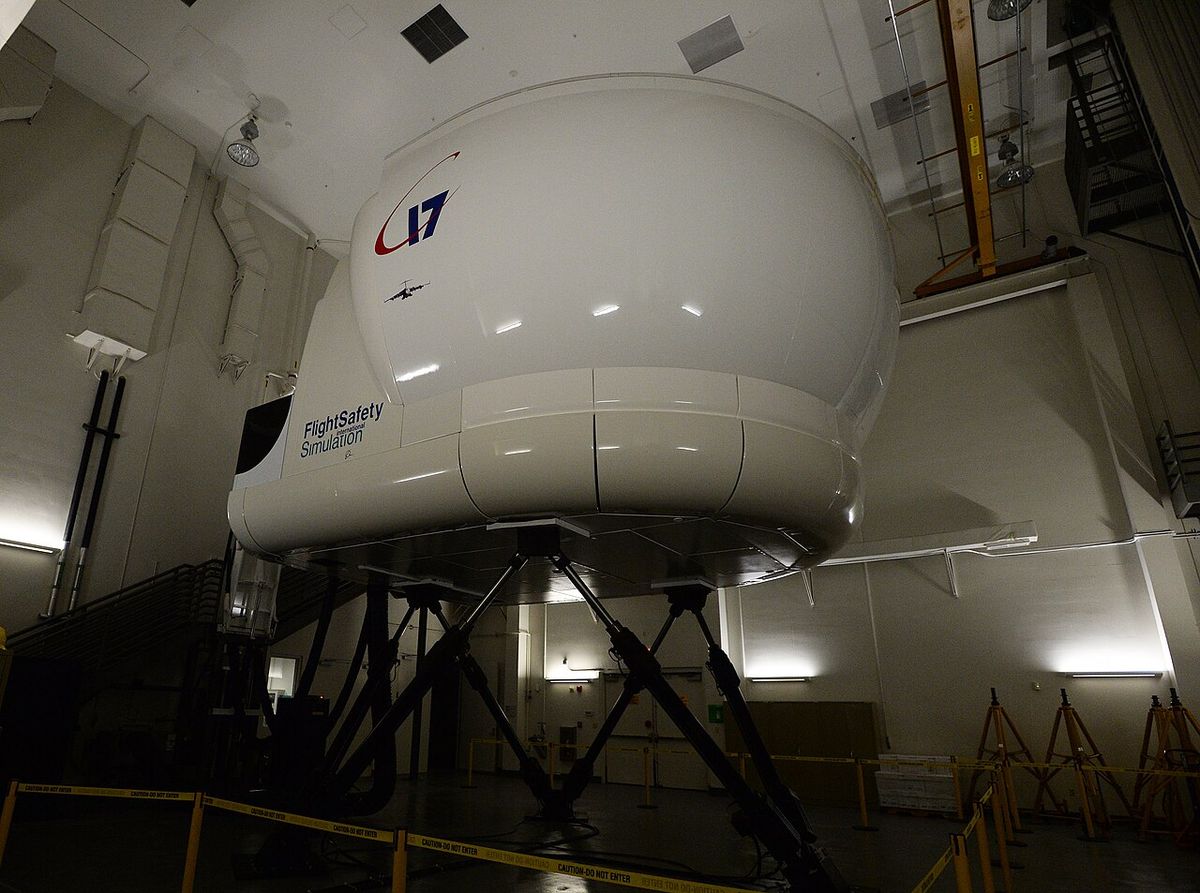
What to expect (typical shape)
- A briefing — structured thinking matters more than memorised patter
- Manual handling — climbs, level-offs, rate-one turns, speed changes, often raw data
- An instrument approach — commonly an ILS, hand-flown
- A go-around — the classic capacity test
- Possibly an abnormal — to see workload management, not system trivia
What they're really testing
- Basic handling. Smooth inputs, trim discipline, anticipation. Pitch-power-trim should be automatic. Over-controlling under observation is the classic failure mode.
- Instrument scan. Raw-data straight-and-level without wandering. When the flight director is gone, do you still have an aircraft?
- CRM & communication. Brief out loud, make standard calls, verbalise decisions. Silent perfection reads as failed CRM in any airline's sim.
Stage 4: HR & technical interview
Candidates commonly report structured interviews with a panel — typically some mix of a Lufthansa captain, HR, and (on cadet routes) a psychologist — and group exercises on some cadet intakes. Expect competency questions, scenario judgement, and technical questions, with the balance depending on your route: capacity and personality for cadets, systems depth for experienced hires.
Common competency questions
- Tell me about a time you disagreed with an instructor or captain.
- Describe a decision you made with incomplete information.
- Tell me about a failure and what you changed afterwards.
- Why Lufthansa — and why should it be you in a Group cockpit?
- How do you handle sustained pressure over a long duty?
Answer with one real example per question, structured: situation, task, action, result — with the emphasis on what you did and what changed. Keep answers to ~90 seconds. Claiming you've never disagreed with anyone reads as low self-awareness, not harmony.
Scenario questions
- "Descending into a Frankfurt slot, your destination weather drops below minima. Walk me through your options."
- "The captain wants to continue an approach you consider unstable. What do you do, in what order?"
- "A cabin crew member reports a smell of smoke in the aft galley in cruise. Thought process?"
There's no single right answer — they want structure: assess, generate options, evaluate against constraints, decide, communicate, review. Naming threat and error management explicitly, where relevant, lands well.
Technical questions to expect
Technical depth tracks your route. Ab-initio candidates get ATPL-level fundamentals and physics; licensed and type-rated candidates should expect real A320 systems questions, since the short-haul fleet is where new First Officers typically start. These are drawn from the same ground the question banks cover:
A320-specific (for licensed / type-rated applicants)
- What are the A320's flight control laws, and what degradations move you between them? (See our Flight Control Laws guide.)
- Walk me through the three hydraulic systems and what the PTU does.
- What is a FLEX takeoff, and what limits apply? (See our FLEX Takeoff guide.)
- Engine failure at V1 — immediate actions and the first 400 feet.
- What's the maximum cabin altitude and maximum differential pressure?
- What does the ECAM do for you during an abnormal, and where are its limits?
ATPL-level (for ab initio)
- What's the difference between IAS, CAS, and TAS?
- What causes a stall, and how does sweep-back affect it?
- What is an ILS, and what are the approach categories?
- Why does VMO give way to MMO as you climb?
- Decode this METAR for me.
- What is RVSM and where does it apply?
Top 7 reasons candidates fail
- Underprepared aptitude testing. The testing stage — Aon/cut-e style or DLR — is the widest filter in the process, and it rewards months of practice, not days.
- Overstating German. If the posting requires German and yours is A2, the interview will find out. Apply where your actual level fits, or fix the level first.
- Generic motivation. "Flag carrier, great reputation" is every applicant's answer. Show you understand the Group structure, the fleet, and what a Frankfurt or Munich base actually means for your life.
- Manual handling in the sim. Over-controlling, no trim, scan collapse under workload. The oldest failure mode in aviation selection.
- Competency answers without a result. If your story ends at "and then I told them", it isn't finished. The result — and what you changed — is the answer.
- Technical gaps at the licensed level. A type-rated applicant who can't explain Normal vs Alternate Law, or what the PTU does, hands the panel an easy no. Understand, don't recite.
- Treating a multi-day selection like a single interview. Where selection runs over days — as candidates commonly report for the cadet route — you are being observed throughout, including in group exercises and breaks. Arrive rested and be consistent.
Realistic timeline & next steps
| Phase | Commonly reported |
|---|---|
| Application to testing invite | A few weeks — varies by campaign volume |
| Testing to interview / sim stages | Several weeks, sometimes longer between cadet stages |
| Final stage to decision | A few weeks |
| Cadet route: selection to flight deck | Roughly two years of training, intake-dependent |
| Direct entry: offer to line flying | Type rating (if needed) plus line training — several months |
Treat every duration above as indicative — elapsed times vary widely by route, intake, and demand cycle, and Lufthansa's hiring appetite moves with fleet plans and retirements. What you control is readiness: aptitude practice banked early, systems knowledge current, language honest, paperwork complete the day a campaign opens.
Build the systems depth before the panel asks
The sim wants smooth hands — but the technical interview wants real A320 and ATPL knowledge, reflexive under pressure. v1prep covers 9,500+ A320 and ATPL questions sourced from the FCOM and the EASA syllabus.
Practice the full bank →