SAS Pilot Interview Prep: Process, Sim, Questions (2026 Guide)
LAST UPDATED: 5 OCTOBER 2026
SAS, Scandinavian Airlines, recruits pilots into three operating companies and five bases, and it publishes how it selects them: five steps from CV screening to a drug and alcohol test. On 25 August 2026 its own careers portal carried five pilot vacancies, from an Experienced First Officer route that starts at 400 hours on CS-25 aircraft to direct-entry Captains on the A320 and the E195. This guide sets out what SAS asks for on each route, how each step works, and what a panel will expect you to know about the airline in 2026.
Know the 2026 SAS, not the old one. It completed a Chapter 11 restructuring in 2024 and left Star Alliance for SkyTeam on 1 September 2024. Air France-KLM, which holds 19.9%, announced in July 2025 a plan to raise its stake to 60.5% by buying out Castlelake and Lind Invest, subject to approvals, with the Danish state keeping its 26.4%. And the fleet is being renewed at both ends: 45 Embraer E195-E2s ordered in 2025 and 18 Airbus A330-900s in June 2026.
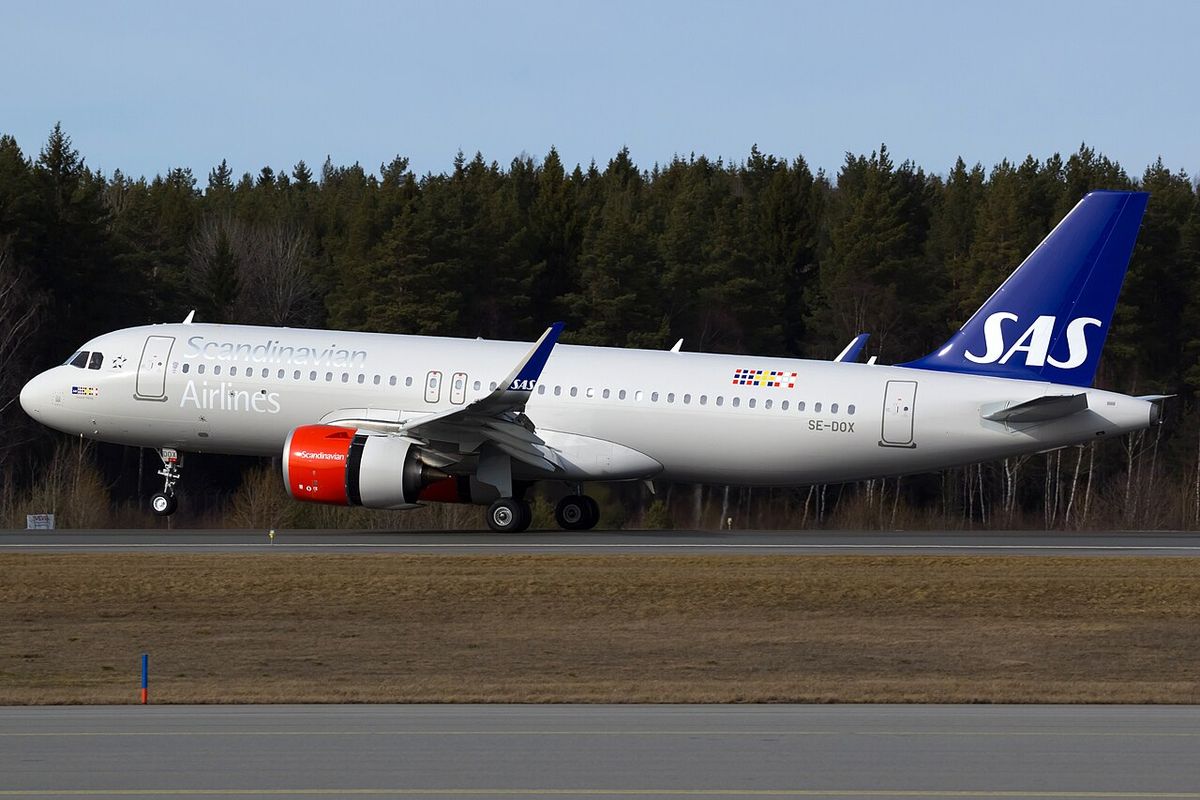
As at 25 August 2026 SAS’s own portal listed an Experienced First Officer route for the Scandinavian bases (first courses planned for autumn 2026), an A320neo First Officer route at London Heathrow (assessments from August, courses late 2026 and early 2027), Direct Entry Captain A320 in Copenhagen, Direct Entry Captain E195 at all bases, and an A320neo Captain role at Heathrow. The Cadet First Officer posting showed “this position has been filled”. Check the airline pilot jobs board for the current position.
Three airlines, five bases
SAS flies under three air operator certificates: SAS itself, the original Danish, Norwegian and Swedish consortium founded in 1946; SAS Connect, an Irish-registered operator flying A320neos; and SAS Link, which flies the Embraer E195. The pilot vacancies name five bases between them: Copenhagen, Stockholm Arlanda, Oslo, Bergen and London Heathrow. The operator and base in the advert decide your contract, your licence authority and which right-to-work rule applies, which is why SAS’s adverts differ so much from one another.
The fleet is all Airbus and Embraer: the A320 family, including the A320neo, on short-haul; the E195 on regional routes; and A330s and A350s on long-haul from Copenhagen. The Boeing 737s that once flew SAS short-haul are gone. Two orders shape the next decade. In July 2025 SAS ordered 45 E195-E2s with purchase rights for 10 more, its largest jet order direct from a manufacturer since 1996, with deliveries from late 2027. On 30 June 2026 it signed for 18 A330-900s, part of an investment in up to 40 wide-bodies that also adds more A330-300s in the meantime (Airbus and SAS press releases).
For a candidate, the practical consequence is that “SAS” is not one job. An Experienced First Officer may be placed on the A320 or the E195; a Heathrow First Officer flies the A320neo under UK rules; a Captain applies to one fleet and one base. Read the advert you are answering, not a summary of SAS in general.
What SAS asks for, route by route
| Route | Licence and hours | Type rating | Also required |
|---|---|---|---|
| Experienced First Officer, A320 and E195, Scandinavian bases | EASA CPL(A) or MPL; 400 h on CS-25 or FAR-25 aircraft | Paid for by SAS | MCC and Advanced UPRT, EASA Class 1, ICAO English Level 5 or 6, unrestricted right to live and work in the EU, clean criminal record |
| A320neo First Officer, London Heathrow | EASA CPL with ATPL subjects; hours not published | A320 rating “preferable” | ICAO Level 5, unrestricted right to live and work in the UK, no incidents or accidents |
| Direct Entry Captain A320, Copenhagen | Unrestricted EASA ATPL(A) with IR; 4,000 h total, 2,000 h on jets or high-speed turboprops, 1,000 h PIC on aircraft above 55 t | Fully funded, 3-year bond | Experience with winter operations |
| Direct Entry Captain E195, all bases, rated or not | EASA ATPL(A); 4,000 h total with 250 h PIC or PICUS, or 3,500 h with 500 h PIC above 16 t, or 3,000 h with 1,000 h PIC above 16 t | Fully funded, 3-year bond | As for the A320 Captain |
| A320neo Captain, London Heathrow | Listed on the portal; the advert itself was not read, so do not assume the Copenhagen figures apply | ||
The number most often misread is the First Officer one. 400 hours on CS-25 or FAR-25 aircraft means time on large transport aeroplanes certified to those codes, not 400 hours total, so a fresh CPL or MPL holder does not meet it and several job boards that repeat “400 hours” have the wrong idea. The First Officer pages also mention pay bands under and over 1,500 hours: that is a pay band, not an entry requirement.
Two other lines catch applicants. SAS accepts EASA licences issued outside Scandinavia, but says they “must be converted before course start”, so a transfer of your state of licence issue has to be finished before training begins. And the English requirement on SAS’s own pages is ICAO Level 5 or 6, not the Level 4 that older third-party copies of its adverts still quote.
The five published selection steps
| Step | What it is | What to prepare |
|---|---|---|
| 1. Application screening | CV and documents checked against the advert | Hours broken down by the advert’s categories, CS-25 time shown separately |
| 2. Recruiter interview | Online or video interview with a recruiter | Why SAS, why this operator and base, and your career in two minutes |
| 3. Online tests | Cognitive and personality assessments | Timed reasoning practice for two to three weeks; consistent, honest questionnaire answers |
| 4. Assessment day | Group exercise, simulator session and personal interview | Competency examples, a sim plan for your device, and the fleet you are applying for |
| 5. Final checks | Background screening, security interview, right-to-work verification, drug and alcohol testing, in the city where you will be based | Dates for every address and employer, and your right-to-work documents |
Two published details change how you should plan. Approved First Officer candidates may be placed in a holding pool, with start dates set by operational need and training capacity, so a pass is not a course date. And unsuccessful candidates may reapply 12 months after the assessment, which makes the first attempt worth preparing properly. The 2026 adverts also show the rhythm: the Heathrow First Officer route offered assessment dates from August into September for courses in late 2026 and early 2027, and the Copenhagen Captain route invited candidates in summer and autumn for employment from autumn 2026 or spring 2027.
The simulator session
SAS names a simulator session on the assessment day and publishes no profile, device or duration. Because the Experienced First Officer route covers both the A320 and the E195, and the Heathrow routes are A320neo, ask which device your invitation uses before you prepare, and plan for the other philosophy if it is not your own.
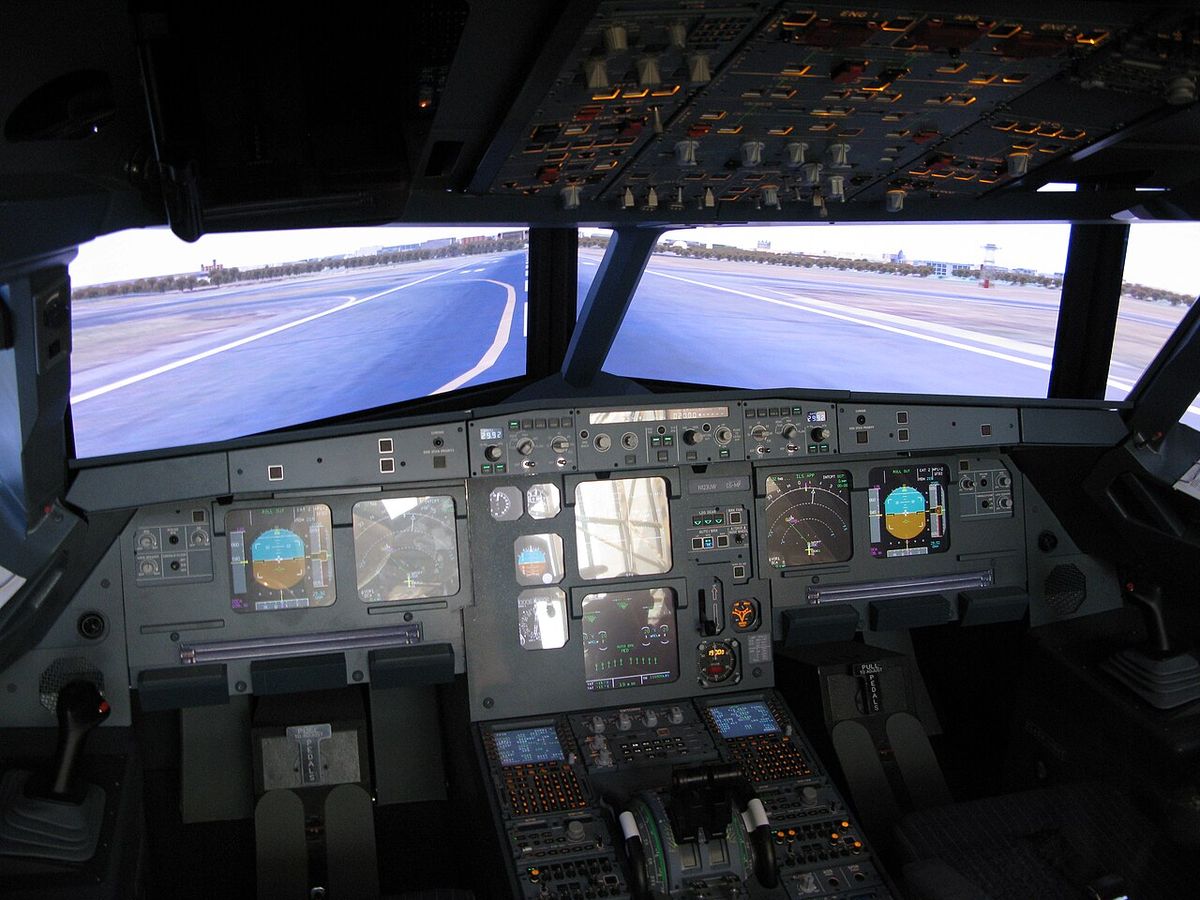
- Coming to an A320 from a yoke. Sidestick, Normal Law and autotrim: make an input, release, and let the aircraft hold the new path. Most converting candidates over-control in the first minutes; the fix is smaller inputs and patience, not more of them.
- Coming to an E195 from an Airbus. A control column and conventional trim habits come back. Fly attitude and thrust, trim early, and expect the aircraft to need you in a way an A320 in Normal Law does not.
- Either way. Brief before each phase, call deviations out loud and correct them early. The session sits on the same day as the group exercise and the interview, so a calm, communicative sim also supports what the panel sees in the other two.
The interviews and the group exercise
You meet SAS twice before the final checks: a recruiter interview online or on video, then a personal interview on the assessment day after the group exercise. The recruiter interview filters on motivation and fit, so have short, specific answers to the questions SAS’s structure makes inevitable.
- Why SAS, now? Show you know the airline after its restructuring: SkyTeam rather than Star Alliance, Air France-KLM’s plan to take a majority, and a fleet renewal with A330-900s and E195-E2s. A candidate still describing the 737 operation has not done the reading.
- Why this operator and this base? SAS, SAS Connect and SAS Link differ in fleet and terms, and Heathrow is a UK contract. Explain why the one you applied for fits your life, and what you would do if offered another.
- Winter operations. SAS’s A320 Captain advert asks for experience with winter operations outright. Expect First Officer candidates to be asked how they handle de-icing, contaminated runways and strong crosswinds, and have a real example if you have one.
- A safety concern raised to someone senior. Give one real event: what you saw, the words you used, and how it ended.
In the group exercise, assessors watch how you work with the others, not who reaches the answer: make sure everyone understands the task, keep an eye on time, build on other people’s ideas and bring a quiet member in. For the competency questions, one real example each, in situation, task, action and result, kept to about ninety seconds.
Technical preparation: winter, Airbus and Embraer
SAS does not publish a technical syllabus, so prepare from three directions.
Winter operations, whatever your fleet
- Ground de-icing and anti-icing: fluid types, holdover time and what ends it. See the Library on ground de-icing and anti-icing.
- Contaminated runway performance: how reported braking action and contaminant depth change your landing and take-off figures. See wet and contaminated runways.
- Cold temperature corrections to altitudes on approach: see cold weather altimetry explained.
- Icing in flight and engine and wing anti-ice use: see airframe icing.
For the A320 routes
- Flight control laws and what degrades Normal Law (see our A320 flight control laws guide)
- Green, Blue and Yellow hydraulics and the PTU (see our A320 hydraulic system guide)
- FLEX and why it is not used on a contaminated runway (see our FLEX takeoff guide)
- ceo and neo differences, which matter at SAS because SAS Connect and Heathrow fly the neo
For the E195 and non-rated candidates
v1prep has no E-Jet bank, so an E195 applicant should work from the manuals of the type they fly now and from ATPL theory: performance, meteorology with the winter groups in a METAR, and the systems principles common to every jet. A non-rated First Officer candidate is assessed on whether they think like a professional pilot, not on an FCOM they have not yet been given.
Where SAS applicants go wrong
- Reading 400 hours as total time. The First Officer minimum is 400 hours on CS-25 or FAR-25 aircraft. Without it the application is screened out, however many total hours you have.
- Applying with ICAO Level 4. SAS’s own pages ask for Level 5 or 6.
- Leaving the licence transfer late. A non-Scandinavian EASA licence is accepted, but it must be converted before the course starts.
- Mixing up the rules for Heathrow and Scandinavia. Heathrow roles need the right to live and work in the UK; the Scandinavian bases need it in the EU. SAS offers no sponsorship in these adverts.
- Stale research. Star Alliance, the 737s and the pre-2024 ownership belong to a different SAS.
- Treating a pass as a start date. Approved candidates may wait in a pool; keep current while you wait.
- A silent simulator session. Accurate flying without briefing or calling out loud scores poorly on the crew side, and the sim sits on the same day as everything else.
SAS pilot recruitment: common questions
What is the SAS pilot selection process?
SAS publishes five steps: application and CV screening; an online or video interview with a recruiter; online cognitive and personality tests; an assessment day with a group exercise, a simulator session and a personal interview; and final checks, which are background screening, a security interview, right-to-work verification and drug and alcohol testing in the city where you will be based.
How many hours do I need to fly for SAS?
For the Experienced First Officer route, 400 hours on CS-25 or FAR-25 aircraft, which means large transport aeroplanes, not total time, with an EASA CPL or MPL. The Copenhagen A320 Captain route asks for 4,000 hours total, 2,000 on jets or high-speed turboprops and 1,000 in command of aircraft above 55 tonnes; the E195 Captain route offers three combinations from 3,000 hours. The Heathrow First Officer advert publishes no hours figure.
Does SAS pay for the type rating?
SAS’s First Officer and Captain pages say the type rating is paid for by SAS. The Captain adverts describe it as fully funded with a three-year bond; the Experienced First Officer advert we read mentions no bond.
Do I need to speak a Scandinavian language to fly for SAS?
The adverts we read on 25 August 2026 ask for ICAO English Level 5 or 6 and do not list a Scandinavian language as a requirement. What they do require is the unrestricted right to live and work in the EU for the Scandinavian bases, or in the UK for London Heathrow.
Where are SAS pilot bases?
The 2026 vacancies name Copenhagen, Stockholm Arlanda, Oslo, Bergen and London Heathrow. The base sits with the operator in the advert, SAS, SAS Connect or SAS Link, and decides your contract and your right-to-work rule: EU for the Scandinavian bases, UK for Heathrow.
Drill A320 systems and ATPL theory
v1prep covers 9,500+ practice questions across A320 systems and ATPL theory — the exact ground the SAS technical interview walks. Every answer sourced, no folklore.
Practice the full bank →