Iberia Pilot Interview Prep: Process, Sim, Questions (2026 Guide)
LAST UPDATED: 20 AUG 2026
Iberia is Spain's flag carrier, part of IAG alongside British Airways, Vueling, Aer Lingus, and LEVEL, and the dominant airline between Europe and Latin America. New First Officers typically start on the A320-family short-haul fleet out of Madrid, with a seniority path toward the A330 and A350 long-haul operation. If you're applying — cadet, direct-entry, or rated — this guide covers the typical shape of the selection process, what to actually prepare, and where candidates commonly lose marks.
One honest caveat up front: Iberia does not publicly document its selection process in detail, and it varies by intake. Everything stage-specific below is the commonly reported pattern, not gospel — your invitation letter is the authority. What doesn't vary: the technical bar, the sim fundamentals, and the CRM expectations. Those you can drill now.
About Iberia's pilot operation
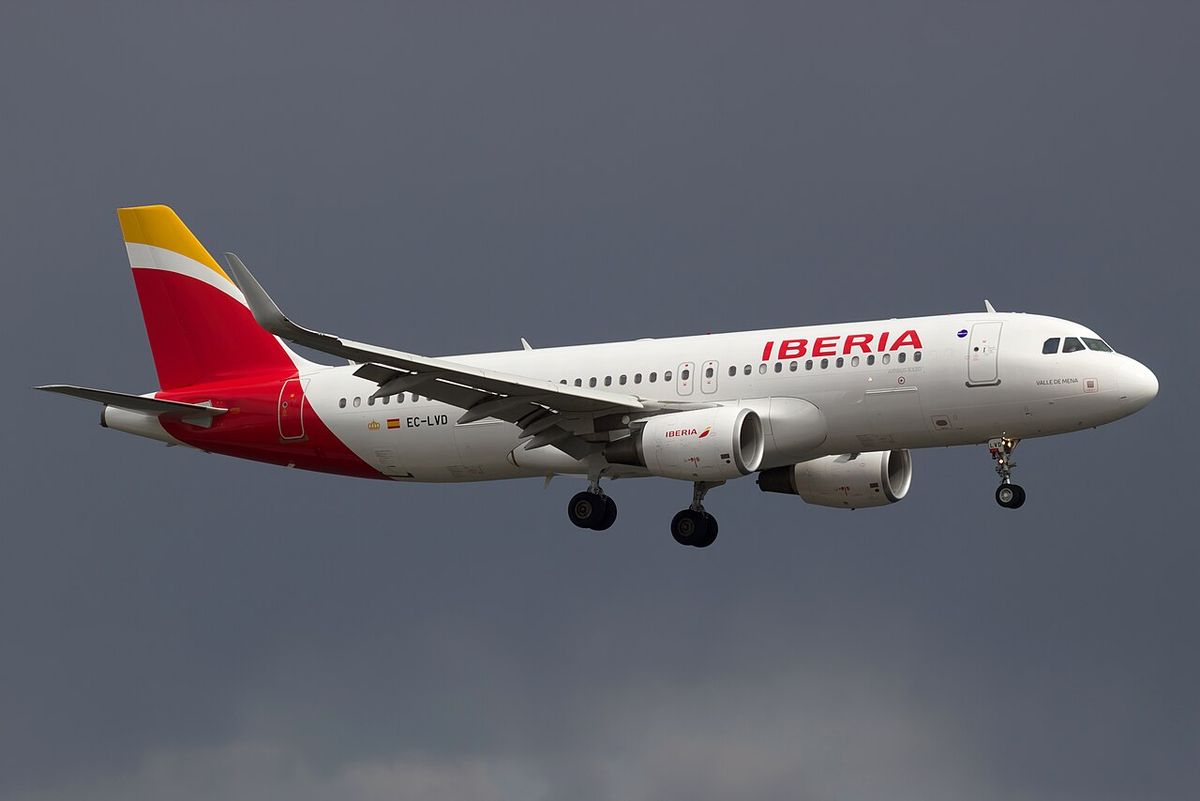
Founded in 1927, Iberia is one of Europe's oldest airlines and a founding-era member of the oneworld alliance. Since 2011 it has been part of International Airlines Group (IAG) — the same group as British Airways, Vueling, Aer Lingus, and LEVEL. That group structure matters in the interview: expect to show you understand where Iberia sits inside IAG and how it differs from its low-cost siblings.
The operation is built around Madrid–Barajas (MAD), Terminal 4. Short and medium-haul flying is on the A320 family — A319, A320ceo/neo, and A321 variants — covering Spain, Europe, and North Africa. Long-haul is Airbus widebody: A330s and A350-900s on the Latin America network that defines the airline, plus North America. Iberia was also the first airline in the world to put the A321XLR into service, using it on thinner transatlantic routes. The group additionally includes Iberia Express, its lower-cost short-haul operator, which also flies A320-family aircraft.
Why this matters for your prep: whatever your long-haul ambitions, the realistic entry point is the A320 family. Progression to the widebody fleet is seniority-driven, as is typical at legacy carriers. So the technical preparation that pays off is A320 systems plus ATPL theory — not A350 trivia.
The typical selection stages
Iberia runs separate campaigns for cadets, non-rated pilots, and type-rated direct entry, and the exact sequence varies between them. The commonly reported shape follows the pattern used across European legacy carriers:
| Stage | Format | What it screens for |
|---|---|---|
| 1. Online application | Web form, CV, licence & hours details | Minimum requirements, presentation |
| 2. Aptitude & psychometric tests | Computer-based, timed | Capacity, multitasking, personality fit |
| 3. HR & technical interview | Panel interview, competency + technical | Motivation, CRM, systems & ATPL knowledge |
| 4. Simulator assessment | Sim profile with raw-data handling | Handling, scan, SOP discipline, CRM |
Order can differ — some intakes reportedly interview before the sim, others after — and some campaigns add a medical review or group exercise. Iberia does not publish pass rates for any stage, and any site quoting exact percentages is guessing. What's consistent in candidate reports: each stage is eliminatory, and the sim and technical interview carry the most weight.
Stage 1: Online application & CV
The application asks for licences, ratings, hours, and work history. Two areas where most applications are weak:
- Aviation hours formatting. Total Time, PIC, P1, P2, IFR, sim, ME/SE breakdown. Get these right and consistent with your logbook. Ambiguity reads as carelessness — and at a legacy carrier with deep applicant pools, carelessness is enough to be filtered.
- Motivation that shows research. "I've always dreamed of flying for Iberia" is what everyone writes. Specific is better: the Madrid hub operation, the Latin America network, the A321XLR long-haul-narrowbody strategy, the path from A320 short-haul to the A350. Show you understand the airline you're joining, not just the brand.
Stage 2: Aptitude & psychometric testing
Like virtually every European airline, Iberia screens with computer-based aptitude and psychometric testing. Iberia doesn't publicly confirm which test provider or battery it currently uses — and providers change between intakes — so don't over-index on one brand of practice test. The content areas are stable across the industry:
- Numerical reasoning — speed arithmetic, percentages, fuel/time/distance problems
- Verbal reasoning — comprehension under time pressure
- Spatial orientation — 3D rotation, instrument interpretation
- Memory and multitasking — tracking multiple parameters at once, the classic discriminator
- Personality questionnaire — untimed, consistency-checked, often revisited at interview
Practice the format family, not one product: pilot-aptitude platforms cover the same skill areas whichever vendor an airline runs that year. The tests aren't intellectually hard — they're tightly timed. Familiarity is what keeps your accuracy up at speed.
The simulator assessment
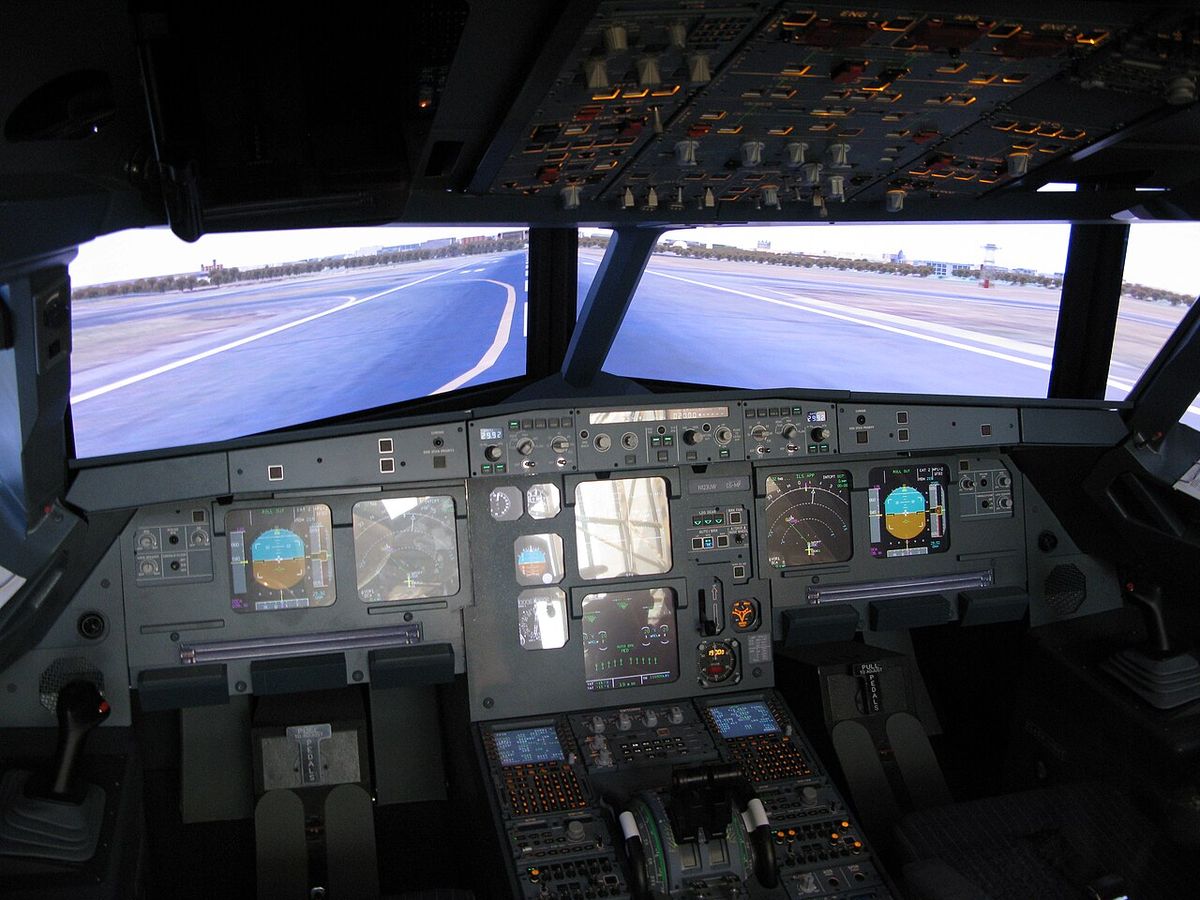
Iberia doesn't publish the assessment device or profile. Given that new joiners typically go to the A320-family fleet, candidates commonly report an A320-style sim profile; treat your invitation letter as the definitive word on device and format. The good news: sim assessments across European carriers test the same fundamentals, so you can prepare effectively without knowing the exact box.
What a typical profile involves
- Departure brief and pre-flight — structured thinking out loud, not recited SOPs
- Manual takeoff and climb — often raw data, flight directors off
- Hand flying — level-offs, rate-one turns, climbs and descents on instruments
- ILS approach — commonly raw data, autopilot and autothrust off
- Go-around — flown and verbalised correctly
- Possibly an abnormal — an engine failure or instrument failure to see your process
What they're really testing
- Basic handling. Smooth inputs, trim discipline, anticipation. Over-controlling is the classic washout. The assessor is judging whether they'd share a flight deck with you.
- Instrument scan. Can you hold heading, altitude, and speed on raw data without the flight director doing your thinking?
- CRM and communication. Standard callouts, briefing out loud, verbalising decisions when something goes wrong. Silent perfection is failed CRM.
HR & competency interview
The interview is typically a panel format mixing competency questions, motivation, and technical content. Candidates commonly report that parts of the conversation may run in Spanish as well as English — unsurprising for a Madrid-based operation — so check your vacancy's language requirements and be ready to switch registers professionally.
Competency questions to prepare
- Tell me about a time you disagreed with a captain or instructor.
- Describe a decision you made with incomplete information.
- Tell me about a failure and what you changed afterwards.
- Give an example of a CRM breakdown you witnessed and what should have happened.
- Why Iberia — and why now?
Answer with the STAR structure (Situation, Task, Action, Result): one real example each, ~90 seconds, with the emphasis on what you did and what changed. "I've never had a conflict" reads as low self-awareness, not sainthood.
Scenario questions
- "Descending into Madrid, you get a hydraulic system failure. Walk me through your priorities."
- "The captain wants to continue an approach you consider unstable. What do you do?"
- "Weather at destination is deteriorating and you're mid-Atlantic with two alternates. Talk me through your decision process."
There's no single right answer — they're scoring structure: assess, list options, evaluate constraints, decide, communicate. Name TEM (Threat & Error Management) where it fits naturally.
Technical questions to expect
Depth depends on your entry route. Type-rated applicants should expect real A320 systems questions; cadet and non-rated applicants get ATPL fundamentals and performance concepts. Either way, hesitant answers on core material are commonly reported as a decisive negative — this is the most preparable part of the whole process.
A320-style questions (for type-rated)
- What are the A320 flight control laws, and what degrades Normal Law to Alternate? (See our Flight Control Laws guide.)
- Walk me through the hydraulic system — Green, Blue, Yellow, and what the PTU does.
- What is a FLEX takeoff, and what are its limits? (See our FLEX Takeoff guide.)
- Engine failure at V1 — immediate actions and the first 400 feet.
- What does FADEC control, and what happens if it fails?
- Maximum cabin altitude and maximum differential pressure?
ATPL-level questions (for ab initio / non-rated)
- What's the difference between IAS, CAS, and TAS?
- What are the ILS categories and their minima?
- What is RVSM and where does it apply?
- How do you decode a METAR? Take me through one.
- What is Vmo/Mmo and why does the limiting factor change with altitude?
Top 7 reasons candidates fail
- Manual handling in the sim. Over-controlling, no trim discipline, chasing the needles. The most common washout at any airline's sim assessment.
- Generic motivation. Not knowing Iberia's fleet split, the Madrid hub, the Latin America network, or where Iberia sits inside IAG signals you applied everywhere with the same letter.
- Underestimating the language dimension. Turning up unable to hold a professional conversation in Spanish when the vacancy called for it — check the posting and prepare accordingly.
- STAR answers without a result. A story that ends with "and then we moved on" isn't an answer. The R is what changed and what you learned.
- Weak A320 systems knowledge when type-rated. If you hold the rating, "I'd have to look that up" on control laws or hydraulics is disqualifying. Understand, don't just memorise.
- Silent sims. Flying accurately without briefing, callouts, or verbalised decisions is failed CRM, not modesty.
- Arriving unprepared for a long day. Travel in the day before, rest, and bring organised paperwork. Assessment fatigue is self-inflicted and visible.
Timeline & next steps
Iberia doesn't publish selection timelines, and elapsed time varies widely with the intake: legacy-carrier campaigns are typically tied to fleet deliveries and training-centre capacity, so candidates commonly report anything from a few weeks to several months between stages. Two practical implications:
- Don't let readiness decay. If your sim invitation lands six weeks after your tests, you want your scan and your systems answers as sharp as the day you applied. Little and often beats cramming twice.
- Silence isn't rejection. Batch processing is normal at airlines this size. Chase politely after the timeframe given in your correspondence, not before.
Drill the technical bank before your interview
The sim wants smooth hands — the panel wants real systems knowledge. v1prep covers 9,500+ A320 and ATPL questions sourced from the FCOM and the EASA syllabus. Drill until your answers are reflexive, in English first — then practise saying them in Spanish.
Practice the full bank →