Air France Pilot Interview Prep: Process, Sim, Questions (2026 Guide)
LAST UPDATED: 20 AUG 2026
Air France is the flag carrier of France, part of the Air France-KLM group and a founding member of SkyTeam — a mixed short-haul and long-haul operation built around Paris Charles de Gaulle. Unlike the low-cost carriers, Air France publishes very little about its pilot selection, and much of what circulates online is second-hand. This guide sticks to what is genuinely known, flags what is only candidate-reported, and tells you what to drill either way.
This isn't a regurgitation of the Air France careers website. It's the working pilot's view: what each stage really tests, what to drill, and where most candidates lose marks.
- About Air France's pilot operation
- The shape of the selection process
- Stage 1: Online application & file screening
- Stage 2: Aptitude & psychometric testing
- Stage 3: HR & technical interviews
- Stage 4: Simulator assessment
- Technical questions to expect
- Top 7 reasons candidates fail
- Realistic timeline & next steps
About Air France's pilot operation
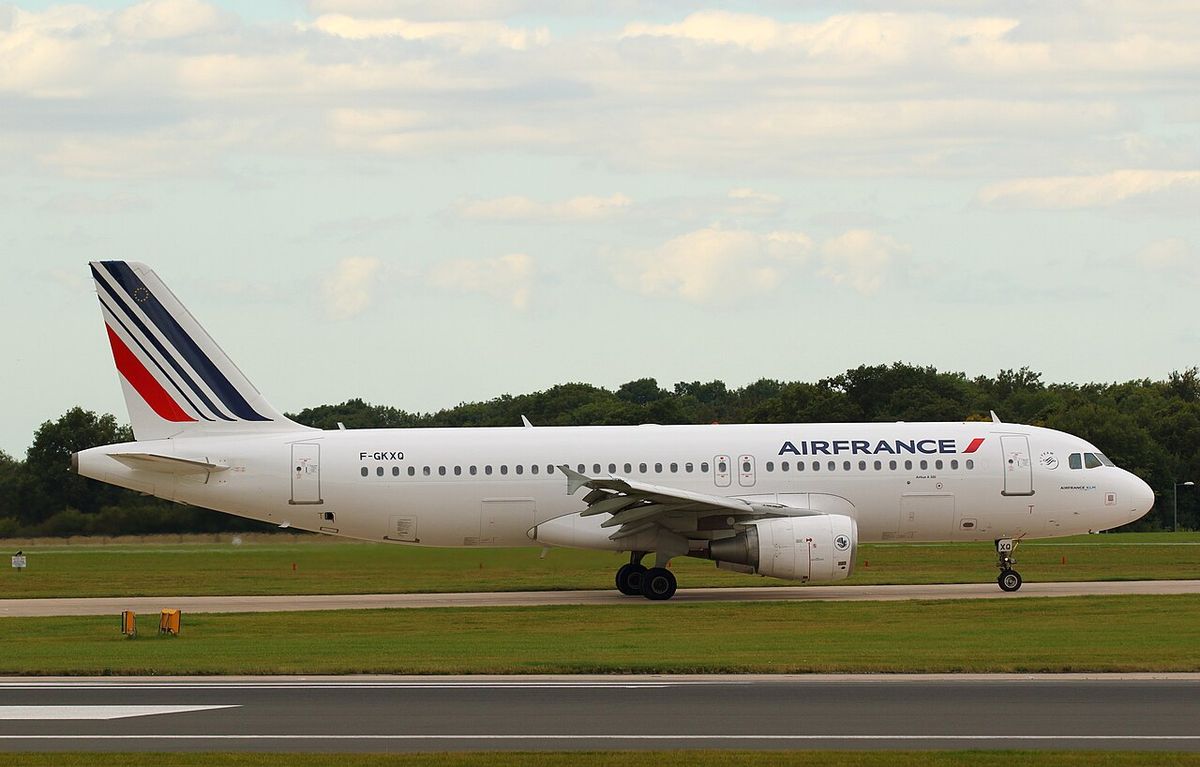
The short and medium-haul network is flown on the A320 family, with the A220-300 fleet growing as the older, smaller A320-family variants are phased out. Long-haul is a widebody operation — Boeing 777s and 787s and Airbus A350s among the types. For a new-hire pilot the practical consequence is simple: short-haul new joiners fly Airbus narrowbodies, and the systems philosophy you'll be quizzed on is Airbus philosophy.
The operational centre of gravity is Paris Charles de Gaulle (CDG), with a domestic and European network radiating from Paris. Expect motivation questions to probe why Air France specifically — the group structure (Air France-KLM), the mixed fleet, and the long-haul career path from narrowbody to widebody are all better material than "it's a prestigious airline."
Recruitment runs along two broad routes: a cadet (ab initio) pathway and experienced direct-entry campaigns. Which routes are open — and their exact entry requirements — varies year to year with hiring demand, so treat the current job posting as the only authoritative source on minima.
The shape of the selection process
Air France does not publish stage names, test providers, or pass rates. What candidates commonly report follows the near-universal airline shape:
| Stage | Format (commonly reported) | What it filters for |
|---|---|---|
| 1. Online application | Web form, licences, hours, motivation | Minima, completeness, motivation |
| 2. Aptitude & psychometric testing | Timed cognitive and psychomotor battery | Raw capacity under time pressure |
| 3. HR & technical interviews | Panel interview(s): competency, motivation, technical | CRM, judgement, knowledge |
| 4. Simulator assessment | Jet simulator evaluation | Handling, scan, CRM |
The exact sequence, grouping, and naming varies by intake and entry route — cadet campaigns are commonly reported to include group exercises alongside the individual testing, and experienced-entry rounds may compress stages. Treat any "insider" stage names, pass rates, or provider claims you read on forums with suspicion: Air France doesn't publish them, and neither will we invent them.
Stage 1: Online application & file screening
The application asks for licences, ratings, hours, and work history — plus motivation. Two areas where most files are weak:
- Aviation hours formatting. Total Time, PIC, P1, P2, IFR, sim hours, ME/SE breakdown. Get these right and consistent with your logbook. Ambiguity reads as carelessness — and flag carriers screen files hard.
- Motivation statement. Most candidates write generic "national carrier, great reputation" copy. Specific is better: the Air France-KLM group context, the narrowbody-to-widebody career path, the CDG hub operation, the fleet transition to A220 and A350. Show you've researched the airline you claim to want.
Stage 2: Aptitude & psychometric testing
Air France does not publish which test battery or provider it uses, so ignore anyone selling "the official Air France tests." What airline aptitude batteries across Europe consistently cover:
- Numerical reasoning — speed-arithmetic, percentages, fuel/distance calculations
- Verbal reasoning — comprehension passages under time pressure
- Spatial / visualisation — 3D rotations, instrument interpretation
- Memory — multi-stimulus recall
- Multitasking & psychomotor — tracking tasks, hand-eye coordination
- Personality questionnaire — untimed, often mined for interview follow-ups
Because the exact battery isn't public, the smart preparation is format-agnostic: drill generic pilot aptitude platforms until timed numerical work, spatial rotation, and multitasking feel routine. Capacity under time pressure transfers between test brands; familiarity with one vendor's exact interface doesn't matter nearly as much as candidates think.
Stage 3: HR & technical interviews
Candidates commonly report structured panel interviews mixing competency questions, motivation, and technical content, with depth scaled to your entry route. Answer competency questions with the STAR method (Situation, Task, Action, Result): one specific real example each, ~90 seconds, and the R is what changed and what you learned.
Common competency questions
- Tell me about a time you disagreed with a captain or instructor.
- Describe a decision you made with incomplete information.
- Give an example of a CRM breakdown you observed and how it could have been handled better.
- Tell me about a time you failed at something and what you learned.
- Why Air France — and why now?
Scenario questions
- "You're cruising and get a pressurisation warning. Walk me through your thought process."
- "The captain wants to continue an approach that's outside your stable approach criteria. What do you do?"
- "Your destination closes while you're en route with fuel for one diversion. How do you decide where to go?"
There's no single right answer. They want structured thinking: assess, identify constraints, list options, evaluate, decide, communicate. Mention TEM (Threat & Error Management) explicitly where relevant. If parts of the interview run in French — reported by some candidates — the structure of a good answer doesn't change with the language; rehearse your STAR stories in both languages if French is in play for your route.
Stage 4: Simulator assessment
Air France does not publish which simulator or aircraft type the assessment uses, and reports vary by intake and route — so prepare for what every airline sim assessment tests rather than chasing rumours about the device:
- Manual handling — smooth inputs, trim, anticipation, no over-controlling
- Raw-data instrument flying — straight and level, climbs, descents, and an ILS without the flight director
- Go-around and repositioning — initiated when you least expect it
- Abnormals — how you think and communicate when something fails, not whether you know the type-specific drill
- CRM — brief out loud, standard callouts, share your mental model with the other seat
Technical questions to expect
Technical depth scales with your route. Experienced Airbus applicants should expect real systems depth; cadets should expect ATPL theory fundamentals and physics-of-flight questions. Since Air France's short-haul flying is Airbus narrowbody, the A320 bank is the closest drill material for the systems side.
A320-style questions (experienced / type-rated)
- What are the three flight control laws and when does each activate?
- Walk me through the hydraulic system — and what does the PTU do?
- What's a FLEX takeoff and what are the limits? (See our FLEX Takeoff guide.)
- What's the maximum cabin altitude and maximum differential pressure?
ATPL-level questions (cadets)
- What's the difference between TAS, IAS, and CAS?
- What's a stall and what causes it?
- What's an ILS and what are the categories?
- How do you decode a METAR? Give me an example.
Top 7 reasons candidates fail
- Under-preparing the aptitude battery. Timed cognitive testing punishes first exposure. Practise format-agnostic until speed feels routine.
- Generic motivation. "It's the national carrier" is what every applicant says. Be specific about the group, the fleet, and the career path.
- Manual handling in the sim. Over-controlling, no trim, poor scan. The single biggest discriminator at every airline.
- STAR answers without a result. The R is what changed and what you learned — not "and then we moved on."
- Pretending to never have failed. "I can't think of one" reads as low self-awareness. Pick a real, minor failure and show the learning.
- Tech gaps for experienced Airbus applicants. If you can't explain Normal vs Alternate Law, you'll struggle. Don't just memorise — understand.
- Ignoring the language dimension. If the posting for your route asks for French and you show up with none prepared — or you assumed a rumour instead of reading the posting — that's a self-inflicted wound.
Realistic timeline & next steps
Air France doesn't publish selection timelines, and candidate reports vary widely by campaign. As broad planning guidance:
| Phase | Commonly reported |
|---|---|
| Application to first invite | A few weeks to a couple of months |
| Full selection (testing to final answer) | Several weeks to a few months |
| Offer to type rating (experienced entry) | Varies with course slots; industry-typical is 1-3 months |
| Cadet route: selection to line flying | Ab initio training typically runs around two years |
The practical takeaway: start preparing before you apply, not after the invite lands. Aptitude capacity, STAR stories, raw-data handling, and technical depth all take weeks to build — and invites can arrive with short notice.
Drill the technical bank before your interview
The sim assessor wants smooth handling — but the interviews want real systems knowledge. v1prep covers 9,500+ A320 and ATPL questions sourced from the FCOM and the EASA syllabus. Use the bank to drill until your answers are reflexive.
Practice the full bank →