Yaw Dampers and Rudder Limiting
A yaw damper is a stability augmentation system that senses yaw rate and makes small, rapid rudder movements to damp Dutch roll. Rudder limiting systems, such as ratio changers, variable stops and travel limiters, reduce the rudder deflection available as airspeed rises so that the fin and rear fuselage are not overloaded.
A yaw damper is an automatic system that moves the rudder to suppress Dutch roll, the lightly damped rolling and yawing oscillation to which swept-wing jets are prone. It is the classic stability augmentation system (SAS): it adds damping that the airframe lacks, above all at high altitude, without changing how the aeroplane is meant to fly. On most transport aircraft it works throughout the flight, whether or not the autopilot is engaged, and it usually coordinates turns as well.
The rudder that the damper moves is also the surface most able to overload the fin. Large rudder deflections are needed at low speed, for example after an engine failure on take-off, but the same deflection at cruise speed could break the structure. Rudder limiting systems, rudder ratio changers, variable stops and travel limiters, therefore reduce the rudder authority available as airspeed rises. Both subjects appear in the ATPL principles of flight, aircraft systems and instrumentation syllabuses and in every jet type rating course.
Dutch roll and stability augmentation
Dutch roll is a coupled lateral-directional oscillation that appears when the dihedral effect is large compared with the static directional stability. A sideslip rolls the aeroplane firmly, raising the wing that faces into it, while the fin swings the nose back into the airflow only slowly. By the time it has, the roll has overshot, a sideslip has built up the other way and the cycle repeats.
Swept wings make it worse. In a sideslip the advancing wing has less effective sweep and produces more lift, so sweep adds dihedral effect, and that contribution is proportional to the lift coefficient: it is largest at low indicated airspeed. Altitude reduces the natural damping. At a given indicated airspeed the true airspeed is higher in thin air, so a given rate of yaw changes the fin's angle of attack less and the restoring moment is smaller. A swept-wing jet at cruise altitude is therefore at its least well damped.
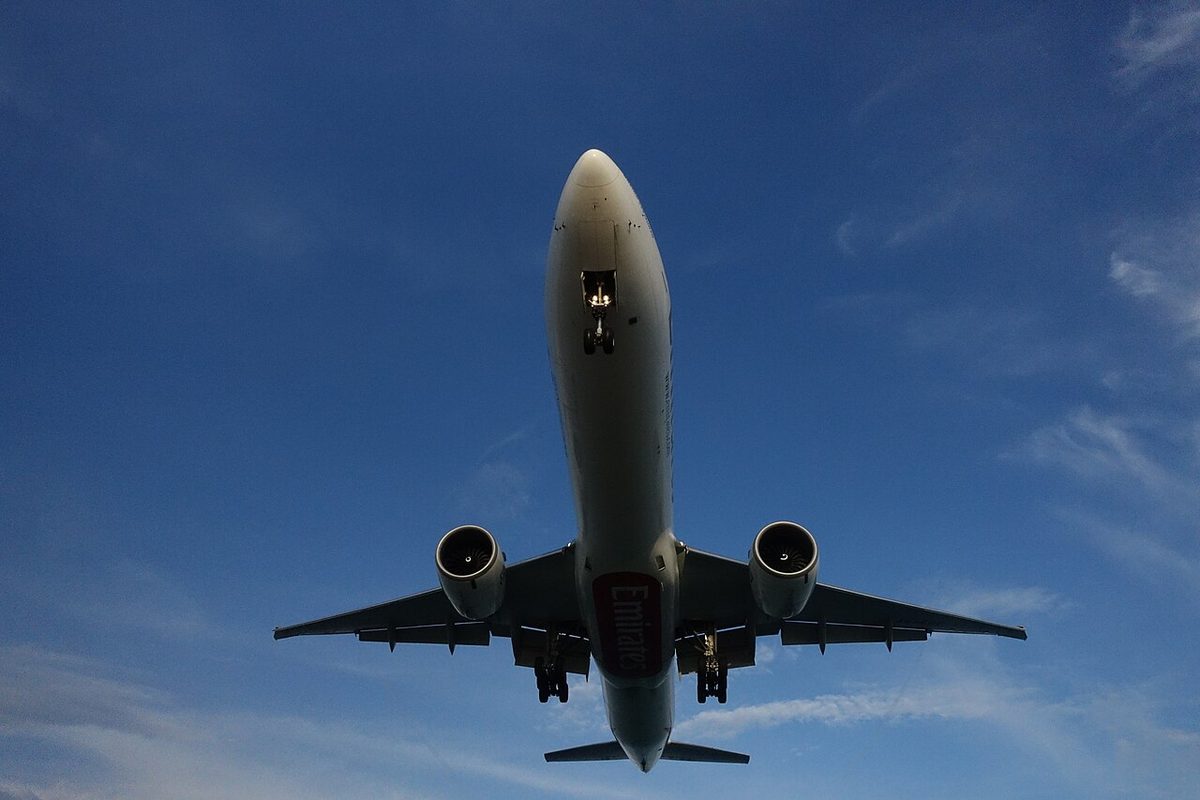
A larger fin would cure Dutch roll, but it adds drag and pushes the aeroplane towards spiral instability (see lateral and directional stability). Transport aeroplanes instead accept a mild natural tendency and add stability augmentation, automatic systems that supplement natural stability rather than replace it. The yaw damper is one. Others are the Mach trim system, which counters the nose-down tuck at high Mach number, and the Boeing 737's speed trim system, which improves speed stability at low weight, aft centre of gravity and high thrust when the autopilot is not engaged. Fly-by-wire aircraft build the same functions into their control laws.

How a yaw damper works
The damper needs a measure of yaw rate. Older installations use a single-axis rate gyro aligned with the aircraft's normal axis; modern aircraft take yaw rate from the inertial reference system. On the Boeing 737 NG two stall management yaw damper (SMYD) computers receive data from both air data inertial reference units, both control wheels and the YAW DAMPER switch, and command the rudder power control unit.
A rate gyro responds to every yaw, including a deliberate turn, so the signal is shaped before it reaches the rudder:
- The Dutch roll filter is a narrow band-pass filter that passes only signals at the Dutch roll frequency. While the rate of turn is building its output rises, but once the rate is constant the output falls to zero, and an opposite pulse appears as the turn ends. The damper therefore does not oppose a steady turn.
- Phase advance brings the correction forward so that the rudder acts when the yaw rate is greatest, not when the fin has already begun to return the nose. A correction that arrives late adds to the next swing instead of stopping it.
- Gain scheduling from an air data computer lets the system match its commands to the flight conditions, and it can reduce the damper's authority at high speed, where even small rudder deflections produce large side loads.
- Synchronisation before engagement cancels any standing output, so the rudder does not snatch when the damper engages. Once it is engaged, a position transducer on the actuator feeds the rudder position back, so the loop stops the rudder at the commanded deflection and returns it to neutral.
Authority is deliberately small. ATPL texts quote typical values of about 3° to 6° of rudder either side: enough to stop an oscillation that has not been allowed to build, too little for a damper that runs away to apply dangerous rudder. Where two damper channels act on a single rudder, their authority adds. On the A320, when only the yaw damping function remains in yaw alternate law, its authority is limited to ±5° of rudder.
Damper movements are not fed back to the rudder pedals on the A320 or the 737, so the pilot does not feel them. Classic installations give each damper an on/off switch, a test switch, a failure light and a small indicator of the rudder demand. The test applies a voltage to a torque coil on the rate gyro to simulate yaw, and the indicator swings to one side and back; some aircraft use the taxi turns as a natural test. On the 737 an amber YAW DAMPER light means the damper is not engaged. The switch trips to OFF, and cannot be reset, if the SMYD detects a fault or finds that the damper does not respond, or if the B FLT CONTROL switch is moved to OFF or STBY RUD.
Turn coordination
Besides damping, most yaw dampers coordinate turns, adding the rudder needed to keep the slip ball centred as bank is applied and so cancelling adverse yaw. On the 737 either yaw damper provides Dutch roll prevention, gust damping and turn coordination. A simpler mechanical equivalent, fitted to some aircraft, is an aileron-rudder interconnect, a spring or linkage that moves the rudder with the ailerons.
Fly-by-wire aircraft go further with auto turn coordination: the computers add the rudder required for a balanced turn, so the pilot turns with the sidestick alone. On the A320 the ELACs compute the yaw orders for turn coordination and yaw damping and send them to the two Flight Augmentation Computers (FACs), which drive the rudder. In normal law the lateral control combines ailerons, spoilers and rudder, the law commands rudder to minimise sideslip, and the pilot does not need the pedals to coordinate a turn. On the Embraer E190-E2, yaw damping is part of the fly-by-wire system and the yaw damper button has been removed from the guidance panel. The same yaw channel lets the autopilot align the aircraft with the runway during an automatic landing, one reason why autoland needs a three-axis autopilot.
Why rudder authority is limited
A transport aeroplane needs large rudder deflections at low speed, to hold direction after an engine failure close to its minimum control speeds and in strong crosswinds. Aerodynamic force rises with the square of the airspeed, so the same deflection at cruise speed would load the fin and rear fuselage far beyond what control requires. Limiting rudder travel as speed increases protects the structure and keeps full authority where it is needed.
Rapid reversals are the greatest danger. In 2001 American Airlines Flight 587, an Airbus A300-600, lost its vertical stabiliser after large alternating rudder inputs below the design manoeuvring speed VA. Transport flight manuals must now state, under 14 CFR 25.1583, that such inputs may cause structural failure at any speed, and the A320 limitations carry the caution that rapid and large alternating control inputs, especially with large sideslip angles, may cause structural failure at any speed. The A320 warning system can also call STOP RUDDER INPUT when it detects inappropriate rudder pedal inputs in cruise at high speed.
Warning: a rudder limiter protects against one large deflection at high speed, not against repeated full reversals. In an upset or a wake encounter, roll with the ailerons and avoid large or alternating rudder inputs.
Rudder ratio changers and variable stops
Two classic mechanisms reduce rudder authority with airspeed:
| System | Pedal travel at high speed | Rudder per unit of pedal |
|---|---|---|
| Rudder ratio changer | Full travel at all speeds | Reduced as IAS rises |
| Variable stop rudder limiter | Reduced as IAS rises | Unchanged, pedal and rudder move together |
A rudder ratio changer alters the gearing between pedal and rudder. At low speed full pedal gives full rudder; at high speed full pedal gives only a limited deflection. The change may be made in a single step or progressively, typically by a hydraulic servo whose gain is controlled by airspeed. A variable stop system keeps rudder movement proportional to pedal movement and instead moves the stops, so that pedal travel and rudder travel shrink together as speed rises. The pilot feels the shortened pedal travel, a physical reminder that full rudder is no longer available.
Rudder travel limiters
The A320 limits the rudder deflection directly: the rudder travel limit (RTL) function of its FACs reduces the maximum rudder deflection progressively as speed increases. Full pedal travel remains available at every speed, but except at low speed the maximum deflection is reached before the pedals reach the end of their travel. If the function fails, the limit stops at the last value reached, and full rudder authority returns when the slats are extended. With both travel limiters failed, the travel limiter indication on the ECAM flight controls page turns amber. The A321XLR has no FACs and uses an electrical rudder, so its yaw functions reconfigure differently after failures.
The Boeing 737 NG limits the force available rather than the travel. Above 137 kt its rudder load limiter reduces the maximum hydraulic pressure of both systems A and B in the main rudder power control unit by about 25 % each, and full rudder authority returns when the speed falls below 132 kt (see primary flight controls).
Split rudders
Some large aircraft have a split rudder, divided into sections that are driven separately. Yaw damping is then divided between the sections, so the failure of one damper system on a split-rudder aircraft removes half of the damping, a loss the design is built to accept. Single-span rudders, by contrast, gather all damper channels on one surface, which is why their combined authority adds.
Yaw damper failure and pilot technique
A yaw damper failure does not make the aeroplane uncontrollable, but at high altitude the Dutch roll may be poorly damped. Large airliners therefore have two or three damper channels, and the minimum equipment list typically limits the altitude with a damper inoperative and may restrict speed or RVSM operation. Descending helps, because damping improves as true airspeed falls. On the 737 the standby yaw damper, powered by the standby hydraulic system through the standby rudder power control unit, is engaged when both FLT CONTROL switches are at STBY RUD. During manual reversion it also uses control wheel movement to give rudder assist in turns.
If Dutch roll develops with the damper inoperative, damp it with small, well-timed aileron inputs against the roll, not with the rudder. Rudder inputs tend to lag the motion, can turn it into a pilot-induced oscillation and may make it diverge.
Exam tip: Dutch roll means dihedral effect strong relative to directional stability; it worsens at high altitude (higher TAS, less damping) and, on swept wings, at low IAS. The cure is a yaw damper, whose Dutch roll filter passes nothing in a steady turn; the manual technique is aileron, not rudder. A ratio changer keeps full pedal travel and reduces rudder; a variable stop reduces both.
Frequently asked questions
What does a yaw damper do on an aircraft?
A yaw damper senses yaw rate, with a rate gyro or from the inertial reference system, and makes small, rapid rudder movements that stop Dutch roll before it builds up. A band-pass filter tuned to the Dutch roll frequency stops it opposing normal turns. Most yaw dampers also coordinate turns and damp gusts, and on many transport aircraft the damper runs for the whole flight whether or not the autopilot is engaged.
Why is Dutch roll worse at high altitude?
Aerodynamic damping depends on the change in angle of attack that a yawing or rolling motion produces at the fin and wings. At a given indicated airspeed the true airspeed is higher in thin air, so the same rate of yaw changes the fin's angle of attack less and the restoring moment is weaker. A swept-wing jet at cruise altitude is therefore at its least damped, which is why yaw dampers matter most there.
What is the difference between a rudder ratio changer and a variable stop?
Both reduce rudder authority as airspeed rises to protect the fin. A rudder ratio changer leaves the pedals their full travel at all speeds but gives less rudder deflection for each unit of pedal movement as speed increases. A variable stop keeps a fixed relationship between pedal and rudder and instead reduces the travel of both together, so the pilot feels the shorter pedal travel at high speed.
How do you recover from Dutch roll if the yaw damper fails?
Damp the roll with small, well-timed aileron inputs against it and do not use the rudder. Rudder inputs tend to lag the motion, can turn the oscillation into a pilot-induced oscillation and may make it diverge. Then follow the checklist and the minimum equipment list, which typically limit the altitude with a damper inoperative, because descending to a lower true airspeed restores natural damping.
What is the rudder travel limiter on the A320?
The rudder travel limit is a function of the A320's Flight Augmentation Computers that reduces the maximum rudder deflection progressively as speed increases, to avoid excessive structural loads. Full pedal travel remains available, but except at low speed full rudder is reached before full pedal. If the function fails, the limit stays at the last value reached, and full rudder authority returns when the slats are extended.
Test yourself on Yaw Dampers and Rudder Limiting
The v1prep banks cover this topic in Aircraft General Knowledge (021), with a worked explanation for every answer. EASA ATPL, PPL, IR and CPL, the FAA written tests and A320/B737 type ratings.
Start practising →Sources and further reading
- EASA, Explanatory Note to ED Decision 2018/001/R, Part-FCL theoretical knowledge learning objectives (022 Instrumentation)
- FAA Pilot's Handbook of Aeronautical Knowledge (FAA-H-8083-25), Chapter 5, Aerodynamics of Flight
- FAA Airplane Flying Handbook (FAA-H-8083-3C), Transition to Jet-Powered Airplanes
- EASA Easy Access Rules for Large Aeroplanes (CS-25)
- 14 CFR 25.1583, Operating limitations
- NTSB AAR-04/04, In-Flight Separation of Vertical Stabilizer, American Airlines Flight 587
Library articles are written for study and exam preparation. They do not replace your aircraft's approved documentation, your operator's procedures or the regulations themselves.