Minimum Control Speeds
Minimum control speeds are the lowest calibrated airspeeds at which a multi-engine aeroplane can still be controlled after a sudden failure of its critical engine: VMCG on the take-off run, VMCA in the air and VMCL in the landing configuration. They are handling limits, set by control authority, not by lift.
A minimum control speed is the lowest speed at which a multi-engine aeroplane can still be kept under control after its most critical engine suddenly fails. It is a handling limit, not a lift limit. The wing may be flying perfectly well below it, but the rudder, and at low speed the ailerons, can no longer balance the yaw and roll produced by full thrust on one side and a dead engine on the other.
Certification defines three of them, one for each place where an engine failure is most dangerous: VMCG on the take-off run, VMCA in the air after lift-off, and VMCL in the landing configuration, where a go-around may call for full thrust at low speed. Together they set floors under the take-off and approach speeds. Light twins add a training speed, VSSE, above which an engine may be shut down deliberately. The handling technique after an engine failure is covered in asymmetric flight; this article concentrates on the speeds themselves.
Asymmetric thrust and the critical engine
When an engine fails, the thrust of the remaining engine acts on an arm from the aeroplane's centre of gravity and yaws the aircraft towards the dead side. The failed engine adds drag on that side, yawing it further, and a roll follows. The rudder opposes the yaw, but its side force depends on dynamic pressure, so it falls with the square of the airspeed, while the yawing moment, set by the live engine's thrust, does not. Somewhere on the way down the speed range the rudder runs out of authority. That speed is the minimum control speed.
The critical engine is the engine whose failure would most adversely affect performance or handling; in minimum control speed terms, the one whose loss leaves the largest yawing moment. On a light twin whose propellers both turn clockwise as seen from the cockpit, it is the left engine. At high angles of attack the descending blade of each propeller produces more thrust, moving each engine's effective thrust line to the right. The right engine's thrust then acts on a longer arm, so losing the left engine leaves the larger moment. The FAA's PAST factors, P-factor, accelerated slipstream, spiralling slipstream and torque, all point the same way. Counter-rotating propellers place both descending blades inboard, give both engines the shortest possible arm and remove the critical engine altogether.
Jet engines have no propeller effects, so on most jet twins neither engine is inherently critical, although a failure at take-off thrust still produces the large yaw that sets the minimum control speeds. The further the engines are from the centreline, the larger that yaw: wing-mounted engines produce much more than engines close to the rear fuselage.
Certification always demonstrates the speeds with the critical engine failing, so the published figures cover a failure of either engine.
Windmilling drag
A failed engine does not simply stop producing thrust. Its propeller keeps turning in the airflow, or windmilling, and becomes a source of drag on the dead side. With engine power gone, a constant-speed unit drives the blades towards fine pitch as it tries to hold the selected rpm. The blades then meet the air at a negative angle of attack, the aerodynamic force on them tilts backwards and the propeller extracts energy from the airflow to turn the dead engine. The result is windmilling drag, very large when the blades are fine.
The three possible states rank clearly:
| Propeller state | Drag | Effect on yaw and VMC |
|---|---|---|
| Windmilling in fine pitch | Greatest | Adds most to the yaw; highest minimum control speed |
| Stopped, blades not feathered | Less | Still a large flat-plate drag |
| Feathered, blades edge-on | Least | Least yaw, lowest minimum control speed, best climb |
This is why certification establishes VMCA with the propeller of the inoperative engine windmilling, unless an automatic feathering system is fitted, and why feathering the failed engine promptly is central to both control and climb performance on a light twin. A failed turbofan also windmills and adds drag, though it cannot be feathered.
VMCG on the ground
The minimum control speed on the ground (VMCG) is the lowest calibrated airspeed on the take-off run at which, when the critical engine suddenly fails, the pilot can keep control and continue the take-off. CS 25.149 and 14 CFR 25.149 define it in the same terms:
- directional control is kept with the rudder alone, with no nosewheel steering, and a rudder pedal force of no more than 150 lbf (667 N);
- from the point of failure until the aeroplane has recovered to a direction parallel to the centreline, its path may not deviate more than 30 ft laterally from the centreline at any point (25.149(e));
- lateral control is used only to keep the wings level;
- take-off thrust is set on the live engine, the aeroplane is trimmed for take-off and loaded to the most unfavourable centre of gravity.
Nosewheel steering is excluded because a wet or contaminated runway can remove its effectiveness, so the demonstrated figure holds on any surface. On the ground the wings must be kept level, so the bank towards the live engine that helps in the air is unavailable, and without nosewheel steering it is the rudder that must hold the aeroplane straight.
VMCG sets the bottom of the take-off speed range. The engine failure speed VEF may not be less than VMCG, and V1, which is VEF plus the speed gained during the recognition time, is never below it (see take-off speeds). A failure below VMCG must lead to a rejected take-off, because continuing could take the aeroplane off the side of the runway. On a wet runway or at a light mass, where the calculation wants a low V1, the VMCG floor can become the limiting factor.
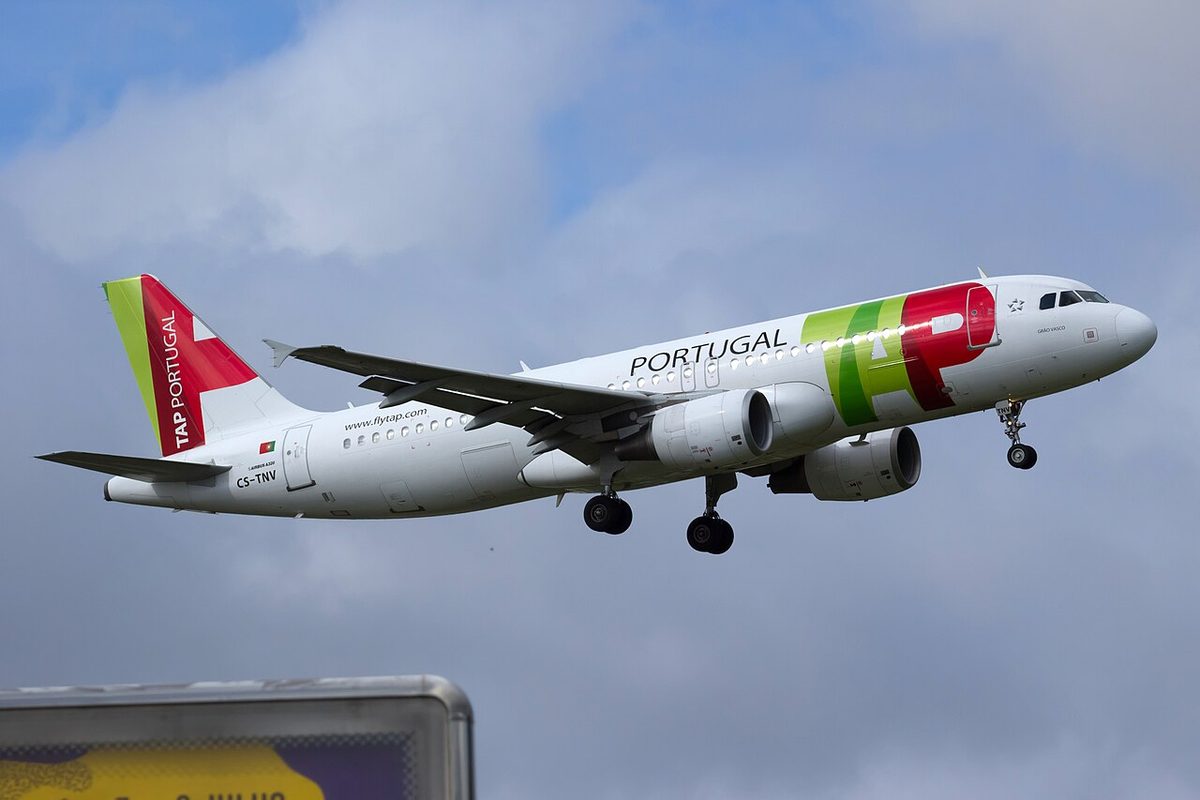
VMCG is highest in dense air: high density gives the most thrust on the live engine and the highest VMCG, so a cold, sea-level runway gives the highest value, and flight manual tables show it falling with pressure altitude and temperature. For the A320, VMCG at sea level without thrust bump is 111 kt in CONF 1+F and 109 kt in CONF 2 and 3, and it must be increased on narrow runways: by 1.5 kt for a 35 m runway and 2.5 kt for a 30 m runway.
VMCA in the air
The minimum control speed in the air (VMCA), often written VMC for light twins, is the calibrated airspeed at which, when the critical engine is suddenly made inoperative, it is possible to keep control of the aeroplane with that engine still inoperative and to maintain straight flight with a bank angle of no more than 5°, conventionally towards the live engine, and a rudder force of no more than 150 lbf. It is established in deliberately unfavourable conditions:
- maximum take-off thrust or power on the operating engine;
- the most unfavourable centre of gravity, which on most aeroplanes is the aft limit, where the rudder's arm is shortest;
- the aeroplane trimmed for take-off, with take-off flap and the landing gear retracted;
- airborne and out of ground effect;
- the failed engine's propeller windmilling, unless automatic feathering is fitted;
- the maximum sea-level take-off weight, or any lower weight needed to show VMCA.
The permitted bank matters. With the wings level and the ball centred, the rudder's side force is balanced only by a sideslip towards the dead engine, and the fin's weathercocking then adds to the yaw. A few degrees of bank towards the live engine let a component of weight balance the rudder force instead, removing the sideslip and lowering the speed at which control can be held. The certified VMCA assumes that bank; flown wings level, the real minimum control speed is higher.
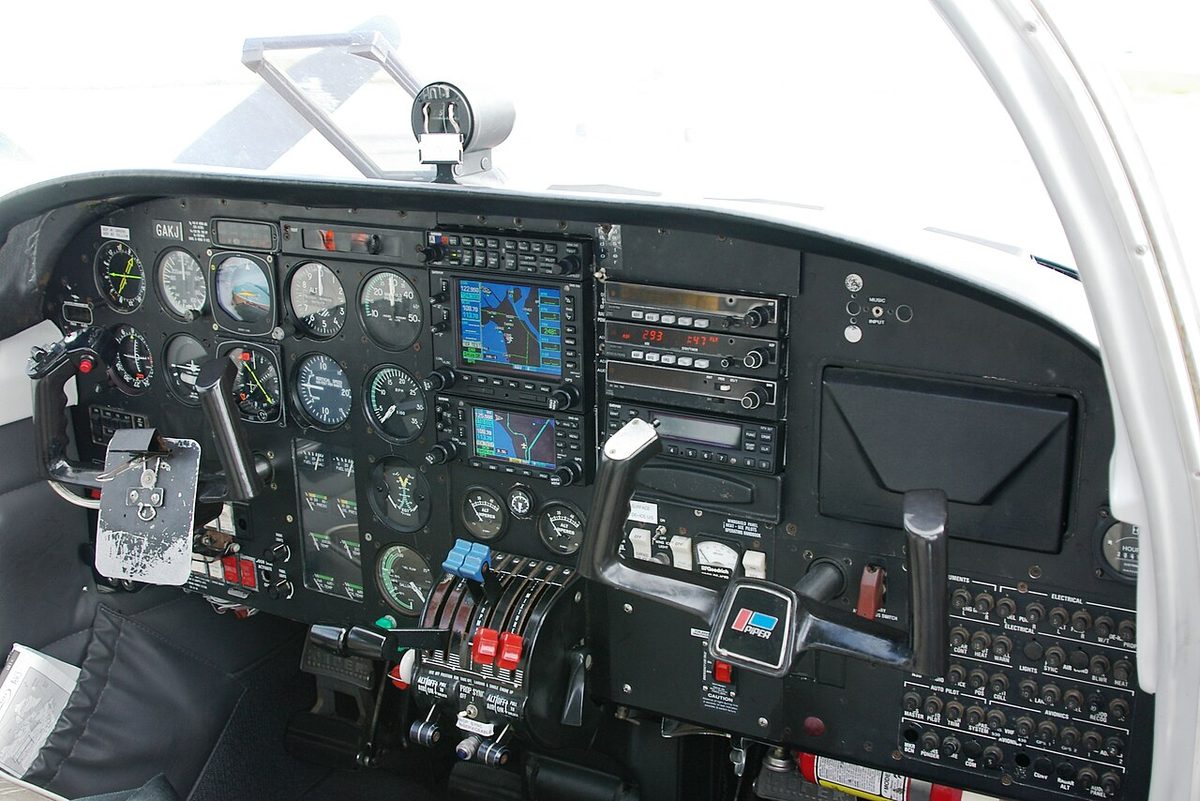
For transport aeroplanes VMCA sets two floors: the rotation speed VR may not be less than 1.05 VMCA, and the take-off safety speed V2 not less than 1.10 VMCA. The A320's VMCA at sea level, without thrust bump, is 110 kt. For light twins in EASA performance Class B, VMC may not exceed 1.2 VS1; VR must be at least 1.05 VMC and 1.1 VS1, and the take-off safety speed at 50 ft at least 1.1 VMC and 1.2 VS1. On the airspeed indicator of a light twin, VMCA is the red radial line near the low-speed end of the scale.
VMCL in the landing configuration
The minimum control speed in the landing configuration (VMCL) covers an engine failure on approach, followed by a go-around. It is established in the most critical approach and landing configuration, with the most unfavourable centre of gravity and go-around thrust on the operating engine. As for VMCA, straight flight must be held with no more than 5° of bank and 150 lbf of rudder force. VMCL adds a roll requirement: from steady flight, the aeroplane must be able to roll through 20° away from the inoperative engine in no more than 5 seconds.
The roll requirement ensures that the pilot can still manoeuvre, not merely hold a heading, with high thrust on one side at approach speed; it demands roll control power as well as rudder. VMCL is a floor under the approach speeds: the reference landing speed VREF may not be less than VMCL, as well as not less than 1.23 VSR0 (see approach speeds). The A320's VMCL is 113 kt.
Safe single-engine speed VSSE
Light twin training includes deliberate engine shutdowns and simulated failures, and doing that close to VMCA is dangerous: a slow reaction could put the aeroplane beyond control at a height where there is no room to recover. VSSE, the safe single-engine speed, now called the safe, intentional one-engine-inoperative speed in FAA material, is the lowest speed at which an engine should be deliberately made inoperative in flight. It is a handling and training margin, not a performance speed, and it sits comfortably above VMCA.
The two performance speeds after a failure are different again. VYSE, the blue radial line on the airspeed indicator, is the best rate of climb, or least rate of descent, with one engine inoperative. VXSE is the best angle of climb with one engine inoperative, used when an obstacle must be cleared. In a real failure the pilot aims for VXSE or VYSE, never below VMCA.
Factors affecting VMC
The published figure is a certification value under specified conditions. In service, the real minimum control speed moves with anything that changes the yawing moment or the controls' ability to oppose it:
| Factor | Effect | Reason |
|---|---|---|
| Higher altitude or temperature | Lower | Less thrust on the live engine, so less yaw |
| Aft centre of gravity | Higher | Shorter arm between rudder and centre of gravity |
| Bank towards the live engine (up to 5°) | Lower | Weight component balances the rudder side force |
| Wings level, ball centred | Higher | Sideslip and fin weathercocking add to the yaw |
| Failed propeller feathered | Lower | Less drag on the dead side |
| Landing gear extended (light twin) | Slightly lower | Added keel area resists the sideslip; the drag penalty remains |
| Fixed derated take-off thrust | Lower | Less asymmetric thrust; the derate carries its own lower VMCG and VMCA |
| Assumed-temperature thrust reduction | No change | Full thrust remains available, so full-thrust VMC applies |
| Narrow runway (VMCG) | Higher | Flight manual increment, as on the A320 |
The altitude effect has a trap. On a normally aspirated light twin, VMCA falls with altitude as indicated airspeed while the stall speed stays almost constant, so the two converge. Above some altitude the aeroplane, slowed with asymmetric power, stalls before it loses directional control, and a stall with full power on one engine can quickly become a spin.
Exam tip: VMCA is determined at the aft centre of gravity limit, because the rudder then has its shortest moment arm and a higher speed is needed to hold the aeroplane straight. A forward centre of gravity lowers VMCA.
If directional control is being lost, the pilot controls only two things: the size of the yawing moment and the airspeed. The immediate actions are to reduce power on the live engine, which restores control at once, and to lower the nose to regain speed, accepting the loss of height. In airliners the protection is built into the scheduled speeds: V2 and VREF already sit above VMCA and VMCL, and single-engine approaches are flown at the speeds and flap settings the type's procedures give, normally somewhat above the all-engines approach speed.
Frequently asked questions
What is the difference between VMCG and VMCA?
VMCG is the minimum control speed on the ground: the lowest speed on the take-off run at which, after a sudden failure of the critical engine, the aeroplane can be kept within 30 ft of the centreline using the rudder alone, without nosewheel steering. VMCA is the airborne equivalent: the lowest speed at which straight flight can be held with no more than 5 degrees of bank. VMCG limits V1 and the engine failure speed; VMCA limits VR and V2.
Why is VMCG determined without nosewheel steering?
Nosewheel steering depends on tyre friction, which a wet, slushy or icy runway can remove almost entirely. Demonstrating VMCG with the rudder alone, as limited by a 150 lbf pedal force, makes the figure valid whatever the runway surface. The wings are also held level, so the bank towards the live engine that lowers the minimum control speed in the air is not available on the ground.
Why does VMCA decrease with altitude?
The yawing moment after an engine failure depends on the thrust of the live engine, and thrust falls as air density falls with altitude and temperature. Less asymmetric thrust needs less rudder, so control can be kept at a lower indicated speed. The stall speed, as an indicated airspeed, hardly changes, so on a normally aspirated light twin the two converge, and above some altitude the aeroplane stalls before it loses directional control.
What is VMCL and why does it matter for VREF?
VMCL is the minimum control speed in the landing configuration, with the critical engine inoperative and go-around thrust on the other. Besides straight flight with no more than 5 degrees of bank, it demands enough roll control to bank 20 degrees away from the dead engine within 5 seconds. Because an engine failure in a go-around must remain controllable, VREF may not be less than VMCL.
What is VSSE on a light twin?
VSSE, the safe single-engine speed, or in current FAA terms the safe, intentional one-engine-inoperative speed, is the lowest speed at which an engine should be deliberately made inoperative in flight, for instance in training. It is published in the flight manual of many light twins and sits comfortably above VMCA, so that a deliberate engine cut cannot put the aeroplane straight into a loss of directional control.
Test yourself on Minimum Control Speeds
The v1prep banks cover this topic in Performance (032), with a worked explanation for every answer. EASA ATPL, PPL, IR and CPL, the FAA written tests and A320/B737 type ratings.
Start practising →Sources and further reading
- EASA Easy Access Rules for Large Aeroplanes (CS-25), CS 25.149 Minimum control speed
- 14 CFR 25.149, Minimum control speed
- 14 CFR 25.107, Takeoff speeds
- FAA Airplane Flying Handbook (FAA-H-8083-3C), Chapter 13, Transition to Multiengine Airplanes
- EASA, Explanatory Note to ED Decision 2018/001/R, Part-FCL theoretical knowledge learning objectives
- FAA Pilot's Handbook of Aeronautical Knowledge (FAA-H-8083-25), Chapter 5, Aerodynamics of Flight
Library articles are written for study and exam preparation. They do not replace your aircraft's approved documentation, your operator's procedures or the regulations themselves.