Lateral and Directional Stability
Lateral stability is an aeroplane's tendency to roll back towards wings level after a disturbance, and directional stability its tendency to yaw back into the relative airflow. Both are produced by sideslip, so the two are coupled and are treated together.
Lateral stability is stability in roll, about the longitudinal axis, and directional stability is stability in yaw, about the normal axis. Unlike pitch, which can be studied on its own, the two cannot be separated: a disturbance in roll produces a sideslip, the sideslip produces yawing and rolling moments at once, and each motion feeds the other. The balance between them decides whether an aeroplane, left alone after a disturbance, settles, wallows in a Dutch roll or slowly winds into a spiral dive.
The subject explains features seen on almost every aeroplane: the dihedral of a low wing, the dorsal fin ahead of the rudder, the drooping wings of some large transports and the yaw damper of swept-wing jets. The general ideas of static and dynamic stability are set out in aircraft axes and stability fundamentals.
Sideslip as the trigger
Sideslip is flight with the relative airflow approaching from one side of the nose instead of straight ahead; the angle between the airflow and the aeroplane's plane of symmetry is the sideslip angle. It follows a yaw disturbance, uncoordinated use of the controls or, most importantly, a bank: once a wing drops, the lift is tilted, and the aeroplane begins to slip sideways and downwards towards the lower wing. The balance ball shows it.
A pure roll, with no sideslip, produces no restoring moment at all. Everything that returns the aeroplane to wings level, and everything that swings the nose back into the airflow, works through the sideslip that follows. That is why lateral and directional stability are both defined as responses to sideslip.
Directional stability and the fin
Static directional stability, also called weathercock stability, is the tendency of the aeroplane to yaw back into the relative airflow after a sideslip. Plotted as yawing moment coefficient against sideslip angle, a directionally stable aeroplane shows a positive slope: the sideslip generates a yawing moment that removes it.
The fin, or vertical stabiliser, is the main source. In a sideslip the airflow meets the fin at an angle of attack equal to the sideslip angle, and the side force it produces acts on a long arm behind the centre of gravity (CG), swinging the nose back like a weathercock. A larger fin or a longer arm gives more stability, at the cost of extra parasite drag.
Other parts contribute for or against:
- The fuselage is destabilising. In a sideslip it produces a side force acting near its quarter-length point, ahead of the CG, which yaws the nose further out of the airflow. The fin must overcome it.
- Keel surface, the side area of the aeroplane (also called keel area), stabilises when it lies behind the CG and destabilises ahead of it. A long nose or a deep forward fuselage works against directional stability.
- Sweepback adds to directional stability. The wing facing into the sideslip presents less effective sweep and more span to the airflow, produces more lift and more induced drag, and the extra drag yaws the nose back.
A dorsal fin is a low-aspect-ratio extension of the fin forward along the top of the rear fuselage. At small sideslip angles it does little, but it stalls only at a very large angle and sheds a vortex that keeps the flow over the main fin attached, so it maintains directional stability at large sideslip angles where the fin alone would stall. A ventral fin under the rear fuselage does the same job directionally. Without such help, a stalled fin loses its restoring moment and the aeroplane may lock into the sideslip; tail configurations describes this fin stall.
Weathercocking and ground loops
The same tendency operates on the ground. With a crosswind, the fin and the side area behind the main wheels are pushed downwind, so the aeroplane tries to turn its nose into wind: weathercocking, also called weathervaning. It must be held off with rudder and nosewheel steering, and it becomes harder to control on a slippery runway, where the tyres grip less.
On a tailwheel aeroplane the CG lies behind the main wheels, which makes it directionally unstable on the ground. If the aeroplane starts to swing, the inertia of the mass at the CG, acting behind the main wheels, tends to tighten the swing instead of damping it. Uncorrected, the swing can become a ground loop: a sharp, uncontrollable turn in which a wingtip may strike the ground or the landing gear may collapse. A nosewheel aeroplane, with the CG ahead of the main wheels, tends to straighten itself instead. The defence is to stop any swing before it builds, with prompt, positive rudder, adding brake or steering as the rudder loses effectiveness at low speed, and to keep flying the aeroplane until it has stopped.
Lateral stability and dihedral effect
Static lateral stability is the tendency to develop a rolling moment in a sideslip that returns the aeroplane towards wings level. Plotted as rolling moment coefficient against sideslip angle, a laterally stable aeroplane shows a negative slope: the moment raises the wing facing into the sideslip.
The wing is the principal surface, above all through dihedral, the upward angle of each wing from root to tip. Suppose the right wing drops. The aeroplane slips to the right, so the airflow gains a component from the right. Because the wings are angled, that component meets the lower right wing from below, increasing its angle of attack, and the raised left wing from above, reducing its angle of attack. The lower wing lifts more and rolls the aeroplane back towards level.
Dihedral is so powerful that the other contributions to lateral stability are measured against it and expressed together as dihedral effect: the total rolling moment the aeroplane produces per degree of sideslip, whatever its source.
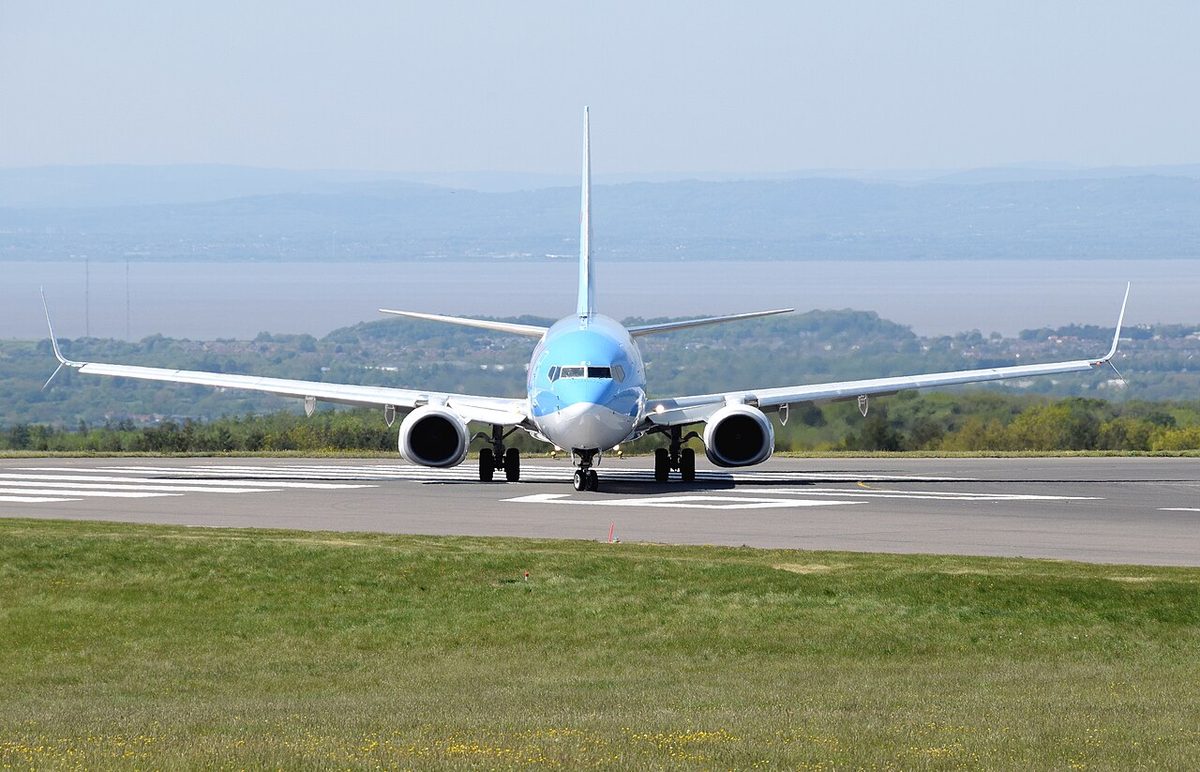
Sources of dihedral effect: dihedral, keel and pendulum
| Feature | Contribution to dihedral effect |
|---|---|
| Geometric dihedral | Positive; the main source on low-wing aeroplanes |
| High wing (FAA: keel effect and weight distribution) | Positive; may need little or no geometric dihedral |
| Mid wing | About neutral |
| Low wing | Negative; needs noticeable dihedral |
| Sweepback | Positive, in proportion to the lift coefficient |
| Keel surface and fin above the CG | Positive |
| Ventral fin below the CG | Negative |
Wing position. In a sideslip the airflow has to pass around the fuselage. On a high-wing aeroplane this cross-flow raises the angle of attack at the root of the wing facing into the sideslip and lowers it on the other side, a stabilising rolling moment. On a low-wing aeroplane the effect is reversed and destabilising, which is why low-wing types show visible dihedral while many high-wing types have very little.
Sweepback. In a sideslip the wing facing into the airflow has less effective sweep and produces more lift, while the trailing wing has more sweep and produces less, so the wing facing into the sideslip rises and the aeroplane rolls back towards wings level. The effect is proportional to the lift coefficient, so it is largest at low indicated airspeed and small at high speed.
Keel surface. Side area above the CG, including most of the fin, receives a side force in a sideslip that acts above the roll axis and rolls the aeroplane towards level. The FAA calls this keel effect. A dorsal fin therefore adds a little lateral stability, and a ventral fin below the CG subtracts some.
Pendulum effect and weight distribution. The FAA's Pilot's Handbook of Aeronautical Knowledge lists weight distribution alongside keel effect: on a high-wing aeroplane the fuselage hangs below the wing, and when a wing dips the fuselage's weight is described as acting like a pendulum that swings the aeroplane back to its original attitude. FAA knowledge tests count a high wing above a low CG among the features that give lateral stability, and that is the answer to give. The mechanism needs one qualification. An aeroplane in flight rotates about its CG, and weight acts through the CG, so weight alone produces no rolling moment; the aeroplane does not hang from a pivot. What a low CG does is put the wing and much of the side area above the point about which the aeroplane rolls. In a sideslip the side force on that keel surface then acts above the CG and, together with the cross-flow at the wing roots, rolls the aeroplane back towards level. Pendulum effect is best read as a name for that aerodynamic result, not as a separate force.
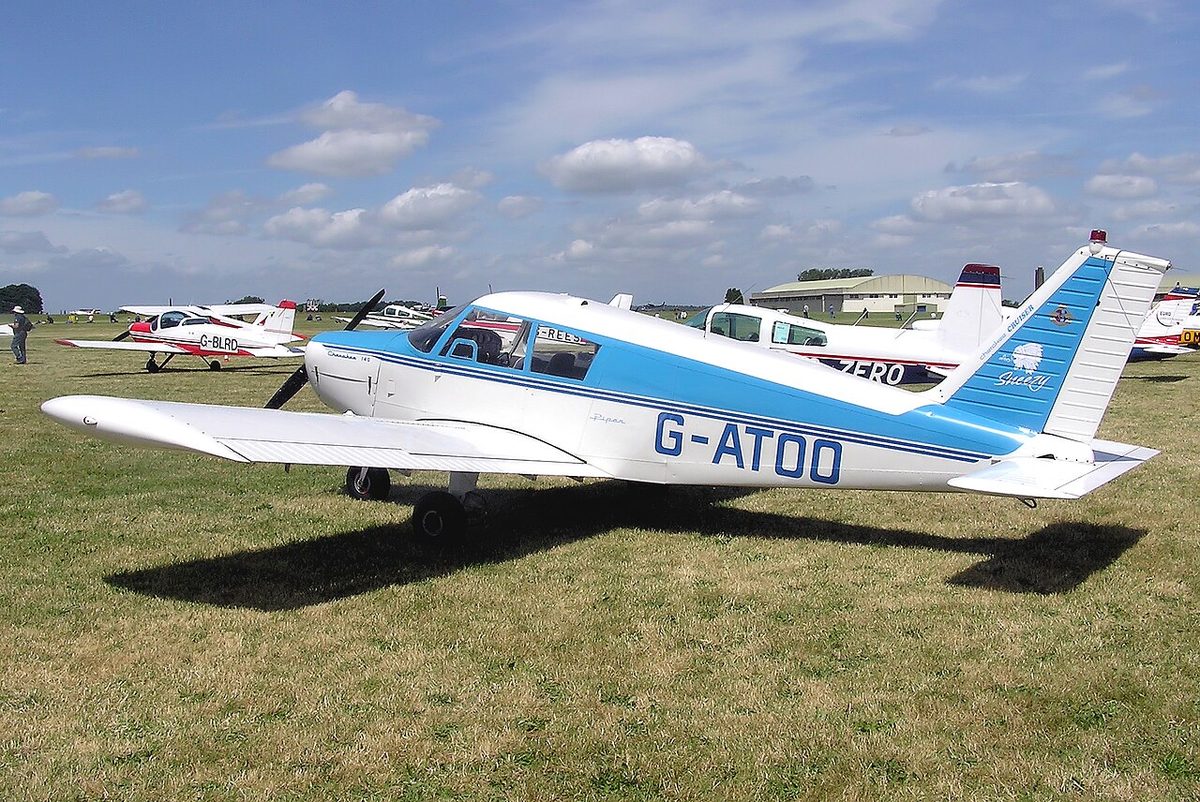
Anhedral
Anhedral is negative dihedral: the wings slope downwards from root to tip. It is used where the other sources would give too much dihedral effect, typically a wing that is both high-mounted and swept back, as on many heavy military transports. Both features add strong positive dihedral effect, and the resulting excess of lateral over directional stability would bring a pronounced Dutch roll tendency. Anhedral takes some of it away and restores the balance.
Dutch roll
Dutch roll is a coupled oscillation in roll and yaw that appears when the dihedral effect is large compared with the static directional stability. A sideslip makes the aeroplane roll firmly, raising the wing that faces into it, while the relatively weak fin swings the nose back only slowly. By the time the nose has come round, the roll has overshot, a sideslip has built up the other way, and the cycle repeats: the aeroplane rolls and yaws alternately from side to side in a repeating, lightly damped oscillation.
Swept-wing jets are especially prone to it. Their dihedral effect from sweep grows with lift coefficient, so the tendency is strongest at low indicated airspeed, and aerodynamic damping falls at high altitude, where Dutch roll is least damped of all. Large aeroplanes therefore carry a yaw damper, which senses yaw rate and moves the rudder to oppose it. On the Boeing 737 either yaw damper provides Dutch roll prevention, gust damping and turn co-ordination, and its movements do not move the rudder pedals; on the A320 the Flight Augmentation Computers perform the same damping. With a yaw damper inoperative, the minimum equipment list usually imposes altitude or speed restrictions.
Warning: if the yaw damper fails and Dutch roll develops, damp it with small, well-timed aileron inputs against the roll. Rudder inputs tend to lag the motion, can turn the oscillation into a pilot-induced oscillation and may make it diverge.
Spiral instability
Spiral instability, or spiral divergence, is the opposite imbalance: static directional stability very large compared with the dihedral effect. After a small bank the aeroplane slips towards the lower wing, and the strong fin yaws the nose into the sideslip faster than the weak dihedral effect can raise the wing. The outer wing, now moving faster, lifts more, so the bank steepens, the nose drops and the aeroplane winds slowly into a descending, tightening spiral. Uncorrected, it becomes a spiral dive, with rising airspeed and load factor.
The divergence is usually so gradual that a pilot corrects it without difficulty, often without noticing. In cloud, without a visual horizon, it is dangerous: the turn is no longer sensed once it is established, and a disoriented pilot who pulls back without levelling the wings only tightens the spiral. The recovery is to level the wings by reference to the attitude indicator first and only then to raise the nose.
The trade-off between Dutch roll and spiral stability
Dutch roll and spiral instability are the two ends of one balance. More fin cures Dutch roll but pushes the aeroplane towards spiral instability; more dihedral effect cures the spiral tendency but pushes it towards Dutch roll. On a swept-wing aeroplane the balance even shifts with speed: at low speed the large dihedral effect from sweep favours Dutch roll, while at high speed the smaller effect lets a spiral tendency dominate.
Designers accept a mild spiral instability in preference to Dutch roll, because a slowly steepening bank is far easier for a pilot to manage than a rapid rolling and yawing oscillation. Most light aeroplanes are designed slightly spirally unstable for this reason, and swept-wing jets rely on yaw dampers to make Dutch roll acceptable.

Frequently asked questions
What is dihedral effect?
Dihedral effect is the rolling moment an aeroplane develops in a sideslip, the measure of its static lateral stability. When a wing drops, the aeroplane slips towards it and the dihedral effect rolls it back towards wings level. Geometric dihedral is the main source, but a high wing position, sweepback and keel surface above the centre of gravity add to it, and a low wing reduces it. All these contributions are expressed together as dihedral effect.
What causes Dutch roll?
Dutch roll is a coupled rolling and yawing oscillation that appears when the dihedral effect is strong compared with the directional stability. A sideslip makes the aeroplane roll firmly, but the fin is too weak to yaw the nose back into the airflow promptly, so it overshoots and the cycle repeats. Swept-wing jets are prone to it at low speed and at high altitude, and use yaw dampers to suppress it.
What is spiral instability?
Spiral instability is the opposite imbalance to Dutch roll: strong directional stability with weak dihedral effect. After a small bank the fin yaws the nose into the sideslip faster than the wing can roll level, the outer wing moves faster and lifts more, and the bank slowly steepens into a descending spiral. Most light aeroplanes are slightly spirally unstable, which is acceptable because the divergence is slow and easily corrected.
Does a high-wing aircraft need dihedral?
Often very little. In a sideslip the airflow around the fuselage raises the angle of attack of the into-wind wing of a high-wing aeroplane and lowers that of the other, a stabilising rolling moment that adds to any geometric dihedral. FAA texts also credit the low-slung fuselage, the pendulum effect. A low wing has the opposite, destabilising effect and needs visible dihedral. A high, swept wing can have so much dihedral effect that anhedral is fitted to reduce it.
What does a dorsal fin do?
A dorsal fin is a low-aspect-ratio extension of the fin forward along the top of the rear fuselage. It stalls only at a very large angle and sheds a vortex that helps keep the flow over the main fin attached, so it maintains directional stability at large sideslip angles where the fin alone might stall. It also adds slightly to lateral stability, whereas a ventral fin under the fuselage reduces it.
Test yourself on Lateral and Directional Stability
The v1prep banks cover this topic in Principles of Flight (081), with a worked explanation for every answer. EASA ATPL, PPL, IR and CPL, the FAA written tests and A320/B737 type ratings.
Start practising →Sources and further reading
- FAA Pilot's Handbook of Aeronautical Knowledge (FAA-H-8083-25), Chapter 5, Aerodynamics of Flight
- FAA Airplane Flying Handbook (FAA-H-8083-3C), Transition to Tailwheel Airplanes and Transition to Jet-Powered Airplanes
- EASA, Explanatory Note to ED Decision 2018/001/R, Part-FCL theoretical knowledge learning objectives
- EASA Easy Access Rules for Large Aeroplanes (CS-25)
Library articles are written for study and exam preparation. They do not replace your aircraft's approved documentation, your operator's procedures or the regulations themselves.