Norwegian Pilot Interview Prep: Process, Sim, Questions (2026 Guide)
LAST UPDATED: 20 AUG 2026
Norwegian is the Nordics' biggest low-cost carrier — an all-Boeing 737 operation flying 737-800s and 737 MAX 8s on short-haul routes across Scandinavia and Europe. This guide covers what's genuinely known about the recruitment process, how to prepare for a 737 sim assessment, the technical questions to expect, and the airline-specific angles that matter. One thing to know up front: Norwegian publishes far less about its selection process than, say, Ryanair — so this guide is explicit about what's confirmed and what's the standard European pattern.
Note for A320 pilots: Norwegian is a pure Boeing operator. If you're A320-rated, applying means a type rating switch to the 737 — and any sim assessment will be on a Boeing. The interview fundamentals (competencies, ATPL theory, CRM) transfer; the aircraft-specific prep does not.
About Norwegian
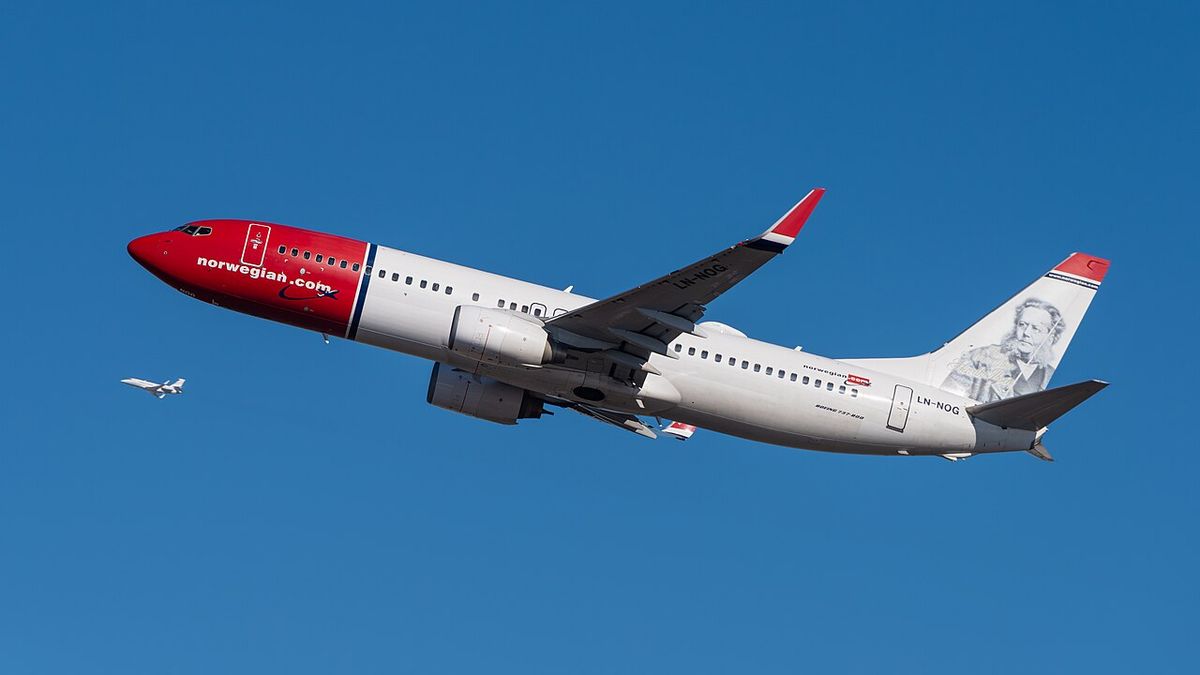
Norwegian Air Shuttle emerged from its 2021 restructuring as a focused short-haul carrier: the long-haul 787 operation is gone, and what remains is an all-Boeing 737 fleet — 737-800s plus a growing number of 737 MAX 8s, roughly 80-90 aircraft in recent years. Sectors are short-haul Nordic and European: domestic Norwegian trunk routes, Scandinavian city pairs, and leisure routes south to the Mediterranean. Headquarters is at Fornebu near Oslo, with the operational heart of the network at Oslo Gardermoen (OSL).
Pilot bases are concentrated in the Nordics. Oslo (OSL), Bergen (BGO), Trondheim (TRD), Stavanger (SVG), Copenhagen (CPH), Stockholm Arlanda (ARN), and Helsinki (HEL) are the bases that appear regularly in vacancy listings. Which bases are actually hiring shifts with the seasonal schedule — check the current listing rather than assuming your preferred city is open.
Seasonality shapes everything here. The Nordic market peaks hard in summer, and Norwegian's capacity — and hiring — tends to follow. Recruitment comes in waves rather than the continuous year-round pipeline you see at Ryanair: campaigns commonly open in autumn and winter ahead of the summer season. Norwegian Group also owns Widerøe, the Norwegian regional carrier (acquired in 2024), but Widerøe operates a separate fleet and recruits separately — this guide covers the 737 mainline operation.
The 4 stages
Norwegian doesn't publish its selection pipeline in detail. What candidates commonly report matches the near-universal European shape:
| Stage | Format |
|---|---|
| 1. Online application | CV upload, licence & ratings, hours, right-to-work details |
| 2. Aptitude testing | Online psychometric/aptitude tests — format varies by intake |
| 3. HR & technical interview | Competency + technical, commonly reported as a combined panel |
| 4. Simulator assessment | Boeing 737 simulator |
Treat the order as indicative, not gospel — candidates report variations by intake and pathway (the sim sometimes sits before the interview, sometimes after, and stages are occasionally combined into a single assessment day). Type-rated direct-entry candidates and non-rated applicants may see different versions of the process. The preparation, however, is the same: aptitude currency, a sharp 737/ATPL technical baseline, and honest STAR-format competency examples.
Sim assessment
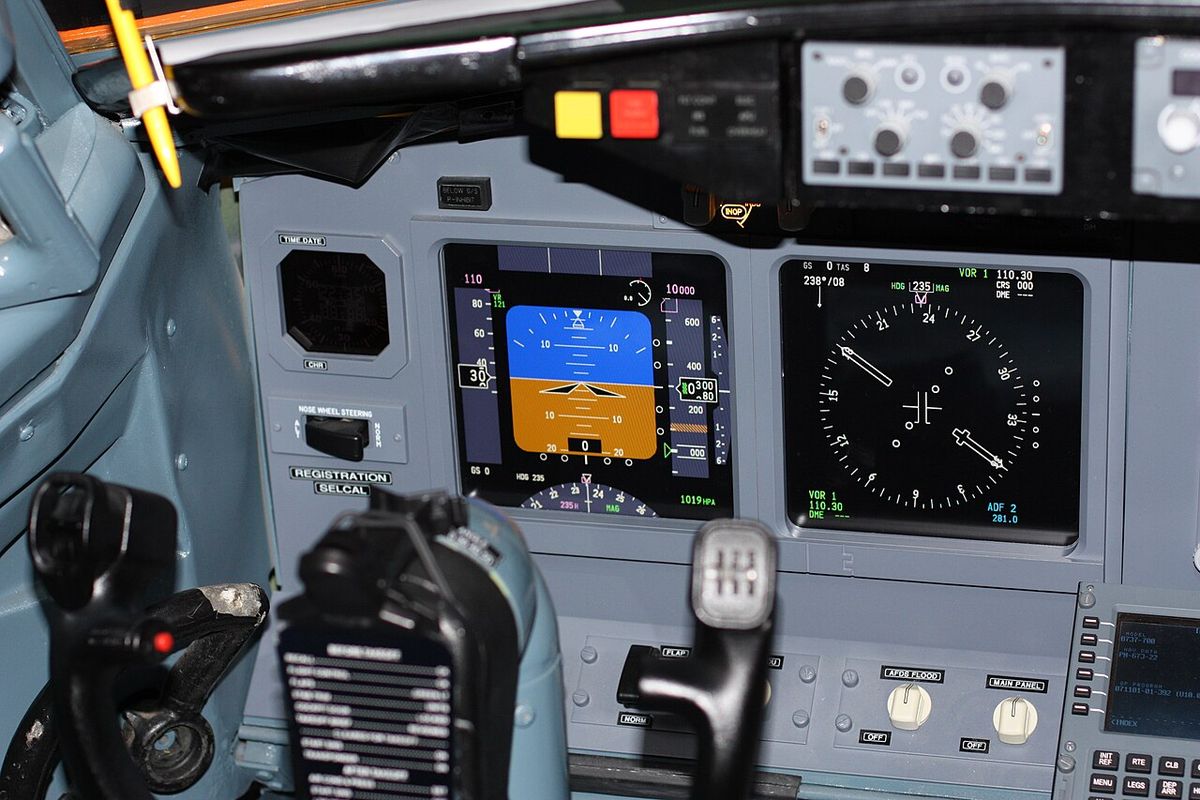
Norwegian is an all-737 airline, so the sim ride is on a Boeing 737 simulator. The airline doesn't publish the assessment profile or device details, so prepare for the standard European short-haul assessment shape rather than a rumoured script:
What to expect (typical European profile)
- Brief — structured pre-flight discussion; know the departure, the weather, and your SOP logic
- Manual takeoff and raw-data climb — automation off, flight directors possibly off
- Hand flying — turns, climbs, descents, level-offs to tight tolerances
- ILS approach — commonly hand flown, possibly raw data
- Possibly — an engine failure, a go-around, or an unusual attitude recovery
What discriminates
Same as every European carrier: smooth manual handling, a disciplined instrument scan, and audible CRM. Fly accurately, talk through what you're doing, and correct deviations early rather than hiding them. Assessors consistently reward trend recognition — catching the drift at 50 feet, not 300.
A320 pilots: the 737 is a conventional aircraft — yoke instead of sidestick, continuous trimming instead of autotrim, more rudder work, a heavier feel. Don't try to fly it like an Airbus. If you can get even an hour in any 737 fixed-base device before the assessment, it pays for itself; if not, brief yourself thoroughly on the trim and pitch-power differences and expect the first ten minutes to feel rough. Assessors know who's converting — they're watching how fast you adapt, not whether minute one is pretty.
HR & technical interview
Candidates commonly describe Norwegian's interview style as structured but low-key — competency questions in STAR format, scenario discussions, and a technical section, delivered with the flat-hierarchy directness typical of Scandinavian workplaces. Overselling and rehearsed theatrics land worse here than almost anywhere; specific, honest examples land better.
Common topics
- Why Norwegian? — know the airline you're actually applying to: the restructured, short-haul, all-737 Norwegian. Referencing the old long-haul 787 network is a research fail.
- Seasonality awareness — Nordic flying peaks in summer. Showing you understand what that means for rosters and workload reads as operational maturity.
- Base flexibility — bases are Nordic; the right to live and work in the EU/EEA is the usual baseline, and flexibility on base assignment strengthens your file.
- CRM examples — single specific incidents, STAR-structured: a disagreement resolved, a threat trapped, an error managed.
- Decision-making scenarios — fuel, weather, diversion logic. Nordic winter operations (contaminated runways, icing, strong winds) are a natural scenario theme for any airline flying this network — have your de-ice and contaminated-runway theory sharp.
Technical questions
For type-rated 737 candidates, expect 737 systems depth. For non-rated candidates, expect ATPL theory and aviation fundamentals — the interviewer is testing whether you think like a pilot, not whether you've pre-memorised the FCOM of a type you don't hold.
Common 737 topics (if rated)
- Hydraulics — what do systems A and B each power, and what does the standby system give you if both are lost?
- Manual reversion — which flight controls remain usable, and how does the aircraft handle?
- Electrical — walk through what happens when an engine generator drops offline; what does standby power keep alive?
- Performance — V1/VR/V2, assumed temperature thrust reduction, contaminated runway logic
- NG vs MAX differences — engines, displays, and systems changes at a headline level (Norwegian flies both)
Common ATPL topics (if not 737-rated)
- Decode this METAR — including winter groups: freezing rain, snow, runway state
- What's an ILS, and what are CAT I/II/III minima? (drill this in our top 30 ATPL air law questions)
- What are V1, VR, V2 — and what does V1 actually commit you to?
- Icing — types, conditions, and effects on performance (see our top 25 ATPL meteorology questions)
- RVSM basics
- Airspace classes A through G
Top reasons candidates fail
- Manual handling — the universal number one. Raw-data accuracy on an unfamiliar 737 is where conversions from Airbus most often come undone
- Stale research — talking about the Norwegian of 2019: long-haul Dreamliners, transatlantic bases. The airline you're interviewing at is a short-haul Nordic 737 operator
- Generic motivation — "Norwegian is a great airline" is weaker than a specific case: Nordic network, single-type fleet, the base you can actually commit to
- Ignoring seasonality — Nordic flying is summer-heavy; candidates who haven't thought about what that means for the operation read as unprepared
- Silent sim flying — accurate but mute is failed CRM. Brief out loud, verbalise your corrections
- Over-rehearsed answers — the low-key Scandinavian interview style exposes canned scripts fast. Authentic, specific examples win
Realistic timeline
Norwegian doesn't publish recruitment timelines, and reports vary widely with the seasonal hiring cycle. As a planning baseline, European short-haul recruitment typically runs:
| Phase | Typical duration |
|---|---|
| Application to first response | 1-4 weeks (longer outside hiring waves) |
| Testing to interview/sim invite | 2-4 weeks |
| Assessment to offer | 1-3 weeks |
| Type rating (if needed) | ~2-3 months |
| Line training | ~2-3 months |
The seasonal shape matters more than the per-stage numbers: campaigns commonly open in autumn and winter targeting spring start dates ahead of the summer peak. If you're applying, be assessment-ready before the wave opens — not after you get the invite.
Drill B737 systems and ATPL theory
v1prep covers 8,100+ practice questions across B737 systems and ATPL theory — the exact ground the Norwegian technical interview walks. Every answer sourced, no folklore.
Practice the full bank →