KLM Pilot Interview Prep: Stages, Sim, Questions (2026 Guide)
LAST UPDATED: 20 AUG 2026
KLM Royal Dutch Airlines is the world's oldest airline still flying under its original name — founded in 1919, hubbed at Amsterdam Schiphol, flying Boeing 737s across Europe and 777s, 787s and A330s long-haul. Selection at the Dutch flag carrier has a reputation among candidates as one of Europe's most thorough: aptitude testing, a psychological assessment, interviews and a sim ride, spread over multiple rounds. This guide covers what's genuinely known, what candidates commonly report, and how to prepare — without pretending KLM publishes details it doesn't.
Note for A320 pilots: KLM's short-haul fleet is Boeing 737 — not Airbus. The Air France–KLM group has ordered A321neos to replace the 737s over the coming years and deliveries have begun, but the 737 remains the short-haul workhorse you would join today. If you're Airbus-rated, budget real study time for Boeing systems logic before the technical round.
About KLM
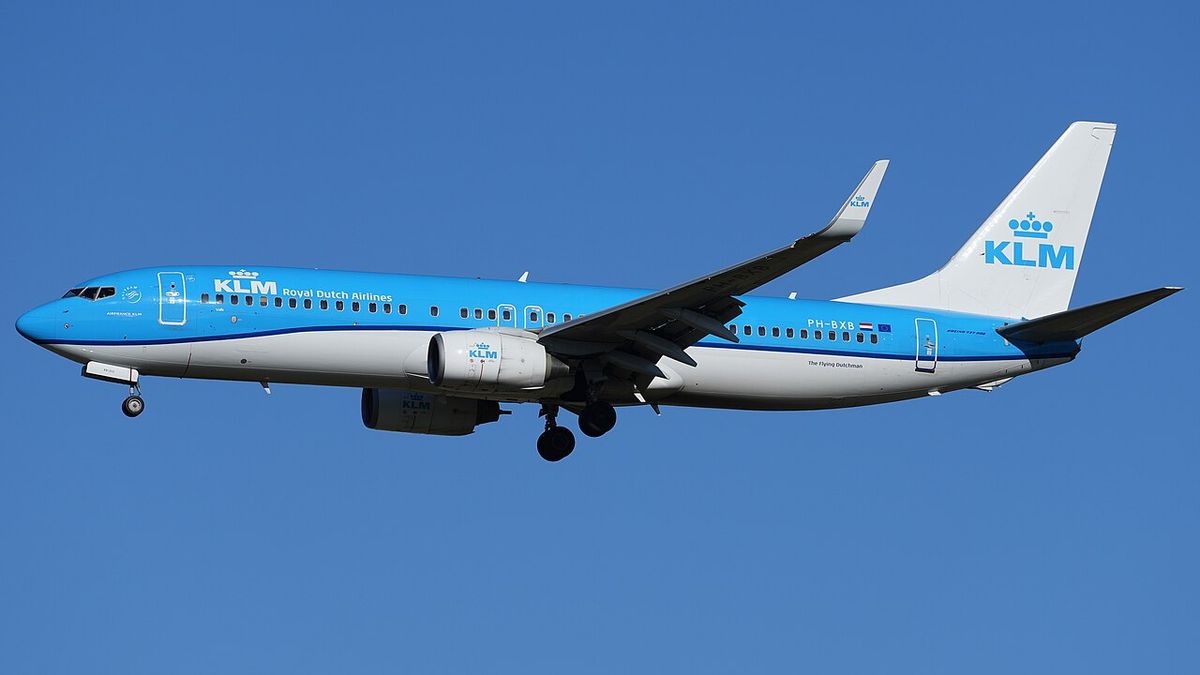
KLM operates a mainline fleet of roughly a hundred aircraft from a single hub — Amsterdam Schiphol (AMS), one of Europe's busiest airports. Short-haul flying is on the Boeing 737, primarily -800s and -900s. Long-haul is flown on the 777-200ER/-300ER and 787-9/-10, with the remaining A330s progressively on their way out of the fleet. Regional routes are operated by KLM Cityhopper on Embraer E175, E190 and E195-E2 jets.
Structurally: KLM merged with Air France in 2004 to form the Air France–KLM group, and joined the SkyTeam alliance the same year (Air France was one of SkyTeam's founders in 2000). The group's low-cost carrier Transavia also flies 737s from the Netherlands. One fleet fact worth knowing cold for interview day: the group has ordered Airbus A321neos to progressively replace the 737s at KLM and Transavia, and deliveries have begun — expect the fleet transition to come up, and know what it means for a new joiner's career path.
Hiring runs in waves, not continuously. When KLM opens applications — ab-initio through the KLM Flight Academy, or direct entry for licensed pilots — competition is intense: this is a legacy flag-carrier career with progression governed by a seniority list. New joiners have commonly started on the 737 or at Cityhopper on the Embraer depending on the intake; fleet assignment follows the airline's needs and the list, not your preference. Long-haul comes later in a career, by seniority.
The selection stages
KLM does not publish its full selection process, and the exact sequence varies by pathway (ab-initio vs experienced direct entry) and by intake. The shape candidates commonly report:
| Stage | Format (as commonly reported) |
|---|---|
| 1. Online application | CV, licence & hours, motivation |
| 2. Aptitude testing | Computer-based; COMPASS-style testing commonly reported for Dutch selection |
| 3. Psychological assessment | Personality questionnaires plus interview with a psychologist |
| 4. HR & technical interview | Structured panel: motivation, CRM, technical knowledge |
| 5. Simulator assessment | Jet simulator ride — profile below |
Treat any forum post claiming exact stage names, pass rates or current test providers with suspicion — these details change between intakes and are not officially published. What stays consistent across years of candidate reports: heavy aptitude screening early, a psychological component weighted more strongly than at most European carriers, and flying skills checked before the end.
Sim assessment
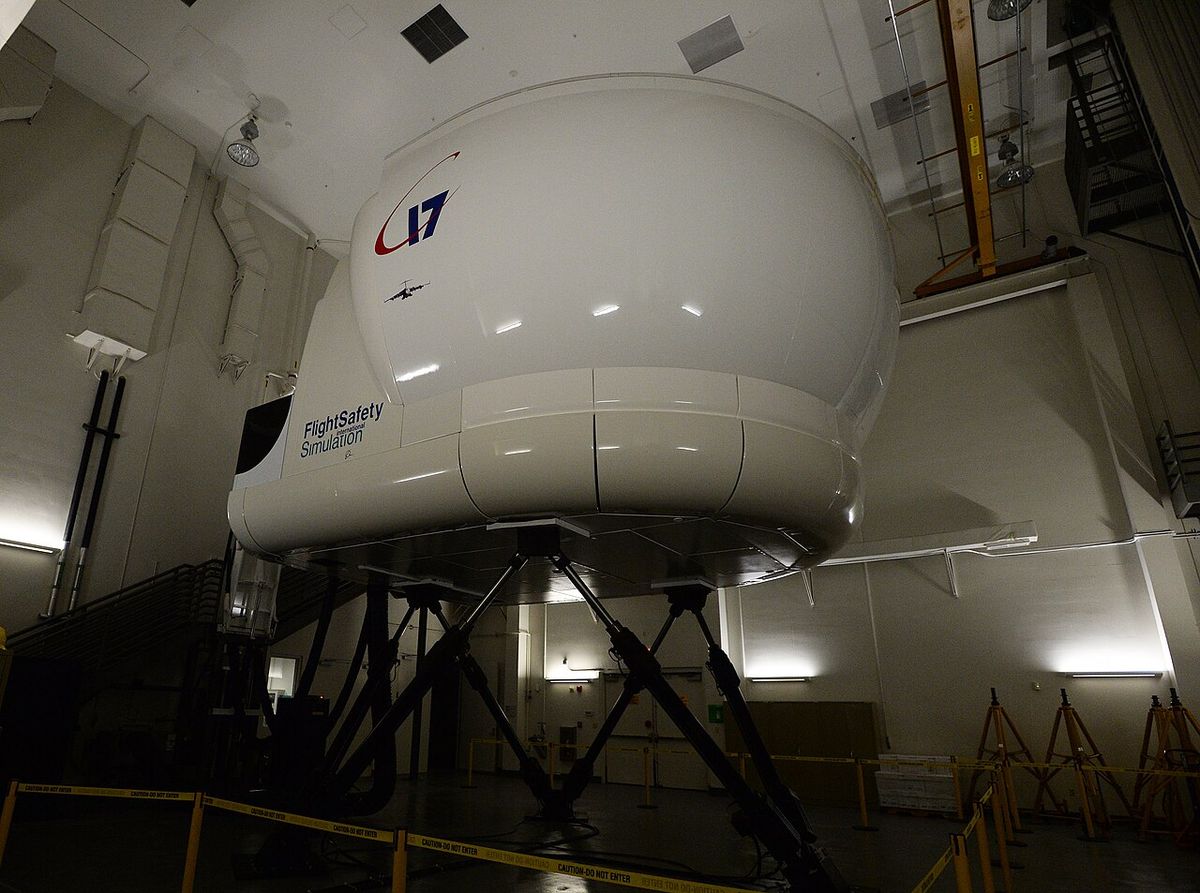
KLM doesn't publish which simulator type the assessment uses, and candidate reports vary by intake — so don't build your prep around one cockpit. With a 737 short-haul fleet, Boeing cockpit logic is a sensible default to study, but the assessment itself follows the near-universal European shape: it tests raw flying and crew skills that transfer across types.
What candidates commonly report flying
- Brief — structured departure brief; SOP discipline is watched from the first minute
- Manual handling — raw-data climbs, turns, level-offs, speed changes
- ILS approach — hand flown, often raw data, to minima
- Go-around — commonly scripted; fly it cleanly and call it properly
- Possibly a non-normal — engine failure or similar, depending on the intake
What discriminates
Same as every European carrier: smooth manual handling, a solid instrument scan, workload management, and CRM out loud. You will usually fly with another candidate or an assessor as the other crew member — communicating, briefing and monitoring are assessed as closely as the flight path. If you're Airbus-rated, be ready for a conventional yoke-and-trim aircraft if the box turns out to be a Boeing: no autotrim, more manual trimming, a heavier feel. The assessors know a type switch feels rusty; they're watching whether you adapt.
HR, psychological & technical interview
If one thing separates KLM selection in candidate reports from other European carriers, it's the weight placed on psychological assessment. Expect personality questionnaires and an interview with a psychologist alongside the classic HR panel. The practical consequence: a rehearsed persona is a liability. Psych-style interviews commonly circle back to earlier answers from different angles — inconsistency between your "prepared self" and your real one is exactly what they're trained to find.
Common topics
- Why KLM? — depth beyond "flag carrier prestige." Single-hub network operation, the Air France–KLM group context, the fleet transition, a decades-long seniority career: show you understand what you're actually joining.
- Flexibility on fleet assignment — Embraer at Cityhopper, 737, long-haul years later: you fly what the seniority list gives you. Signalling you'd only accept one fleet is a red flag.
- Life in the Netherlands — a realistic plan for living near or commuting to Schiphol reads as maturity; hand-waving reads as risk.
- CRM examples — single, specific events, STAR-structured, with what you actually said and did.
- Language — fluent English to ICAO standards is a given; Dutch requirements have varied by vacancy, so read the current posting rather than trusting forums.
Technical questions
For 737-rated candidates, expect type-specific systems questions. For everyone else, expect ATPL theory and aviation fundamentals — at flag-carrier depth. The bar isn't reciting the answer; it's explaining why the system is built that way and what it means operationally.
Example 737 systems questions (if rated)
- How many hydraulic systems does the 737 have, what pressurises each, and what does the standby system power?
- You lose hydraulic systems A and B — what happens to the flight controls? (The classic manual-reversion question.)
- What is the Speed Trim System, and why does the 737 need it?
- Talk me through pressurisation: what controls the outflow valve, and what are the modes if the automatics fail?
Common ATPL topics (all candidates)
- Why does an aircraft fly? (basic principles of flight)
- Decode this METAR (see our ATPL meteorology questions)
- What are V1, VR and V2 — and what exactly does V1 commit you to?
- ILS categories — what are CAT I/II/III minima about?
- RVSM — what is it and what equipment does it require?
- Airspace classes A through G (see our ATPL air law questions)
Top reasons candidates fail
- Underestimating the psychological assessment — trying to present a "perfect pilot" persona instead of a consistent, honest one. It cracks under cross-questioning.
- Weak manual handling — the same discriminator as everywhere in Europe: raw-data scan and smooth inputs, under observation, on a possibly unfamiliar type.
- Generic motivation — "KLM is a great airline" is weaker than showing you understand the single-hub operation, the fleet transition, and a seniority-list career.
- Inflexibility on fleet or lifestyle — expecting to pick 737 over Embraer, or having no realistic plan for being based around Schiphol.
- Silent CRM in the sim — flying accurately without briefing, communicating or monitoring is failed CRM, not good flying.
- Not knowing the airline's basics — fleet types, hub, group structure, alliance. At a flag carrier, getting these wrong ends interviews.
Realistic timeline
KLM doesn't publish selection timelines, and they stretch or compress with each hiring wave. What candidates commonly report:
| Phase | Commonly reported |
|---|---|
| Application to first invite | Weeks to a few months — hiring runs in waves |
| Testing & assessment rounds | Spread over several weeks |
| Final stages to outcome | A few weeks |
| Offer to course start | Variable — waits in a hiring pool are commonly reported |
| Type rating (if needed) | Roughly 2-3 months |
| Line training | Roughly 2-3 months |
Add it up and application-to-line-flying is realistically anywhere from around six months to well over a year, depending on the wave, the pool and whether you need a type rating. Anyone quoting exact KLM timelines as fact is guessing — plan for the range, not the best case.
Drill B737 systems and ATPL theory
v1prep covers 11,700+ questions across B737 NG/MAX, A320 and ATPL banks — every answer cited to its FCOM, FCTM or EASA source. Exactly the depth flag-carrier technical rounds test.
Practice the full bank →