Tail Configurations
An aircraft's tail configuration is the arrangement of its stabilising and control surfaces: normally a horizontal stabiliser with elevator and a vertical stabiliser with rudder at the rear, or a foreplane, the canard, ahead of the wing. The layout shapes stability, control power and stall behaviour.
The tail of an aeroplane, the empennage, carries the surfaces that keep it stable in pitch and yaw and let the pilot control it about those axes. On most aeroplanes these are a horizontal stabiliser with an elevator and a vertical stabiliser with a rudder, but designers arrange them in several ways: low on the fuselage, on top of the fin, at the tips of the tailplane, in a V, or with the horizontal surface moved ahead of the wing as a canard.
Each layout brings advantages and particular risks. The T-tail of many jets is linked to the deep stall; every tailplane can stall on ice when flap is lowered; every fin can stall at a large sideslip. Knowing which configuration an aeroplane has tells a pilot which of these to guard against, and why some types carry a stick pusher.
Horizontal and vertical stabilisers
The horizontal stabiliser, or tailplane, provides longitudinal stability and, through the elevator hinged to its trailing edge, pitch control. The vertical stabiliser, or fin, provides directional stability and, through the rudder, yaw control. FAA texts use the terms horizontal and vertical stabilizer; EASA texts use tailplane and fin as often as stabiliser. How they create stability is explained in longitudinal stability and lateral and directional stability.
A tail surface can change its aerodynamic force in two ways: by deflecting a hinged surface, which changes its camber, or by changing the incidence of the whole surface. Horizontal tails therefore come in three forms:
- Fixed tailplane with elevator. The common light-aircraft arrangement, trimmed by a tab on the elevator.
- Trimmable horizontal stabiliser. The whole stabiliser changes incidence for trim, driven electrically or hydraulically, while the elevator handles manoeuvres. With the elevator left near neutral, trim drag is lower than with a deflected elevator and tab, which is why jet transports such as the Boeing 737 and the Airbus family use it.
- Stabilator. An all-moving tailplane, with no separate elevator, as on the Piper PA-28. It is very effective, but because it pivots near its own aerodynamic centre its hinge moments are small and it would feel dangerously light. An anti-servo tab (anti-balance tab), moving in the same direction as the trailing edge, adds control force and usually doubles as the trim tab.
What matters for stability is the tail's area multiplied by its moment arm from the centre of gravity (CG): a small surface far aft can do the work of a larger one close in. Natural stability is expensive in weight and drag, and a fly-by-wire aeroplane with relaxed stability can use smaller tail surfaces. The fin must also survive the loads of full rudder at speed. Many jets limit rudder travel as speed rises for this reason, and large alternating rudder inputs can overload the fin.
Conventional, T, H, cruciform and V tails
| Layout | Arrangement | Main advantages | Main drawbacks |
|---|---|---|---|
| Conventional | Tailplane on the rear fuselage, fin above | Simple and light; the fin carries no tailplane loads; propeller slipstream strengthens the elevator at low speed | Tailplane sits in the wing's downwash and wake |
| T-tail | Tailplane on top of the fin | Clear of downwash, wake and slipstream in normal flight; allows tail-mounted engines; the tailplane acts as an endplate on the fin | Stronger, heavier fin; on propeller aeroplanes the elevator loses the slipstream at low speed; deep stall risk with a swept wing |
| H-tail | Two fins at the tips of the tailplane | The fins act as endplates on the tailplane; less height than a single fin | The tailplane structure must carry the fin loads |
| Cruciform tail | Tailplane part-way up the fin | Lifts the tailplane clear of the wing wake and the jet exhaust without the full structural penalty of a T-tail | A compromise in both respects |
| V-tail | Two surfaces set in a V | Fewer surfaces, less weight and drag | Pitch and yaw are mixed in one set of surfaces |
The conventional tail remains the most common. Its tailplane works in the downwash behind the wing, which reduces its stabilising contribution, and on a single-engine propeller aeroplane in the slipstream, which improves elevator power at low speed and high power.
The T-tail mounts the horizontal stabiliser on top of the fin. Jet examples include the Boeing 727, the DC-9 and MD-80 family, the Fokker 100 and F28 and the BAe 146; light aeroplanes such as the Diamond DA40 use it too. Above the downwash, the tailplane keeps more of its stabilising effect and gives smoother elevator response. The fin must be stronger to carry the tailplane, and on a propeller aeroplane the elevator loses the benefit of the slipstream, so more control travel or force may be needed at low speed.
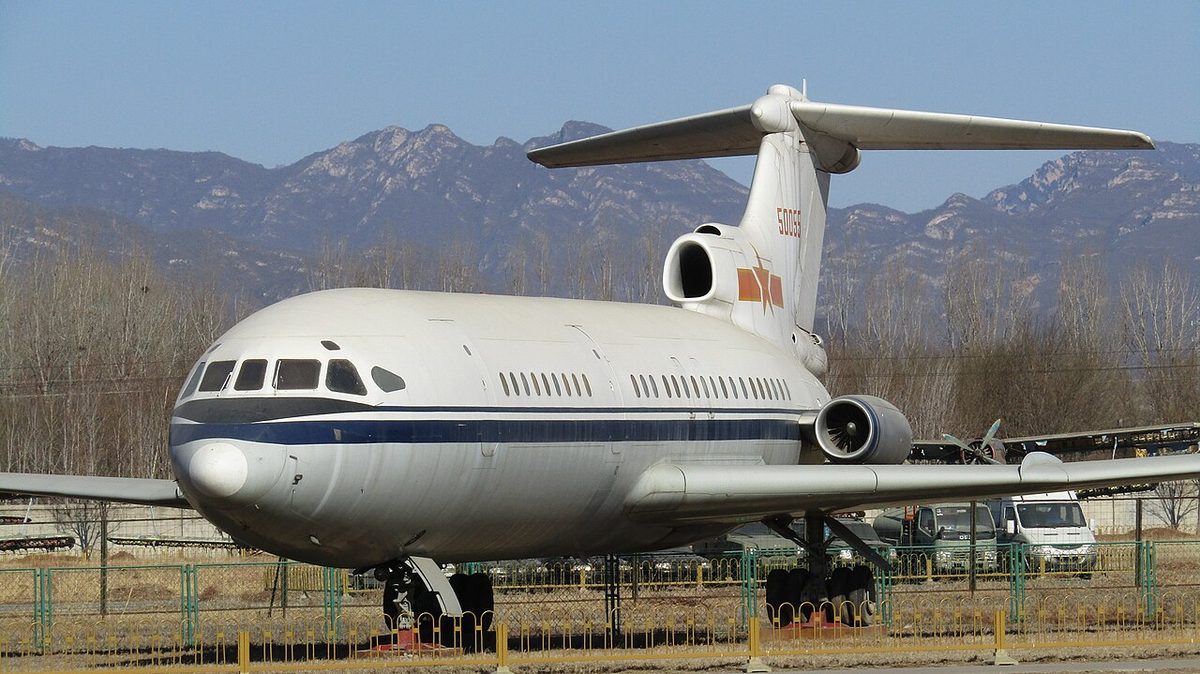
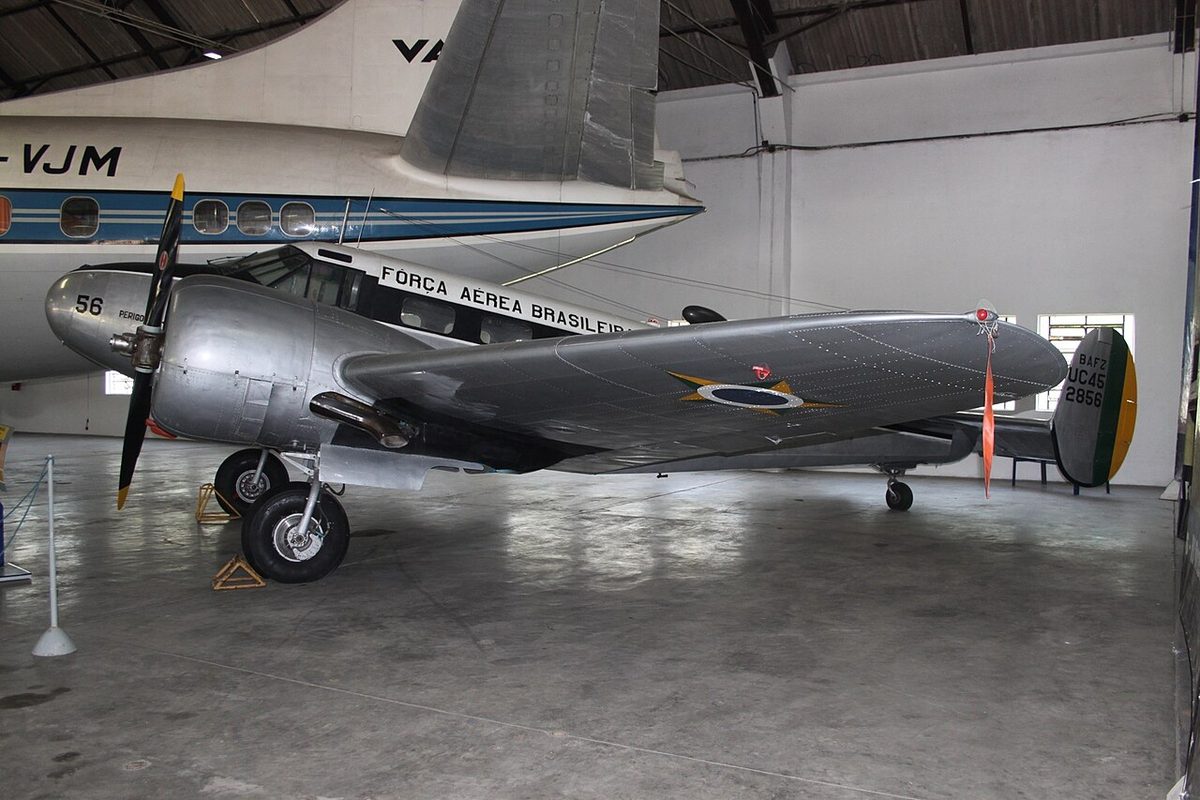
The H-tail places a fin and rudder at each end of the tailplane. The cruciform tail sets the tailplane part-way up the fin, where it clears the jet exhaust and wing wake. The V-tail, or butterfly tail, replaces three surfaces with two, each carrying a ruddervator: moving together they act as elevators, and moving differentially as a rudder, with a mixer combining the pilot's inputs. The V-tailed Beechcraft Bonanza is the best-known example.
Canards
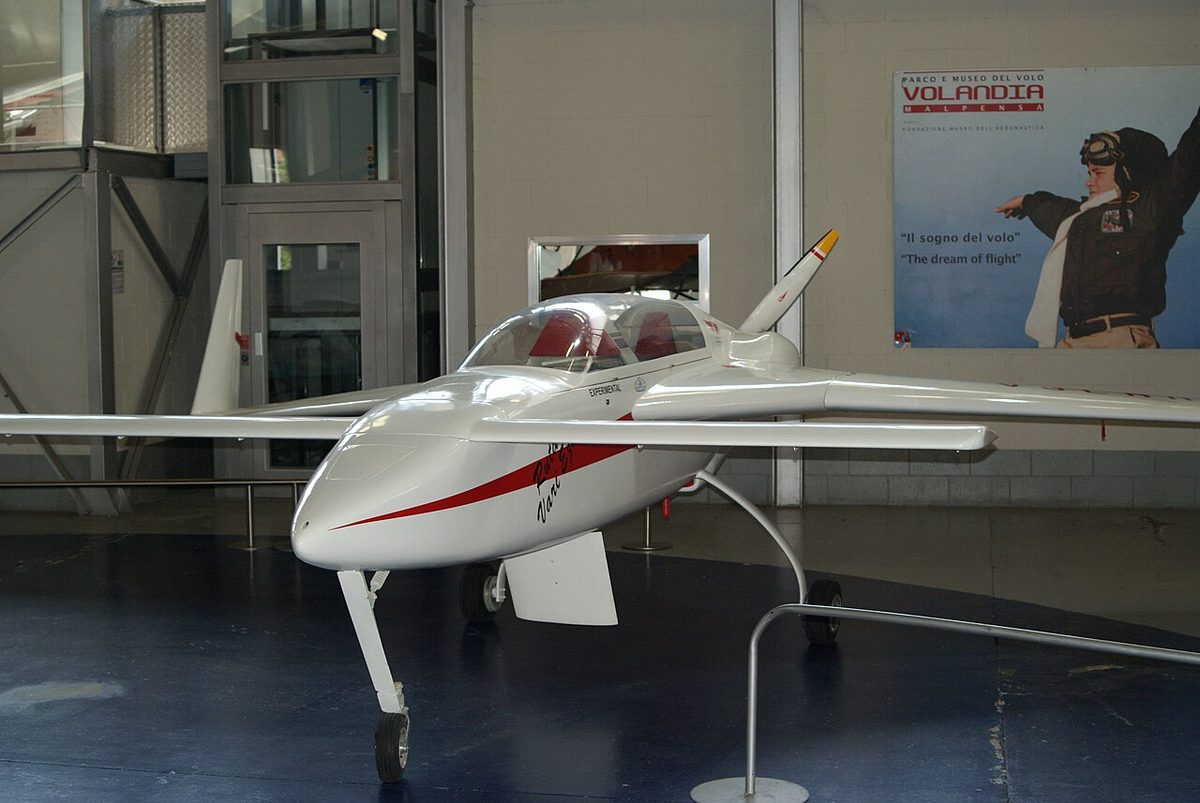
A canard is a horizontal control surface, or foreplane, mounted ahead of the wing instead of behind it. On a stable canard aeroplane both surfaces lift upwards: the foreplane, ahead of the CG, balances the nose-down moment of the main wing's lift behind the CG, so the wing no longer has to carry a tail download as well as the weight.
Stability works differently. A gust that raises the angle of attack increases the foreplane's lift ahead of the CG, which is destabilising. The stability comes from the main wing, whose extra lift acts behind the CG. As on any aeroplane, the CG must lie ahead of the neutral point, which on a canard lies between the two surfaces.
The stall requires particular care. The foreplane must stall first. When it does, it loses lift, the nose drops and both surfaces return to a lower angle of attack, so the main wing never reaches its own stall and the aeroplane stays controllable. If the main wing stalled first, the nose would pitch up with nothing to bring it down. The price of this safety is that the main wing can never use its full maximum lift coefficient. Many modern combat aircraft combine a canard with a delta wing and fly-by-wire controls, which lets them fly with relaxed stability.
T-tails and deep stall
A deep stall, called a super stall in some ATPL texts, is a stalled condition that the aeroplane will hold by itself and from which recovery may be impossible. It is associated with the combination of a swept wing and a high-mounted tailplane.
The swept wing starts it. Near the stall the tips stall first; because they lie behind the root, losing their lift moves the centre of pressure forward, and the concentrated inboard lift also increases the downwash on the tail. Both effects pitch the nose up, driving the angle of attack higher. At that angle the wake of the stalled wing, which leaves the wing roughly along the direction of the airflow, rises relative to the aeroplane until it envelops the high tailplane. Immersed in slow, turbulent air, the tailplane and elevator lose most of their effectiveness, and the pilot can no longer lower the nose. The aeroplane settles at a very high angle of attack with a high rate of descent in a nearly level attitude.
On 22 October 1963 the prototype BAC One-Eleven G-ASHG entered such a stable stall during stall tests and struck the ground near Chicklade, Wiltshire, in an almost level attitude, killing all seven crew. The lesson was prevention: because the progression from stall to deep stall is too fast for a pilot to react to, aeroplanes with deep stall characteristics are fitted with a stick pusher, which pushes the control column forward at a set angle of attack before the deep stall region is reached, together with a stick shaker to warn earlier.
Exam tip: "the swept wing causes the pitch-up; the T-tail makes recovery impossible" summarises the deep stall. See stall for stall warning and identification.
Tailplane stall
A tailplane stall is a stall of the horizontal tail. Because the tailplane normally flies at a negative angle of attack to produce its download, a tailplane stall removes that download, and the nose pitches down suddenly.
Ice is the usual cause. The tailplane is thinner than the wing and collects ice earlier, often without the crew being able to see it, and ice lowers its stalling angle. Extending flap then increases the downwash onto the tail, making its angle of attack more negative, and can push the contaminated tail past its stall. The typical sequence is flap selection on approach in icing conditions followed by a nose-down pitch, lightening or buffeting of the pitch controls and difficulty in trimming.
Warning: recovery from a tailplane stall is the opposite of a wing stall. Pull back on the controls, retract the flap to the previous setting and, if power has just been increased, reduce it. Follow the aircraft manufacturer's procedure, and if tail ice is suspected plan a landing with reduced flap. See airframe icing.
Fin stall
The fin meets the airflow at an angle of attack equal to the sideslip angle, so a large enough sideslip stalls it, like any aerofoil. A fin stall removes the restoring yawing moment exactly when it is most needed, and the aeroplane may lock into the sideslip. Rudder deflected in the direction that opposes the sideslip adds to the fin's effective camber and angle of attack, so it makes the fin stall at a smaller sideslip angle.
Large sideslips arise from mishandled asymmetric thrust, cross-controlled flight and large rudder inputs. The design remedy is the dorsal fin, a low-aspect-ratio extension forward of the fin that stalls only at a very large angle and sheds a vortex that keeps the flow over the main fin attached, so directional stability is maintained at sideslip angles where a plain fin would stall. A ventral fin under the rear fuselage has the same directional effect.
Frequently asked questions
What is a T-tail and why is it used?
A T-tail has the horizontal stabiliser mounted on top of the fin. In normal flight it sits above the wing's downwash, its wake and the propeller slipstream, which gives smoother elevator response and helps pitch stability, and it leaves the rear fuselage free for tail-mounted engines. The penalties are a stronger, heavier fin, less elevator power at low speed on a propeller aeroplane, whose tail is out of the slipstream, and, with a swept wing, the risk of deep stall.
What is a deep stall?
A deep stall, also called a super stall, is a stable stalled condition from which recovery may be impossible. On a swept-wing aeroplane with a T-tail, the tips stall first and pitch the nose up, and at the high angle of attack the tailplane becomes immersed in the turbulent wake of the stalled wing. The elevator then cannot produce enough nose-down moment. Types at risk are fitted with a stick pusher to stop the aeroplane reaching that condition.
How do you recover from a tailplane stall?
A tailplane stall, usually caused by ice on the tailplane and often triggered by extending flap, gives a sudden nose-down pitch, lightening or buffeting of the controls and difficulty trimming. Recovery is the opposite of a wing stall: pull back on the controls, retract the flap to the previous setting and reduce power if it has just been increased. The aircraft manufacturer's procedure takes precedence, and a reduced-flap landing should be planned.
Why must a canard stall before the main wing?
On a canard layout the foreplane lies ahead of the centre of gravity and the main wing behind it. If the foreplane stalls first, it loses lift and the nose drops, reducing the angle of attack of both surfaces, so the wing never reaches its own stall and control is kept. If the main wing stalled first, the nose would pitch up with no way of recovering. The price is that the wing's full maximum lift cannot be used.
What is the difference between a stabilator and an elevator?
An elevator is a hinged surface at the trailing edge of a fixed horizontal stabiliser; deflecting it changes the camber of the tailplane. A stabilator is an all-moving tailplane that pivots as one piece, changing its incidence, and combines the stabiliser and elevator in a single surface. It is very powerful and would feel too light, so it usually carries an anti-servo tab that moves in the same direction and adds control force.
What is a fin stall?
The fin meets the airflow at an angle of attack equal to the sideslip angle, so at a large sideslip it can stall like any aerofoil. The restoring yawing moment then collapses and the aeroplane may lock into the sideslip. Rudder applied in the correcting direction adds to the fin's effective angle of attack and makes it stall at a smaller sideslip. A dorsal fin keeps the flow attached and delays the problem.
Test yourself on Tail Configurations
The v1prep banks cover this topic in Principles of Flight (081), with a worked explanation for every answer. EASA ATPL, PPL, IR and CPL, the FAA written tests and A320/B737 type ratings.
Start practising →Sources and further reading
- FAA Pilot's Handbook of Aeronautical Knowledge (FAA-H-8083-25), Chapter 6, Flight Controls
- FAA Advisory Circular AC 91-74B, Pilot Guide - Flight in Icing Conditions
- FAA AC 120-109A, Stall Prevention and Recovery Training
- EASA Easy Access Rules for Large Aeroplanes (CS-25)
- EASA, Explanatory Note to ED Decision 2018/001/R, Part-FCL theoretical knowledge learning objectives
Library articles are written for study and exam preparation. They do not replace your aircraft's approved documentation, your operator's procedures or the regulations themselves.