Flutter and Aeroelasticity
Aeroelasticity is the study of how the flexibility of an airframe interacts with the aerodynamic and inertial loads on it. Its effects range from a steady loss of control effectiveness, such as aileron reversal, to flutter, a self-excited oscillation that can destroy a structure within seconds.
An aeroplane is not a rigid object. Its wings bend upwards in flight and twist under the loads on them, its tail flexes, and its control surfaces are hinged masses that can swing as the structure moves. Aeroelasticity is the study of how that flexibility interacts with the aerodynamic forces, which themselves depend on the shape the structure takes, and with the inertia of the masses involved. Usually the interaction is harmless. At high dynamic pressure it can weaken or reverse a control, and in its most violent form, flutter, it can tear a surface off within seconds.
For pilots the subject explains the inboard ailerons and roll spoilers of jet transports, the weights on the control surfaces of light aeroplanes, the fuel kept in an airliner's outer wing tanks, and why a speed limit, an unapproved repair or worn control hinges are taken so seriously. It is examined in EASA Principles of Flight and in Airframes and Systems.
Aeroelasticity
Three kinds of force take part. Aerodynamic forces depend on speed and on the shape and angle of the surfaces. Elastic forces arise as the structure resists being bent or twisted, like a spring. Inertial forces arise from the masses of the structure, the fuel, the engines and the control surfaces as they accelerate.
Aeroelastic effects fall into two families. Static effects are steady deformations: the wing twists a little under an aileron load and stays twisted, reducing the aileron's effectiveness, and at the extreme reversing it. Dynamic effects are oscillations in which all three kinds of force exchange energy, the most important being flutter. Both become more severe as dynamic pressure rises, because the aerodynamic loads grow with the square of the equivalent airspeed while the structure's stiffness stays the same.
Flexural axis and wing twist
The flexural axis of a wing is the spanwise line along which a load can be applied without twisting the wing; a load applied there only bends it. It lies close to the spars, within the torsion box that gives the wing its torsional stiffness. An upward load applied ahead of the flexural axis twists the wing leading-edge up; one applied behind it twists the wing leading-edge down.
Control surfaces sit at the trailing edge, far behind the flexural axis, and the force on them acts on a long arm. A lowered aileron increases the lift near the trailing edge and so twists the wing nose-down, reducing the angle of attack of the whole section; a raised aileron does the opposite. This aeroelastic wing twist grows with dynamic pressure and depends on the wing's torsional stiffness. It is largest near the tips of long, thin wings, which are the most flexible and where outboard ailerons are placed.
Aileron and control reversal
As speed increases, the nose-down twist caused by a lowered aileron cancels a growing share of the extra lift the aileron produces. Aileron effectiveness therefore falls with rising dynamic pressure, reaches zero at a critical reversal speed, and beyond it becomes negative: the lowered aileron twists the wing so much that the wing loses lift and drops instead of rising. This is aileron reversal, or high-speed aileron reversal, and it rolls the aeroplane the opposite way to the pilot's input.
Designers keep the reversal speed well outside the flight envelope. They stiffen the wing in torsion, place ailerons for high-speed use on the stiffer inner wing, and roll the aeroplane with spoilers, whose lift loss is spread across the chord and twists the wing much less. Many jet transports lock their outboard ailerons out when the flaps are retracted, as described in roll control, adverse yaw and spoilers.
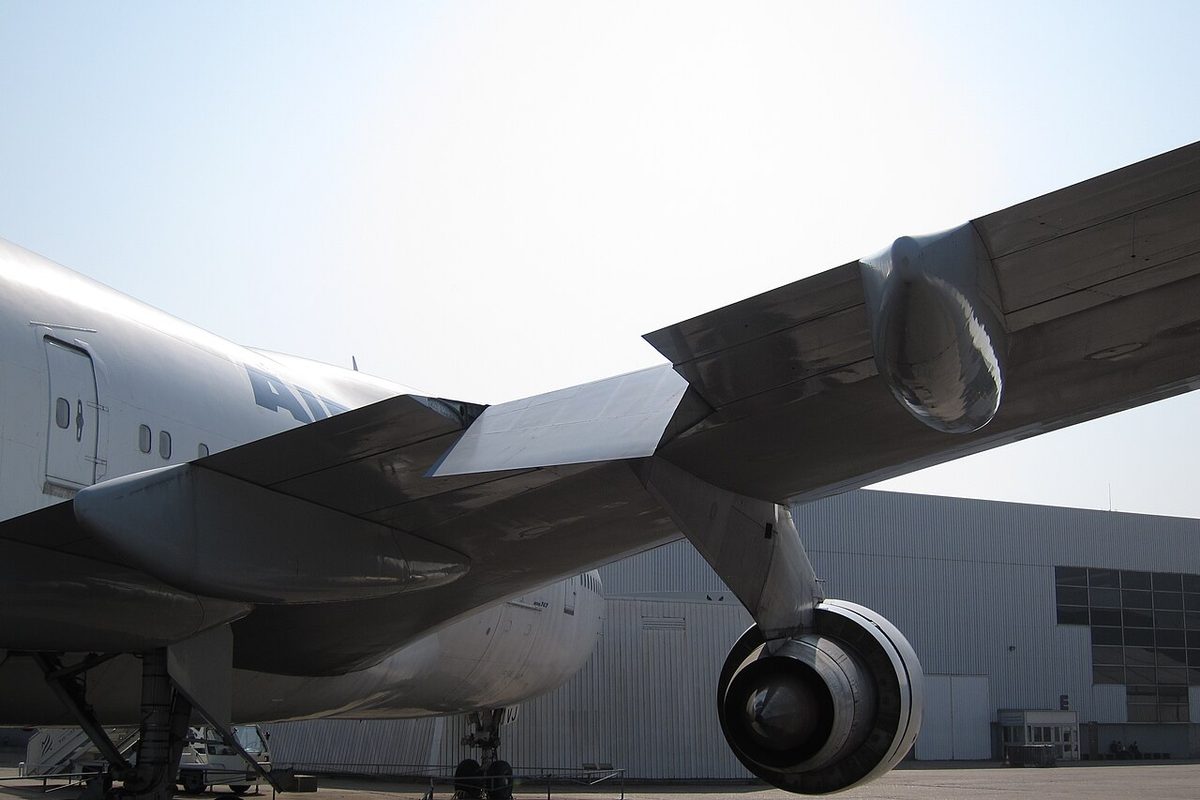
Control reversal is the general name for any control producing the opposite of the response the pilot commands. Aeroelastic aileron reversal is the classic case. Controls can also lose effectiveness at high Mach numbers: a shock wave ahead of a trailing-edge surface stops its deflection from influencing the flow ahead of the shock, and the separated flow behind the shock weakens it further (see high-speed flight). It should not be confused with a reversal of control force, in which the surface still works the right way but the hinge moment changes sign, as in the overbalance described in control balance, tabs and trim.
Flutter
Flutter is a self-excited oscillation of a structure or control surface, driven by the interaction of aerodynamic, elastic and inertial forces. It needs two modes of motion that can exchange energy, typically bending and twisting of a wing or tail, or bending of the wing and rotation of a control surface about its hinge. Suppose a wing bends upwards and, as it does so, an aileron whose centre of gravity lies behind its hinge lags behind, swinging trailing-edge down. The deflected aileron increases the lift on the rising wing and pushes it further; on the way back the process reverses. At low speed the structure's damping absorbs the energy and any oscillation dies away. Above the flutter speed the airflow puts more energy into each cycle than the structure can absorb, and the amplitude grows, often explosively.
Flutter is an instability, not a simple resonance with a gust, although a gust or a control input can start it. It can cause the loss of a control surface, a tailplane or a wing within seconds. The flutter speed depends on the stiffness and mass distribution of the structure, so anything that changes them can lower it into the flight envelope:
- control surface free play, worn hinges, or slack and flexible control circuits;
- unapproved repairs or modifications that add mass behind the hinge line, or removal or alteration of balance weights;
- damage to the structure.
For large aeroplanes the aeroelastic stability requirements are CS 25.629 and 14 CFR 25.629: flutter must not occur within the flight envelope, and each type is analysed and flutter-tested during certification. For the pilot the practical defences are to respect the speed limits and to keep the controls in good order. On a light aeroplane VNE is set at no more than 0.9 of the design diving speed VD, leaving a margin against flutter and structural failure; on a jet, VMO/MMO is set sufficiently below VD/MD that the design speeds are very unlikely to be reached inadvertently. Mass balance weights and their attachments are checked on the walk-round.
Mass balancing
Mass balance is weight added to a control surface ahead of its hinge line, so that the surface's centre of gravity lies on or slightly ahead of the hinge. The surface's inertia then no longer makes it lag behind the bending structure, the coupling that drives control-surface flutter is removed, and the flutter speed rises. Mass balance can be a concentrated weight on an arm or horn projecting ahead of the hinge, visible on many light aeroplanes, or a distributed mass inside the leading edge of the surface.
Most control surfaces are mass-balanced. Mass balancing is part of the certified design, so balance weights must never be removed or altered, and any repair that adds mass to a control surface, particularly behind the hinge, must be approved because it can upset the balance. Mass balance is entirely separate from aerodynamic balance: it does nothing to lighten the control force.
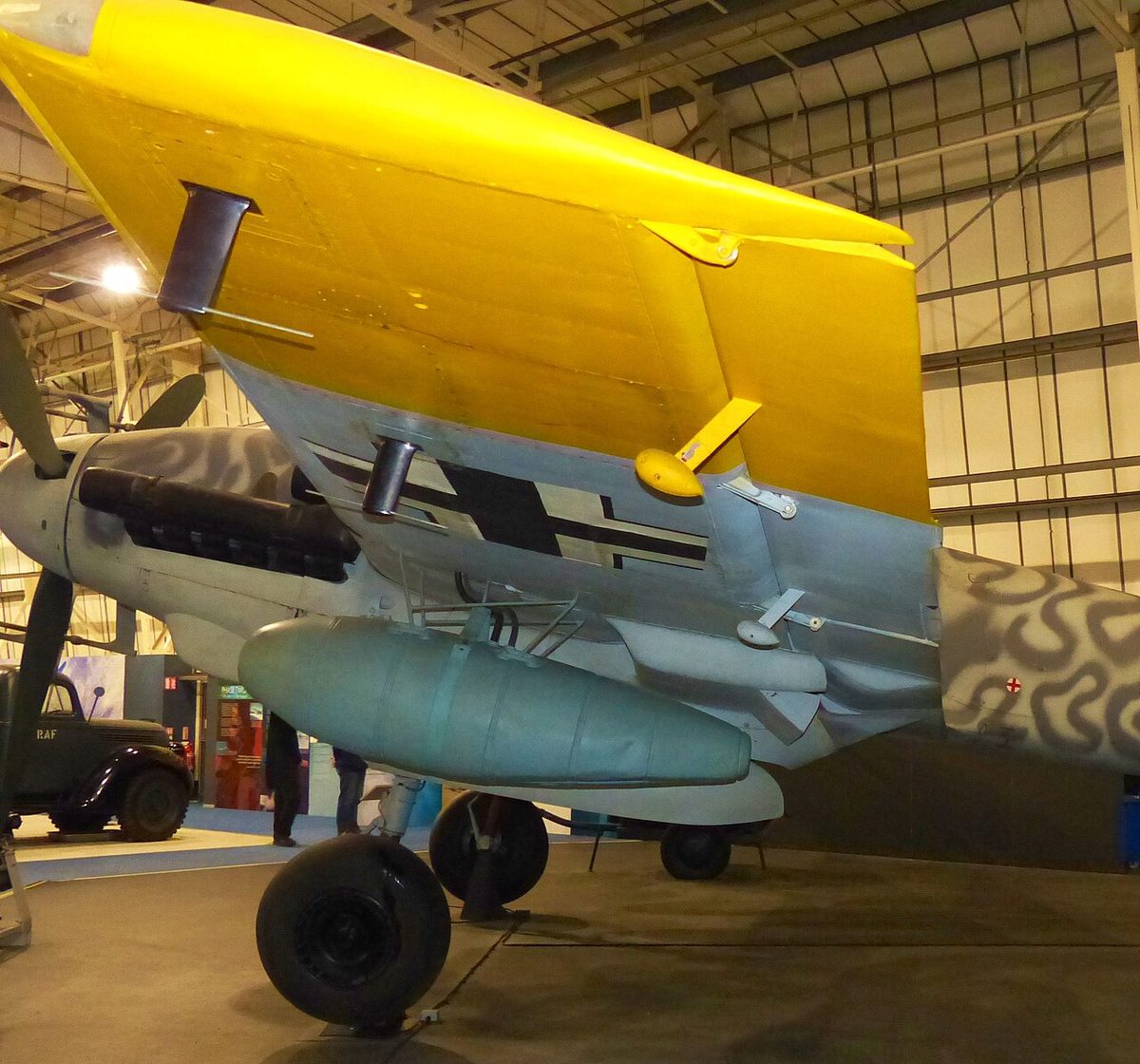
Two other design features prevent control-surface flutter. Fully powered, irreversible controls hold the surface with hydraulic actuators, so aerodynamic forces cannot drive it about its hinge; modern jets combine them with mass balancing. Spoilers cannot flutter at all, one of their advantages for roll control. The wing as a whole is balanced in the same way: engines on pylons ahead of the leading edge put mass forward of the flexural axis and raise the wing's flutter speed. The A320 keeps fuel in its outer wing tanks throughout the flight for wing bending and flutter relief, and those tanks are the last to feed the engines.
Control buzz
Control buzz is a rapid oscillation of a control surface at transonic speed, caused by a shock wave standing close to its hinge line. Each small movement of the surface shifts the shock across the hinge, which changes the hinge moment abruptly and drives the surface back again. Buzz is distinct from flutter, since it depends on the movement of the shock rather than on coupling with the structure's elastic modes. It is one of the effects of flight above the critical Mach number, along with shock-induced separation and high-speed buffet (see buffet and buffet margin).
Aileron up-float and load relief
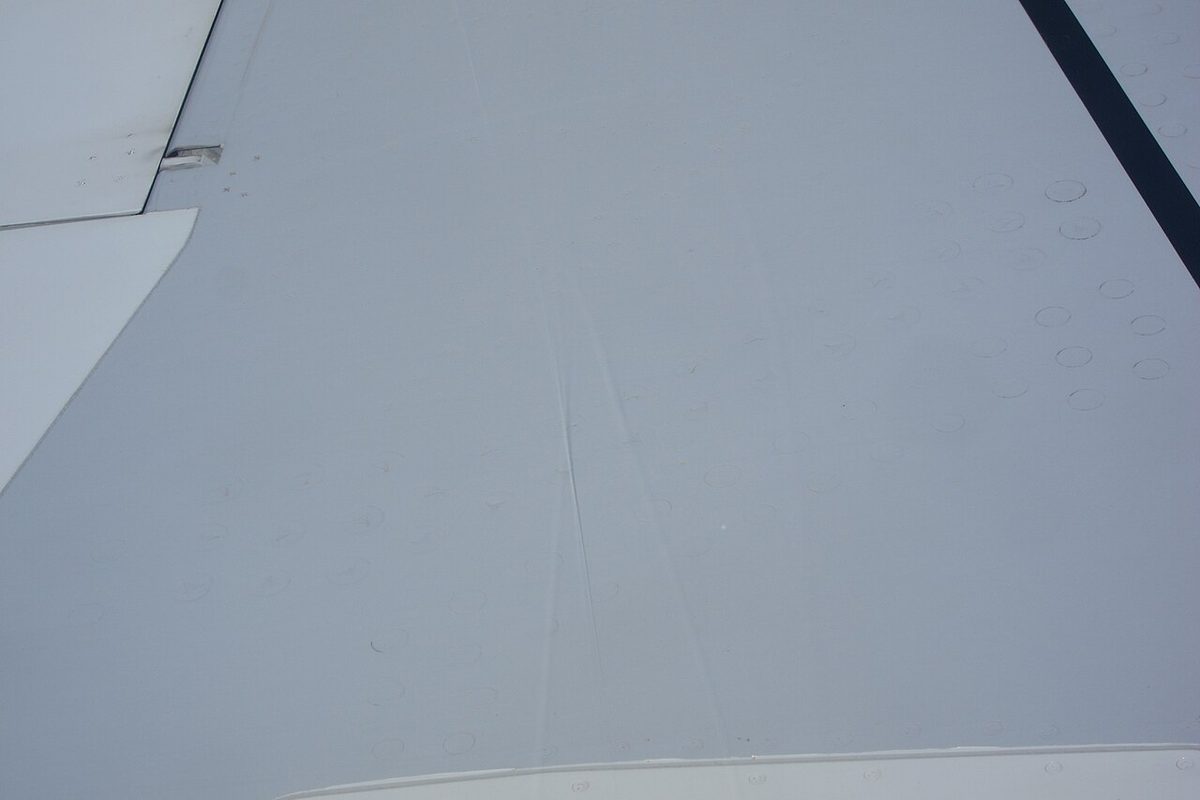
Loads on the structure can also be reduced on purpose. Lift bends the wing upwards about its root, and the bending moment is greatest at the root: all the lift outboard contributes to it, and lift far out along the span acts on the longest arm. ATPL airframe texts list aileron up-float, the ailerons riding slightly up, among the means of relieving wing bending: it off-loads the wingtips and so reduces the root bending moment.
Mass carried in the wing also relieves bending, by pushing down against the lift. Wing-mounted engines and fuel in the wing tanks both do so, which is why outer wing fuel is used last and why the maximum zero fuel mass exists: it limits the load carried in the fuselage, which gives no such relief (see structural design and design loads). Fly-by-wire aircraft go further and move surfaces actively: the A320's normal law includes the alleviation of manoeuvre loads.
Frequently asked questions
What is flutter on an aircraft?
Flutter is a self-excited oscillation of a wing, tail or control surface in which aerodynamic, elastic and inertial forces feed one another. Typically bending and twisting of the structure couple, and above a critical flutter speed the airflow puts more energy into each cycle than the structure can absorb, so the amplitude grows rapidly. It can destroy a structure within seconds, so it must not occur anywhere in the flight envelope.
What is mass balancing and why is it needed?
Mass balancing is the addition of weight to a control surface ahead of its hinge line, so that the surface's centre of gravity lies on or ahead of the hinge. If it lay behind, the bending of the wing or tail would fling the surface through deflections that feed energy back into the structure and cause flutter. Mass balance does not lighten the control force; that is the job of aerodynamic balance.
What causes aileron reversal?
The air load on a deflected aileron acts behind the wing's flexural axis, so it twists the wing. A down-going aileron twists the wing leading edge down and reduces its angle of attack. The twist grows with dynamic pressure, and above a critical speed it removes more lift than the aileron adds, so the wing rolls the wrong way. Jets avoid it with inboard ailerons and spoilers at high speed and stiff wing structures.
What is control buzz?
Control buzz is a rapid oscillation of a control surface at transonic speed, caused by a shock wave standing close to its hinge line. Each small movement of the surface moves the shock across the hinge, which changes the hinge moment abruptly and drives the surface back. It is distinct from flutter, which comes from coupling with the structure's elastic modes, and it belongs to flight above the critical Mach number.
How do wing-mounted engines help against flutter?
Engines hung on pylons ahead of the wing's leading edge put a large mass forward of the flexural axis. They act as a mass balance for the wing, changing the frequencies of its bending and twisting modes so that they couple less readily, which raises the flutter speed for a given structural stiffness. Their weight also relieves the upward bending of the wing in flight, as does fuel kept in the outer wing tanks.
Test yourself on Flutter and Aeroelasticity
The v1prep banks cover this topic in Principles of Flight (081), with a worked explanation for every answer. EASA ATPL, PPL, IR and CPL, the FAA written tests and A320/B737 type ratings.
Start practising →Sources and further reading
- EASA, Explanatory Note to ED Decision 2018/001/R, Part-FCL theoretical knowledge learning objectives
- EASA Easy Access Rules for Large Aeroplanes (CS-25), including CS 25.629 Aeroelastic stability requirements
- 14 CFR 25.629, Aeroelastic stability requirements
- FAA Pilot's Handbook of Aeronautical Knowledge (FAA-H-8083-25), Chapter 6, Flight Controls
Library articles are written for study and exam preparation. They do not replace your aircraft's approved documentation, your operator's procedures or the regulations themselves.