Airline Pilot Ranks, Seniority and Scheduling
Airline pilots hold ranks, captain, first officer and on some aircraft second officer or flight engineer, that fix their authority and duties on the flight deck. In many airlines, above all in North America, a seniority list then decides when each pilot upgrades, where they are based and which schedules they can hold.
An airline's pilots are organised in ranks that mirror the division of authority on the flight deck. The captain commands the aircraft, the first officer is the second pilot, and on some long-haul flights or older three-crew aircraft a second officer or a flight engineer completes the crew. How a pilot moves between those ranks, where they are based and which days they fly depends partly on regulation and partly on the airline's employment agreement.
In North America almost everything in an airline pilot's working life is ordered by seniority, the pilot's place on the company list by date of hire. Elsewhere practice varies more, but the vocabulary of bases, pairings, rosters and standby is shared.
Flight crew ranks
The captain is the pilot in command, called the commander in European commercial air transport, with final authority over the conduct of the flight (see pilot in command and flight crew composition). To command a multi-pilot aeroplane in commercial air transport an EASA pilot needs an ATPL(A). In US Part 121 operations the pilot in command needs an ATP certificate with the type rating and at least 1,000 hours of air carrier experience, for example as second in command in Part 121 operations (14 CFR 121.436). By convention the captain sits in the left-hand seat.
The first officer (FO) is the co-pilot, the second in command in FAA terms, who shares the flying, commonly alternating sectors as pilot flying and pilot monitoring, and takes command only if the captain is incapacitated. An EASA first officer may hold a CPL(A) with a multi-engine instrument rating and MCC training, or an MPL; a Part 121 first officer must hold an ATP certificate, restricted or unrestricted, with the type rating.
Many airlines also recognise a senior first officer, typically an experienced first officer holding a full ATPL. The title is the airline's, not the regulator's, but the licence matters: under ORO.FC.A.201 a pilot who relieves the commander in the cruise, only above FL 200, must hold an ATPL(A), be type-rated, recurrently trained and checked, and route competent.

Second officers and flight engineers
A second officer (SO) ranks below first officer. Some long-haul operators employ second officers as cruise relief pilots who fly in the cruise while the other pilots rest, but do not normally take off or land. Under EASA rules a cruise relief co-pilot must complete simulator recency and refresher training at intervals of no more than 90 days.
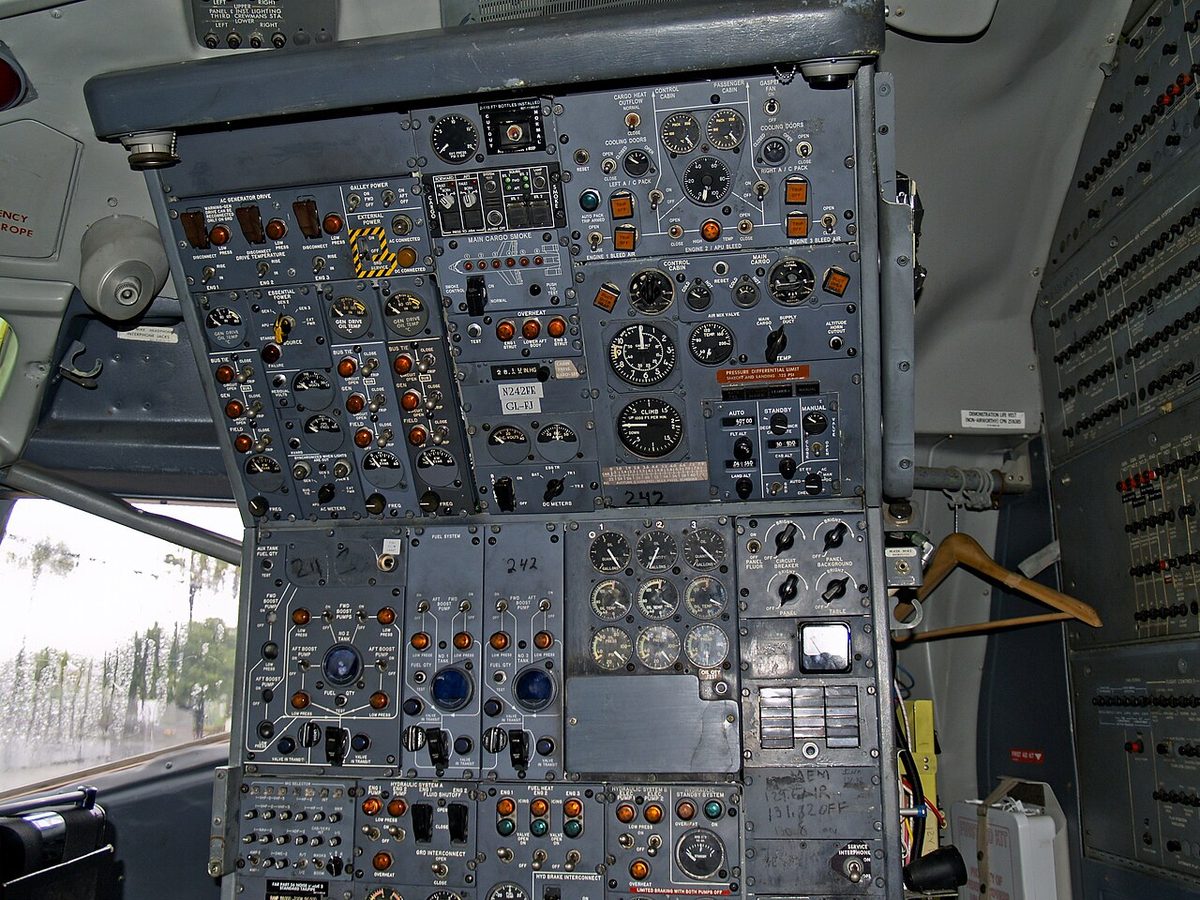
In the three-crew era the title meant something else. Airliners such as the Boeing 727, the early Boeing 747 and the DC-10 carried a flight engineer (FE) at a side-facing panel behind the pilots, managing the fuel, electrical, hydraulic and pressurisation systems and the engine settings. At many US airlines a newly hired pilot started as a second officer in that seat and moved to the right-hand seat as seniority allowed; other flight engineers were career specialists rather than pilots. The FAA still issues flight engineer certificates under 14 CFR Part 63. The two-pilot flight deck, standard on new airliner designs since the 1980s, has made the position rare.
Chief pilot
The chief pilot is a management pilot responsible for the standards and conduct of the pilot group. The FAA lists a chief pilot among the management positions a Part 121 or Part 135 operator must fill. At large airlines the title also goes to the managers of individual bases or fleets, the line pilot's direct managers. EASA has no chief pilot post as such: under the accountable manager the operator appoints nominated persons for flight operations and crew training, and chooses the titles below them (see air operator certification).
Captain upgrade
The captain upgrade, or command upgrade, is the move from the right-hand seat to the left. It has two gates: the pilot must meet the regulatory and company minimums, and a captain vacancy must exist that the pilot's seniority, or the airline's selection process, can secure.
Under EASA rules the upgrading pilot must hold an ATPL(A), which requires at least 1,500 hours of flight time in aeroplanes, including 500 hours in multi-pilot operations (see commercial and airline transport pilot licences). A first officer who has passed the ATPL theory examinations but lacks that experience is informally said to hold a "frozen ATPL". The operator sets its own minimum experience for command, and the upgrade is a command course under ORO.FC.205. For aeroplanes it includes at least:
- training in a flight simulation training device, including line-oriented flight training (LOFT) and/or flight training;
- an operator proficiency check operating as commander;
- training in command responsibilities;
- line training as commander under supervision, for a minimum of 10 sectors;
- a line check as commander, and demonstrated knowledge of the routes or areas and aerodromes to be used.
Crew resource management training for the leadership role is part of the course. The new commander then counts as an inexperienced flight crew member until completing, on the type, 100 hours and 10 sectors within a consolidation period of 120 days, or 150 hours and 20 sectors, and no flight crew may contain more than one inexperienced member (AMC1 ORO.FC.200(a)).
In US Part 121 operations the regulatory minimum is the 1,000 hours of 121.436, and upgrades usually come sooner at regional airlines than at the major carriers, where more first officers compete for each captain's seat. The new captain flies initial operating experience with a check airman, at least 25 hours on a turbojet, and a line check (121.434). Until reaching 100 hours as pilot in command in the type in Part 121 operations, the captain is a high-minimums captain, adding 100 ft to the DA or MDA and half a mile, or the RVR equivalent, to the landing visibility minimum (121.652).
Note: At a seniority-based airline a new captain starts at the bottom of the captains' list, often back on reserve or at an unpopular base, so some pilots delay the upgrade until a vacancy comes with a base they want.
How seniority works
Seniority is a pilot's position on the airline's pilot list, normally by date of hire, with a tie-breaker such as age or a random draw for pilots who joined on the same day. Under most North American collective agreements it decides which aircraft, seat and base a pilot can hold, when they upgrade, the schedule awarded in bidding, vacation periods, and the order of furlough and recall.
System seniority is the pilot's place on the whole list, which improves only as pilots above retire or leave. Relative seniority is the place within one category, such as first officers on one fleet at one base: a pilot who changes aircraft or base keeps the system number but may drop from near the top of one category to the bottom of another. Because seat and aircraft usually set the pay rate, seniority also decides earnings indirectly.
Seniority does not transfer between airlines, so a pilot who changes employer starts again at the bottom. The retirement age for airline pilots is 65 under both EASA and FAA rules, so the age profile of the pilots above a new hire largely decides how quickly they move up.
When airlines merge, their lists must be combined. In the United States the McCaskill-Bond provisions, enacted in December 2007, require a fair and equitable integration of the merging carriers' seniority lists under sections 3 and 13 of the Allegheny-Mohawk labour protective provisions, with arbitration where the employee groups cannot agree.
Outside North America practice varies: some airlines keep strict seniority lists, others select pilots for command or a fleet by assessment, with length of service as one factor.
Crew bases
A crew base, called a domicile at US airlines, is the airport where a pilot's duties start and end. EASA's flight time rules define the home base as the location assigned by the operator from which a crew member normally starts and ends a duty period or series of duty periods, and where the operator is not normally responsible for accommodation. CS FTL.1.200 requires a single airport assigned with a high degree of permanence. When it changes, the first recurrent extended recovery rest period before duty at the new base rises to 72 hours, including 3 local nights.
New hires usually start at the most junior base, often on reserve, and move when their seniority can hold a transfer.
Trip pairings and line bidding
Planners cut the timetable into trip pairings, also called trips, rotations or sequences: chains of duty periods that start and end at the same crew base, built within the flight time limitations. The pairings are then assembled into each pilot's month, called a line or roster. Two methods dominate in North America:
- Line bidding: the airline builds complete monthly lines and publishes them, pilots rank them, and the lines are awarded in seniority order.
- Preferential bidding system (PBS): pilots state preferences, such as days off, trip length, report times or destinations, and software builds each line, honouring preferences in seniority order as far as the pairings allow.
Either way the most senior pilots get the trips they want and the most junior fly what is left. Many airlines elsewhere build rosters centrally, often around a regular pattern of working days and days off, with a request system instead of full bidding. EASA requires rosters to be published far enough ahead for crew members to plan adequate rest; the acceptable means of compliance is 14 days (AMC1 ORO.FTL.110(a)).
Reserve duty
Reserve duty means being available to be called out for an unassigned trip, to cover sickness, disruption or extra flights. It is the usual lot of junior pilots, and the two regulatory systems frame it differently:
| EASA (ORO.FTL) | FAA (Part 117) | |
|---|---|---|
| Short notice | Standby: airport standby counts in full as duty; other standby, at home or in suitable accommodation, lasts up to 16 hours, 25 % of it counting towards cumulative duty | Short-call reserve: a reserve availability period of no more than 14 hours |
| Longer notice | Reserve: assignments notified at least 10 hours ahead | Long-call reserve: a duty that runs into the window of circadian low needs 12 hours' notice |
| Protection | Limits on standby and on the flight duty period that follows | Unaugmented: duty plus reserve availability period no more than the Table B limit plus 4 hours, or 16 hours if less |
Collective agreements usually add rules on contact times and call-out notice.
Commuting and jumpseat access
Many pilots live away from their base and commute, usually by air, which eats into rest. On 12 February 2009 Colgan Air Flight 3407, a Bombardier DHC-8-400, crashed on approach to Buffalo; both pilots had commuted to their Newark base and spent the night before in the crew room, and the NTSB concluded that their performance was likely impaired by fatigue, although it could not say how far fatigue contributed (see fatigue). Part 117 does not regulate commuting directly, but makes the pilot responsible for reporting fit for duty (117.5) and requires fatigue education that covers commuting (117.9). EASA guidance says crew members should consider temporary accommodation nearer the home base if their travelling time usually exceeds 90 minutes (GM1 CS FTL.1.200).
Commuters often ride the flight deck jumpseat. Under 14 CFR 121.547 the pilot in command may admit certain persons to the flight deck, including pilots of other airlines where the carrier authorises it, and US airlines keep reciprocal jumpseat agreements. The Cockpit Access Security System (CASS) checks an off-line pilot's identity, employment and eligibility against the employing airline's records at the gate, so that a pilot of one participating airline can ride in another's cockpit jumpseat on US domestic flights. The captain keeps the final say.
At the airport, the Known Crewmember (KCM) programme, run by the TSA with Airlines for America and ALPA, let uniformed pilots and flight attendants use dedicated access points after verification of their identity and employment status, instead of the passenger screening lanes. In 2026 the TSA began replacing it with its own Crewmember Access Point (CMAP) programme, which uses biometric facial comparison and which crew members join voluntarily.
Furlough
A furlough is the North American term for laying pilots off with the right to be recalled. Under the usual contract terms pilots are furloughed in reverse seniority order, most junior first, and recalled in seniority order before any new pilot is hired, keeping their place on the list within the recall rights of the agreement. Hiring moves in cycles with demand, and furloughs follow downturns.
European law has no equivalent term. Reductions in staff follow national law and collective agreements, and the EU collective redundancies directive, 98/59/EC, requires consultation with workers' representatives before large-scale redundancies; some agreements order them by seniority, others do not. At a seniority-based airline the date of joining therefore matters more than the first year's pay, and the rules on upgrades, bases, rosters and layoffs are written in the collective agreement described in pilot unions and professional bodies.
Frequently asked questions
What is the difference between a captain and a first officer?
The captain is the pilot in command, with final authority over the flight and responsibility for the aircraft, crew and passengers. The first officer is the co-pilot, second in command, who shares the flying and monitoring, usually alternating sectors, and takes command only if the captain is incapacitated. Commanding a multi-pilot airliner requires an ATPL under EASA rules, and an ATP certificate with 1,000 hours of air carrier experience in US Part 121 operations.
What is a second officer in an airline?
A second officer is a pilot ranked below first officer. Some long-haul airlines use second officers as cruise relief pilots who fly the aircraft in the cruise while the other pilots rest, but do not normally take off or land. In the era of three-crew jets such as the Boeing 727, second officer also meant a pilot sitting at the flight engineer's panel, the usual entry job for new hires at many US airlines.
How does airline pilot seniority work?
Seniority is a pilot's place on the airline's list, normally by date of hire. At seniority-based airlines, mainly in North America, it decides which aircraft, seat and base a pilot can hold, when they upgrade to captain, which schedule they win in bidding, their vacation, and the order of furlough and recall. It does not transfer between airlines, so a pilot who changes employer starts again at the bottom.
What is reserve duty for airline pilots?
Reserve is time when a pilot has no trip assigned but must be available to be called out, to cover sickness, disruption or extra flights. Under FAA Part 117, short-call reserve lasts up to 14 hours, and long-call reserve needs 12 hours' notice of a duty that runs into the window of circadian low. EASA distinguishes standby, including airport standby, from reserve, for which an assignment must be notified at least 10 hours ahead.
What does a command upgrade course involve?
Under EASA rule ORO.FC.205, a pilot upgrading to commander completes a command course that includes simulator training with line-oriented flight training, an operator proficiency check as commander, training in command responsibilities, at least 10 sectors of line training as commander under supervision, and a line check as commander. The pilot must also hold an ATPL(A) and meet the operator's own minimum experience for command.
Test yourself on Airline Pilot Ranks, Seniority and Scheduling
The v1prep banks cover this topic in the airline interview bank, with a worked explanation for every answer. EASA ATPL, PPL, IR and CPL, the FAA written tests and A320/B737 type ratings.
Start practising →Sources and further reading
- EASA Easy Access Rules for Air Operations (ORO.FC.205 Command course, ORO.FTL.105 and ORO.FTL.110, CS FTL.1.200 Home base)
- 14 CFR 121.436, Pilot qualification, certificates and experience requirements
- 14 CFR Part 117, Flight and Duty Limitations and Rest Requirements (117.5, 117.9, 117.21 Reserve status)
- 14 CFR 121.547, Admission to flight deck
- 14 CFR Part 63, Certification, Flight Crewmembers Other Than Pilots (flight engineers)
- TSA, Crewmember Access Point (CMAP), successor to Known Crewmember
Library articles are written for study and exam preparation. They do not replace your aircraft's approved documentation, your operator's procedures or the regulations themselves.