Flight Time Limitations
Flight time limitations (FTL) are the rules that cap how long a crew member may fly and be on duty, and set the minimum rest between duties, so that fatigue does not endanger a flight. In Europe they are ORO.FTL and CS FTL.1; in the United States, 14 CFR Part 117 for airline pilots.
Flight time limitations (FTL) are the prescriptive rules that limit how long a crew member may fly and be on duty, and require minimum rest between duties. Their purpose is to keep fatigue within safe bounds. A legal roster does not guarantee a rested crew, but it gives crews a fair chance of arriving fit and staying alert through the last approach of the day.
ICAO requires States to set prescriptive limits and allows them to approve an operator's fatigue risk management system (FRMS) for all or part of its operations instead. Europe does it in ORO.FTL, part of the Air Operations Regulation, with the detailed tables in the certification specifications CS FTL.1; these apply to scheduled and charter commercial air transport by aeroplane and cover flight and cabin crew, while air taxi, emergency medical and single-pilot operations remain under older EU-OPS and national rules for now. The United States does it in 14 CFR Part 117, which has applied to flightcrew members in Part 121 passenger operations since 4 January 2014; all-cargo operators may remain under older rules, and Part 135 has its own limits. Detailed FTL rules for business aviation outside commercial air transport are left to national law in the EU.
Purpose of FTL schemes
A scheme works on three levels. It limits each duty by length and by the time of day at which it starts, because the body is least alert in the window of circadian low (WOCL), 02:00 to 05:59 in the time zone to which the crew member is acclimatised. It requires rest long enough to include a real opportunity for sleep. And it caps cumulative flight and duty time over weeks and months, because sleep debt builds up over successive days.
Responsibility is shared. Under ORO.FTL the operator must plan and manage duties so as to prevent fatigue, and the crew member must use the rest opportunities properly and must not operate when fatigue is likely to impair safety. Part 117 goes further on the individual's side: each flightcrew member must report for a flight duty period rested and prepared, and must affirmatively state fitness for duty before the flight; a carrier may not assign a crew member who reports being too fatigued.
Flight time and duty definitions
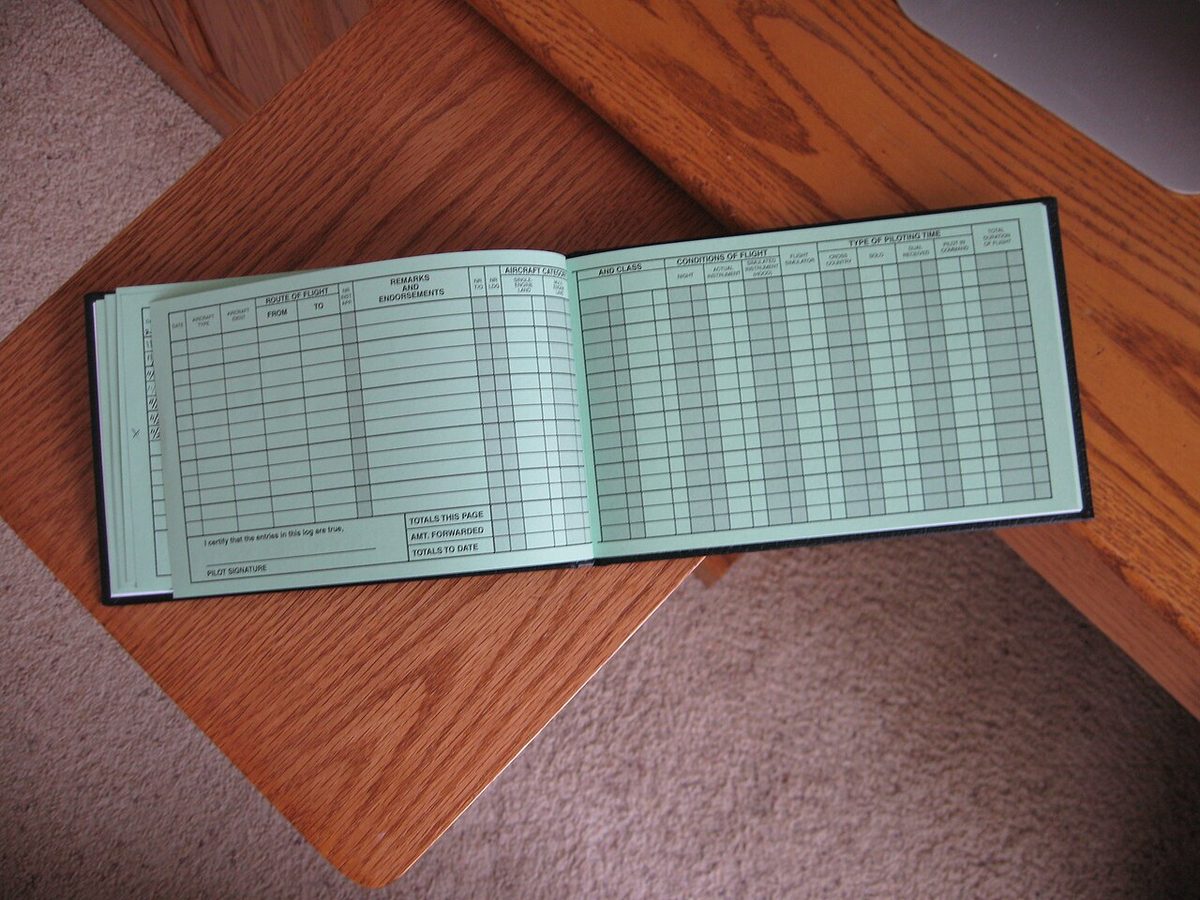
Flight time (block time), in the ICAO definition, runs from the moment the aeroplane first moves for the purpose of taking off until it finally comes to rest at the end of the flight, so a pushback counts. The FAA's definition in 14 CFR 1.1 starts when the aircraft moves under its own power for the purpose of flight and ends when it comes to rest after landing.
A duty period is any time a crew member spends working for the operator, from reporting for duty until free of all duties, including post-flight duties. A flight duty period (FDP) is the part of it that includes flying: it begins when the crew member reports for a duty that includes a sector or a series of sectors, and ends when the aircraft finally comes to rest with engines shut down at the end of the last sector flown as an operating crew member. Part 117 similarly ends the FDP when the aircraft is parked after the last flight segment. Positioning, simulator training and office work are duty but not flight time.
Acclimatisation and home base
The limits depend on the body clock, so the rules must decide which clock that is. An acclimatised crew member is one whose circadian rhythm is in step with the local time where he or she is. Under EASA rules a crew member is acclimatised to a 2-hour wide time zone around the local time at the point of departure. After travel across time zones, a table in ORO.FTL.105 uses the time-zone difference and the time elapsed since reporting to decide whether the crew member is still acclimatised to the original time, has become acclimatised to the new one, or is in an unknown state of acclimatisation, which carries its own, lower FDP limits.
The home base is the location, assigned by the operator, from which a crew member normally starts and ends a duty period or series of duty periods, and where the operator is not normally responsible for accommodation. Rest rules differ at home base and away from it. A local night is a period of 8 hours falling between 22:00 and 08:00 local time.
Part 117 uses theaters, geographical areas in which the departure and arrival points of a flight duty period differ by no more than 60 degrees of longitude. A flightcrew member is acclimated after 72 hours in a theater or after at least 36 consecutive hours free from duty. An unacclimated crew member has 30 minutes deducted from the FDP limit.
Flight duty period limits
For an acclimatised crew member without in-flight rest, EASA's basic maximum daily FDP is:
- 13:00 for a start between 06:00 and 13:29, with one or two sectors;
- less for later starts, down to 11:00 for one or two sectors when the FDP starts between 17:00 and 04:59;
- reduced by 30 minutes for each sector from the third, down to a floor of 9:00.
Exam tip: an acclimatised pilot reports at 08:00 for five sectors. Three sectors beyond the second each cost 30 minutes, so the maximum FDP is 13:00 minus 1:30, which is 11:30. Six sectors give 11:00, and ten or more reach the 9:00 floor.
Part 117 has two tables for an unaugmented two-pilot crew. Table A limits flight time in the FDP to 9 hours when the FDP starts between 05:00 and 19:59 and 8 hours otherwise. Table B limits the FDP itself by report time and number of segments: for a report between 07:00 and 11:59 it allows 14 hours for one or two segments, 13 for three or four, 12.5 for five, 12 for six and 11.5 for seven or more, while a report between 00:00 and 03:59 allows 9 hours whatever the number of segments.
FDP extensions
EASA allows two kinds of extension. A flight duty period extension without in-flight rest may be planned in the roster: up to 1 hour, not more than twice in any 7 consecutive days, paid for in rest by adding 2 hours to both the pre-flight and post-flight rest, or 4 hours to the post-flight rest. Commander's discretion deals with the unforeseen: after reporting, the commander may extend the FDP by up to 2 hours, or 3 hours with an augmented crew, when unforeseen circumstances such as delays make it necessary, after consulting the crew about their alertness. Its use is reported, and the operator must handle the reports in a non-punitive way and use them to correct rosters that do not work.
Part 117 separates the decisions by take-off. Before take-off the pilot in command and the certificate holder may extend the FDP by up to 2 hours for unforeseen operational circumstances. After take-off they may extend it as far as necessary to land safely at the next destination or alternate. An extension of more than 30 minutes may be used only once before the crew member receives a 30-consecutive-hour rest period, and any FDP that exceeds the limit by more than 30 minutes must be reported to the FAA within 10 days.
Augmented crew operations
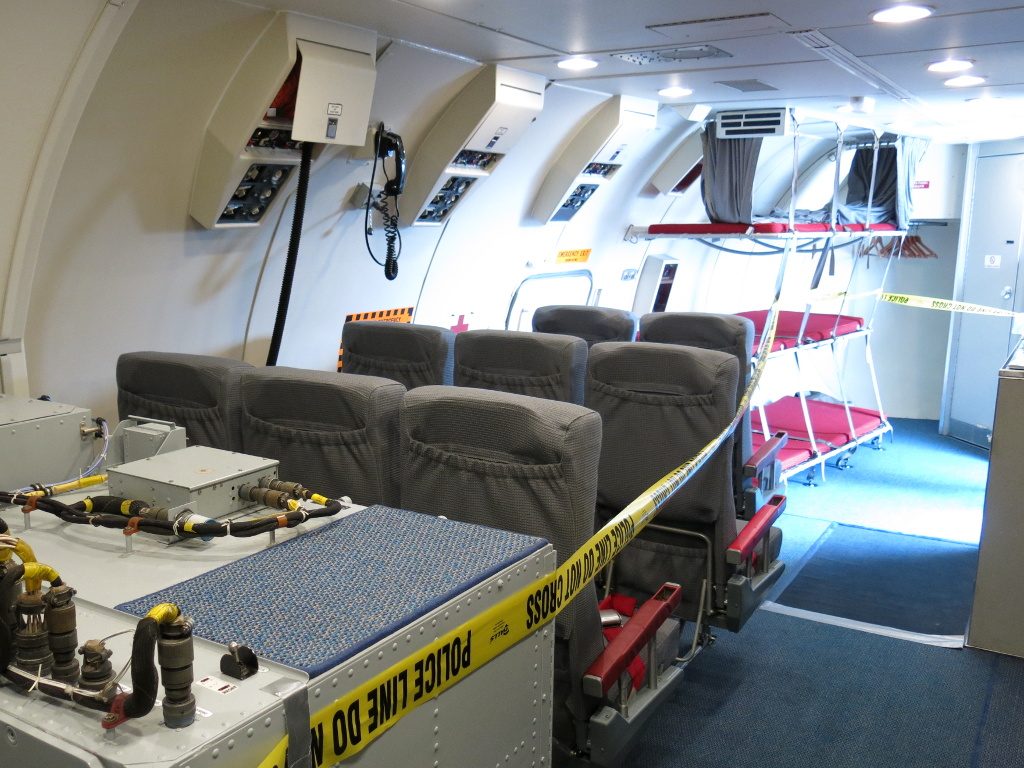
An unaugmented flight crew is the minimum crew the aircraft and operation require. An augmented crew carries more than the minimum, so that each pilot can leave the flight deck for in-flight rest and be replaced by another suitably qualified pilot. The augmented vs unaugmented flight crew distinction matters because in-flight rest allows a longer FDP. Under both EASA and FAA rules the extension depends on the number of additional pilots and on the class of rest facility: a bunk or flat bed in a compartment separated from the flight deck and cabin earns more than a reclining seat. Relief in flight is also constrained by the qualification rules for the relieving pilot (see pilot in command and flight crew composition).
In-flight rest in a rest facility is different from controlled rest, a short nap in the flight deck seat that EASA allows as a fatigue countermeasure and the FAA does not authorise for Part 121 crews.
Rest periods
A rest period is a continuous period free of all duties before a flight duty period. EASA sets the minimum rest period as:
- at home base: at least as long as the preceding duty period, or 12 hours, whichever is greater;
- away from home base: at least as long as the preceding duty period, or 10 hours, whichever is greater, including an 8-hour sleep opportunity in addition to the time for travel and physiological needs.
A duty of 13 hours 20 minutes ending at home base therefore requires 13 hours 20 minutes of rest; the whichever-is-greater construction stops a long duty from being followed by only the fixed minimum.
Beyond the daily rest, EASA requires a recurrent extended recovery rest period of at least 36 hours, including two local nights, with no more than 168 hours between the end of one and the start of the next. Two local nights matter more than the raw hours, because recovery depends on sleeping when the body clock expects it. Rosters with early starts, late finishes or night duties, which EASA calls disruptive schedules, attract additional rest, and reduced rest is permitted only under the operator's fatigue risk management.
Part 117 requires at least 10 consecutive hours of rest before an FDP, including an opportunity for 8 hours of uninterrupted sleep, and at least 30 consecutive hours free from all duty in any 168 consecutive hours.
Cumulative limits
Cumulative flight time and duty limits stop acceptable days from adding up to an unacceptable month:
| Limit | EASA (ORO.FTL.210) | FAA (Part 117) |
|---|---|---|
| Duty or FDP, short term | 60 duty hours in any 7 consecutive days | 60 FDP hours in any 168 consecutive hours |
| Duty, medium term | 110 duty hours in any 14 consecutive days | None |
| Duty or FDP, 28 days | 190 duty hours in any 28 consecutive days, spread as evenly as practicable | 190 FDP hours in any 672 consecutive hours |
| Flight time, 28 days | 100 hours in any 28 consecutive days | 100 hours in any 672 consecutive hours |
| Flight time, year | 900 hours in a calendar year and 1,000 hours in any 12 consecutive calendar months | 1,000 hours in any 365 consecutive calendar days |
EASA's long-term limits mix two kinds of period. A calendar month or calendar year follows the calendar, so the 900-hour limit starts again every 1 January, while the 1,000-hour limit rolls forward one calendar month at a time. The FAA avoids calendar months and years and counts backwards in consecutive hours or, for the annual limit, consecutive calendar days. EASA counts every duty towards the cumulative duty limit, not only flight duty; Part 117 limits FDP hours instead.
Standby and days off
Standby duty is a period in which a crew member must be available to receive an assignment without an intervening rest period. EASA distinguishes airport standby, at the airport, which counts in full towards cumulative duty, from other standby, for example at home, of which 25 per cent counts, and limits both, together with the FDP that may follow them. Part 117 calls the equivalent state reserve and has its own rules for short-call and long-call reserve.
Days off are protected by definition. A single day free of duty must include two local nights, and a rest period may form part of it, so a crew member cannot be released at midnight and called "off" the following day.
FAA Part 117 comparison
The two schemes reach similar limits by different routes. EASA's tables cover flight and cabin crew, control flight time mainly through the FDP and cumulative limits, and leave unforeseen extensions to the commander. Part 117 covers flightcrew members only, adds a cap on flight time in each FDP, counts in rolling hours and shares the extension decision between the pilot in command and the certificate holder. The FAA may approve an FRMS under 117.7 for operations the tables do not fit, such as ultra-long-range flights, while EASA builds fatigue risk management (ORO.FTL.120) into the operator's management system and requires it in a few cases, such as reduced rest. Both require fatigue training; section 117.9 requires it annually for flightcrew members, dispatchers, schedulers and their managers. Rosters and crew patterns are covered in airline pilot ranks, seniority and scheduling, and the physiology behind the rules in sleep and circadian rhythms.
Frequently asked questions
What is the maximum flight duty period under EASA rules?
For an acclimatised crew member the basic maximum daily FDP is 13 hours when the duty starts between 06:00 and 13:29 and includes one or two sectors. It falls by 30 minutes for each sector from the third, down to 9 hours, and is shorter for duties starting later in the day or at night, with 11 hours for one or two sectors from 17:00 to 04:59. Planned extensions and commander's discretion may add to it within strict limits.
What is the minimum rest period for airline pilots?
Under EASA rules the minimum rest before a flight duty period starting at home base is at least as long as the preceding duty period, or 12 hours if that is greater. Away from base it is the preceding duty period or 10 hours, whichever is greater, and must include an 8-hour sleep opportunity. Under FAA Part 117 it is 10 consecutive hours, including an opportunity for 8 hours of uninterrupted sleep.
What are the cumulative flight time limits for airline crew?
EASA limits flight time to 100 hours in any 28 consecutive days, 900 hours in a calendar year and 1,000 hours in any 12 consecutive calendar months, and duty to 60 hours in any 7 consecutive days, 110 in 14 and 190 in 28. FAA Part 117 uses rolling windows: 100 hours of flight time in 672 consecutive hours and 1,000 in 365 consecutive calendar days, and 60 FDP hours in 168 hours and 190 in 672.
When is a pilot acclimated under FAA Part 117?
Part 117 treats a flightcrew member as acclimated after 72 hours in a theater, a geographical area in which the departure and arrival points of a flight duty period differ by no more than 60 degrees of longitude, or after at least 36 consecutive hours free from duty. An unacclimated crew member has 30 minutes deducted from the maximum flight duty period in the Part 117 table.
What is commander's discretion?
Commander's discretion is the authority of the commander, under EASA rules, to extend the flight duty period or reduce rest when unforeseen circumstances arise after reporting, such as delays or weather. The FDP may be extended by up to 2 hours, or 3 hours with an augmented crew, after consultation with the crew. Its use must be reported and handled in a non-punitive way so that the operator can adjust its rosters.
Test yourself on Flight Time Limitations
The v1prep banks cover this topic in Air Law (010), with a worked explanation for every answer. EASA ATPL, PPL, IR and CPL, the FAA written tests and A320/B737 type ratings.
Start practising →Sources and further reading
- EASA Easy Access Rules for Air Operations (ORO.FTL and CS FTL.1)
- 14 CFR Part 117, Flight and Duty Limitations and Rest Requirements, Flightcrew Members
- 14 CFR 1.1, General definitions (flight time)
- ICAO Doc 9966, Manual for the Oversight of Fatigue Management Approaches
- FAA Advisory Circular 120-103A, Fatigue Risk Management Systems for Aviation Safety
- AIP France, GEN 1.7, Differences from ICAO Standards, Recommended Practices and Procedures (Annex 6, Part II)
Library articles are written for study and exam preparation. They do not replace your aircraft's approved documentation, your operator's procedures or the regulations themselves.