Commercial and Airline Transport Pilot Licences
The commercial pilot licence (CPL) allows a pilot to be paid to fly and to command single-pilot aircraft in commercial air transport. The airline transport pilot licence (ATPL), called the ATP certificate by the FAA, is the highest pilot licence and is needed to command multi-pilot airliners.
A private licence lets a pilot fly for pleasure; a professional licence lets a pilot be paid. The commercial pilot licence (CPL) is the first professional licence and allows the holder to fly for remuneration and to command small aircraft in commercial service. The airline transport pilot licence (ATPL), which the FAA issues as the airline transport pilot (ATP) certificate, is the highest pilot licence and the one needed to command an airliner. Two alternative routes lead to the airline flight deck: the multi-crew pilot licence (MPL), an ICAO licence built around an airline's needs, which EASA issues and the FAA does not, and the FAA's restricted ATP.
The licences differ in their privileges, but also in how pilots reach them. In Europe a new first officer typically joins an airline with a CPL, a multi-engine instrument rating and passes in the ATPL theory examinations, and the ATPL itself follows years later with the hours. In the United States every Part 121 airline pilot already holds an ATP certificate, so the hours come first. Both systems stop airline flying at 65.
Commercial pilot licence
The EASA CPL(A) may be issued from the age of 18. Its theoretical and flight instruction must be completed at an approved training organisation (ATO), and the applicant passes the theoretical examinations and a skill test. The medical is the Class 1 certificate: valid for 12 months, reduced to 6 months for holders aged 40 or more in single-pilot commercial air transport carrying passengers, and for all holders from 60. Initial issue is by an aero-medical centre only. When the Class 1 period runs out, the certificate continues to serve as a Class 2 for its longer validity, so the holder keeps private privileges but loses commercial ones.
Under FCL.305 the CPL(A) holder may:
- exercise all the privileges of the LAPL(A) and PPL(A);
- act as pilot in command or co-pilot of any aeroplane in operations other than commercial air transport;
- act as pilot in command in commercial air transport of any single-pilot aeroplane;
- act as co-pilot in commercial air transport.
The CPL therefore allows paid corporate flying, flight instruction with an instructor certificate, or command of a light aircraft on air-taxi work for an operator holding an air operator certificate, but not command of a multi-pilot airliner. The licence gives personal privileges only: flights sold to the public also need an operator with an AOC (see commercial and private operations).
The FAA commercial pilot certificate for single-engine airplanes requires 250 hours of flight time (190 in an approved Part 141 course), including 100 hours as pilot in command, 50 hours of cross-country, 20 hours of training with 10 of instrument training and 10 in a complex or technically advanced airplane, a day and a night training cross-country flight of at least 100 NM straight-line, a cross-country of at least 300 NM with landings at three points, one of them at least 250 NM from the start, and 5 hours of night VFR with 10 take-offs and landings. Commercial privileges require at least a second-class medical, valid for them for 12 calendar months. A commercial certificate issued without an instrument rating carries a limitation: no passengers for hire on cross-country flights of more than 50 NM or at night.
ATPL and ATP certificate
The EASA ATPL(A) may be issued from the age of 21. The applicant must hold either an MPL, or a CPL(A) with a multi-engine instrument rating and instruction in multi-crew cooperation, must have passed the ATPL theoretical examinations and must pass a skill test in a multi-pilot aeroplane. The experience requirement is at least 1,500 hours of flight time in aeroplanes, including:
- 500 hours in multi-pilot operations;
- 500 hours as pilot in command under supervision (PICUS), or 250 hours made up either entirely as pilot in command or of at least 70 hours as pilot in command and the rest as PICUS;
- 200 hours of cross-country flight time, of which 100 as pilot in command or PICUS;
- 75 hours of instrument time, of which no more than 30 may be instrument ground time;
- 100 hours of night flight as pilot in command or co-pilot.
Up to 100 of the 1,500 hours may be flown in a full flight simulator (FFS) and a flight and navigation procedures trainer (FNPT), with no more than 25 in the FNPT. The privilege the ATPL adds is command of multi-pilot aeroplanes in commercial air transport.
The ATPL theoretical examinations are passed at 75% in each paper, within 18 months from the end of the calendar month of the first attempt, in no more than six sittings and with no more than four attempts at any one paper; breach any of these limits and the whole set is retaken after further training. A pilot with a CPL, a multi-engine IR and all the ATPL passes but not yet the hours is informally said to hold a frozen ATPL.
The FAA ATP certificate with an airplane multi-engine rating requires age 23, good moral character, the ability to read, speak and write English, a commercial certificate with an instrument rating, the knowledge and practical tests, and 1,500 hours of flight time, including 500 hours of cross-country, 100 of night, 75 of instrument time, 250 as pilot in command (or as second in command performing the duties of the pilot in command under supervision) and 50 in the class of airplane, of which 25 may be in a full flight simulator. Acting as pilot in command on ATP privileges requires a first-class medical. Since 2013 every Part 121 second in command must hold an ATP certificate, restricted or unrestricted, with the type rating, and a Part 121 pilot in command also needs 1,000 hours of specified air carrier experience (121.436). At US regional airlines the pilot usually gains the ATP certificate together with the type rating during initial training.
Exam tip: keep the two 1,500-hour lists apart. EASA asks for 200 hours cross-country and 500 multi-pilot; the FAA asks for 500 cross-country and 50 in class. Both ask for 75 instrument and 100 night.
Restricted ATP
The restricted ATP (R-ATP) of 14 CFR 61.160 lowers the hours and age for pilots with qualifying backgrounds. The minimum age is 21, and the total time required is:
| Route | Total flight time |
|---|---|
| Military pilot | 750 hours |
| Bachelor's degree with an aviation major and at least 60 semester credits of aviation coursework, from an institution holding an FAA letter of authorisation | 1,000 hours |
| Associate degree with an aviation major, or a bachelor's with at least 30 such credits | 1,250 hours |
| No qualifying background, from age 21 | 1,500 hours |
The military and degree routes also need only 200 hours of cross-country time instead of 500.
The restriction concerns airline command: the holder may serve as second in command in Part 121 operations, except in flag or supplemental operations that require three or more pilots, but may not act as pilot in command (61.167). The R-ATP holder completes the same ATP-CTP, knowledge test and practical test as everyone else, and on reaching 1,500 hours, 500 hours of cross-country and age 23 the certificate is reissued without restriction, with no new checkride.
ATP-CTP and the ATM knowledge test
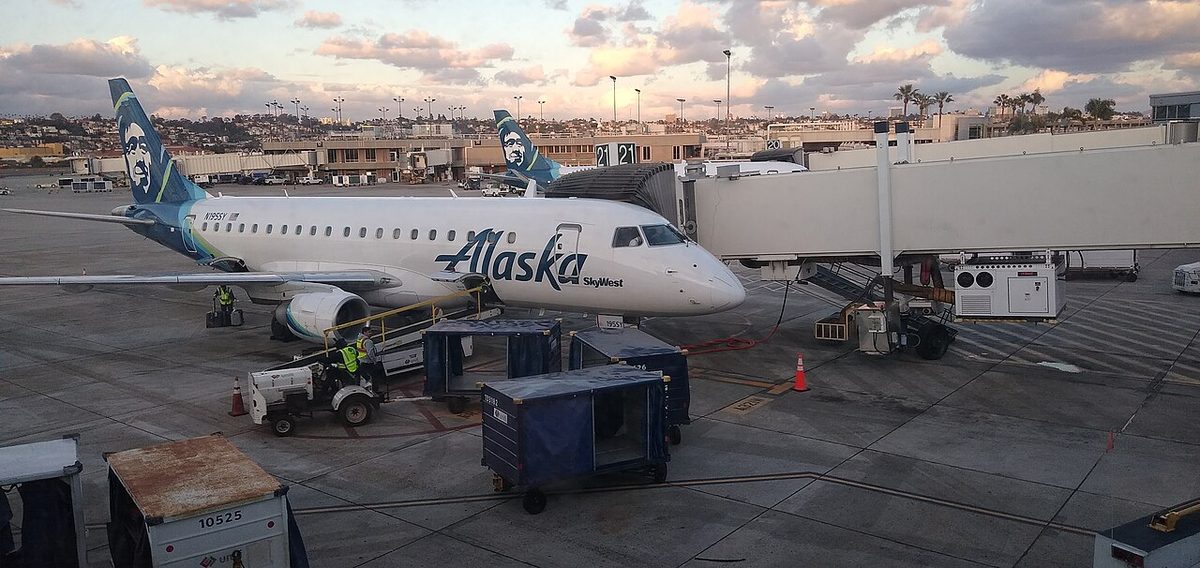
The FAA added the ATP Certification Training Program (ATP-CTP) of 61.156 in the rules that followed the Colgan Air Flight 3407 accident. It is required before the ATM knowledge test, the ATP multi-engine airplane written test, and consists of at least 30 hours of academic training and 10 hours of simulator training: 6 in a Level C or higher full flight simulator representing a multi-engine turbine airplane of at least 40,000 lb and 4 in a flight training device. The academic part covers high-altitude operations, adverse weather, air carrier operations, leadership and professional development, crew resource management and safety culture. The course may be given only by a Part 121, 135, 141 or 142 provider; there is no checkride, and the graduation certificate, which the candidate presents at the testing centre, does not expire. There is no ATP-CTP requirement for the single-engine or helicopter ATP.
Most FAA knowledge test results are valid for 24 calendar months, but the ATP knowledge test result is valid for 60, so a pilot may sit the ATM while still building hours. A type rating and ATP test flown in a simulator without a circling approach may leave the limitation "circling approach, VMC only" on the certificate until the manoeuvre is demonstrated.
Multi-crew pilot licence
The multi-crew pilot licence (MPL) was added to ICAO Annex 1 as a licence designed around the airline flight deck rather than around the single-pilot light aircraft. An MPL(A) course is a competency-based course at an ATO, usually run for a sponsoring airline, in which the student trains from an early stage in a multi-crew environment, much of it in flight simulation training devices. The licence requires a Class 1 medical.
The MPL's privileges are those of a co-pilot in an aeroplane required to be operated with a co-pilot. Flying single-pilot aeroplanes commercially is not part of the licence and needs further requirements to be met. Once the holder has the experience of FCL.510.A, the MPL leads directly to the ATPL(A). The FAA issues no MPL, so its route to the airline right-hand seat remains the ATP certificate.
Multi-crew cooperation course
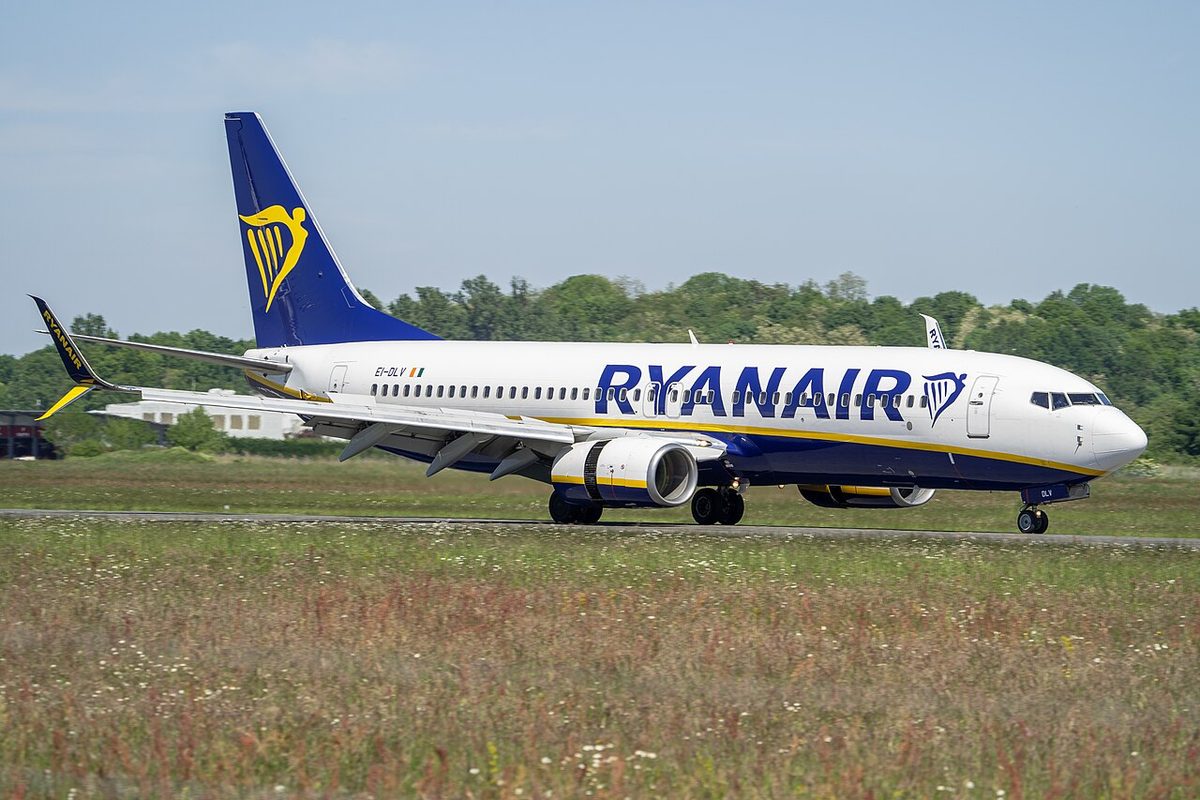
Multi-crew cooperation (MCC) is the functioning of the flight crew as a team of cooperating members led by the pilot in command. Part-FCL requires MCC training before a pilot exercises privileges in multi-pilot aeroplanes, and instruction in MCC is one of the prerequisites for the ATPL(A) of a CPL holder, whose skill test is flown in a multi-pilot aeroplane. The MCC course, completed at an ATO in an FFS or an FNPT qualified for MCC, teaches crew coordination: the pilot-flying and pilot-monitoring roles, standard operating procedures and callouts, and crew resource management (see crew resource management). It is usually taken after the CPL and multi-engine IR and before the first multi-pilot type rating (see class and type ratings). An MPL course includes the equivalent training from the start.
The age 65 limit
ICAO Annex 1 does not allow pilots in multi-pilot crews to fly in international commercial air transport after their 65th birthday, and both systems follow it.
- EASA (FCL.065): a pilot aged 60 to 64 may act as a pilot in commercial air transport only as a member of a multi-pilot crew. The former condition that no other pilot in that crew had reached 60 was removed in 2015, after ICAO dropped it. From 65 the pilot may not act as a pilot in commercial air transport at all. Class 1 validity also drops to 6 months from 60.
- FAA (121.383): a pilot may not serve as a required pilot in Part 121 operations after reaching 65. The Fair Treatment for Experienced Pilots Act of 2007 raised the limit from 60. ICAO removed from Annex 1 in 2014 the requirement that an over-60 pilot on an international flight be paired with a pilot under 60, and the FAA dropped it in 2015. Proposals to raise the limit to 67 have been debated, but it remains 65.
The limits restrict only commercial air transport under EASA rules and Part 121 airline flying under FAA rules. A pilot over 65 keeps the licence and may fly privately, instruct or fly other operations the rules allow, subject to the medical (see medical certification).
Frequently asked questions
What is the difference between a CPL and an ATPL?
Under EASA Part-FCL a CPL(A) holder may be paid to fly, may command any aeroplane in operations other than commercial air transport, may command single-pilot aeroplanes in commercial air transport and may act as co-pilot in commercial air transport. Commanding a multi-pilot aeroplane in commercial air transport needs an ATPL(A), which requires age 21, a multi-engine instrument rating, MCC training and 1,500 hours of flight time.
How many flight hours does an ATPL require?
EASA requires 1,500 hours in aeroplanes, including 500 in multi-pilot operations, 500 as pilot in command under supervision or 250 as pilot in command (or at least 70 as pilot in command made up with PICUS), 200 cross-country, 75 of instrument time and 100 at night. The FAA ATP also needs 1,500 hours, including 500 cross-country, 100 night, 75 instrument and 250 as pilot in command, at a minimum age of 23, or fewer hours for a restricted ATP.
What is a restricted ATP?
It is an FAA airline transport pilot certificate issued under 14 CFR 61.160 from age 21 with fewer than 1,500 hours, namely 750 for military pilots, 1,000 for graduates of an authorised aviation bachelor's degree with 60 credits of aviation coursework, and 1,250 for an associate degree or a bachelor's with 30 credits. Its holder may serve as second in command in Part 121 operations, except flag or supplemental operations requiring three or more pilots, but not as pilot in command.
What is the ATP-CTP?
The Airline Transport Pilot Certification Training Program of 14 CFR 61.156 is a course of at least 30 hours of academic training and 10 hours of simulator training, 6 of them in a Level C or higher full flight simulator of a multi-engine turbine airplane. It must be completed before the ATP multi-engine knowledge test (ATM), whose result then remains valid for 60 calendar months.
Can airline pilots fly after the age of 65?
Not in airline service. Under EASA's FCL.065 a pilot aged 60 to 64 may fly in commercial air transport only as a member of a multi-pilot crew, and from 65 not at all. Under 14 CFR 121.383 a pilot may not serve as a required pilot in Part 121 operations after reaching 65. Private and other non-commercial flying is not affected.
Test yourself on Commercial and Airline Transport Pilot Licences
The v1prep banks cover this topic in Air Law (010), with a worked explanation for every answer. EASA ATPL, PPL, IR and CPL, the FAA written tests and A320/B737 type ratings.
Start practising →Sources and further reading
- EASA Easy Access Rules for Aircrew (Regulation (EU) No 1178/2011), FCL.065, FCL.300 to FCL.305, FCL.400 series and FCL.505 to FCL.510.A
- ICAO Annex 1, Personnel Licensing
- 14 CFR 61.159, Aeronautical experience, airplane category rating
- 14 CFR 61.160, Aeronautical experience, airplane category restricted privileges
- 14 CFR 61.156, Training requirements, airplane category multiengine class or type rating
- 14 CFR 61.129, Aeronautical experience (commercial pilot)
- 14 CFR 121.436, Pilot qualification, certificates and experience requirements
- 14 CFR 121.383, Airman, limitations on use of services
Library articles are written for study and exam preparation. They do not replace your aircraft's approved documentation, your operator's procedures or the regulations themselves.