Fatigue
Fatigue is a physiological state of reduced mental or physical performance caused by sleep loss, extended wakefulness, the phase of the body's circadian rhythm or workload. It impairs alertness and the ability to perform safety-related duties, and the person affected is often a poor judge of it.
Fatigue in aviation is a physiological state in which mental or physical performance is reduced by lack of sleep, by being awake too long, by working at the wrong point in the body's daily cycle or by heavy workload. Treating it as a physiological state, as ICAO does, turns fatigue into a safety hazard that can be measured and managed rather than a matter of motivation. A fatigued pilot cannot decide to perform normally, and is often the last person on the flight deck to notice the decline.
Early reports, night flights, multi-sector days, time-zone changes and irregular rosters all cut into sleep or place duty at the body's lowest point. Regulators therefore limit flight and duty time, require minimum rest and increasingly expect operators to manage fatigue with data. The subject is examined in the EASA Human Performance and Operational Procedures papers and in the FAA knowledge tests, which cover Part 117 in detail.
Defining fatigue
The ICAO definition names four causes: sleep loss, extended wakefulness, circadian phase and workload, mental or physical. The first two concern sleep, the third the time of day at which the body is asked to work and the fourth the demands of the duty. They add together, so a moderate shortfall of sleep becomes serious when it coincides with the early morning and a demanding approach.
Fatigue is not boredom, although a long, quiet cruise often reveals it. It is the F in the FAA's IMSAFE self-check (illness, medication, stress, alcohol, fatigue, emotion).
Acute and chronic fatigue
Textbooks divide fatigue by how long it takes to build and to clear:
- Acute fatigue is short-term: the tiredness that follows a long or strenuous day, a single poor night or a demanding duty. One good period of sleep removes it. EASA texts call it short-term fatigue.
- Chronic fatigue builds when recovery falls short repeatedly over days or weeks, often combined with stress, illness or domestic pressure. It is harder to recognise, goes deeper and needs a longer recovery, sometimes with medical advice. EASA texts call it long-term fatigue; FAA guidance also speaks of cumulative fatigue.
Exam tip: questions on acute and chronic fatigue, often set as acute fatigue vs. chronic fatigue, turn on the cure. If one good night's sleep fixes it, it was acute; if it persists or returns after rest, it is chronic.
Sleep pressure, the body clock and sleep debt
Sleep pressure, the homeostatic drive to sleep, builds with every hour awake and is discharged only by sleep. The circadian rhythm is a roughly 24-hour internal cycle of body temperature, hormone secretion and alertness, kept in step with the day by external time cues (zeitgebers) such as daylight and meal times. Alertness is lowest when core body temperature is lowest, in the early morning, with a smaller dip in the early afternoon. EASA (ORO.FTL.105) defines the window of circadian low (WOCL) as 02:00 to 05:59 in the time zone to which the crew member is acclimatised, and the FAA (14 CFR 117.3) uses the same hours. Crossing time zones leaves the body clock out of step with local time, and eastbound travel, which shortens the day, is usually harder to adapt to than westbound.
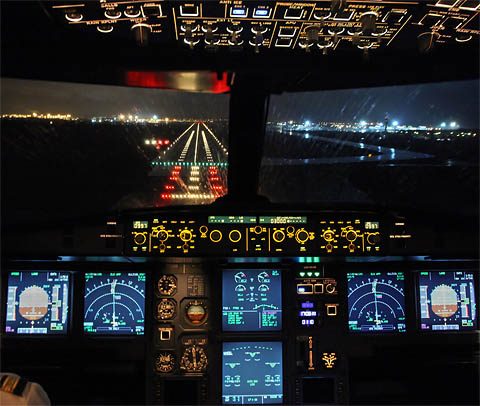
Sleep deprivation is failing to obtain the sleep the body needs, either totally, through a night without sleep, or partially, through short nights. Partial deprivation accumulates as sleep debt, the running shortfall between sleep needed and sleep obtained. Debt is repaid only by extra sleep, and usually more than one normal night is needed. This is the logic behind periodic extended rest: EASA requires a recurrent extended recovery rest of at least 36 hours including two local nights, no more than 168 hours apart, and Part 117 requires at least 30 consecutive hours free from duty in any 168 consecutive hours.
A sleep opportunity is the time available for sleep, not the sleep achieved. A rest period also has to cover travel, meals and falling asleep, which is why the rules name the sleep opportunity explicitly: Part 117 requires 10 consecutive hours of rest containing 8 hours of uninterrupted sleep opportunity, and EASA's minimum rest away from base, 10 hours or the length of the preceding duty if greater, includes an 8-hour sleep opportunity. Daytime sleep after a night duty is usually shorter and lighter.
EASA human performance texts teach a simple sleep credit/debit model: each hour of sleep earns two credits, each hour awake costs one, and credit cannot exceed 16 points. Eight hours of sleep therefore supports about 16 hours awake, and sleep cannot be banked in advance. It is an exam model, not a physiological measurement.

Effects on performance
Fatigue slows reactions, causes lapses and narrows attention onto one task while others are dropped. It weakens short-term memory and multitasking, degrades communication and crew coordination, and makes people irritable and willing to accept lower standards. Its most dangerous effect is on self-assessment: tired people consistently underrate how impaired they are, which is why a crew needs the cross-checks of crew resource management and why fatigue appears among the threats in controlled flight into terrain.
Dawson and Reid put the effect in familiar terms in 1997. In their laboratory study, performance on a coordination task after about 17 hours awake fell to the level seen at a blood alcohol concentration of 0.05%, and after 24 hours to the level seen at 0.10%.
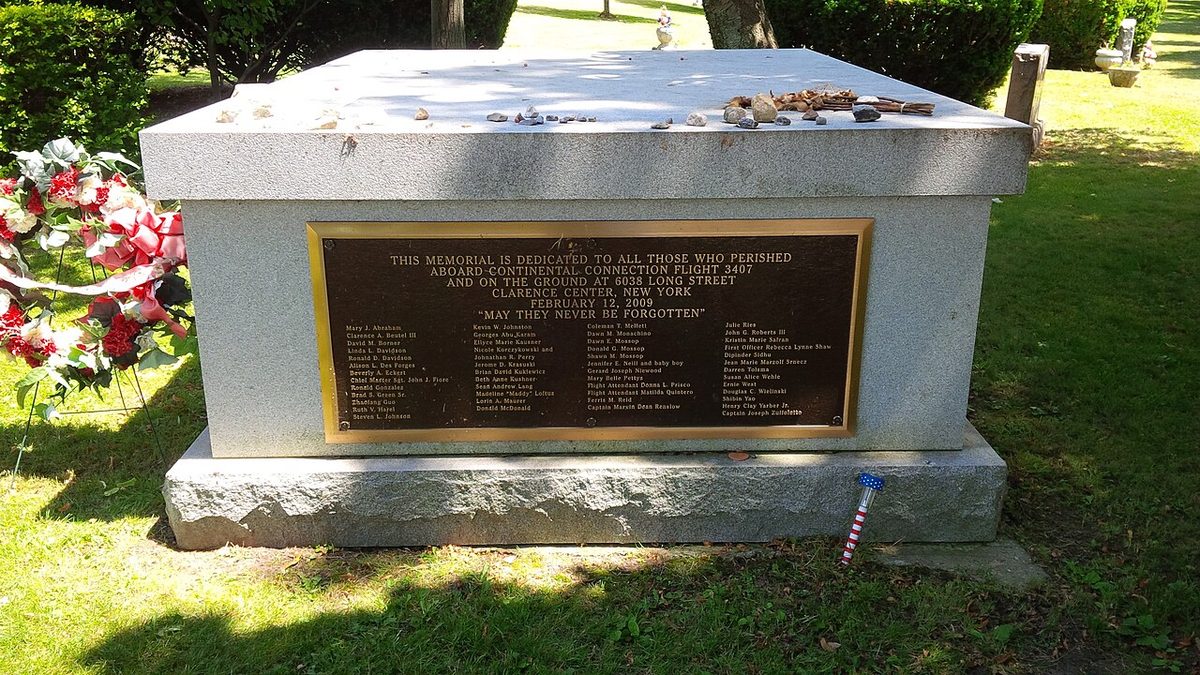
On 12 February 2009 Colgan Air Flight 3407, a Bombardier DHC-8-400 approaching Buffalo at night, stalled and crashed into a house, killing 50 people (see stall). Both pilots had commuted to their Newark base and spent the night before in the crew room, against company policy. The NTSB concluded that their performance was likely impaired by fatigue, although it could not say how far fatigue contributed. The accident led to the Airline Safety and Federal Aviation Administration Extension Act of 2010 and to Part 117, which took effect on 4 January 2014 for passenger operations under Part 121.
Microsleeps
A microsleep, also written micro-sleep, is a brief involuntary episode of sleep lasting from a fraction of a second to a few seconds. It can happen with the eyes open, and the person usually does not know it has happened, so radio calls, alerts or instrument indications are simply missed. Microsleeps show that sleep pressure is very high and do nothing to relieve it, so they tend to recur.
Hypovigilance, in EASA human performance texts, is a state in which sleep patterns appear on the EEG while the person seems to be working. Monotony, low workload, background noise, dim lighting, warmth and a recent meal promote it. Conversation, movement and brighter lighting help for a while, but only sleep cures it.
Flight time limitations
Prescriptive flight time limitations set the maximum length of a flight duty period (FDP), cumulative limits on flight and duty time, and minimum rest. EASA's rules are in ORO.FTL and CS FTL.1 and apply to commercial air transport by aeroplane; the FAA's Part 117 applies to passenger operations under Part 121, while all-cargo operators may remain under the older rules. The detail is covered in flight time limitations; the main figures are:
| Item | EASA (ORO.FTL) | FAA (14 CFR Part 117) |
|---|---|---|
| Basic maximum FDP, unaugmented crew | 13:00 for a start between 06:00 and 13:29 with one or two sectors, 30 minutes less for each sector from the third, down to 9:00 | 9 to 14 hours by report time and number of segments; 14 hours for a report between 07:00 and 11:59 with one or two segments |
| Duty starting at night or in the WOCL | 11:00 for one or two sectors when starting between 17:00 and 04:59 | 9 hours for a report between 00:00 and 03:59 |
| Flight time in one FDP | Controlled through the FDP limit | 8 or 9 hours, by report time |
| Minimum rest | Home base: 12 hours or the preceding duty, if longer. Away: 10 hours or the preceding duty, with an 8-hour sleep opportunity | 10 hours, with 8 hours of uninterrupted sleep opportunity |
| Cumulative duty | 60 hours in 7 days, 110 in 14 days, 190 in 28 days | FDP 60 hours in 168 hours, 190 in 672 hours |
| Cumulative flight time | 100 hours in 28 days, 900 in a calendar year, 1,000 in 12 calendar months | 100 hours in 672 hours, 1,000 in 365 days |
| Unforeseen extension | Commander's discretion, up to 2 hours (3 hours with an augmented crew) | Up to 2 hours if the need arises before take-off; after take-off, as far as needed to land safely |
Under Part 117 an extension of more than 30 minutes beyond the table limit must be reported to the FAA within 10 days. EASA requires a non-punitive process for the use of commander's discretion.
Controlled rest and napping
Controlled rest is a short, planned period off task, which may include sleep, taken by one pilot in the flight deck seat during a low-workload phase of the cruise. EASA guidance to CAT.OP.MPA.210 treats controlled rest on the flight deck as a countermeasure for unexpected fatigue, organised by the commander, not a substitute for proper rest. Only one pilot rests at a time, with the harness fastened and the seat positioned clear of the controls. The rest should last no more than 45 minutes, to limit actual sleep to about 30 minutes, and is followed by a 20-minute recovery period before the pilot resumes duties. Controlled rest should end at least 30 minutes before top of descent. The FAA takes the opposite view: its fatigue guidance, AC 120-100, states that it does not authorise in-seat naps, and controlled rest was left out of Part 117.
The evidence behind controlled rest comes largely from a NASA study published in 1994. On long transoceanic flights, pilots given a 40-minute rest opportunity fell asleep in about five minutes, slept for 26 minutes on average and afterwards showed faster reaction times and fewer lapses than colleagues without a rest.
The length is limited because of sleep inertia, the grogginess and impaired judgement that follow waking, worst after deep sleep. Air India Express Flight 812, a Boeing 737-800 arriving from Dubai, overran the tabletop runway at Mangalore on 22 May 2010, killing 158 of the 166 on board. The cockpit voice recorder showed that the captain had slept for much of the flight. The Indian Court of Inquiry found that the cause was his failure to abandon an unstabilised approach despite three go-around calls from the first officer and terrain warnings, and it considered that sleep inertia after prolonged sleep may have impaired his judgement (see stabilised approach).
A prophylactic nap is taken in advance of expected sleep loss, for example in the afternoon before a night duty, to reduce sleep pressure before the WOCL. Short naps limit sleep inertia; caffeine helps for a few hours but can delay and lighten later sleep.
Fatigue reporting
Fatigue reporting starts with fitness for duty. Part 117 requires each flightcrew member to report rested and prepared, and to affirm fitness for duty before the flight; a crew member who reports being too fatigued must not be assigned or continue. EASA requires crew members to use their rest opportunities properly and not to operate when fatigued. Regulation (EU) No 376/2014 on occurrence reporting gives crew members the means to report fatigue, and those reports feed the operator's fatigue risk management. Reporting only works in a just culture, in which a fatigue call is treated as a safety report, not a disciplinary matter.
Fatigue risk management systems
ICAO requires States to regulate fatigue through prescriptive limits and allows them to approve a fatigue risk management system (FRMS): a data-driven means of continuously monitoring and managing fatigue-related risk, based on scientific principles and operational experience, that aims to keep personnel adequately alert. ICAO Doc 9966 describes four components that mirror a safety management system: an FRMS policy and documentation; fatigue risk management processes to identify hazards, assess risk and apply mitigations; safety assurance processes to check that the mitigations work; and promotion through training and communication. Typical data are fatigue reports, rosters compared with the duty actually flown, sleep and alertness measurements and fatigue models.
Under Part 117 the FAA may approve an FRMS (117.7, with guidance in AC 120-103A) to vary specific limits, for example on ultra-long-range flights. EASA builds fatigue risk management (ORO.FTL.120) into the operator's management system and makes it mandatory only in a few cases, such as the use of reduced rest.
Fatigue education and awareness training is required on both sides of the Atlantic. Section 117.9 requires annual training for flightcrew members, dispatchers, schedulers and their managers, and EASA's ORO.FTL.250 requires initial and recurrent fatigue management training for crew members, rostering staff and management personnel, covering the causes and effects of fatigue and the countermeasures. See also hypoxia and hyperventilation and sleep and circadian rhythms.
Frequently asked questions
What is the window of circadian low (WOCL)?
The WOCL is the part of the body's daily cycle when alertness and performance are at their lowest, because core body temperature and the circadian drive for wakefulness bottom out. EASA defines it as 02:00 to 05:59 in the time zone to which the crew member is acclimatised, and the FAA's Part 117 uses the same hours. Duty that starts in it is allowed a shorter maximum flight duty period.
What is the difference between acute and chronic fatigue?
Acute fatigue is short-term tiredness after a long day, a strenuous duty or one poor night, and a single good sleep cures it. Chronic fatigue builds up over days or weeks when recovery repeatedly falls short, often combined with stress or illness. It is harder to recognise, degrades performance more deeply and needs a longer period of recovery, sometimes with medical advice.
Are pilots allowed to sleep in the cockpit?
Under EASA rules the commander may organise controlled rest, in which one pilot at a time rests in the seat during a quiet part of the cruise. The rest should last no more than 45 minutes, be followed by a 20-minute recovery period and end at least 30 minutes before top of descent. The FAA does not authorise in-seat napping for US operators.
What are the EASA cumulative flight time limits?
Under ORO.FTL.210 a crew member's flight time may not exceed 100 hours in any 28 consecutive days, 900 hours in any calendar year and 1,000 hours in any 12 consecutive calendar months. Duty periods are limited separately to 60 hours in any 7 consecutive days, 110 hours in any 14 and 190 hours in any 28. The FAA's Part 117 uses rolling windows counted in hours instead.
What is a fatigue risk management system (FRMS)?
An FRMS is a data-driven way of continuously monitoring and managing fatigue-related risk, based on science and operational experience. Instead of relying only on fixed duty limits, the operator collects fatigue reports, sleep and alertness data and roster information, assesses the risk, applies mitigations and checks that they work. ICAO Doc 9966 describes it, and regulators may approve one to vary the prescriptive limits.
What is a microsleep?
A microsleep is a brief, involuntary episode of sleep lasting from a fraction of a second to a few seconds, which can occur with the eyes open. The person usually does not know it happened, so information is simply missed. Microsleeps show that sleep pressure is high, they do nothing to relieve it, and they tend to recur until the person actually sleeps.
Test yourself on Fatigue
The v1prep banks cover this topic in Human Performance and Limitations (040), with a worked explanation for every answer. EASA ATPL, PPL, IR and CPL, the FAA written tests and A320/B737 type ratings.
Start practising →Sources and further reading
- ICAO Doc 9966, Manual for the Oversight of Fatigue Management Approaches
- EASA Easy Access Rules for Air Operations (ORO.FTL, CS FTL.1 and AMC/GM to CAT.OP.MPA.210)
- 14 CFR Part 117, Flight and Duty Limitations and Rest Requirements, Flightcrew Members
- FAA Advisory Circular 120-103A, Fatigue Risk Management Systems for Aviation Safety
- Flight Safety Foundation, Controlled Rest on the Flight Deck, A Resource for Operators
- Dawson and Reid, Fatigue, alcohol and performance impairment, Nature 388 (1997)
- NTSB AAR-10/01, Loss of Control on Approach, Colgan Air Flight 3407, Clarence Center, New York
Library articles are written for study and exam preparation. They do not replace your aircraft's approved documentation, your operator's procedures or the regulations themselves.