Pilot in Command and Flight Crew Composition
The pilot in command (PIC) is the pilot designated as being in command and charged with the safe conduct of the flight, with final authority over the aircraft and everyone on board. Crew composition rules decide how many pilots and cabin crew a flight needs and what each must be qualified to do.
Every flight has one person in charge. The pilot in command (PIC), called the commander in European commercial operations, is the pilot designated as being in command and charged with the safe conduct of the flight. Whatever the size of the crew, the rules concentrate authority and responsibility in that one person, because in an emergency there is no time to decide who decides.
Around the pilot in command the regulations build the rest of the crew: how many pilots, what the second pilot must hold, how many cabin crew, and how inexperienced, older or relief pilots may be combined.
PIC authority and responsibility
ICAO Annex 2 gives the pilot in command final authority as to the disposition of the aircraft while in command, and responsibility for operating it in accordance with the rules of the air. The rules may be departed from only when absolutely necessary in the interests of safety. In the United States, 14 CFR 91.3(a) makes the pilot in command directly responsible for, and the final authority as to, the operation of the aircraft, and in Part 121 operations the pilot in command has full control and authority over the aircraft and crew during flight time (121.533 and 121.537).
Under EASA's CAT.GEN.MPA.105 the commander of a commercial flight has two periods of responsibility. Responsibility for the safety of all crew members, passengers and cargo on board begins when the commander arrives on board and ends when he or she leaves the aircraft at the end of the flight. Responsibility for the operation and safety of the aeroplane runs from the moment it is first ready to move for the purpose of taxiing before take-off until it finally comes to rest at the end of the flight with the engines used as primary propulsion units shut down.
The commander's authority includes:
- deciding who is admitted to the flight deck;
- refusing to carry inadmissible passengers, deportees or persons in custody whose carriage is a risk to safety, and disembarking any person or cargo that is a potential hazard;
- refusing to carry anyone who appears to be under the influence of alcohol or drugs to the extent that safety is likely to be endangered;
- ensuring that checklists and operational procedures are followed, and that during critical phases of flight, such as take-off, final approach and landing, no crew member performs duties other than those required for safe operation;
- refusing to take off unless the aircraft surfaces are clear of any deposit that might affect performance.
Crew members must report to the commander any fault, malfunction or incident that could affect safety. The commander signs the operational flight plan, accepts or rejects last-minute changes to the load, and may take measures against offenders on board, a power first set out internationally in the Tokyo Convention of 1963.
The split of operational control differs. ICAO Annex 6 lets the operator delegate it to the pilot in command and, where its approved method of supervision requires one, to a flight dispatcher; the EU rules, as France notes in its AIP GEN 1.7, leave it solely with the commander. In US domestic and flag operations the pilot in command and the aircraft dispatcher are jointly responsible for the preflight planning, delay and dispatch release, though in flight the pilot in command is the final authority (see operational control and flight dispatch).
Emergency authority
PIC emergency authority (14 CFR 91.3) lets the pilot in command, in an in-flight emergency requiring immediate action, deviate from any rule of Part 91 to the extent required to meet that emergency. A written report is due only if the Administrator requests one (91.3(c)). If ATC gave the aircraft priority, the facility may ask for a report within 48 hours (91.123(d)). In Part 121, the emergency authority of the pilot in command under 121.557 allows any action the pilot in command considers necessary, including deviation from prescribed procedures and methods, weather minimums and the rules of 14 CFR chapter I, to the extent required in the interests of safety; the pilot in command keeps ATC and dispatch informed and sends a written report through the operations manager to the FAA within 10 days of returning to home base.
The same principle runs through other rules: an ACAS resolution advisory is followed unless that would jeopardise the safety of the aeroplane, and a clearance that cannot be flown safely is refused.
Preflight action requirements
Pre-flight action under ICAO Annex 2 and SERA requires the pilot in command, before any flight away from the vicinity of an aerodrome and before every IFR flight, to study the available current weather reports and forecasts, take the fuel requirements into account, and prepare an alternative course of action in case the flight cannot be completed as planned.
Preflight action (14 CFR 91.103) requires the pilot in command to become familiar with all available information concerning the flight. For every flight this includes the runway lengths at airports of intended use and the take-off and landing distance data from the approved flight manual or, where there is none, other reliable information for the conditions. For IFR flights and flights not in the vicinity of an airport it adds weather reports and forecasts, fuel requirements, alternatives if the flight cannot be completed as planned, and known traffic delays advised by ATC.
The pilot in command also decides whether the aircraft is in condition for safe flight (91.7). With an inoperative item and no approved MEL, 91.213(d) allows flight only if the item is not required by the type certificate's VFR-day instruments, by 91.205 for the kind of flight, by an airworthiness directive, or by the aircraft's equipment list or Kinds of Operations Equipment List (KOEL), the list in the flight manual showing the equipment required for each kind of operation, such as day or night VFR, IFR and flight in icing. The item is then removed or deactivated and placarded.
Second in command
The second in command (SIC) is, in FAA terms, the pilot designated to be second in command of an aircraft during flight time. ICAO and EASA speak of the co-pilot, a licensed pilot serving in any piloting capacity other than pilot-in-command, excluding a pilot on board only to receive flight instruction. The pilot in command may hand the flying to the co-pilot as pilot flying while keeping command. A co-pilot who performs the duties and functions of pilot in command under the supervision of the pilot in command is flying as PICUS in Part-FCL terms, and may log that time towards command experience.
An EASA CPL(A) holder may be co-pilot in commercial air transport, but command of a multi-pilot aeroplane in CAT requires an ATPL(A). Since 2013 a Part 121 SIC must hold an ATP certificate, restricted or unrestricted, with the type rating, and a Part 121 PIC needs an ATP with the type rating and 1,000 hours of air carrier experience (121.436). A required crewmember, in FAA usage, is one whose presence the aircraft's certification or the operating rules call for; 91.105, for example, obliges each required flight crewmember to keep the seat belt fastened at the station.
Minimum flight crew
The minimum flight crew is set first by the aircraft's certification, stated in the flight manual, and then by the operating rules, which may require more. Under EASA rules for commercial air transport (ORO.FC.200), IFR or night operations in turboprop aeroplanes with a MOPSC of more than nine, and in all turbojet aeroplanes, require two pilots whatever automation is fitted.
Single-pilot operations are otherwise possible in suitable aeroplanes. Single-pilot IFR in commercial air transport (ORO.FC.202) requires an autopilot with at least altitude hold and heading mode, a pilot with at least 50 hours of IFR flight time on the type or class, of which 10 hours as commander, and recent experience of 5 IFR flights, including 3 instrument approaches, in the single-pilot role in the preceding 90 days, or an IFR check. A Class 1 medical is valid for only 6 months for pilots aged 40 or more in single-pilot commercial air transport carrying passengers.
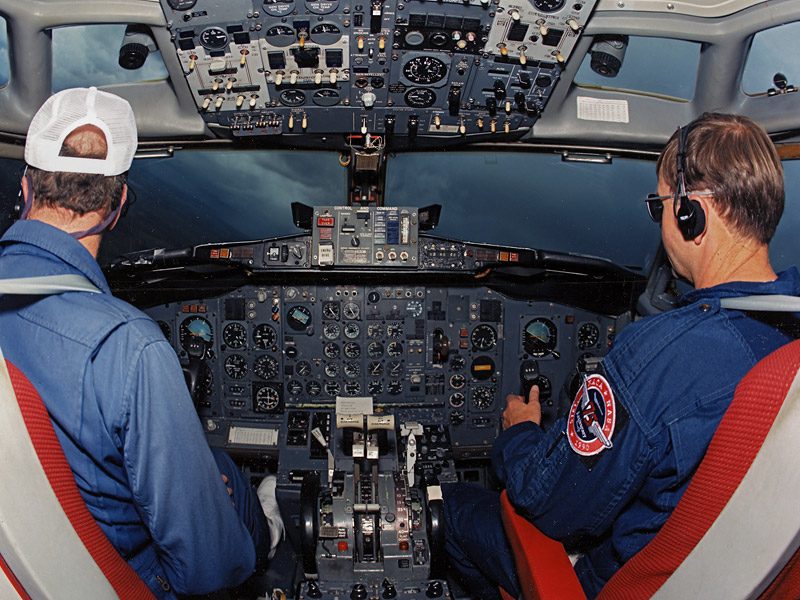
A multi-crew operation (MCO), which Part-FCL calls a multi-pilot operation, is one requiring at least two pilots using multi-crew cooperation (MCC), in a multi-pilot or a single-pilot aircraft, and MCC training is required before a pilot flies multi-pilot aeroplanes. Composition rules also limit risky combinations: no flight crew may contain more than one inexperienced flight crew member (one with fewer than 100 hours and 10 sectors on type within 120 days, or 150 hours and 20 sectors, since the type rating or command course; AMC1 ORO.FC.200(a)), and a pilot aged 60 to 64 may fly in commercial air transport only as a member of a multi-pilot crew (FCL.065; the former rule that no other pilot in the crew had reached 60 was deleted in 2015). From 65, no one may act as a pilot in commercial air transport.
Cabin crew and MOPSC
The maximum operational passenger seating configuration (MOPSC) is the maximum number of passenger seats of an individual aircraft, excluding crew seats, established for operational purposes and specified in the operations manual. It drives many requirements, including cabin crew.
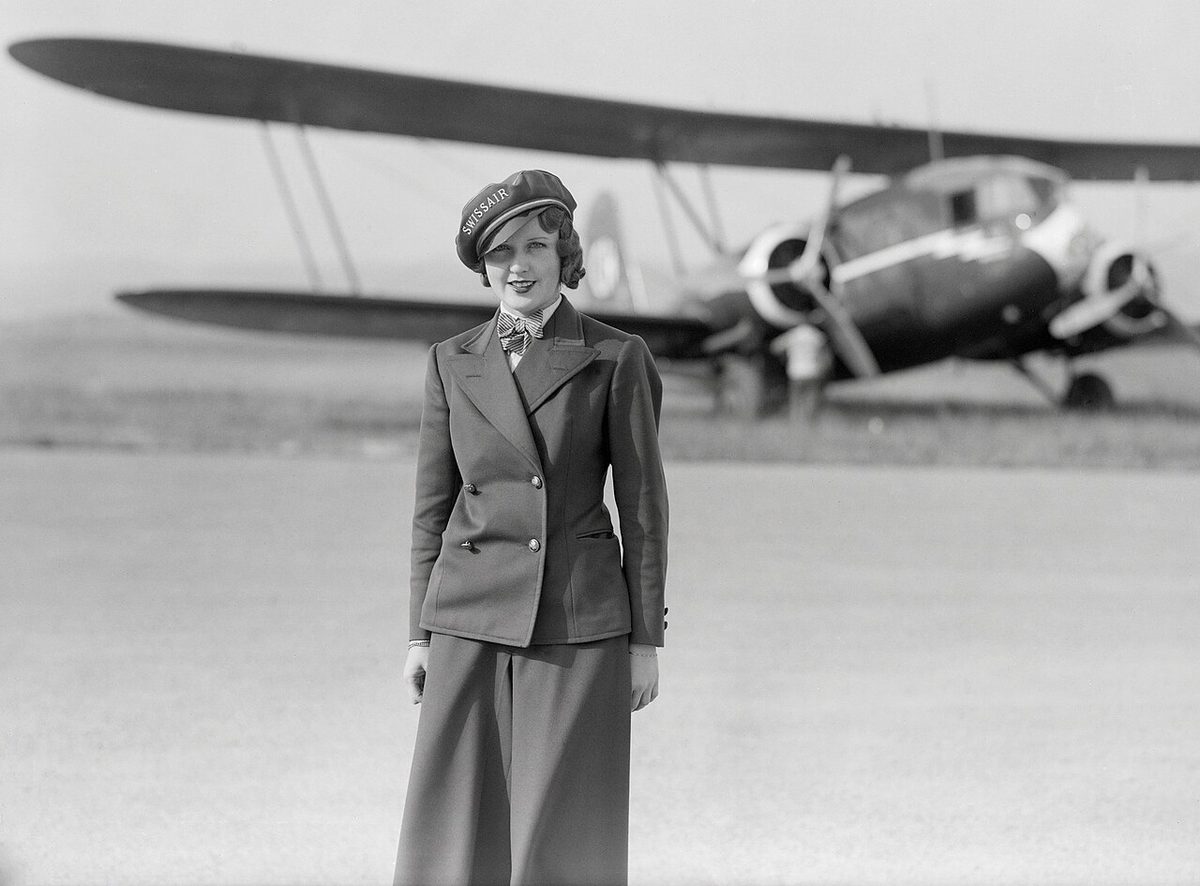
Under EASA rules an aeroplane with a MOPSC of more than 19 must carry at least one cabin crew member whenever one or more passengers are on board. The minimum flight attendant requirement, in European terms the minimum cabin crew, is one cabin crew member for every 50 passenger seats, or fraction of 50, installed on the same deck, or the number set during certification if that is greater. Cabin crew must be at least 18, hold a cabin crew attestation, and normally operate on no more than three aeroplane types. A senior cabin crew member needs at least one year of experience as cabin crew and a specific course.
Under FAA Part 121 (121.391; see also cabin safety and passenger management) the number depends on seating capacity, not on passengers carried: one flight attendant for 10 to 50 seats, or 20 to 50 when the maximum payload is 7,500 lb or less, two for 51 to 100, and above 100 two plus one for each further 50 seats or part of 50.
High-minimums captain
A newly upgraded captain in a Part 121 operation is a high-minimums captain. Under 121.652, until the pilot in command has 100 hours as PIC in the type in Part 121 operations, the MDA or DA(H) is raised by 100 ft and the landing visibility minimum by half a mile or the RVR equivalent: in the OpSpec C054 table, RVR 2,400 becomes RVR 5,000. The raised minimums need not exceed the airport's alternate minimums, but may never be lower than 300 ft and 1 mile, and they do not apply to take-off. The 100 hours may be reduced by up to 50 per cent by substituting one Part 121 landing in the type for each hour, if the pilot has at least 100 hours as PIC in another type in Part 121 operations.
Crew positions and seats
Crew positions (P1 / P2 / P3) are shorthand in logbooks and rosters in many countries: P1 for the pilot in command and P2 for the co-pilot. P3 is used less consistently for a third crew position; on the three-crew Hawker Siddeley Trident it was the flight engineer's seat, which some co-pilots were qualified to fill. By convention the captain sits in the left-hand seat (LHS) and the first officer in the right-hand seat (RHS). A pilot who may have to operate in either seat, such as a training captain, needs specific training and checking for it.
A cruise relief pilot allows long flights to be crewed for in-flight rest. Under ORO.FC.A.201 the commander may hand over the conduct of the flight to another qualified commander or, for operations only above FL 200, to a relief pilot who holds an ATPL(A), has completed conversion training including the type rating, is recurrently trained and checked, and is route competent. Route and aerodrome competence must be kept current and is valid for 12 months beyond the month of qualification or of the latest operation on the route; European rules categorise aerodromes A, B or C by difficulty. The FAA's equivalent for demanding airports is the special airport list of 121.445.
A check airman is a pilot designated by a US carrier, and approved by the FAA, to conduct checks and to supervise initial operating experience, a new pilot's first line flying. European operators give the equivalent roles to instructors, examiners and training captains.
The flight deck observer seat (jump seat) can carry a flight deck observer: an inspector, a check pilot, or a pilot of another carrier travelling under agreement, but always at the commander's discretion, since the commander has the final say on admission to the flight deck.
Crew rostering combines these rules with flight time limitations. A constituted crew, the same pilots permanently paired, is considered poor crewing policy, because private habits and signals creep in that a replacement does not know. Standard procedures and crew resource management let any qualified captain fly with any qualified first officer (see also flight deck leadership and authority gradient).
Frequently asked questions
What authority does the pilot in command have?
The pilot in command is the final authority as to the operation of the aircraft. The commander decides whether to take off, may refuse to carry or may disembark any person or cargo that is a potential hazard, decides who is admitted to the flight deck, and directs the crew. In an emergency requiring immediate action the pilot in command may deviate from the rules to the extent needed, and reports the deviation afterwards as the regulations require.
What does 14 CFR 91.103 require before a flight?
Before every flight the pilot in command must become familiar with all available information about it. For every flight that includes runway lengths at the airports of intended use and take-off and landing distance data. For an IFR flight or a flight not in the vicinity of an airport it also includes weather reports and forecasts, fuel requirements, alternatives if the flight cannot be completed as planned, and any known traffic delays advised by ATC.
How many cabin crew does an airliner need?
Under EASA rules an aeroplane with a maximum operational passenger seating configuration of more than 19 needs at least one cabin crew member whenever a passenger is carried, and in general one for every 50 passenger seats, or fraction of 50, on the same deck. Under FAA Part 121 it is one flight attendant for 10 to 50 seats (20 to 50 with a payload of 7,500 lb or less), two for 51 to 100, and above 100 two plus one per further 50 seats or part of 50.
What is a high-minimums captain?
Under 14 CFR 121.652, a Part 121 captain with fewer than 100 hours as pilot in command in the type in Part 121 operations must add 100 feet to the DA or MDA and half a mile, or the RVR equivalent, to the landing visibility minimum. The raised minimums need not exceed the airport's alternate minimums but may never be lower than 300 feet and 1 mile. They do not apply to take-off minimums.
Can a pilot over 60 fly in commercial air transport?
Under EASA Part-FCL, a pilot aged 60 to 64 may fly in commercial air transport only as a member of a multi-pilot crew. The former condition that no other pilot in the crew had reached 60 was deleted in 2015 (Regulation (EU) 2015/445). From 65 a pilot may not act as a pilot in commercial air transport at all. The Class 1 medical is also valid for only 6 months from the age of 60.
Test yourself on Pilot in Command and Flight Crew Composition
The v1prep banks cover this topic in Air Law (010), with a worked explanation for every answer. EASA ATPL, PPL, IR and CPL, the FAA written tests and A320/B737 type ratings.
Start practising →Sources and further reading
- 14 CFR 91.3, Responsibility and authority of the pilot in command
- 14 CFR 91.103, Preflight action
- 14 CFR 121.652, Landing weather minimums, IFR, all certificate holders
- 14 CFR 121.391, Flight attendants
- EASA Easy Access Rules for Air Operations (CAT.GEN.MPA.105, ORO.FC and ORO.CC)
- EASA Easy Access Rules for Aircrew (Regulation (EU) No 1178/2011), FCL.065 and FCL.305
- EASA Easy Access Rules for Standardised European Rules of the Air (SERA)
- AIP France, GEN 1.7, Differences from ICAO Standards, Recommended Practices and Procedures (Annex 6, Part I)
Library articles are written for study and exam preparation. They do not replace your aircraft's approved documentation, your operator's procedures or the regulations themselves.