Air Operator Certification
An air operator certificate (AOC) is the certificate by which a State authorises an operator to carry out commercial air transport, subject to the operations specifications attached to it. The FAA issues it under 14 CFR Part 119; in Europe it is issued by the competent authority under Part-ORO.
An air operator certificate (AOC) is the licence to run an airline or a charter company. It is the certificate by which a State authorises an operator to carry out commercial air transport, the carriage of passengers, cargo or mail for remuneration, within the limits written into the operations specifications attached to it. A pilot may hold every licence and rating needed to fly an airliner, but carrying passengers for hire normally needs an operator that holds an AOC.
Certification is a test of the organisation rather than of individuals. Before issuing the certificate the authority examines the operator's management and nominated personnel, its manuals and training programmes, its aircraft and their maintenance, and the way it controls each flight. The rules come from ICAO Annex 6, Operation of Aircraft, and are written into national law: in the United States as 14 CFR Part 119, in the European Union as Part-ORO of the Air Operations Regulation (EU) No 965/2012.
The air operator certificate
Annex 6 makes the State of the Operator, the State where the operator has its principal place of business, responsible for issuing the AOC and for overseeing the operator (see the Chicago Convention and ICAO). The aircraft are normally on that State's register, although other arrangements may be agreed; Article 83 bis of the Chicago Convention lets the State of Registry transfer some of its duties to the State of the Operator when an aircraft is leased across borders.
The AOC and its operations specifications state the operator's name and location, the types of operation authorised, the aircraft types and registration marks, the areas of operation, and any special limitations and authorisations. The maximum take-off mass of each aircraft is not among them. The authority may vary, suspend or revoke the certificate if it ceases to be satisfied that the operator can operate safely.
In the EU an AOC is a precondition of commercial air transport under ORO.AOC.100; an airline's operating licence under EU economic rules is needed in addition, never instead. The EU AOC has no expiry date: it is issued for an unlimited duration and remains valid as long as the operator continues to comply, under ORO.GEN.135, and the EU operations specifications contain more entries requiring prior approval than the ICAO model. The original stays with the operator, and each aircraft carries a certified true copy of the AOC with a copy of the relevant operations specifications.
FAA Part 119 certification
Part 119 (Certification of Air Carriers and Commercial Operators) decides which certificate a US operator needs and which operating rules then apply. An operator that provides air transportation as a direct air carrier receives an air carrier certificate; one that carries persons or property for compensation or hire without being an air carrier receives an operating certificate. Once certificated, the operator is referred to throughout the rules as the certificate holder, and the FAA's oversight is organised around that certificate.
Part 119 also exempts a list of operations from certification although money changes hands. Student instruction, nonstop sightseeing flights under 91.147 within 25 statute miles of the departure airport, ferry and training flights, crop dusting, banner towing, aerial photography and surveying, firefighting and some parachute operations are among them. They are flown under Part 91, or Part 137 for agricultural work, and a pilot paid to fly them needs at least a commercial certificate (see commercial and private operations).
Part 121 vs Part 135
The FAA classifies certificated operations into kinds, defined in 14 CFR 110.2; Part 119 then assigns each kind its operating rules:
| Kind of operation | Operating rules | In outline |
|---|---|---|
| Domestic | Part 121 | Scheduled operations within the 48 contiguous states, or within Alaska or Hawaii |
| Flag | Part 121 | Scheduled operations between the United States and points outside it, between points outside it, or between the 48 states and Alaska or Hawaii |
| Supplemental | Part 121 | Non-scheduled operations with larger aeroplanes, and larger all-cargo operations |
| Commuter | Part 135 | Scheduled operations with smaller aircraft |
| On-demand | Part 135 | Charter and other non-scheduled operations with smaller aircraft, and limited scheduled service |
The dividing lines are drawn by whether the flights are scheduled, the number of passenger seats, the payload capacity and whether the aircraft is a turbojet. A scheduled passenger service in a turbojet is a Part 121 operation however few seats the aeroplane has.
The kind of operation changes the detail of Part 121. Domestic and flag operations need a dispatch release signed by the pilot in command and an aircraft dispatcher, who are jointly responsible for the preflight planning, delay and release of the flight; supplemental operations use a flight release, and operational control is shared by the pilot in command and the director of operations. Fuel rules differ too: a domestic flight must carry fuel to the destination, then to the most distant alternate, then for 45 minutes at normal cruising consumption (121.639), while turbine-powered flag and supplemental flights need fuel to the destination, then for 10 per cent of the flight time, then to the alternate, then for 30 minutes of holding at 1,500 ft above it (121.645). Destination alternate requirements also differ between 121.619 and 121.621.
Part 135 applies similar principles with requirements scaled to smaller aircraft and simpler operations. Fractional ownership programmes, by contrast, fly under Part 91 Subpart K.
Operations specifications
Operations specifications (OpSpecs) turn a general certificate into a precise authorisation. The FAA issues them as numbered paragraphs, grouped by letter: A for general matters, B for en route authorisations, C for terminal and airport authorisations, D for maintenance. Examples that pilots meet:
- A061, use of electronic flight bags in place of paper documents and charts.
- B342, ETOPS: a twin-engined aeroplane may not fly a route with any point more than 60 minutes from an adequate airport at one-engine-inoperative speed without it.
- C055, alternate airport minimums: with one navigation facility, 400 ft is added to the MDA or DA, and the visibility minimum is raised too.
- C059 and C060, CAT II and CAT III approaches, naming the airports and runways.
- C078 (C079 for Part 135), lower-than-standard take-off minimums. The standard minimum of 91.175 is 1 statute mile for aeroplanes with two engines or fewer; these paragraphs allow RVR 1,600 (500 m), and lower values where runway lights, several RVR reports and, at the lowest, approved guidance are available.
OpSpecs also authorise the minimum equipment list, the weight and balance programme and the carriage of hazardous materials. Special Authorization CAT II (SA CAT II), a CAT II approach to a runway that lacks some of the usual CAT II lighting, is flown to a DH of 100 ft and an RVR of 1,200 ft with autoland or a head-up display to touchdown, and only by operators authorised for it (see low visibility operations).
In Europe the equivalent authorisations are specific approvals under Part-SPA, entered in the operations specifications: SPA.LVO for low-visibility take-offs below 400 m RVR, CAT II and CAT III and SA CAT I and SA CAT II; SPA.PBN for RNP AR approaches; SPA.RVSM for RVSM.
Required management personnel
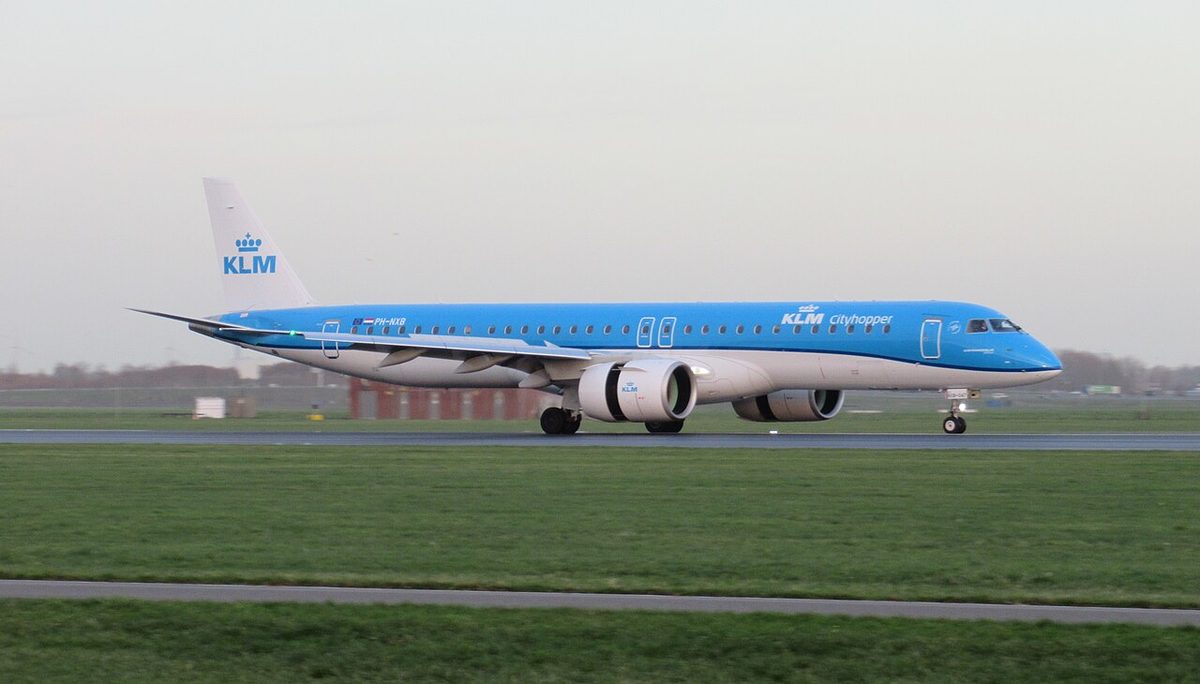
The FAA requires a Part 121 certificate holder to employ qualified people in five management positions: a Director of Safety, a Director of Operations, a Chief Pilot, a Director of Maintenance and a Chief Inspector. A Part 135 operator needs at least a Director of Operations, a Chief Pilot and a Director of Maintenance. Under Part 5, every Part 121 carrier must also run a safety management system under an accountable executive (see safety management systems).
EASA's structure is similar. The Accountable Manager has the corporate authority to ensure that all operations and maintenance can be financed and carried out to the required standard, and is responsible to the authority for compliance with the AOC. Beneath the accountable manager, the operator nominates a Nominated Post Holder (in current EASA wording a nominated person) for each of four areas: flight operations, crew training, ground operations and maintenance, the last now called continuing airworthiness. One person may hold more than one post where the scale and scope of the operation allow; under the older EU-OPS rules an operator with 21 or more full-time staff needed at least two people for the four areas.
EASA Part-ORO requirements
Part-ORO (Organisation Requirements for Air Operations) contains the requirements for the operator as an organisation. Its subparts include ORO.GEN, general requirements and the management system; ORO.AOC, the AOC; ORO.DEC, declarations by operators that need no certificate; ORO.MLR, manuals, logs and records; ORO.SEC, security; ORO.FC and ORO.CC, flight and cabin crew; and ORO.FTL, flight time limitations.
The core of ORO.GEN is the management system: clearly defined lines of responsibility and accountability, a safety policy, the identification of hazards and management of the risks, training, documentation and compliance monitoring, scaled to the size and complexity of the operator. The operator stays responsible for any service it contracts out and must bring the hazards of those services into its management system.
ORO.AOC adds requirements specific to commercial air transport, among them a flight data monitoring programme for aeroplanes with a maximum certificated take-off mass over 27,000 kg, which EU rules require to be non-punitive. The operations manual is written under ORO.MLR in four parts: A general, B aeroplane operating matters, C route and aerodrome information, D training. The minimum equipment list is based on the manufacturer's master list and may be more restrictive but never less restrictive than it.
Compliance monitoring and quality
Under the older EU-OPS rules every operator ran a Quality System under a quality manager. Part-ORO calls the same function compliance monitoring: a compliance monitoring manager checks, by audit and inspection, that the operator meets the requirements and follows its own procedures, and reports findings through a feedback system to the accountable manager so that corrective action is taken. Compliance monitoring looks at whether the rules are being followed; the safety management side of the management system looks at whether the operation is safe even when they are. Records of the management system are kept for at least five years.
Wet and dry leasing
A wet lease provides an aircraft together with crew. Under EASA rules the lessor, who provides the aircraft and complete crew, remains the operator: the flights are conducted under the lessor's AOC, and the lessor keeps responsibility for airworthiness. A dry lease provides the aircraft only, and the lessee operates it under its own AOC. Under ORO.AOC.110 every lease of an aircraft used by an EU operator needs the competent authority's prior approval, with extra conditions when an aircraft registered in a third country or a third-country operator is leased in.
The FAA defines a wet lease in 14 CFR 110.2 as an arrangement in which one person provides an entire aircraft and at least one crew member. Before operating under a wet lease with another common carrier, a certificate holder must give the FAA a copy of the lease (119.53). The FAA then decides which party has operational control, the exercise of authority over initiating, conducting or terminating a flight, and amends each party's operations specifications. Arrangements that pass operational control to someone without a certificate are illegal.
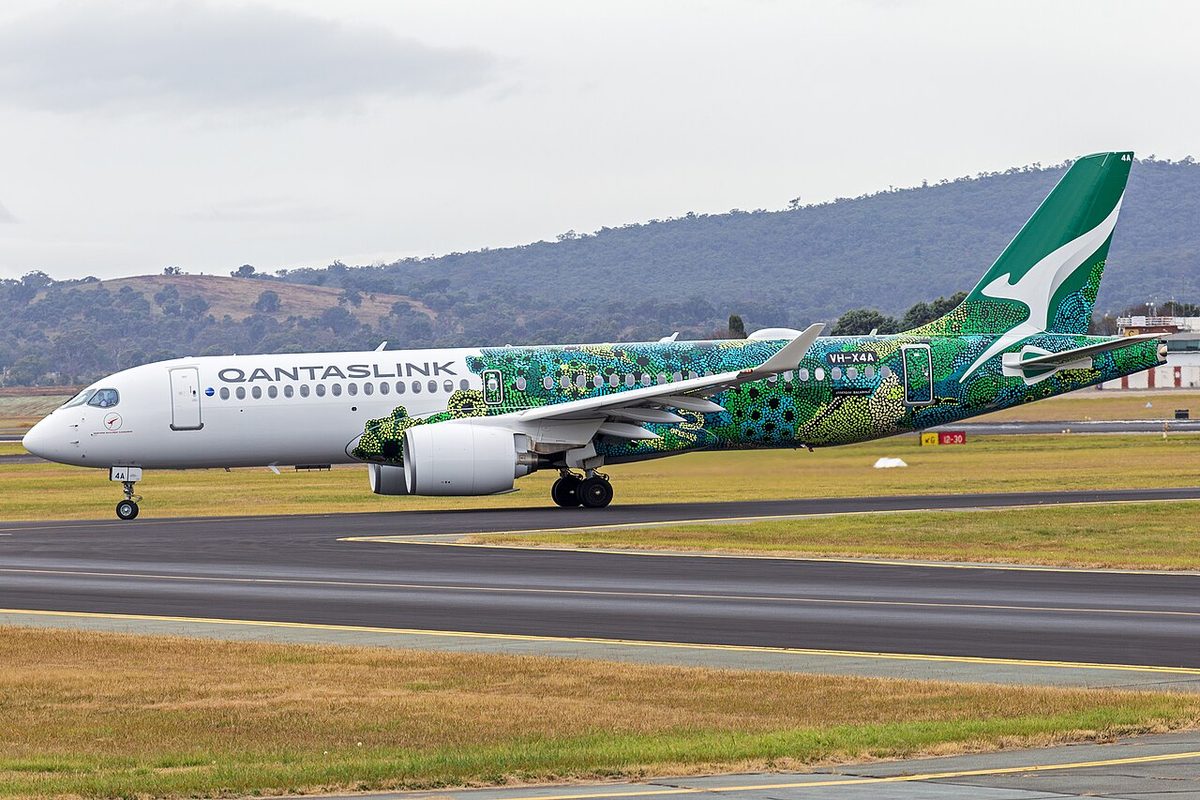
Exam tip: wet lease, lessor's AOC; dry lease, lessee's AOC. The party that provides the crew normally keeps operational control.
Frequently asked questions
What is an air operator certificate (AOC)?
An AOC is the certificate that allows an operator to carry passengers, cargo or mail for remuneration, known as commercial air transport. It is issued by the authority of the State where the operator has its principal place of business, after that authority is satisfied that the organisation, manuals, crews, aircraft and maintenance arrangements are adequate. The operations specifications attached to it list the aircraft, areas and special authorisations the operator may use.
What is the difference between Part 121 and Part 135?
Both are FAA operating rules for certificate holders under Part 119. Part 121 governs the domestic, flag and supplemental operations of the airlines, with dispatch, training and equipment requirements scaled for larger aeroplanes. Part 135 governs commuter and on-demand operations, the scheduled services and charters flown with smaller aircraft. The kinds of operation are defined in 14 CFR 110.2 by scheduling, passenger seats, payload and whether the aircraft is a turbojet.
What are operations specifications (OpSpecs)?
Operations specifications are the part of an operator's certificate that states exactly what it may do. They list the aircraft, the kinds of operation and areas authorised, and special authorisations such as CAT II and CAT III approaches, lower than standard take-off minimums, ETOPS or the use of a minimum equipment list. The FAA issues them as numbered paragraphs; in Europe they are attached to the AOC and a copy is carried on board.
What is the accountable manager in an EASA operator?
The accountable manager is the person with corporate authority to make sure that all operations and maintenance can be financed and carried out to the standard the authority requires. He or she is responsible to the authority for compliance with the AOC and receives the findings of compliance monitoring. The nominated persons for flight operations, crew training, ground operations and maintenance report to the accountable manager.
Who operates a wet-leased aircraft?
In a wet lease the lessor provides the aircraft and at least part of the crew, and normally remains the operator, so the flights are conducted under the lessor's AOC and the lessor keeps responsibility for airworthiness. In a dry lease only the aircraft is provided and the lessee operates it under its own certificate. A US certificate holder gives the FAA a copy of a wet lease before operating under it, and the FAA decides which party has operational control.
Test yourself on Air Operator Certification
The v1prep banks cover this topic in Air Law (010), with a worked explanation for every answer. EASA ATPL, PPL, IR and CPL, the FAA written tests and A320/B737 type ratings.
Start practising →Sources and further reading
- EASA Easy Access Rules for Air Operations (Regulation (EU) No 965/2012), Part-ORO (ORO.GEN, ORO.AOC)
- 14 CFR Part 119, Certification of Air Carriers and Commercial Operators
- 14 CFR 110.2, Definitions (kinds of operation, wet lease)
- 14 CFR Part 121, Operating Requirements, Domestic, Flag, and Supplemental Operations
- 14 CFR Part 135, Operating Requirements, Commuter and On Demand Operations
- ICAO Doc 7300, Convention on International Civil Aviation
- AIP France, GEN 1.7, Differences from ICAO Standards, Recommended Practices and Procedures (Annex 6, Part I)
Library articles are written for study and exam preparation. They do not replace your aircraft's approved documentation, your operator's procedures or the regulations themselves.