Take-off Procedures and Rejected Take-off
Take-off procedures are the standard steps by which a crew prepares, checks and flies a take-off: computing and cross-checking the data, setting thrust, monitoring the roll and deciding before V1 whether to continue or reject. A rejected take-off (RTO) is the abandoning of a take-off and stopping the aircraft on the runway.
A take-off is the one phase in which the crew must commit the aeroplane to flight or to a stop within seconds, at high speed, close to the ground. The certified numbers give just enough runway for either choice, provided the data are right and the decision is made in time. Take-off procedures exist to make both true: data computed and cross-checked before the aeroplane moves, a thrust setting and a roll monitored against callouts, and a go/no-go decision made before V1.
This article covers the procedures a crew applies on the day. How the speeds themselves are certified is explained in take-off speeds V1, VR and V2, and the distances they protect in take-off distances and field length.
Take-off data and gross error checks
A jet's take-off data are computed for each departure from the actual mass, the runway and intersection, wind, temperature, pressure and runway condition, the flap setting and the thrust rating. The output typically includes the take-off thrust or reduced-thrust setting, V1, VR and V2, the stabiliser trim and the acceleration and thrust reduction altitudes. It is usually produced by an electronic flight bag performance application and then entered in the flight management system. Many operators also record it on a takeoff data card, paper or electronic, so that both pilots check the same figures.
Studies of airline operations have found errors in take-off data entry common, including wrong weights and wrong runways. Airline procedures therefore require both pilots to check mass, flap, thrust, V-speeds and runway against the load sheet, the performance output and the FMS independently. A gross error check is added: a check that the numbers are reasonable for the aeroplane on the day, for instance that the speeds look right for the mass.
The need is shown by the Emirates Airbus A340-500 that departed Melbourne on 20 March 2009. A take-off weight nearly 100 tonnes below the actual figure was entered into the performance calculation. The resulting speeds were far too low, and the aeroplane struck its tail and overran the runway before getting airborne (ATSB AO-2009-012).
A runway or intersection change after the data are prepared is a known trap. A shorter take-off run can invalidate the computed mass and speeds, so the procedure is a complete recomputation and a second cross-check, and a crew without time to do that declines the change.
Take-off trim setting
The take-off trim setting is the stabiliser position that gives the correct pitch response at rotation for the aeroplane's centre of gravity, mass and flap setting. A forward CG needs more nose-up trim and raises the take-off speeds; a mis-set trim from a wrong CG has caused tail strikes and rotation problems.
On the Boeing 737 the trim is set before start and checked to lie within the green band, the allowable take-off range on the stabiliser trim indicator. If the thrust levers are advanced for take-off with the trim outside that range, the take-off configuration warning sounds an intermittent horn. The same warning covers trailing edge flaps outside the take-off range, leading edge devices not configured for take-off, the speed brake lever not down and the parking brake set.
Rolling and intersection take-offs
In a rolling take-off the aeroplane lines up and the take-off thrust is set without stopping, or the brakes are released as the thrust comes up. The engines are first brought to an intermediate setting and allowed to stabilise, and only then advanced to take-off thrust: about 40 % N1 before the TO/GA switch on the Boeing 737, 50 % N1 before the thrust levers go to FLX or TOGA on the A320. Setting thrust progressively as the aeroplane moves lets the airflow into the intake settle, which reduces the risk of a compressor stall or surge in a crosswind or with an S-duct intake. With a tailwind or a crosswind above 20 kt, A320 procedures set about 70 % N1, then take-off thrust progressively by 40 kt ground speed.
A standing take-off, with full power against the brakes before release, is the short-field technique on which many light aircraft take-off charts are based. Whichever method is used, the distance consumed turning onto the runway is not available for the take-off run.
An intersection departure starts from a taxiway part-way along the runway. The remaining take-off run is shown by an intersection take-off sign, a yellow information sign with a distance in metres and an arrow, and the declared distances are published in the AIP. Toulouse-Blagnac, for example, measures them from the upstream edge of the taxiway where it meets the runway, except at one taxiway where the taxiway centreline is used. The performance must be recomputed for the shorter run. Where ICAO requires a 2-minute wake turbulence interval behind a departing heavier aircraft, the interval becomes 3 minutes for an aircraft departing from an intermediate part of the runway, because its lift-off point is nearer the place where the other aircraft's vortices began (see wake turbulence).
Before thrust is set, the crew confirms the aeroplane is on the intended runway and at the intended intersection: runway markings and lights, a centred localiser, the runway symbol on the navigation display and, where fitted, a runway awareness advisory system.
The 100-knot crosscheck
Once the thrust is set, the pilot monitoring checks that each engine has reached its take-off value, on the A320 before 80 kt, and calls "THRUST SET". The captain keeps a hand on the thrust levers until V1.
On Airbus types the pilot monitoring then calls "ONE HUNDRED KNOTS" and the pilot flying makes the 100-knot crosscheck, comparing the airspeed on their own display. An airspeed disagreement found at this point is a reason to stop while stopping is still straightforward (see unreliable airspeed). Below 100 kt the captain may reject depending on the circumstances; above it, a reject is a more serious matter. Boeing and Embraer operators make an 80 kt call instead: on the Boeing 737 the pilot monitoring calls "80 KNOTS" and the pilot flying checks and answers "CHECK". Embraer describes the call's purposes: it cross-checks the airspeeds, confirms that both pilots are capable, and marks the entry into the high-energy regime.
Go/no-go decision and V1
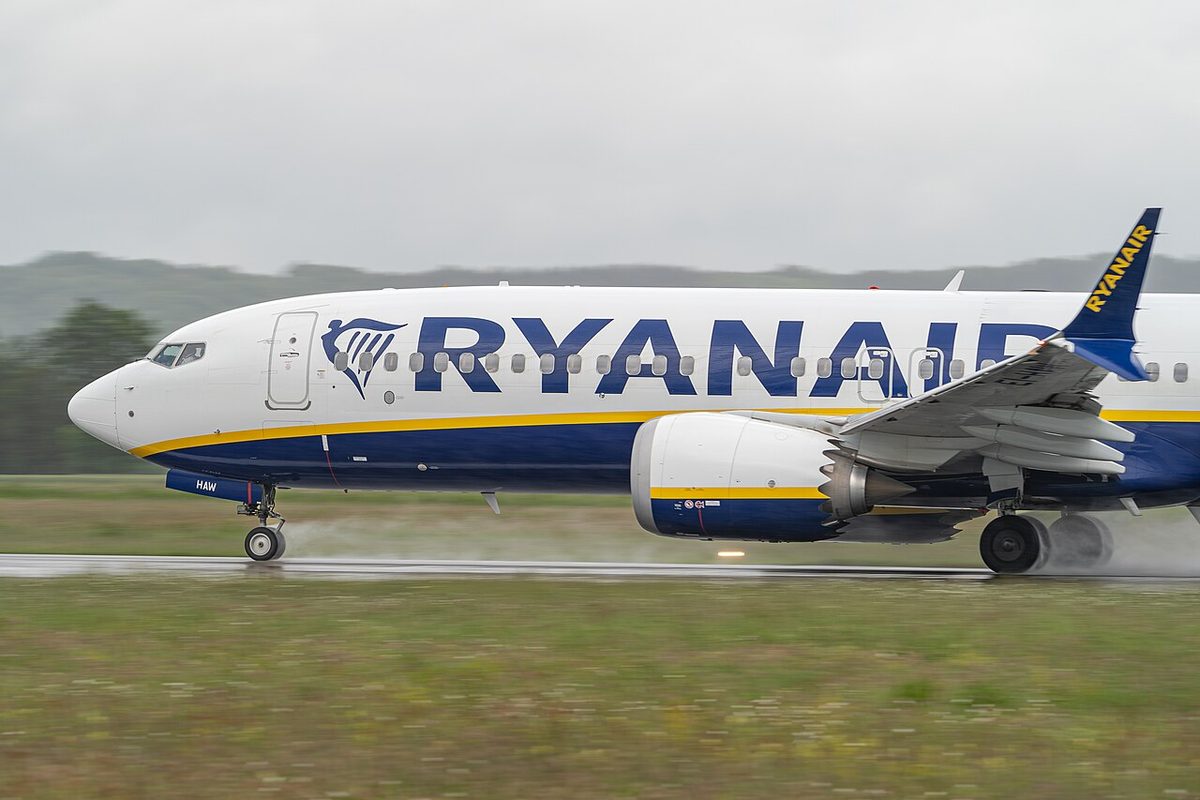
V1 is the maximum speed at which the first action to stop can be taken and the aeroplane stopped within the accelerate-stop distance, and the minimum speed from which the take-off can be continued after an engine failure. The take-off go/no-go decision must therefore already have been made when V1 is reached. A stop begun later is not covered by the certified distance, and on a field-limited runway it may not end on the runway. After V1 the crew continues unless the aeroplane appears unable to fly.
In most operators' procedures the captain makes the decision to reject. On the Boeing 737 the captain calls "REJECT" and flies the stop.
The FAA's Takeoff Safety Training Aid, introduced by AC 120-62, reviewed rejected take-off accidents. It found about one rejected take-off in every 3,000 take-offs and one overrun accident or incident in every 4.5 million. Of the 74 accidents studied, 58 per cent were begun above V1, and only slightly more than a quarter involved any loss of engine thrust. The lesson was that a late reject for a problem that did not threaten the aeroplane is often worse than continuing.

Low-speed and high-speed RTO regimes
Manufacturers divide the roll into two low-speed and high-speed rejected take-off regimes, at 80 kt on Boeing types and 100 kt on Airbus types.
| Regime | Reject for |
|---|---|
| Low speed, up to 80 kt (Boeing) or 100 kt (Airbus) | Any warning or caution, abnormal indication or unusual noise, or anything the captain judges unsafe |
| High speed, up to V1 | Engine failure, fire, predictive windshear warning, or an aeroplane unsafe or unable to fly |
| Above V1 | Continue |
The Boeing 737 RTO procedure shows the actions. The captain calls "REJECT" and at the same time closes the thrust levers, disengages the autothrottle and applies maximum manual braking or checks that the RTO autobrake is working, then raises the speed brake lever and applies maximum reverse consistent with the conditions. The first officer checks these actions and calls "SPEEDBRAKES UP" and "60 KNOTS", and ATC and the cabin are told as soon as practical. Field length permitting, the reverse levers reach the reverse idle detent by taxi speed. The RTO autobrake applies maximum braking when the thrust levers are closed at or above 90 kt wheel speed; below 90 kt it is not initiated.
A stop near V1 converts the aeroplane's kinetic energy into brake heat. Boeing's procedure is not to set the parking brake unless an evacuation is needed, so that the hot brakes can cool, and to consult the brake cooling schedule for the cooling time and precautions (see brake energy and tyre speed limits).
Rotation rate and technique
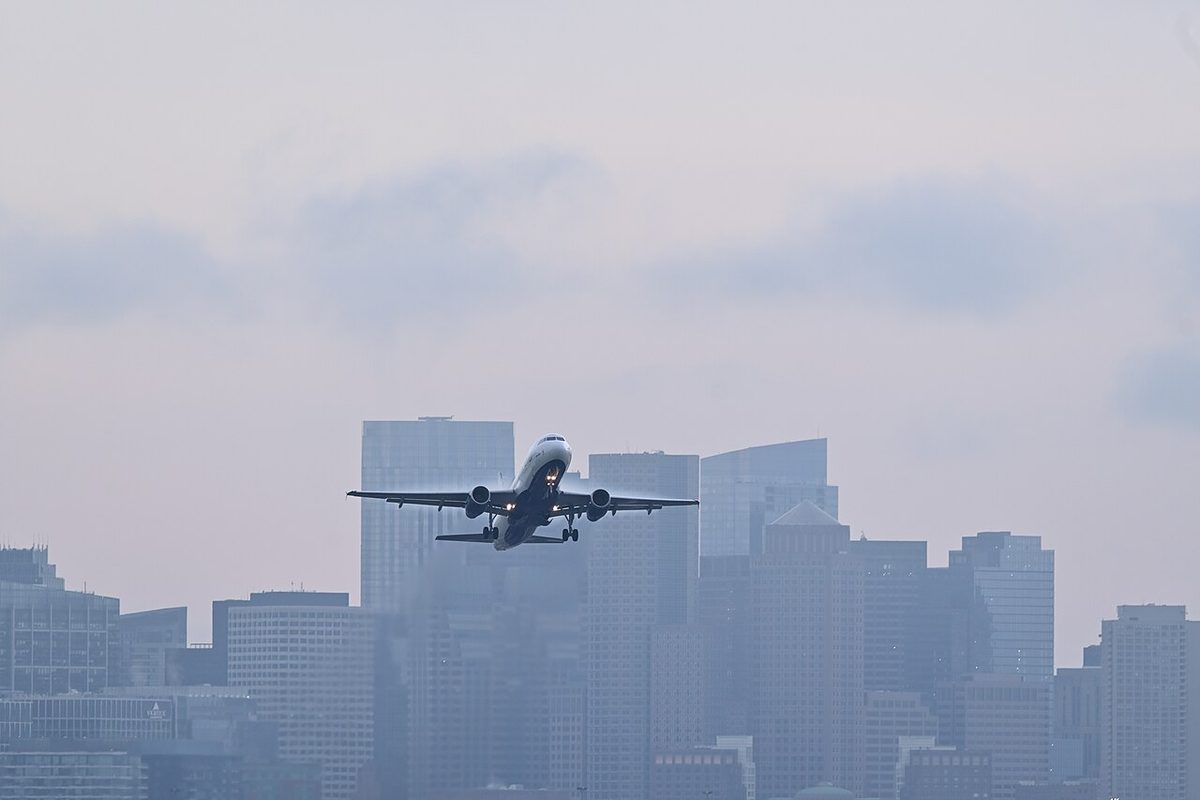
At VR the pilot flying starts a smooth, continuous rotation towards the target attitude. The rotation rate matters as much as the speed at which it starts. Boeing recommends an average of 2 to 3° per second. Airbus calls for about 3° per second on the A320 towards a pitch attitude of 15°, or 12.5° with an engine failed, after which the pilot follows the flight director. Lateral inputs are kept to a minimum on the ground and during rotation.
A rotation that is late or slow lengthens the take-off distance and can cost the obstacle margin. One that is early or fast reaches a high pitch attitude while the wheels are still on the runway.
Tail strike avoidance
A tail strike (also written tailstrike) happens when the pitch attitude on the ground reaches the geometric limit at which the tail touches the runway before lift-off; for many narrow-body airliners that limit lies around 11° to 13°. Airbus lists the main factors as early rotation, rotation technique, configuration, the take-off trim setting, a crosswind take-off and oleo inflation. FAA training material stresses early rotation, a fast rotation rate and wrong take-off data, which give a VR that is simply too low.
A tail strike can damage the structure of the rear fuselage, including the pressure hull. After a tail strike, A320 procedures therefore call for avoiding flight at an altitude that needs a pressurised cabin and returning to the departure airport for a damage assessment.
Exam tip: V1 is a decision already made, not a moment to start thinking. Below 80 or 100 kt reject for almost anything; above it and before V1, reject only for engine failure, fire, predictive windshear or an aeroplane that cannot fly.
Frequently asked questions
What is the difference between a low-speed and a high-speed rejected take-off?
Manufacturers split the take-off roll at 80 kt on Boeing types and 100 kt on Airbus types. Below that speed the crew rejects for any warning, caution, abnormal indication or unusual noise, because stopping is easy. Above it, and up to V1, the crew rejects only for an engine failure, fire, a predictive windshear warning or anything that makes the aeroplane unsafe or unable to fly. After V1 the take-off is continued.
What is the purpose of the 100 knot crosscheck?
On Airbus types the pilot monitoring calls one hundred knots and the pilot flying checks the airspeed on their own display, so an airspeed disagreement is found while stopping is still simple. It also marks the change to the high-speed regime, above which a reject is a more serious matter. Boeing and Embraer crews make an 80 kt call instead, which also serves as a check that both pilots are capable.
Why are most rejected take-off overruns caused by high-speed rejects?
The FAA Takeoff Safety Training Aid found about one rejected take-off in 3,000 take-offs but only one overrun in about 4.5 million. Of the 74 rejected take-off accidents studied, 58 per cent were begun above V1, and only slightly more than a quarter involved any loss of engine thrust. The certified stopping distance assumes the first stopping action by V1, so a late reject for a minor problem can run off the end.
What causes a tail strike on take-off?
The tail touches the runway when the pitch attitude reaches the geometric limit before the main wheels leave the ground. Airbus lists early rotation, rotation technique, configuration, the take-off trim setting, crosswind and oleo inflation as the main factors. Wrong take-off data, such as a mass far below the real one, produce a rotation speed that is too low, and a fast rotation rate does the rest.
What is a gross error check of take-off data?
It is a reasonableness check that the computed data make sense for the aeroplane on the day, beyond comparing one figure with another. The crew confirms that the mass, runway, flap, thrust setting and V-speeds agree with the load sheet and the conditions, and that the speeds look right for that mass. Data entry errors are common, and a take-off weight entered nearly 100 tonnes too low once gave speeds far below the real ones.
Test yourself on Take-off Procedures and Rejected Take-off
The v1prep banks cover this topic in Operational Procedures (070), with a worked explanation for every answer. EASA ATPL, PPL, IR and CPL, the FAA written tests and A320/B737 type ratings.
Start practising →Sources and further reading
- FAA AC 120-62, Takeoff Safety Training Aid
- FAA, Pilot Guide to Takeoff Safety
- 14 CFR 25.107, Takeoff speeds
- EASA Easy Access Rules for Large Aeroplanes (CS-25)
- ATSB AO-2009-012, Tailstrike and runway overrun, Airbus A340-541 A6-ERG, Melbourne
- AIP France, AD 2 LFBO Toulouse-Blagnac (declared distances from runway intersections)
Library articles are written for study and exam preparation. They do not replace your aircraft's approved documentation, your operator's procedures or the regulations themselves.