Landing Distance
Landing distance is the horizontal distance from the point where the aeroplane is 50 ft above the landing threshold to the point where it comes to a complete stop. For dispatch, a factored version of the certified distance must fit within the landing distance available.
Landing distance is the horizontal distance an aeroplane needs to come to a complete stop from a point 50 ft above the landing threshold. The flight manual gives it for a precisely flown landing on a dry, hard runway. Operators never plan on that figure alone: regulations multiply it by generous factors before comparing it with the runway, add further margin when the runway is wet, and require a second check in flight against the conditions actually expected.
The subject links certification, dispatch planning and airmanship. The factors exist because real landings are flown less precisely than flight-test landings, and runway overruns remain one of the commonest serious accidents (see runway excursion).
Landing distance components
The landing distance is measured from a screen height of 50 ft above the threshold, the same for every performance class. Steep approach operations may be approved with a different screen height, never less than 35 ft (CAT.POL.A.245). The distance has two parts:
- The landing airborne distance, from 50 ft to touchdown, includes the final descent and the flare. On a 3° path, 50 ft corresponds to about 950 ft of horizontal distance, so the airborne part is typically around 1,000 ft for a jet transport. A floated flare lengthens it.
- The ground roll, from touchdown to a full stop, includes the time taken to lower the nosewheel and bring in the decelerating devices, then the braked deceleration itself.
The threshold is crossed at the reference landing speed, VREF. For Performance Class A aeroplanes VREF is at least 1.23 VSR0, the reference stall speed in the landing configuration, and not less than the minimum control speed in the landing configuration, VMCL. Performance Class B aeroplanes use at least 1.3 VS0. Every knot above VREF adds energy that the flare and the brakes must absorb.
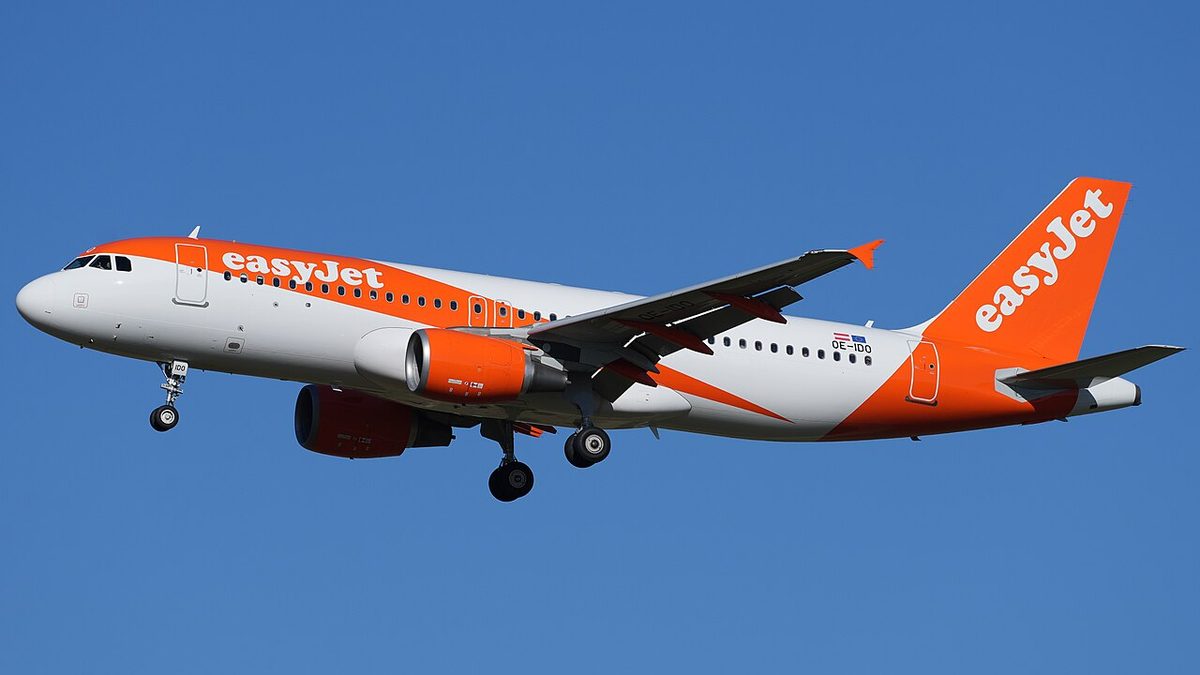
Certified (gross) landing distance
The certified landing distance is the distance established in flight test under CS-25 or 14 CFR Part 25 and published in the flight manual. It is flown on a dry, hard runway by test pilots crossing the threshold at VREF, touching down without an extended float and using maximum wheel braking; reverse thrust is not credited on a dry runway. The data take account of the aerodrome pressure altitude, and the wind corrections include no more than 50 per cent of a headwind and at least 150 per cent of a tailwind.
The unfactored figure is often called the gross landing distance. Terms differ between texts: in Performance Class B material the net landing distance is the gross distance multiplied by the dispatch factor, the figure that must fit the runway. The landing distance required (LDR) is the factored distance, and it must not exceed the landing distance available (LDA) declared by the aerodrome.
Dispatch factors: 60% and 70%
Under EASA Part-CAT (CAT.POL.A.230 for Class A), the landing mass planned for the destination and any alternate must allow a full-stop landing from 50 ft above the threshold:
| Aeroplane | Dry runway | Factor on the certified distance |
|---|---|---|
| Class A turbojet | Within 60% of LDA | 1 ÷ 0.60 ≈ 1.67 |
| Class A turboprop | Within 70% of LDA | 1 ÷ 0.70 ≈ 1.43 |
| Class B (all) | Within 70% of LDA | ≈ 1.43 |
A turbojet with a certified landing distance of 1,500 m therefore needs an LDA of at least 1,500 ÷ 0.6 = 2,500 m. A Class B aeroplane with a gross landing distance of 600 m needs 600 ÷ 0.7, about 857 m. The FAA equivalent for turbine-engined airliners, 14 CFR 121.195(b), applies the 60 per cent rule to turbojets and turboprops alike at the destination, so a 5,000 ft certified distance requires about 8,333 ft of runway. The FAA's 70 per cent figure for turboprops applies only at alternate airports (121.195(c) and 121.197).
Class B planning applies surface and slope corrections before the factor, and they multiply rather than add: 1.15 for dry grass up to 20 cm long and 1.05 for each 1 per cent of downslope, with no credit for an upslope. For Class A, a runway slope is taken into account only when it exceeds 2 per cent, from the flight manual data.

Exam tip: "within 60 per cent of the LDA" and "multiply by 1.67" are the same rule stated two ways. Divide the gross distance by 0.6, or multiply by 1.67, to find the minimum LDA; multiply the LDA by 0.6 to find the longest acceptable certified distance.
Wet runway landing factor
When the weather reports or forecasts indicate that the runway may be wet at the estimated time of arrival, the LDA must be at least 115 per cent of the dry requirement (CAT.POL.A.235):
- Turbojet: 1.67 × 1.15 ≈ 1.92, so the 1,500 m aeroplane needs about 2,875 m.
- Turboprop and Class B: 1.43 × 1.15 ≈ 1.64.
A shorter distance may be used if the flight manual contains approved wet runway landing data, but never less than the dry requirement. For a contaminated runway, the LDA must be at least the greater of the wet requirement and 115 per cent of the landing distance determined from approved contaminated data. The FAA rule is the same in substance: 121.195(d) adds 15 per cent when the runway is forecast wet or slippery, so the 5,000 ft example needs about 9,583 ft.
The wet factor is a planning margin, not a measure of wet braking. FAA material notes that braking friction on a wet runway can fall to about half the dry value, which is why the arrival check below uses performance data for the reported condition (see wet and contaminated runways).
Most favourable and most likely runway
The dispatch calculation must be satisfied under two assumptions:
- The aeroplane lands on the most favourable runway in still air: the runway that permits the highest landing mass. It is usually the longest, but slope, surface and obstacles can make another runway better.
- The aeroplane lands on the runway most likely to be assigned, considering the probable wind speed and direction, the ground handling characteristics of the aeroplane, and other conditions such as landing aids and terrain.
If the second condition cannot be met at the destination, the aeroplane may be dispatched only if an alternate aerodrome is designated at which all the landing requirements can be met. At a single-runway destination where a landing depends on a specified wind component, so that the still-air case cannot be met, dispatch is possible if two alternates are designated that permit full compliance. The same logic applies to Class B aeroplanes. Before starting the approach, the commander must still be satisfied that the landing can be made safely.
Time-of-arrival assessment
Dispatch factors are applied hours before landing, to forecast conditions. By the time the aeroplane arrives, the runway may be contaminated, the wind may have changed, or a failure may have raised the approach speed. A landing distance assessment at time of arrival repeats the calculation with the actual data: runway condition code, wind, temperature, mass, configuration, approach speed additives and the braking and reverse thrust that will be used.
EASA makes the check a rule. Under CAT.OP.MPA.303 the commander may continue the approach only when satisfied, on the information available, that the landing distance available is at least the landing distance at time of arrival (LDTA). The acceptable means of compliance expects the LDA to be at least 115 per cent of the LDTA. Airbus calls the result the factored in-flight landing distance (FILD): the computed in-flight landing distance plus a 15 per cent margin, which is not applied in an emergency.
In the United States the assessment is guidance rather than a rule, although operators build it into their procedures. SAFO 19001, which replaced SAFO 06012, and AC 91-79B recommend at least a 15 per cent margin over the computed distance. The dispatch factor does not protect a landing on a contaminated runway with a tailwind: only a calculation for the actual conditions does.
Aerodynamic and wheel braking
The ground roll depends on the forces that slow the aeroplane:
- Ground spoilers (lift dumpers) deploy at touchdown. They destroy lift, which puts the aeroplane's weight on the wheels so the brakes can work, and they add drag. A soft touchdown delays the weight-on-wheels signal and with it the spoilers and autobrake, which is why a firm touchdown is recommended on slippery runways.
- Reverse thrust is most effective at high speed and does not depend on runway friction. Jet reverse is reduced to idle at a low speed set by the manufacturer, to avoid re-ingesting exhaust and debris.
- Aerodynamic braking in a light aeroplane means holding the control column back after touchdown so the airframe's drag helps slow it; the FAA recommends it, with a firm touchdown and progressive braking, on wet and slippery runways.
- Wheel braking does most of the work on a dry runway. Anti-skid keeps each wheel near maximum friction, and the autobrake applies a selected deceleration. On a wet or contaminated runway the friction available, not the setting, decides the deceleration.
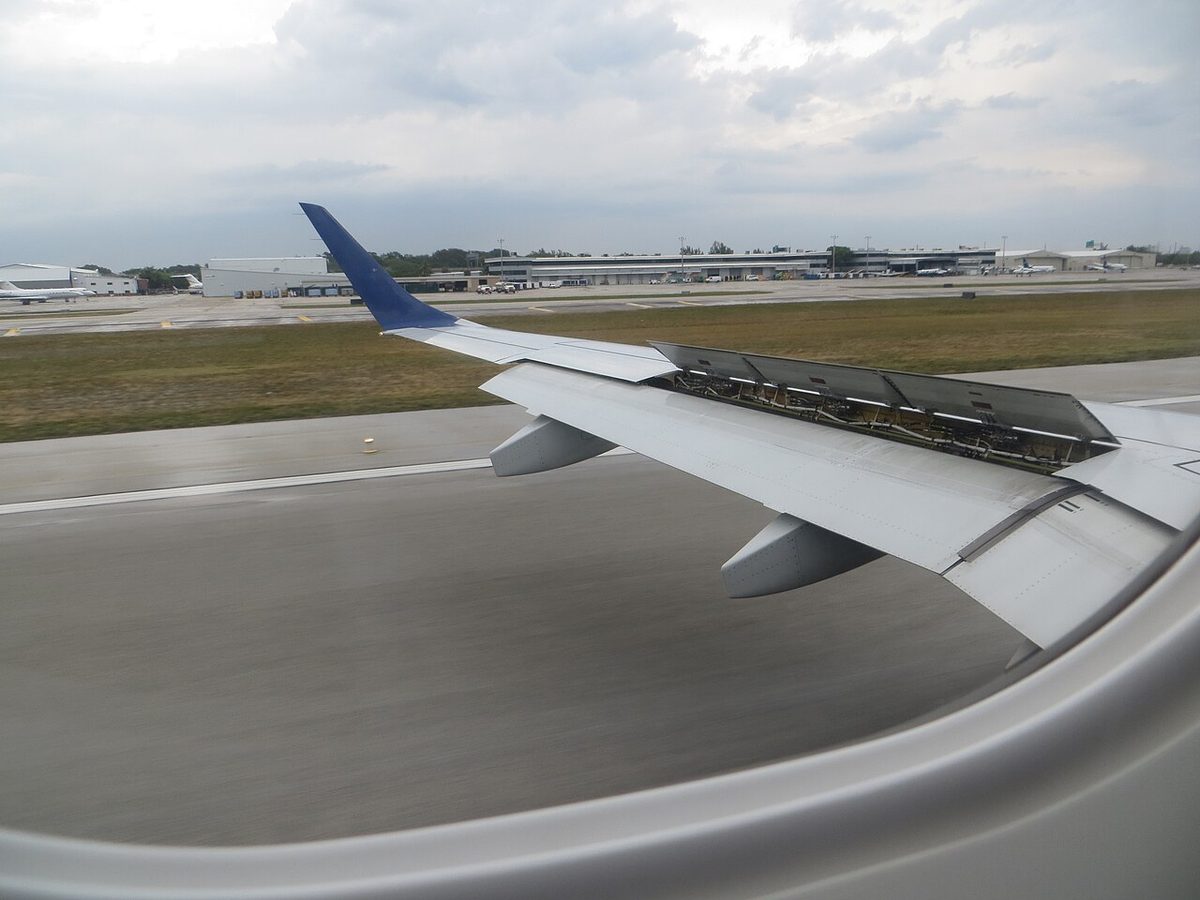
Several operational factors lengthen the distance well beyond the book figure:
| Factor | Typical effect |
|---|---|
| Speed above VREF at the threshold | About 20% longer for a 10% speed excess (FAA); about 200 ft for each 5 kt (EASA exam material) |
| Tailwind | About 20% longer for 10 kt (FAA exam material) |
| Downslope | About 5% longer per 1% |
| Higher mass | Higher VREF and more energy; ground roll grows roughly in proportion |
| High pressure altitude or temperature | Higher true airspeed for the same VREF |
| Long flare or late touchdown | Longer airborne distance, less runway left |
Warning: the factors built into dispatch planning are not a reserve to be spent on a fast, long landing. An unstable approach, a long float or a late decision to brake can use the whole margin before the aeroplane is on the ground. If the landing distance with its margin does not fit the runway, the options are to hold, wait for better conditions, or divert (see stabilised approach).
Frequently asked questions
What is the 60 percent rule for landing?
For dispatch of a turbojet aeroplane, EASA and FAA rules require that it can make a full-stop landing from 50 ft above the threshold within 60 per cent of the landing distance available. In other words, the available distance must be at least 1.67 times the certified dry landing distance. Under EASA rules, turboprops in Performance Class A and all Class B aeroplanes use 70 per cent, a factor of 1.43; the FAA destination rule keeps 60 per cent for turboprops too.
How is the wet runway landing distance calculated?
When the runway is forecast to be wet at the estimated time of arrival, the landing distance available must be at least 115 per cent of the dry requirement. For a turbojet that means 1.67 times 1.15, about 1.92 times the certified dry distance; for a turboprop or Class B aeroplane 1.43 times 1.15, about 1.64. A shorter wet figure may be used if the flight manual contains approved wet data, but never less than the dry requirement.
What is the difference between landing distance required and landing distance available?
The landing distance available, LDA, is a declared distance published by the aerodrome: the length of runway usable for the ground run of a landing. The landing distance required, LDR, is what the aeroplane needs, found from the flight manual for the actual mass and conditions and multiplied by the regulatory factors. For dispatch, the required distance must not exceed the available distance.
What does most favourable and most likely runway mean?
Dispatch landing calculations must be satisfied twice: on the most favourable runway in still air, which permits the highest landing mass, and on the runway most likely to be assigned given the forecast wind and other conditions. If only the most likely runway fails, the aeroplane may still be dispatched if an alternate aerodrome is designated where every landing requirement can be met.
What is a landing distance assessment at time of arrival?
It is a check made in flight, before the approach, that the runway is still long enough in the conditions actually expected: the latest runway condition code, wind, temperature, mass, configuration and the braking and reverse thrust to be used. EASA requires it under CAT.OP.MPA.303, and its acceptable means of compliance expects a 15 per cent margin. The FAA recommends the same margin in SAFO 19001 and AC 91-79B.
Test yourself on Landing Distance
The v1prep banks cover this topic in Performance (032), with a worked explanation for every answer. EASA ATPL, PPL, IR and CPL, the FAA written tests and A320/B737 type ratings.
Start practising →Sources and further reading
- EASA Easy Access Rules for Air Operations (Regulation (EU) No 965/2012), CAT.POL.A.230, CAT.POL.A.235 and CAT.OP.MPA.303
- EASA, Annex III to ED Decision 2021/005/R (AMC and GM to Part-CAT, runway surface condition and landing distance at time of arrival)
- 14 CFR 121.195, Airplanes, turbine engine powered, landing limitations, destination airports
- 14 CFR 25.125, Landing
- FAA AC 91-79B, Aircraft Landing Performance and Runway Excursion Mitigation
- EASA Easy Access Rules for Large Aeroplanes (CS-25)
Library articles are written for study and exam preparation. They do not replace your aircraft's approved documentation, your operator's procedures or the regulations themselves.