Runway Excursions
A runway excursion is an event in which an aircraft leaves the runway surface during take-off or landing, either off the end (an overrun) or off the side (a veer-off). Excursions are the most common kind of runway accident in commercial aviation.
A runway excursion happens when an aircraft leaves the runway surface during take-off or landing. It may roll off the far end or slide off the side, at walking pace onto grass or at high speed into a ravine, a sea wall or a road. Excursions rarely have one cause: an approach that is slightly fast, a touchdown slightly long, a runway slightly more slippery than reported and a tailwind slightly stronger than planned can add up to more runway than exists.
Runway excursions are the most frequent type of runway accident in commercial aviation, well ahead of runway incursions. They are also among the most preventable, because nearly every link in the chain is visible to the crew before touchdown or before V1.
- What a runway excursion is
- Overruns and veer-offs on take-off
- Overruns and veer-offs on landing
- Contributing factors
- Landing distance assessment at time of arrival
- Runway end safety areas and arresting systems (RESA, EMAS)
- Action plans: EAPPRE and GAPPRE
- Notable excursions and lessons
- Frequently asked questions
What a runway excursion is
The two forms are named by where the aircraft leaves the paved surface:
- A runway overrun is an excursion off the end of the runway. On take-off it usually follows a rejected take-off that cannot be stopped in the distance available, or a take-off that does not become airborne in time. On landing it follows a touchdown too fast, too long or on a surface too slippery to stop on.
- A veer-off is an excursion off the side of the runway, usually through loss of directional control: crosswind, asymmetric thrust or braking, reverse thrust on a slippery surface, or a system failure.
The scale of the problem was measured by the Flight Safety Foundation's Runway Safety Initiative. In the 14 years from 1995 to 2008, commercial transport aircraft had 1,429 accidents with major or substantial damage. Of these, 431 (30%) were runway-related, and 417 of those, 97%, were excursions. That is almost 30 excursion accidents a year, against about one a year for runway incursions and runway confusion combined.
Overruns and veer-offs on take-off
The rejected take-off (RTO) is the manoeuvre most closely tied to take-off overruns. Certification guarantees a stop within the accelerate-stop distance available (ASDA) only if the reject begins by V1 and the crew applies the certified technique on the runway surface assumed in the calculation (see take-off speeds V1, VR and V2). A reject begun above V1 has no such guarantee.
The FAA and industry's Takeoff Safety Training Aid of 1993 was written to cut RTO accidents, many of which began above V1. Hence the airline convention of rejecting only for serious failures once in the high-speed regime.
Other take-off excursions come from:
- Performance data errors: a wrong mass, runway, intersection or temperature entered into the calculation.
- Contamination not accounted for, which lengthens the accelerate-stop distance.
- Loss of directional control in a crosswind or after an engine failure at low speed.
A take-off excursion happens with the aircraft heavy with fuel, so the consequences can be severe.

Overruns and veer-offs on landing
The certified landing distance assumes a precise technique: crossing the threshold at 50 ft at the reference speed, a firm touchdown without float, and prompt deceleration. Every departure from that picture eats into the margin built into the dispatch factors.
The touchdown zone is the first part of the runway beyond the threshold where landing aircraft are meant to touch down, marked by touchdown zone markings and, on precision approach runways, by lights. A long landing is a touchdown beyond it, or beyond the point the operator's procedures specify. Floating in the flare, crossing the threshold high or fast, or holding off for a smooth touchdown all lengthen the air distance, and runway used in the air is not available for stopping. Many operators require a go-around whenever the aircraft cannot touch down in the touchdown zone.
Many veer-offs on landing involve crosswind on a slippery runway. Tyre side force falls with friction, and reverse thrust in a crosswind can add to the drift (see wet and contaminated runways).
Contributing factors
The Flight Safety Foundation's excursion work and the FAA's AC 91-79B identify the same recurring factors on landing:
- Unstable approaches, above all those continued to land instead of going around (see stabilised approach).
- Excess speed and height over the threshold, which lead to long touchdowns.
- Tailwind, which raises ground speed and lengthens both the air and the ground distance.
- Wet or contaminated runways, where braking depends on the reported condition and the actual one may be worse.
- Late or incomplete deceleration: spoilers not deployed, reverse selected late or cancelled early, brakes applied late.
- Crosswind and gusts, a frequent factor in veer-offs.
- Weather at the moment of landing: heavy rain from a thunderstorm, windshear, or a sudden change that makes the earlier performance check obsolete.
Most accidents combine several of these. The common thread is a crew that continued when a go-around, a diversion or a longer runway would have broken the chain. The Foundation's analysis names the failure to go around as a primary cause of excursions.
Landing distance assessment at time of arrival
The dispatch rules make sure the planned landing fits the runway with generous factors (see landing performance). But weather and runway conditions change after dispatch, so both authorities expect a second check before landing.
The landing distance at time of arrival (LDTA) is the distance the aircraft is expected to need at the actual time of landing. It is computed for the runway in use, the latest weather and runway condition, the aircraft's mass and configuration, and the deceleration devices to be used. EASA makes the in-flight check a rule under CAT.OP.MPA.303, using the latest weather and runway condition report. Its acceptable means of compliance expects the landing distance available to be at least 115 per cent of the LDTA. If the flight manual has no LDTA data, correction factors may be applied to the certified dry landing distance.
The runway condition comes through the ICAO Global Reporting Format (GRF), in force worldwide since 4 November 2021. Aerodrome staff assess each third of the runway and use the Runway Condition Assessment Matrix (RCAM) to assign a runway condition code from 6 (dry) to 0, which the crew then enters into the performance data. The FAA introduced the same method earlier through its Takeoff and Landing Performance Assessment programme. Wet and contaminated runway performance is covered in detail in wet and contaminated runways.
The FAA's approach differs in legal status. After the Chicago Midway accident described below, SAFO 06012 (2006) recommended that turbojet operators assess landing performance at the time of arrival, with at least a 15 per cent margin between the expected landing distance and the distance available. SAFO 19001 has since replaced it, and AC 91-79B carries the guidance. The FAA treats 15 per cent as the minimum acceptable margin for normal operations, but outside an operator's own procedures it is guidance, not a rule.
Runway end safety areas and arresting systems (RESA, EMAS)
When prevention fails, the ground beyond the runway decides the outcome. ICAO Annex 14 surrounds the runway with a runway strip, which extends 60 m past the runway end. Beyond it, a code 3 or 4 runway must have a runway end safety area (RESA), an area kept clear to reduce damage to an aircraft that undershoots or overruns. It must be at least 90 m long and at least twice the runway width. Annex 14 recommends a length of 240 m, and many aerodromes cannot provide it because of water, roads or buildings.
The FAA's equivalent is the runway safety area (RSA), whose standard for many runways is 500 ft wide and 1,000 ft beyond each runway end. Where land is not available, US airports install an engineered materials arresting system (EMAS). It is a bed of crushable material laid beyond the runway end; the tyres sink in and the aircraft decelerates rapidly. The FAA states that a standard EMAS stops most aircraft overrunning at 70 kt.
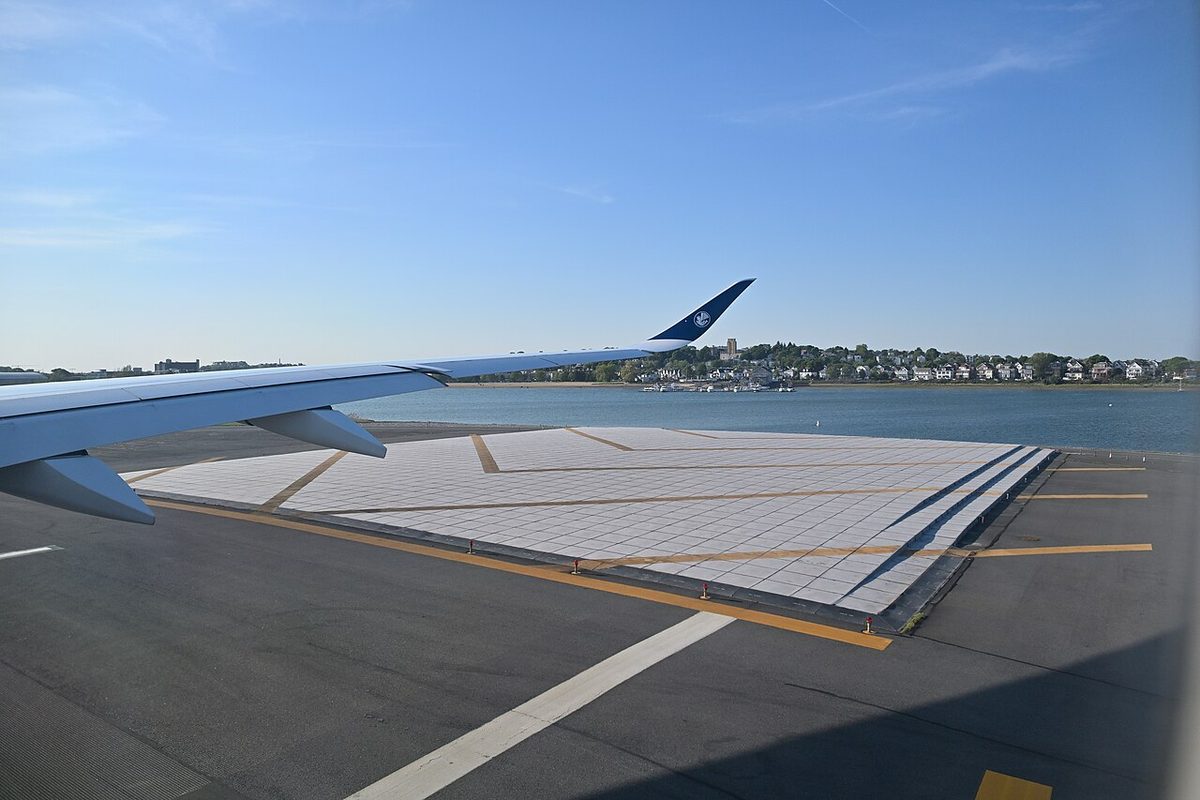
Declared distances can also be reduced to create a safety area within existing pavement, which is why the published landing distance available is sometimes shorter than the concrete.
Action plans: EAPPRE and GAPPRE
EUROCONTROL published edition 1.0 of the European Action Plan for the Prevention of Runway Excursions (EAPPRE) in January 2013. It rests on a EUROCONTROL study of more than a thousand excursion accident and incident reports. The study found that the causal and contributory factors in Europe were the same as elsewhere in the world. EAPPRE sets out practical recommendations for the organisations involved, with guidance material to help operational staff apply them.
In January 2021, EUROCONTROL and the Flight Safety Foundation published the first part of the Global Action Plan for the Prevention of Runway Excursions (GAPPRE), extending the same approach worldwide. It contains recommendations for aircraft operators, airports, air navigation service providers, manufacturers and regulators. Guidance and best practice were added in the expanded version.
Notable excursions and lessons
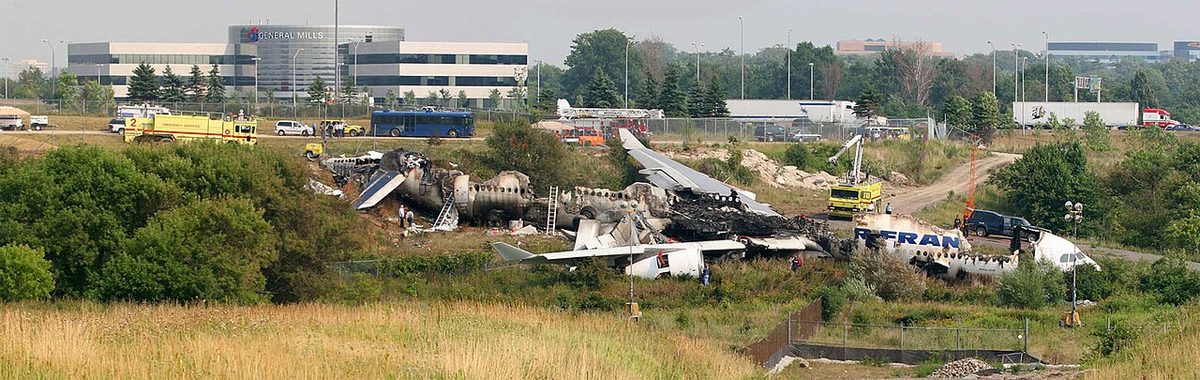
Air France 358, Toronto, 2005. An Airbus A340-313 from Paris, with 297 passengers and 12 crew, approached runway 24L as thunderstorms reached the airport. The crew had heard that an aircraft ahead reported poor braking, and the weather radar showed heavy precipitation moving onto the runway. At about 200 ft, with autopilot and autothrust disconnected, the aircraft went above the glideslope and its ground speed increased. It crossed the threshold about 40 ft above the glideslope and touched down about 3,800 ft along a 9,000 ft runway. It could not stop and came to rest in a ravine. Everyone escaped before fire destroyed the aircraft. The Transportation Safety Board of Canada made recommendations on landing in deteriorating weather, and on providing runway end safety areas or other means of stopping at all code 4 runways.
Southwest Airlines 1248, Chicago Midway, 2005. A Boeing 737-700 landed on runway 31C with a quartering tailwind of 8 kt and braking action reported as fair to poor. The company limit for poor conditions was 5 kt of tailwind, and the on-board performance computer's stopping margin included credit for reverse thrust, an assumption it did not show the crew. The aircraft overran through the blast fence and perimeter fence onto a road, where it struck a car and killed a child. The NTSB's probable cause was the pilots' failure to use the available reverse thrust in time. Their first experience with the autobrake system had distracted them. Contributing factors included unclear company guidance on arrival landing distance calculations and a performance computer that hid its assumptions.
Delta Air Lines 1086, New York LaGuardia, 2015. An MD-88 landed on runway 13, which was contaminated with snow, and veered off the left side. It hit the perimeter fence and stopped with its nose on an embankment beside Flushing Bay. Twenty-nine passengers suffered minor injuries. The NTSB found that the captain lost directional control because excessive reverse thrust degraded the rudder's effectiveness. The report found that a callout when reverse thrust exceeds 1.3 EPR on contaminated runways could help MD-80 series crews avoid rudder blanking.
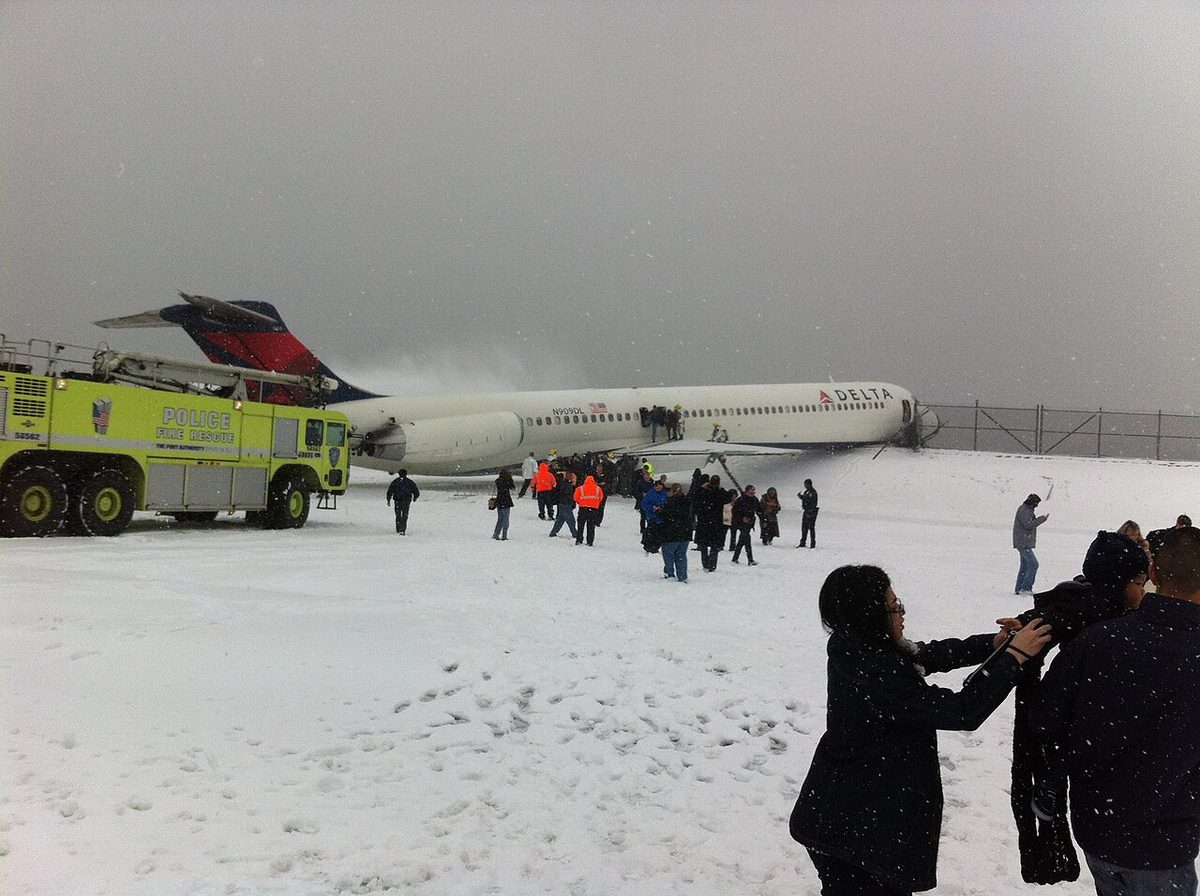
The three accidents show the three families: an approach continued into deteriorating weather and a long touchdown; a landing distance check that looked acceptable because of hidden assumptions and then slow deceleration; and a loss of control on a slippery runway. In each, the defences were known and available.
Frequently asked questions
What is a runway excursion?
A runway excursion is an event in which an aircraft leaves the runway surface during take-off or landing. If it goes off the end of the runway it is an overrun; if it goes off the side it is a veer-off. Excursions range from a wheel on the grass to hull losses, and they are the most frequent type of runway accident in commercial aviation.
What causes runway excursions on landing?
The usual causes act together: an unstable approach, excess speed or height over the threshold, a long landing beyond the touchdown zone, a tailwind, a wet or contaminated runway, late or incomplete use of spoilers, brakes and reverse thrust, and crosswind or asymmetric thrust for veer-offs. A timely go-around breaks most of these chains, which is why a no-fault go-around policy is a key defence.
What is the 15 percent landing distance margin?
It is the margin applied when crews check the landing distance before an approach, using the actual weather and runway condition. EASA's acceptable means of compliance expects the landing distance available to be at least 115 per cent of the landing distance at time of arrival. In the United States the FAA recommends the same 15 per cent margin through SAFO guidance and AC 91-79B.
How long is a runway end safety area?
ICAO Annex 14 requires a runway end safety area at each end of a code 3 or 4 runway, extending at least 90 m beyond the end of the runway strip, which itself runs 60 m past the runway end. Annex 14 recommends 240 m. The FAA's runway safety area standard is often 1,000 ft beyond each runway end and 500 ft wide.
What is EMAS at an airport?
EMAS, an engineered materials arresting system, is a bed of crushable material laid beyond a runway end. An overrunning aircraft's tyres sink into it and the aircraft decelerates quickly. The FAA states that a standard installation will stop most aircraft overrunning at 70 kt. Airports install EMAS where there is not enough land for a full runway safety area.
Test yourself on Runway Excursions
The v1prep banks cover this topic in Operational Procedures (070), with a worked explanation for every answer. EASA ATPL, PPL, IR and CPL, the FAA written tests and A320/B737 type ratings.
Start practising →Sources and further reading
- Flight Safety Foundation, Reducing the Risk of Runway Excursions (Runway Safety Initiative report)
- EUROCONTROL, European Action Plan for the Prevention of Runway Excursions (EAPPRE)
- EASA, Annex III to ED Decision 2021/005/R (AMC and GM to Part-CAT, runway surface condition and landing distance at time of arrival)
- FAA AC 91-79B, Aircraft Landing Performance and Runway Excursion Mitigation
- FAA, Engineered Materials Arresting Systems (EMAS)
- TSB Canada, Aviation Investigation Report A05H0002, Air France Airbus A340-313, Toronto
- NTSB AAR-07/06, Runway Overrun and Collision, Southwest Airlines Flight 1248, Chicago Midway
- NTSB AAR-16/02, Runway Excursion During Landing, Delta Air Lines Flight 1086, LaGuardia
Library articles are written for study and exam preparation. They do not replace your aircraft's approved documentation, your operator's procedures or the regulations themselves.