Top 25 ATPL Meteorology Questions (with EASA-Sourced Answers)
LAST UPDATED: 24 MAY 2026
Meteorology is one of the highest-volume ATPL subjects (over 200 questions in the standard exam pool) and the one where understanding beats memorisation. These 25 questions cover the topics that show up reliably in EASA exams and airline interviews: jet streams, CB hazards, icing, fronts, METARs/TAFs, tropopause, turbulence, weather radar.
Atmosphere & tropopause
1. What is the tropopause? The boundary between the troposphere (where most weather happens) and the stratosphere (above). Marked by a temperature inversion — temperature stops decreasing with altitude and becomes roughly constant or slowly increases. Average altitude: ~36,000 ft mid-latitudes, lower at poles (~25,000 ft), higher at equator (~55,000 ft).
2. What's the lapse rate in the standard atmosphere? ISA lapse rate: ~2°C per 1,000 ft in the troposphere. Standard sea level temperature: 15°C, pressure 1013.25 hPa. The actual atmospheric lapse rate varies — saturated adiabatic ~1.5°C/1000 ft, dry adiabatic 3°C/1000 ft.
3. What's an inversion? A layer where temperature increases with altitude (opposite of normal). Causes vertical air-flow stability, often traps pollutants and fog at the surface. Common over cool surfaces at night (radiation inversion) or in subsidence areas (high-pressure regions).
4. What's the difference between troposphere and stratosphere? Troposphere: turbulent, weather-bearing layer where temperature decreases with altitude. Stratosphere: stable, smooth layer where temperature is constant then increases (due to ozone heating).
5. Why is air thinner at altitude? Atmospheric pressure decreases roughly exponentially with altitude. At FL400, pressure is ~190 hPa (~19% of sea level). True air density is what limits engine performance and pressurisation requirements.
Air masses & fronts
6. What's a cold front? Boundary where cold air displaces warm air. Steep slope (~1:50 to 1:100), typically narrow band of weather, often violent (CB, gusts, sometimes squall lines). Moves typically faster than warm fronts.
7. What's a warm front? Warm air gradually overrides cold. Shallow slope (~1:200 to 1:300), wide band of stratus weather, embedded CB possible but less violent. Typically precedes the warm sector of a depression.
8. What's an occlusion? When a faster-moving cold front overtakes a warm front. Cold occlusion: the new cold air is colder than the air ahead. Warm occlusion: the new "cold" air is actually warmer than the air ahead. Both produce extensive cloud and precipitation.
9. What's the typical cloud sequence in a warm front? Approaching cirrus → cirrostratus → altostratus → nimbostratus → drizzle/rain. Deteriorating from high to low cloud over many hours; precipitation builds gradually.
10. What's the typical cloud sequence in a cold front? Sudden CB build-up, often line of TS, heavy precipitation, then rapid clearing behind. Much shorter time-scale than warm front weather.
Hazards: icing, CB, turbulence
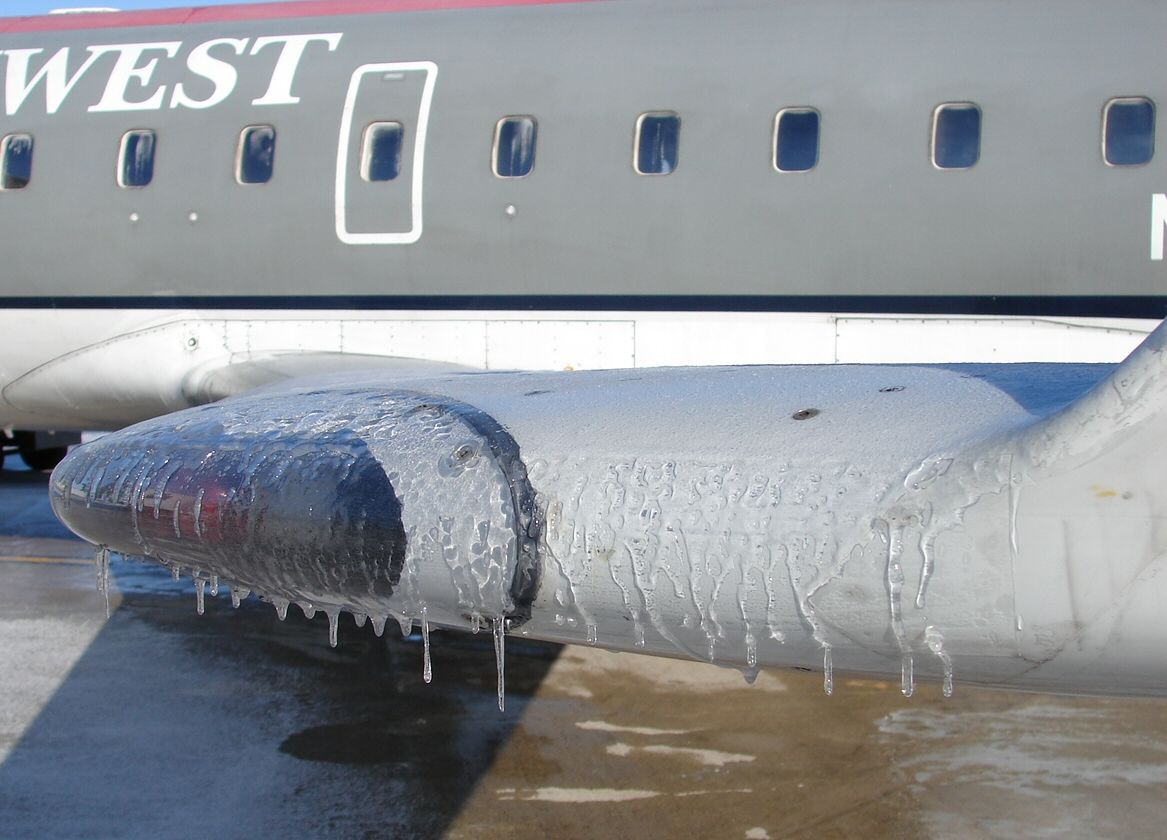
11. What's the most dangerous icing condition? Freezing rain — supercooled raindrops that freeze on contact with the airframe, building thick clear ice rapidly. Found above frontal surfaces in winter. Quickly degrades aerodynamics, weight, and instrumentation. Action: descend to warmer air or climb above the inversion if possible.
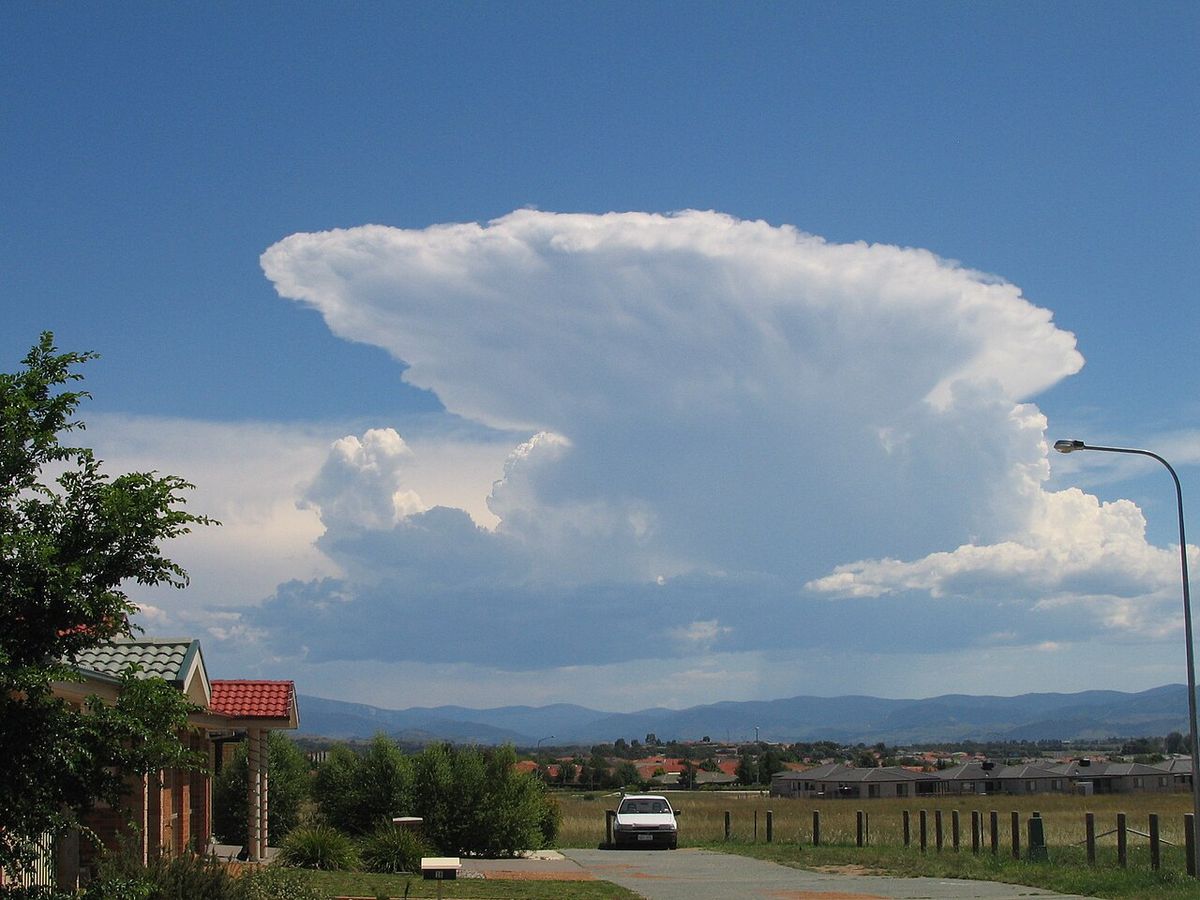
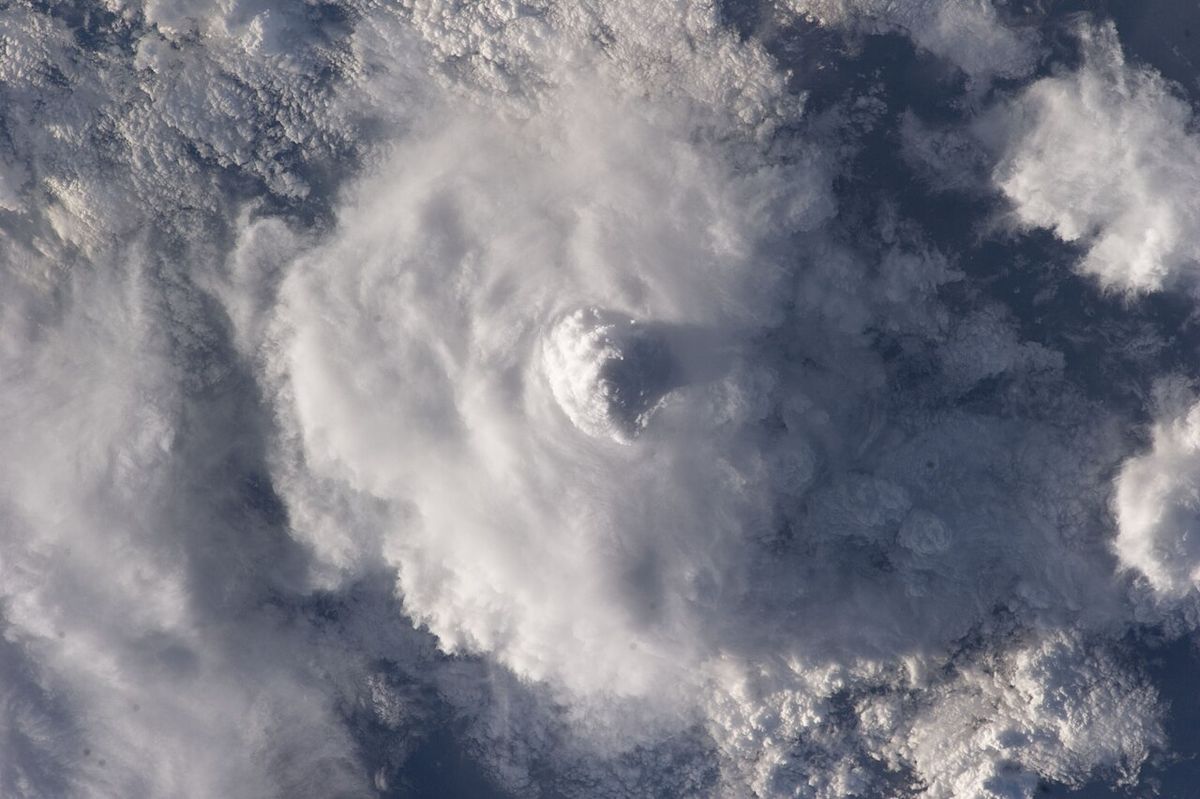
12. What are the four hazards in a CB? Severe turbulence, lightning, hail, icing — plus heavy precipitation and downdrafts/microbursts. Avoidance distance: 20 NM minimum (more in tropical CBs). Don't attempt to fly under or close to CB.
13. What's a microburst? A localised severe downdraft from a CB, ~1-2 NM diameter, lasting 5-15 minutes. Causes severe windshear in the surrounding area. Has caused fatal accidents on approach (Delta 191, others). Predictive windshear systems alert before encounter; reactive systems alert during.
14. What's clear air turbulence (CAT)? Turbulence in cloudless air, typically near the tropopause and jet stream boundaries. Can be moderate to severe. Forecast via SIGWX charts showing CAT areas. Mountain wave CAT is a separate phenomenon related to terrain.
15. What's icing classification? Trace: barely perceptible. Light: occasional accretion, may slightly affect performance. Moderate: rate sufficient that diversion or anti-ice is necessary. Severe: anti-ice cannot keep up; immediate diversion essential.
Jet streams & tropopause shears
16. What's a jet stream? A narrow, fast-moving river of air at the tropopause. Subtropical jet (~25-30°N, FL360-FL400) and polar jet (~50-60°N, FL280-FL340 in winter, higher in summer). Speeds typically 80-150 kt; can exceed 200 kt in extreme cases.
17. Why are jet streams stronger in winter? Greater temperature gradient between equator and pole in winter strengthens the geostrophic wind through the thermal-wind relationship. Summer jet streams are weaker and further north.
18. Where is the strongest CAT typically found around a jet stream? On the polar side and below the jet core. Tropopause shears (sharp wind gradient at the tropopause) create severe CAT. Crossing the jet stream perpendicular to its axis is preferable to flying parallel along the shear.
19. What's the NAT-OTS? North Atlantic Track System — daily set of organized tracks across the North Atlantic, optimised for jet stream tailwinds eastbound and headwind avoidance westbound. Issued by Shanwick (eastern) and Gander (western) Oceanic Area Control Centres.
20. How do jet streams affect flight planning? Tailwinds save fuel and time. Headwinds penalise. ATC allows altitude/route changes to use favourable winds. Flight planning systems automatically optimise for forecast winds.
Reading METAR, TAF, charts
21. Decode this METAR: EGLL 121420Z 24015G25KT 200V270 9999 SCT025 BKN040 18/12 Q1015 — London Heathrow, 12th day at 1420 UTC, wind 240/15 gusting 25 kt, varying 200-270, visibility >10 km, scattered 2,500 ft, broken 4,000 ft, temp/dew 18/12°C, QNH 1015. Standard METAR sequence.
22. What's the difference between TAF and METAR? METAR: actual observed weather at a specific time (issued every 30 min or hourly). TAF: forecast for the airport for the next 9-30 hours. TAFs use sequence indicators: BECMG (becoming, gradual change), TEMPO (temporary fluctuation), PROB (probability of occurrence).
23. What's CAVOK? "Ceiling and Visibility OK" — replaces visibility/cloud/weather sections in a METAR/TAF when ALL of: visibility ≥10 km, no significant cloud below 5,000 ft (or MSA whichever higher), no CB or TCU, no significant weather phenomena.
24. What's the difference between QNH, QFE, and QNE? QNH: pressure adjusted to mean sea level — altimeter reads field elevation when on ground. QFE: pressure at field elevation — altimeter reads zero on ground (used in some legacy ops). QNE: 1013.25 hPa (standard), used above transition altitude for flight levels.
25. What's a SIGWX chart? Significant Weather Chart — depicts forecast weather features for a specific level/time: jet streams (with speed), CAT areas, CB, tropopause height, fronts, ice levels. Critical for ATPL exam questions about identifying hazards on a route.
Drill all 518 ATPL Meteorology questions
v1prep's meteorology bank covers every EASA syllabus topic with detailed explanations.
Practice the full bank →