Ryanair Pilot Interview Prep: Process, Sim, Questions (2026 Guide)
LAST UPDATED: 25 SEPTEMBER 2026
Ryanair Holdings is a 737 group at heart — 621 Boeing 737s plus 26 A320s at Lauda Europe (31 March 2026), about 95 bases, and separate direct-entry assessment profiles for rated Captains and First Officers. This guide covers the recruitment process, the sim assessment specifics, the technical questions, and the airline-specific things that matter when applying. Honest read: it's a high-tempo operation — 25-minute turns, earlies and lates in one block, multi-sector days — and the HR panel wants someone who has thought seriously about bases, rosters and that tempo and still wants the job.
Note for A320 pilots: the Ryanair-brand airlines fly the Boeing 737-800 and 737-8200; the group's only Airbus operator is Lauda Europe (26 A320s at 31 March 2026). The type-rated First Officer advert seen in September 2026 asked for a 737 rating with 800 hours on type, so read the current advert carefully for which routes are open to you and on what terms.
About Ryanair
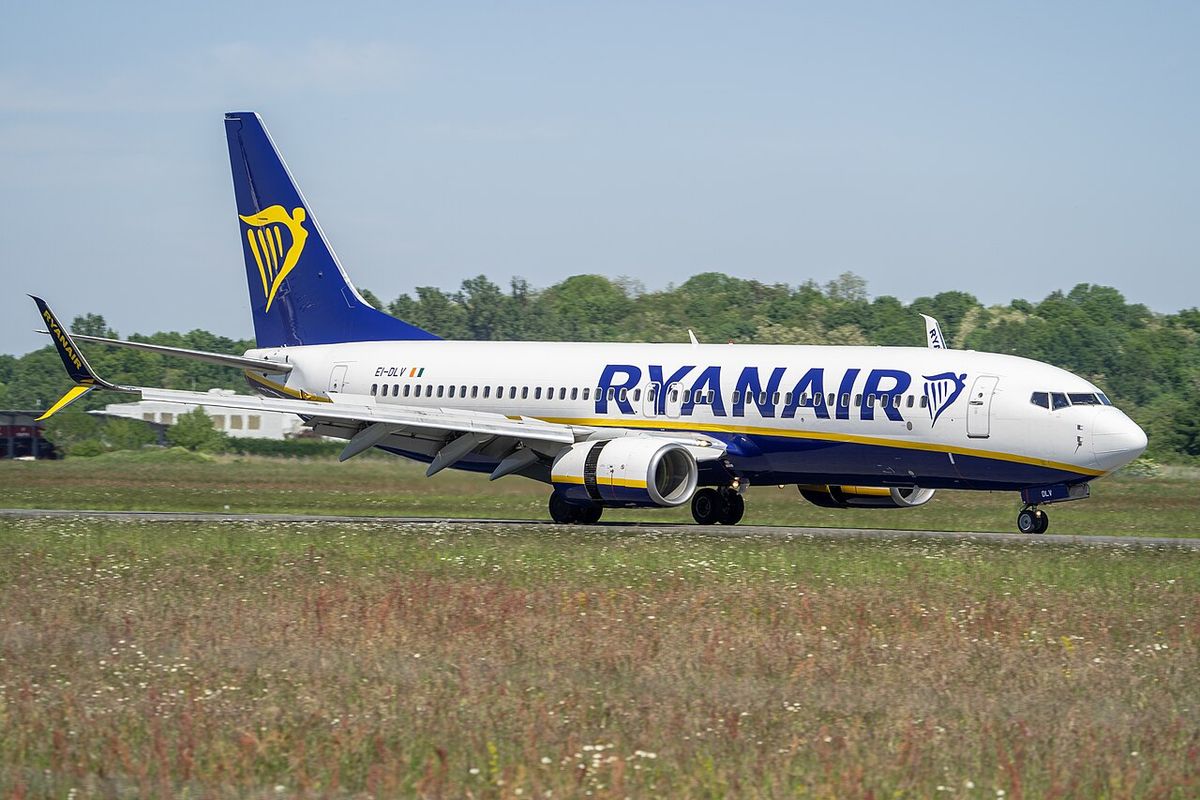
Ryanair Holdings owns five airlines, each with its own AOC: Ryanair DAC (Ireland), Ryanair UK, Buzz (Poland), Malta Air and Lauda Europe (Malta), which flies the group's A320s. The company that employs you decides your regulator, contract, collective agreement and, in practice, your bases. At 31 March 2026 the group operated 647 aircraft: roughly 410 737-800s (189 seats), all 210 737-8200 "Gamechangers" (197 seats; the last delivered in February 2026) and 26 A320s (FY26 results). Next is the 737 MAX 10 — 150 firm plus 150 options, not yet certified in September 2026, with the first 15 due in spring 2027. The operation is short-haul point-to-point with a widely reported 25-minute scheduled turnaround.
The group reports about 3,800 daily flights from 95 bases to more than 220 airports in 35 countries (2026), and capacity follows airport costs: for winter 2026 it grew Riga and Bratislava while cutting Estonia and Lithuania by about a quarter, and a three-aircraft Tirana base was announced for summer 2026. The direct-entry careers page says your base is confirmed at offer stage; a 2026 Buzz advert allocated bases "first come, first served", and pilots report later transfers as seniority-based — so it is not necessarily where you'd prefer to live.
Progression is marketed as fast: the careers page quotes Captain earnings of up to £155,500 or €165,000 in year one. First Officer pay is not published on the careers pages seen, secondary sources disagree, and pay and contracts vary by country and employing airline. Ask which company would employ you, under which collective agreement, and what the realistic time to command is given the MAX 10 schedule.
The 4 stages
| Stage | Format |
|---|---|
| 1. Online application | Hours, ratings, licence and medical |
| 2. Online assessment | Aon platform (the former cut-e tests), separate Captain and First Officer profiles, non-refundable fee (€60 on the pages seen) |
| 3. Simulator assessment | Assessment day at one of the group's simulator centres in Europe |
| 4. HR & technical interview | Same assessment day; result within about a week, base confirmed at offer stage |
This is the sequence the group's direct-entry careers page sets out for rated pilots (September 2026). The details vary by campaign and your invitation is the final word. Candidates report the online assessment as short timed modules — mental arithmetic, spatial orientation, multitasking, hand–eye tracking, verbal and numerical reasoning — in one sitting of over an hour, and some campaigns reportedly add a pre-recorded video interview. On the assessment day, candidates report a document check: licence, medical, passport and logbook.
Sim assessment
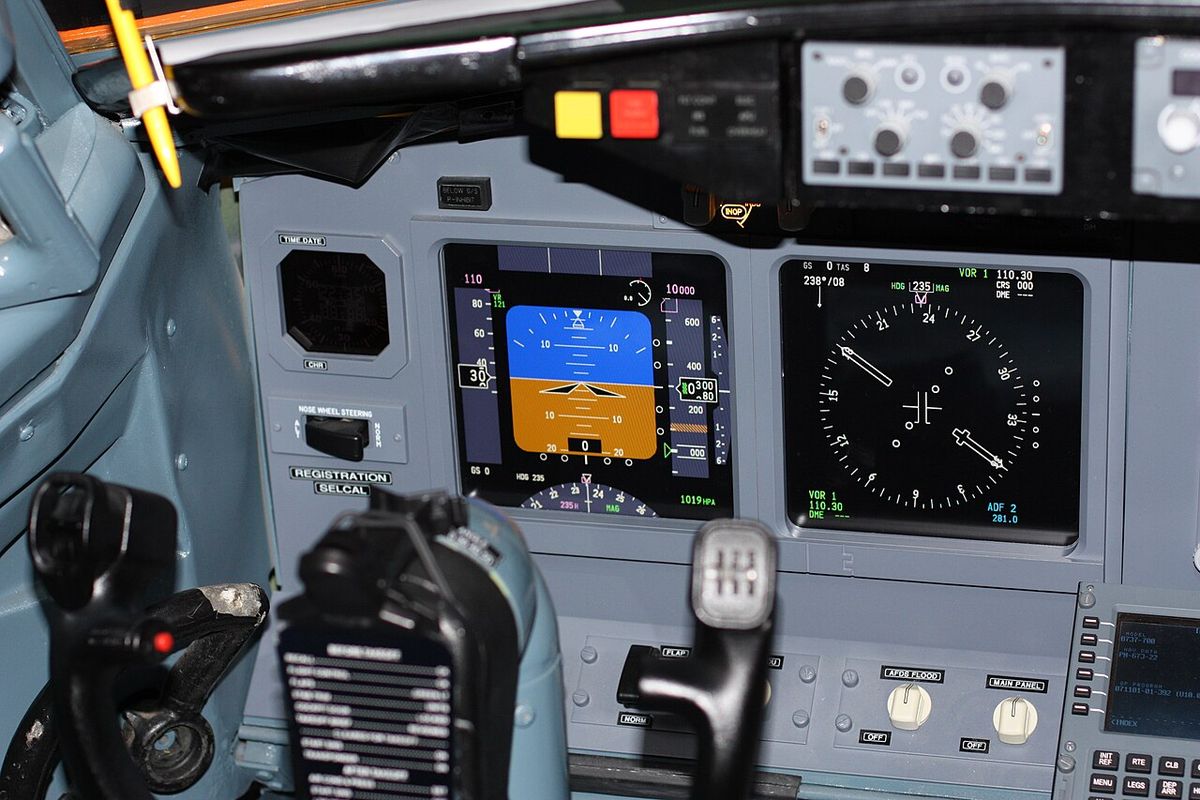
The profile is not published. Candidate reports over several campaigns describe a 737-800 simulator flown in pairs, each candidate taking turns as pilot flying and pilot monitoring, at one of the group's simulator centres in Europe. If your raw-data flying is rusty, book a 737 simulator session before the day.
What you'll fly
- Brief — brief your partner before you start
- Hand-flown departure — often a SID
- General handling — climbs and descents at set rates, level-offs, speed changes, turns and steep turns
- Tracking — a radial or an arc
- A failure — engine, generator, pack or hydraulic — with a decision to make
- Raw-data ILS — autopilot and flight directors off, to a landing or a go-around
What discriminates
Smooth manual handling, instrument scan, CRM. As a rated First Officer you are held to a higher standard than a cadet: flows, callouts and memory items should be automatic, so that your capacity goes on flying and communicating. A silent, accurate pilot scores worse than a slightly less accurate one who briefs, calls deviations and involves the other candidate. Know your own -800 pitch-and-power numbers and trim continuously. The 737 also handles differently from the A320 — conventional yoke instead of sidestick, more rudder coordination — so if you're coming from Airbus, expect to feel "rusty" at first.
A320 pilots: don't try to "fly the 737 like an A320." The 737 wants positive, deliberate inputs. Trim works differently. Speed control feels heavier. Embrace it rather than fighting it.
HR & technical interview
Both interviews happen on the assessment day. The HR interview is competency-based and direct, so use STAR. The technical interview is reported to cover ATPL subjects at operational depth and, for rated pilots, 737 systems and procedures. Answer concisely and without embellishment, and prepare eight real STAR stories: a disagreement, an error, time pressure, a fatigue call, crew conflict, commercial pressure, a failure handled well and one handled badly.
Common topics
- Why Ryanair? — they want commitment, not "any flying job." "Lots of flying and fast command" on its own is weak. Specific: single-family 737 commonality, the completed Gamechanger programme and the MAX 10 order that define the growth curve, and a home-base roster that fits your life.
- Will you go to any base? — the base is confirmed at offer stage. Name your realistic flexibility and a reason ("My preference is X for family reasons, but I'd accept Y or Z"); don't claim you'll go anywhere if you wouldn't.
- Handling pressure — the careers page describes 5-on/4-off with no planned overnights; pilots describe 25-minute turns, earlies and lates in one block, and four-sector days. Show you know what that involves and how you manage it.
- CRM examples — single specific incidents, STAR-structured.
- Decision under pressure — fuel decisions, weather decisions, technical decisions.
Technical questions
The technical interview is reported to cover ATPL subjects at operational depth and, for rated pilots, 737 systems and procedures (hydraulics, flight controls, FADEC, packs, etc.). Be accurate and calm about the limits of your knowledge: if you are unsure of a number, say so and state the principle — they're testing whether you can think like a pilot.
Common 737 topics (if rated)
- Hydraulic systems A, B and standby — and the PTU, which is one-directional: system A pressure keeps the autoslats and leading edge devices working if system B's engine-driven pump loses pressure (a different job from the A320's PTU)
- Flight controls — yoke-driven, not FBW; manual reversion possible
- Performance — V-speeds, take-off thrust ratings, runway analysis
- Packs and pressurisation
- Auto flight system (LNAV, VNAV)
Common ATPL topics (if not 737-rated)
- Why does an aircraft fly? (basic POF)
- What's an ILS and what are CAT I/II/III?
- How do you decode a METAR?
- What's V1, VR, V2? (see our V-speeds guide)
- RVSM basics
- Class A/B/C/D airspace
Top reasons candidates fail
- Manual handling — same theme as every carrier; candidates report a raw-data ILS with autopilot and flight directors off
- Not having thought about bases — the base is confirmed at offer stage and the network moves with airport costs; know which bases you would accept, which you would struggle with, and why
- Over-rehearsed answers — the HR interview is direct. Authentic, specific examples win
- Generic motivation — saying "Ryanair is a great airline" is weaker than tying the fleet plan, the roster and the route to command to what you want to build
- Bad CRM in the sim — quietly flying perfectly without communication is failed CRM. Brief out loud
- Underestimating operational tempo — short sectors, tight turnarounds, weather pressures. Showing awareness of this is critical
Realistic timeline
| Phase | What the careers page says / what to ask |
|---|---|
| Online assessment | Completed before any simulator invitation |
| Sim, HR and technical interview | All on one assessment day |
| Result | Within about a week, with the base confirmed at offer stage |
| Conversion course and line training | Ask for the current footprint, including 8200 differences training |
| Roster | 5-on/4-off, no planned overnights, rosters published four weeks ahead; ask whether your base works it all year |
| Command | Ask the realistic time to command for a direct-entry First Officer, given the MAX 10 schedule |
We have not found a published timeline from application to first revenue sector, so ask at the assessment day, and ask whether there is any training cost or bond for a rated joiner.
Drill ATPL theory and systems
v1prep covers 9,600+ ATPL and A320 questions. Even if you're going for a 737 rating, ATPL theory and aviation fundamentals are tested across both fleets — practice transfers.
Practice the full bank →