Turkish Airlines Pilot Interview Prep: Process, Sim, Questions (2026 Guide)
LAST UPDATED: 20 AUG 2026
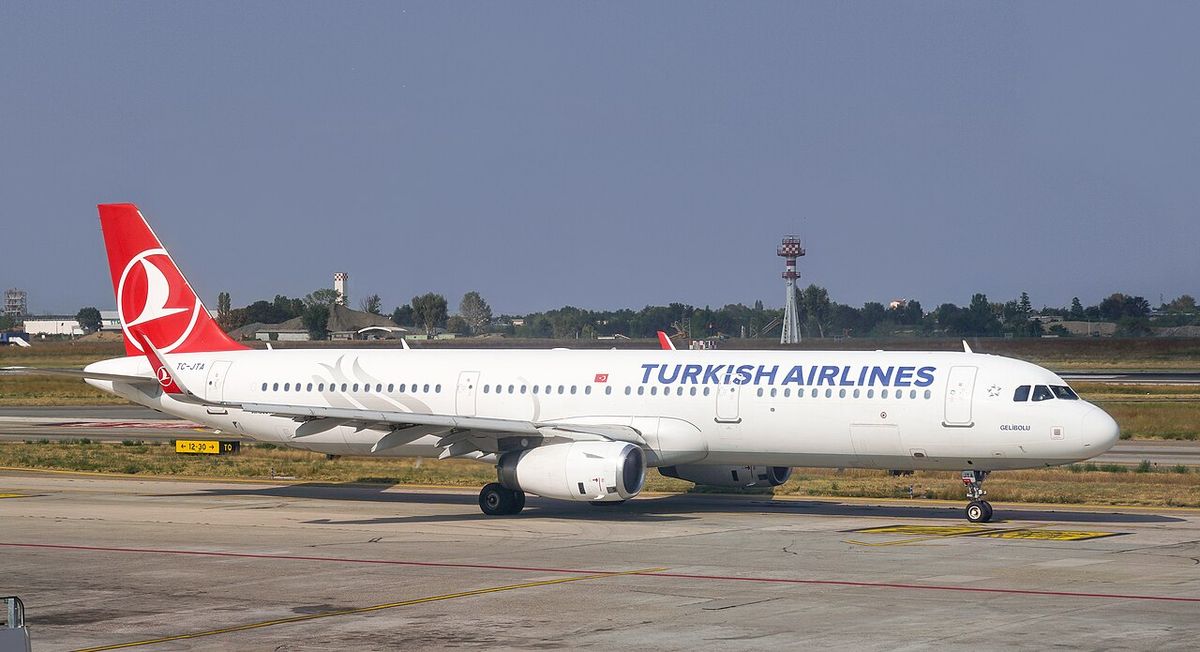
Turkish Airlines is the flag carrier of Türkiye and one of the world's largest network airlines — hubbed at Istanbul Airport (IST) and, by most published counts, serving more countries than any other carrier. This guide covers what is genuinely known about the selection process, how to prepare for the sim and the interviews, and the one structural fact that changes your prep strategy: Turkish Airlines flies both Airbus and Boeing narrow-bodies.
The dual-fleet advantage: most European carriers force a choice — Airbus operator or Boeing operator. Turkish Airlines flies the A320 family (A319/A320/A321, including neos) and the Boeing 737 (NG and MAX) side by side. Whether you hold an A320 or a 737 rating, your type knowledge stays directly relevant — and your technical prep should go deep on the type you're rated on, plus solid ATPL theory for everything else.
About Turkish Airlines
Turkish Airlines operates a fleet of well over 400 aircraft as of recent years, and has publicly announced long-term growth plans that would push that number far higher over the next decade. The network is the airline's signature: by most published counts it serves more countries than any other airline in the world, built around the megahub at Istanbul Airport (IST). The group also includes AJet (formerly AnadoluJet), its lower-cost subsidiary operating largely out of Istanbul Sabiha Gökçen (SAW) — note that AJet typically recruits separately.
The fleet is unusually diverse. Narrow-body: A320 family (A319, A320, A321 — ceo and neo) and Boeing 737 (737-800 NG and 737 MAX). Wide-body: A330, A350, Boeing 777, and 787. Very few major carriers run both narrow-body families at scale — for candidates it means the airline has genuine use for both A320-rated and 737-rated pilots, and fleet assignment is ultimately the airline's call, not yours.
Hiring runs through the airline's official careers portal. Turkish Airlines has historically recruited across multiple pathways: cadet programmes (typically aimed at Turkish nationals), experienced First Officers, and type-rated direct-entry candidates — with campaigns for international pilots appearing periodically as the fleet grows. Eligibility (licence, hours, ratings, medical class) varies by campaign, so verify the current requirements on the official posting before you build your application.
The selection stages
Turkish Airlines does not publish a stage-by-stage syllabus, and the exact sequence varies by intake and pathway. What follows is the near-universal shape of airline selection plus what candidates commonly report for Turkish Airlines specifically:
| Stage | Commonly reported format |
|---|---|
| 1. Online application | CV, licence and ratings, hours, documents via the careers portal |
| 2. Aptitude / psychometric testing | Computer-based cognitive and personality assessment |
| 3. English proficiency assessment | Dedicated English evaluation — frequently mentioned by candidates |
| 4. HR & technical interview | Panel format; motivation, competencies, technical knowledge |
| 5. Simulator assessment | Handling and CRM check; details vary by intake |
Some candidates report stages being grouped into one or two visits, others report a longer spread — treat the order above as indicative, not gospel. A medical check (Class 1 plus any airline-specific screening) sits somewhere in every airline's pipeline. What is consistent across reports: English matters more here than at many European carriers, and it is assessed deliberately rather than just absorbed through the interview.
Sim assessment
Turkish Airlines runs a substantial in-house training operation in Istanbul with full-flight simulators covering its fleets. The airline doesn't publish which simulator type assessments use, and with both A320 and 737 narrow-bodies in the fleet it can plausibly differ by intake — candidates' reports vary. The sensible plan: prepare to fly the type you're rated on, and if you're notified of a different type, ask the recruitment team and get whatever exposure you can beforehand.
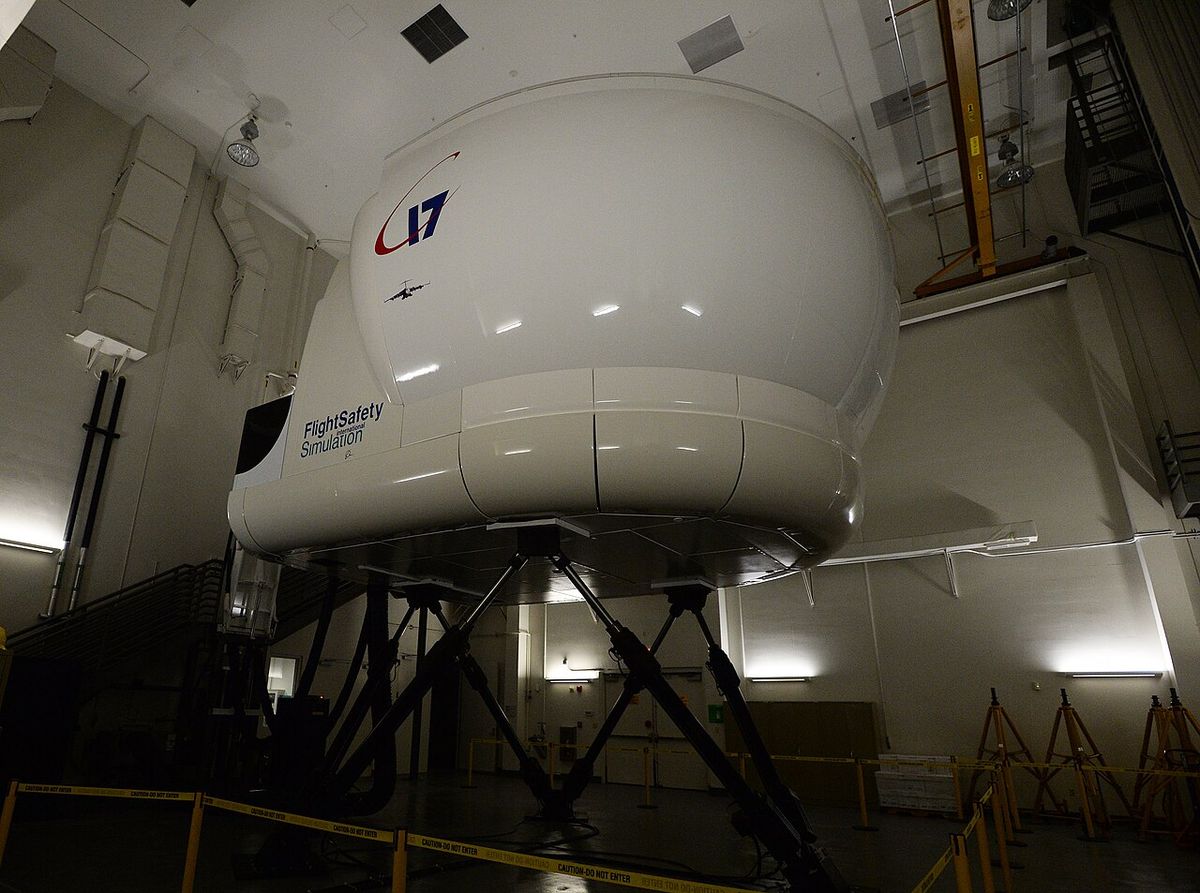
What a typical European-style sim assessment looks like
- Brief — structured pre-flight discussion; know the profile, the SOPs you'll apply, and your role split
- Manual handling — raw-data flying: climbs, turns, level-offs, speed changes
- ILS approach — commonly hand-flown, possibly raw data, to minima and go-around
- Non-normal — an engine failure, a hold, or an unusual-attitude element may appear
- CRM throughout — verbalise, delegate, monitor; the assessor is watching the crew, not just the flight path
What discriminates is the same everywhere: smooth manual handling, a disciplined instrument scan, and audible CRM. Fly attitude and power, trend the corrections, keep talking. A technically adequate profile flown in silence scores worse than a slightly scruffier one flown as a crew.
HR & technical interview
Candidates commonly report a panel-style interview mixing HR competencies with technical questioning. Three themes deserve specific preparation for Turkish Airlines:
- English proficiency — ICAO Level 4 is the regulatory floor, but reports consistently mention the airline probing spoken English hard. Practise talking through technical topics out loud, in English, until it's fluent — explaining a system badly in your second language is the classic stumble.
- Why Turkish Airlines? — generic answers are weak everywhere; here you have real material: the largest country network in the world, a rapidly growing fleet, wide-body progression from a single hub, and a rare dual-fleet operation. Use specifics.
- Relocation to Istanbul — the operation is built around Istanbul. Interviewers will want realistic, thought-through answers about basing your life and family there, not vague enthusiasm.
Beyond that, expect the standard set: STAR-format competency examples (a conflict in the flight deck, a decision under pressure, an error you made and caught), scenario questions on fuel, weather and diversions, and CRM in multicultural crews — a daily reality at a carrier with a network this international.
Technical questions
Technical questioning typically targets the type you're rated on, plus general ATPL theory. Because Turkish Airlines flies both narrow-body families, your prep splits cleanly: go deep on your type, and be sharp on the fundamentals every pilot shares. Real bank-style examples:
If you're A320-rated
- You lose the Green hydraulic system in flight — what do you lose, and what does the PTU do for you?
- What are the conditions for reverting to Alternate Law, and what protections remain in it?
- Walk through a FLEX takeoff — what is the assumed temperature actually doing to your thrust?
If you're 737-rated
- What does the 737 standby hydraulic system power, and when does it arm?
- Manual reversion on the 737 — which systems have failed, and how does the aircraft handle?
- Explain the difference between LNAV/VNAV and raw-data flying on the 737 auto flight system
ATPL theory for everyone
- What are V1, VR and V2 — and what moves V1 on a wet runway? (see our V-speeds guide)
- Decode a METAR with TEMPO, CB and wind-shear groups
- What are the RVSM equipment requirements and contingency procedures?
- ILS categories — minima and requirements for CAT I / II / III
Top reasons candidates fail
- English below the bar — the most Turkish-Airlines-specific failure mode reported. Technical brilliance delivered in halting English still fails the assessment
- Weak manual handling — the universal killer; raw-data ILS practice pays off more than anything else you can do in a sim
- Generic motivation — "a great airline with a big network" is what every candidate says. Specifics about the hub model, fleet growth and career path win
- Not knowing the operation — arriving unaware that the airline flies both A320s and 737s, or vague on the Istanbul hub structure, reads as low effort
- Silent sim flying — flying accurately without briefing, verbalising or monitoring is failed CRM at every carrier
- Unrealistic relocation answers — the operation lives in Istanbul; interviewers notice when candidates haven't genuinely thought that through
Realistic timeline
Turkish Airlines doesn't publish selection timelines, and reports vary widely by campaign — treat everything below as indicative, not promised:
| Phase | Commonly reported |
|---|---|
| Application to first contact | Weeks to a few months, varying by campaign and demand |
| Testing & interviews | Often grouped into one or more visits to Istanbul |
| Assessment to outcome | Varies; candidates report anything from weeks to months |
| Type rating / conversion (if needed) | Industry-typical ~2-3 months |
| Line training | Industry-typical 1-3 months |
The honest summary: from application to the right-hand seat is a matter of months, not weeks, and patience between stages is commonly part of the experience. Use the waiting time — the technical bar doesn't move while you do.
Drill both type banks + ATPL theory
v1prep covers 11,700+ questions across A320 systems, B737 systems and ATPL theory — a rare exact fit for Turkish Airlines' dual-fleet operation. Whichever type you're rated on, drill it deep and keep the fundamentals sharp.
Practice the full bank →