Brake Energy and Tyre Speed Limits
Brake energy and tyre speed limits are the take-off and landing limits set by the wheels rather than the runway: the kinetic energy the brakes can absorb in a stop, expressed as the maximum brake energy speed VMBE, and the maximum ground speed for which the tyres are rated.
Wheel brakes stop an aeroplane by turning its kinetic energy into heat. The amount of heat a brake can absorb without failing is limited, and so is the speed at which a tyre can safely roll. Both limits belong to the landing gear rather than to the runway, and both can cap the take-off mass on a day when the runway itself would allow more.
For transport aeroplanes the two appear in take-off planning as the maximum brake energy speed (VMBE) and the tyre speed limit. They also shape what happens after a stop: how long the brakes need to cool, when the aeroplane may take off again, and how the aeroplane is dispatched when the anti-skid system has failed.
Brake kinetic energy
The kinetic energy of the aeroplane is ½mV², where m is its mass and V its ground speed. It grows with the mass and with the square of the speed. An aeroplane rolling 10 per cent faster carries 21 per cent more kinetic energy, and one of 70 tonnes rolling at 150 kt carries about 208 MJ. In a stop, part of that energy is absorbed by aerodynamic drag and, where it is used, by reverse thrust. The rest goes into the brakes as heat.
Several conditions raise the energy of a stop from a given indicated airspeed:
- Mass. A heavier aeroplane has more kinetic energy at the same speed, and its speeds are also higher.
- Pressure altitude and temperature. In thinner air the same indicated airspeed is a higher true airspeed, so the ground speed and the energy are higher. This is why brake energy matters most at hot, high aerodromes.
- Tailwind. A tailwind adds directly to the ground speed.
- Downhill slope. On a downslope, gravity keeps adding energy during the stop.
The worst case is the rejected take-off at high speed and high mass, the stop for which the brakes are sized. Certification requires the brakes' energy capacity to be demonstrated, including a flight-test maximum brake energy rejected take-off with not more than 10 per cent of the allowable brake wear range remaining (CS and 14 CFR 25.109(i)). Each braked wheel must also have a means of preventing a wheel failure or tyre burst caused by high brake temperature (25.735(j)).
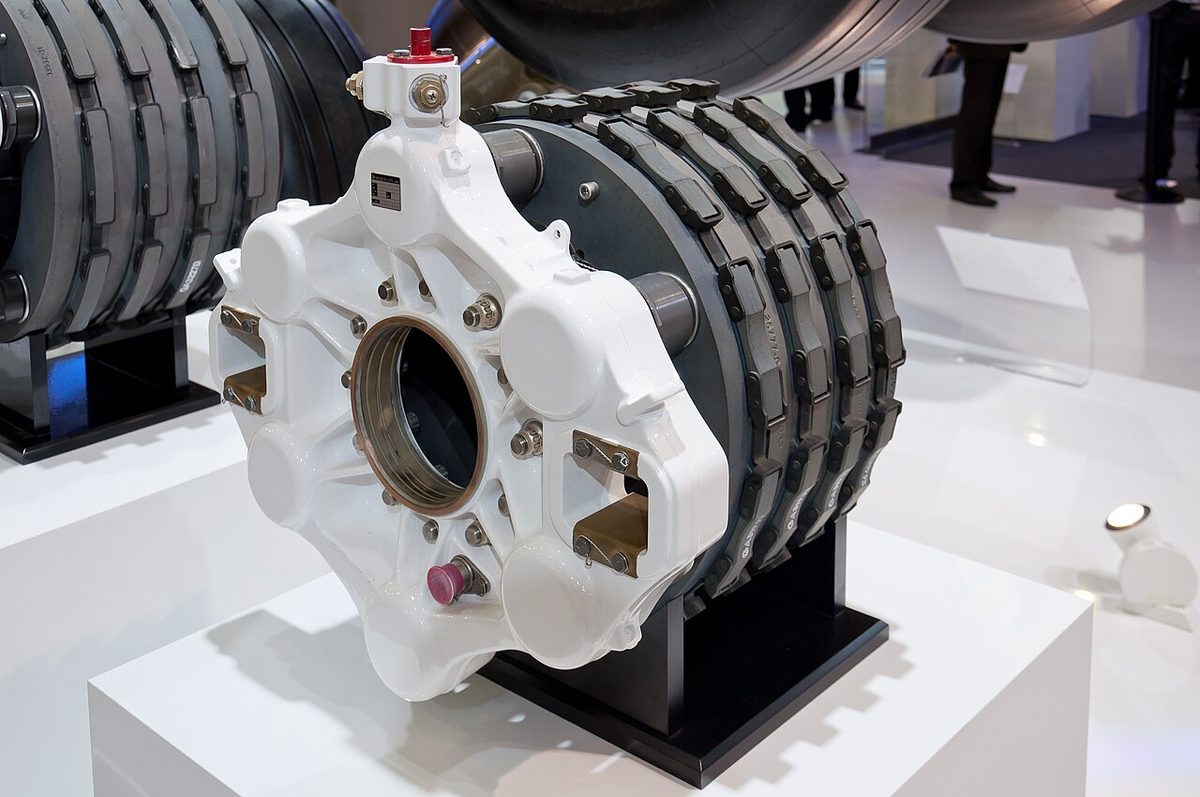
Maximum brake energy speed
The maximum brake energy speed (VMBE) is the highest speed from which the aeroplane can be stopped without the brakes absorbing more than their certified energy capacity. Above it a rejected take-off could end in brake failure, fire or the release of the wheel fuse plugs. The rule is simple: V1 may never exceed VMBE.
The flight manual gives VMBE as an indicated airspeed that decreases with mass, pressure altitude, temperature, tailwind and downhill slope. When the V1 that the runway length would allow is higher than VMBE, V1 is reduced to VMBE. That is possible only if the continued take-off after an engine failure still fits within the take-off distance available with the lower V1. If it does not, the mass must be reduced.
Exam tip: the order of speeds on take-off is VMCG ≤ V1 ≤ VR, with V1 also no greater than VMBE. If a question asks which speed brake energy limits, the answer is V1, and through V1 the take-off mass.
Brake energy limited mass
The mass at which V1 just equals VMBE is the brake energy limited mass. It is one of the limits compared when the maximum take-off mass of a Performance Class A aeroplane is determined. EASA exam material lists seven:
- Field length limited mass.
- Climb limited mass.
- Obstacle limited mass.
- Brake energy (VMBE) limited mass.
- Tyre speed limited mass.
- Runway strength (ACR/PCR) limited mass.
- Maximum structural take-off mass.
The lowest governs (see take-off mass limitations). The brake energy limit typically binds when the runway is long enough to allow a high V1 and the aeroplane is heavy at a hot, high aerodrome. It also caps the improved climb technique, called the increased V2 procedure in EASA exam material, which uses surplus runway to fly higher take-off speeds and gain climb gradient (see take-off speeds).
Landing puts energy into the brakes too. The threshold speed rises with the square root of the mass, so the kinetic energy at touchdown rises roughly with the square of the mass, and at a hot, high aerodrome the higher true airspeed adds more. On a hot day at a high aerodrome, brake energy can therefore limit the landing mass, and it matters most when the aeroplane has to take off again soon after landing.
Brake cooling and energy zones
Heat leaves a brake stack slowly, by radiation, by convection into the air and by conduction into the wheel. A brake that is already hot has less capacity left for the next stop. As the temperature rises the friction of the linings falls, so the aeroplane slows less for the same pedal pressure. This is brake fade. The heat also soaks into the wheel, whose aluminium alloy loses strength as it heats, and into the tyre.
The braked wheels of transport aeroplanes therefore carry fuse plugs (fusible or thermal plugs). They melt at a set temperature and let the tyre deflate in a controlled way instead of bursting. A melted plug means the brake has been overheated, and the wheel, tyre and brake must be inspected before further flight.
To decide how long the brakes need, the flight manual provides a brake kinetic energy graph or brake cooling schedule. It is entered with the mass and the speed at which braking began, corrected for wind, pressure altitude and the number of reversers used. It gives the energy absorbed by the brakes and places the stop in one of three brake energy zones. The zone limits are specific to each chart. The example chart used in European ATPL training material gives the energy in millions of foot-pounds:
| Energy absorbed | Zone | Typical actions |
|---|---|---|
| Below 5 | None | No special action |
| 5 to 17 | Normal | Allow about 5 minutes of cooling for each unit above 5 |
| 17 to 29 | Caution | Park without setting the parking brake, keep clear of the wheels for 30 minutes, allow the same cooling time as in the normal zone, check the wheels and brakes before the next take-off |
| Above 29 | Danger | Clear the runway, alert the fire service, use the minimum foot braking, do not set the parking brake, allow 2 to 3 hours of cooling, replace the wheels and tyres |
After a high-energy stop the parking brake is not set unless essential, because it clamps the hot discs together and drives more heat into the wheel; chocks hold the aeroplane instead. Fuse plugs, tyres and wheels release their energy sideways, along the line of the axle, so hot wheels are approached only from the front or the rear. After a heavy stop the crew keeps the fire service informed and avoids taxiing onto a congested apron.
Aircraft with brake temperature indication set limits in degrees. On the Airbus A320, take-off is not permitted with any brake above 300 °C with the brake fans off. Running fans make the indication read low, so with fans on the crew delays take-off while any indicated brake temperature is above 150 °C.
Carbon brakes absorb and dissipate heat better than steel brakes and weigh much less. Their wear depends mainly on the number of brake applications and on brake temperature, not on the pressure or duration of each application, so crews reduce wear by using fewer brake applications during taxi.
Quick turnaround limit
A landing heats the brakes, and the heat is still there at the next take-off. Some flight manuals therefore publish a quick turnaround limit: the highest landing mass, for the aerodrome's pressure altitude and temperature, from which the aeroplane can land and take off again without a special cooling period. If the landing mass exceeds it, the aeroplane must wait at least a specified time, and typically the fuse plugs are checked, before the next departure.
The limit falls at hot, high aerodromes for the same reasons as VMBE. Where the brake cooling schedule gives a longer cooling time than the planned ground time, the turnaround time rather than the runway decides when the aeroplane can leave.
Tyre speed limit
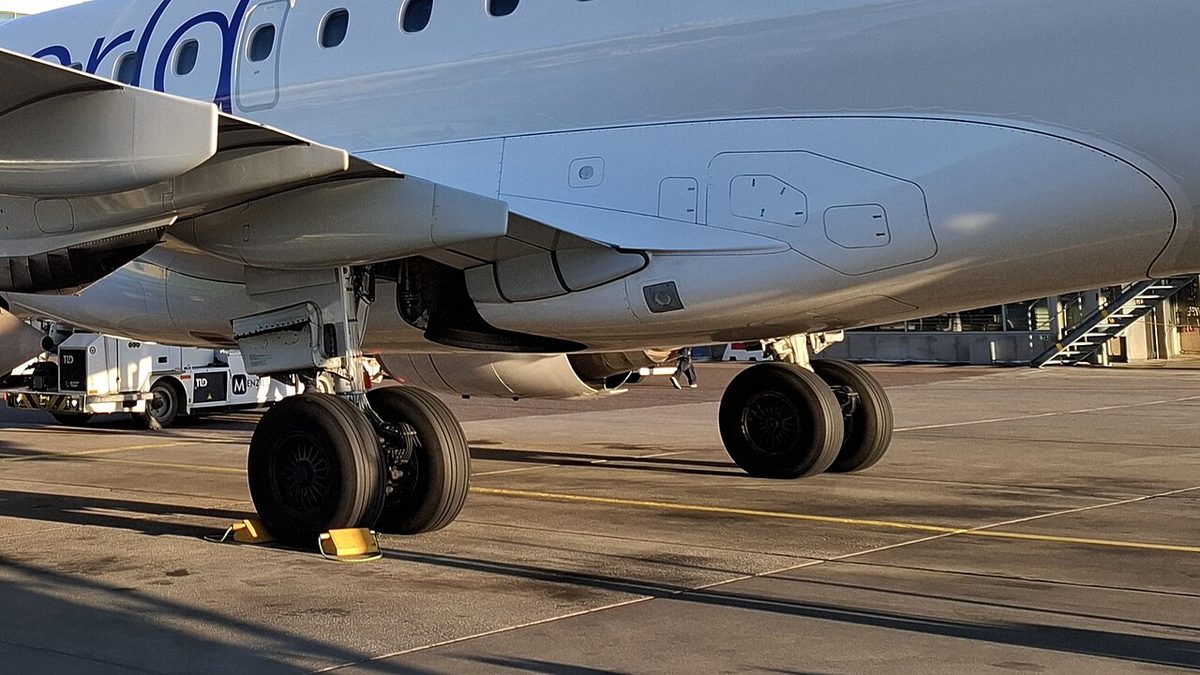
Aircraft tyres are rated for a maximum ground speed at which they have been tested and approved. The rating is marked on the sidewall, often in miles per hour: a 225 mph tyre, for example, is limited to about 195 kt. The tyre speed limit requires the ground speed at lift-off not to exceed the rating.
The lift-off ground speed is highest when the mass is high, since VLOF rises with the square root of the mass; when the aerodrome is hot and high, since the true airspeed at the same indicated airspeed is higher; and when there is a tailwind. The tyre speed limited mass is the highest mass at which VLOF, as a ground speed, just equals the rating. When it binds, the performance calculation limits the mass or selects more flap, which lowers the lift-off speed. Like VMBE, it caps the improved climb technique. A tyre failure near lift-off speed can lead to a high-speed rejected take-off with the fire risk that goes with it, which is why the limit is not treated as a formality.
Anti-skid inoperative dispatch
The certified stopping distances assume a working anti-skid system, which keeps each wheel close to the slip that gives maximum friction and prevents locked wheels. Without it the pilot must brake more gently to avoid locking a wheel, and the braking achieved is much lower. A locked wheel on a wet surface can also lead to reverted-rubber aquaplaning and a burst tyre.
The minimum equipment list often allows dispatch with the anti-skid inoperative, with conditions:
- The flight manual supplement gives anti-skid inoperative performance. The accelerate-stop distance grows, so V1 is reduced, and the mass is reduced if that is not enough. Landing distances grow in the same way.
- Many MEL entries and training texts prohibit take-off from a wet or contaminated runway with the anti-skid inoperative.
- Automatic functions that rely on the anti-skid may be lost. On the Boeing 737, RTO autobrake can be armed only when the anti-skid and autobrake systems are operational.
- The crew briefs the braking technique: steady, moderate pedal pressure rather than maximum braking, and reverse thrust used without counting on more of it than the performance data credit.

Anti-skid can also be lost in flight, and on some types it is lost in particular braking modes. On the A320 it is not available when the brakes are supplied by the accumulator alone, when the A/SKID and N/W STRG switch is off, with the parking brake, or below 20 kt ground speed in any mode. The landing distance must then be recalculated with the appropriate corrections before the approach (see landing distance).
Warning: brake energy limits assume a stop that starts at or below the calculated V1. A rejected take-off begun above V1 can exceed the brakes' capacity even when VMBE was respected in planning. The limit protects the plan only if the crew keeps to the decision speed.
Frequently asked questions
What is VMBE?
VMBE is the maximum brake energy speed: the highest speed from which the aeroplane can be brought to a stop without the brakes absorbing more energy than they are certified for. V1 may never exceed it. VMBE falls as mass, pressure altitude, temperature and tailwind increase, and on a downhill runway, so it is most often limiting for heavy departures from hot, high aerodromes.
What is the tyre speed limit on take-off?
Aircraft tyres are rated for a maximum ground speed, marked on the sidewall and often given in miles per hour, for example 225 mph, about 195 kt. The ground speed at lift-off must not exceed it. A heavy aeroplane at a hot, high aerodrome with a tailwind has a high lift-off ground speed, so the tyre rating can limit the take-off mass unless a flap setting with a lower lift-off speed is used.
Why must hot brakes be approached from the front or rear?
After a high-energy stop the heat from the brakes soaks into the wheels and tyres. The fuse plugs in the wheels melt at a set temperature to let the tyres deflate instead of bursting, and a plug, a tyre or a wheel that fails releases its energy sideways, along the line of the axle. Fire crews and ground staff therefore approach hot wheels from the front or the rear.
What is a quick turnaround limit?
It is the highest landing mass, for the aerodrome's altitude and temperature, from which an aeroplane can land and take off again without a special brake cooling period. Above it the brakes may be too hot to absorb a rejected take-off, so the flight manual requires a minimum waiting time and, typically, a check that the wheel fuse plugs have not melted before the next departure.
Can an aircraft be dispatched with the anti-skid inoperative?
Often yes, under the minimum equipment list, but with heavy penalties. Without anti-skid the braking achieved in a stop is much lower, so the accelerate-stop and landing distances grow and V1 and the permitted mass fall. Many MEL entries and training texts prohibit take-off from a wet or contaminated runway in this state, and the crew must brief a braking technique that avoids locking the wheels.
Test yourself on Brake Energy and Tyre Speed Limits
The v1prep banks cover this topic in Performance (032), with a worked explanation for every answer. EASA ATPL, PPL, IR and CPL, the FAA written tests and A320/B737 type ratings.
Start practising →Sources and further reading
- 14 CFR 25.109, Accelerate-stop distance
- 14 CFR 25.735, Brakes and braking systems
- EASA Easy Access Rules for Large Aeroplanes (CS-25)
- FAA AC 120-62, Takeoff Safety Training Aid
- FAA, Pilot Guide to Takeoff Safety
- EASA Easy Access Rules for Air Operations (Regulation (EU) No 965/2012), CAT.POL.A and minimum equipment list
Library articles are written for study and exam preparation. They do not replace your aircraft's approved documentation, your operator's procedures or the regulations themselves.