Air Traffic Control Units
Air traffic control units are the facilities that provide air traffic control service: aerodrome control towers, approach control units and area control centres, with working positions such as clearance delivery, ground and apron. Each controls a defined phase of flight in a defined part of the aerodrome or airspace.
Air traffic control (ATC) is not provided by one controller but by a chain of units, each responsible for one phase of a flight. A departing airliner may speak to clearance delivery, apron, ground and tower at its departure aerodrome, then to departure or approach control, then to one or more area control centres, before the same sequence runs in reverse at its destination. Each hand-over moves the aircraft to a controller with the right picture of the traffic in the next piece of airspace or ground.
Knowing which unit does what tells a pilot whom to call, what to ask for and what service to expect. ICAO Annex 11 and PANS-ATM define the units and their services, EASA applies them through SERA, and the FAA uses its own names for the same functions. Examinations test the definitions, the call sign suffixes and the difference between procedural and surveillance control.
Air traffic control and the controller
Air traffic services (ATS) is the umbrella term for flight information service, alerting service, air traffic advisory service and air traffic control service (see air traffic services). The objectives are to prevent collisions between aircraft, and between aircraft on the manoeuvring area and obstructions; to expedite and maintain an orderly flow of traffic; to provide advice and information useful for safe and efficient flight; and to notify the search and rescue organisations of aircraft in need.
Air traffic control service is divided into three parts, each normally provided by its own kind of unit:
| Service | Provided for | Unit |
|---|---|---|
| Aerodrome control service | Aerodrome traffic | Aerodrome control tower |
| Approach control service | Arriving and departing controlled flights | Approach control unit, or the tower or ACC where combined |
| Area control service | Controlled flights en route in control areas | Area control centre (ACC) |
An air traffic controller (ATCO) holds a licence issued to the standards of ICAO Annex 1, with ratings for the kinds of control they provide. The FAA summarises the controller's priorities in the AIM: first, the separation of aircraft and the issue of safety alerts; second, other required services that do not involve separation; third, additional services as far as possible.
A unit's call sign is the location name followed by a suffix that shows the service, so the suffix, not the place, tells the pilot what kind of station is answering:
| Suffix | Unit or service |
|---|---|
| CONTROL | Area control centre |
| APPROACH | Approach control |
| ARRIVAL, DEPARTURE | Approach control radar arrivals or departures |
| RADAR | Radar unit in general |
| TOWER | Aerodrome control |
| GROUND | Surface movement control |
| DELIVERY | Clearance delivery |
| APRON | Apron control or management service |
| INFORMATION | Flight information service |
| RADIO | Aeronautical station |
| HOMER | Direction-finding station |
INFORMATION and RADIO stations are not ATC. An aerodrome flight information service passes information but cannot clear an aircraft to take off or land, and an air/ground RADIO operator only relays information, much of it reported by other pilots.
Clearance delivery
Clearance delivery, call sign DELIVERY, issues ATC route clearances to departing aircraft before they taxi (see ATC clearances). Splitting it from ground control keeps long clearances and their readbacks off the taxi frequency at a busy aerodrome. Some aerodromes use the same frequency for other pre-flight business; at Toulouse Blagnac, for example, a VFR aircraft departing without a filed flight plan submits a flight notice on the DELIVERY frequency.
In the United States, pilots at airports with a pre-taxi clearance programme call clearance delivery or ground control not more than ten minutes before their proposed taxi time. Many airports deliver clearances by data link, either as a pre-departure clearance (PDC), which needs no readback, or as a CPDLC departure clearance, which requires a response from the crew. At airports without a control tower, the Chart Supplement gives the frequency or telephone number for obtaining an IFR clearance.
Apron management
The apron is the area of an aerodrome where aircraft park, load and unload, refuel and are maintained. It is part of the movement area but not of the manoeuvring area, which comprises the runways and taxiways used for take-off, landing and taxiing. An apron management service, call sign APRON where it has its own frequency, regulates the movement of aircraft on the apron to prevent collisions between aircraft and with obstacles, regulates the entry of aircraft to the apron and coordinates their exit with the aerodrome control tower, and ensures the safe and expeditious movement of vehicles. Emergency vehicles responding to an emergency have priority over all other surface traffic.
Ground movement control
Ground movement control (GMC), also called surface movement control and using the call sign GROUND, handles aircraft and vehicles taxiing on the manoeuvring area. It issues taxi routes, holding instructions and, in coordination with the tower, clearances to cross runways; every instruction involving a runway is read back in full (see aerodrome control phraseology). In the United States, 14 CFR 91.129 forbids operating on a runway or taxiway at an airport with an operating control tower without an appropriate clearance, and VFR pilots can ask ground or clearance delivery for radar traffic information when they call for taxi.
Ground controllers work mainly by sight, backed at larger airports by surface movement radar or multilateration. Such equipment is not required everywhere: France, for example, notifies ICAO that it does not systematically require surface movement radar for the manoeuvring area. In low visibility, when the controller cannot see the aircraft, pilots are asked to report positions and runway vacated.
Aerodrome control tower
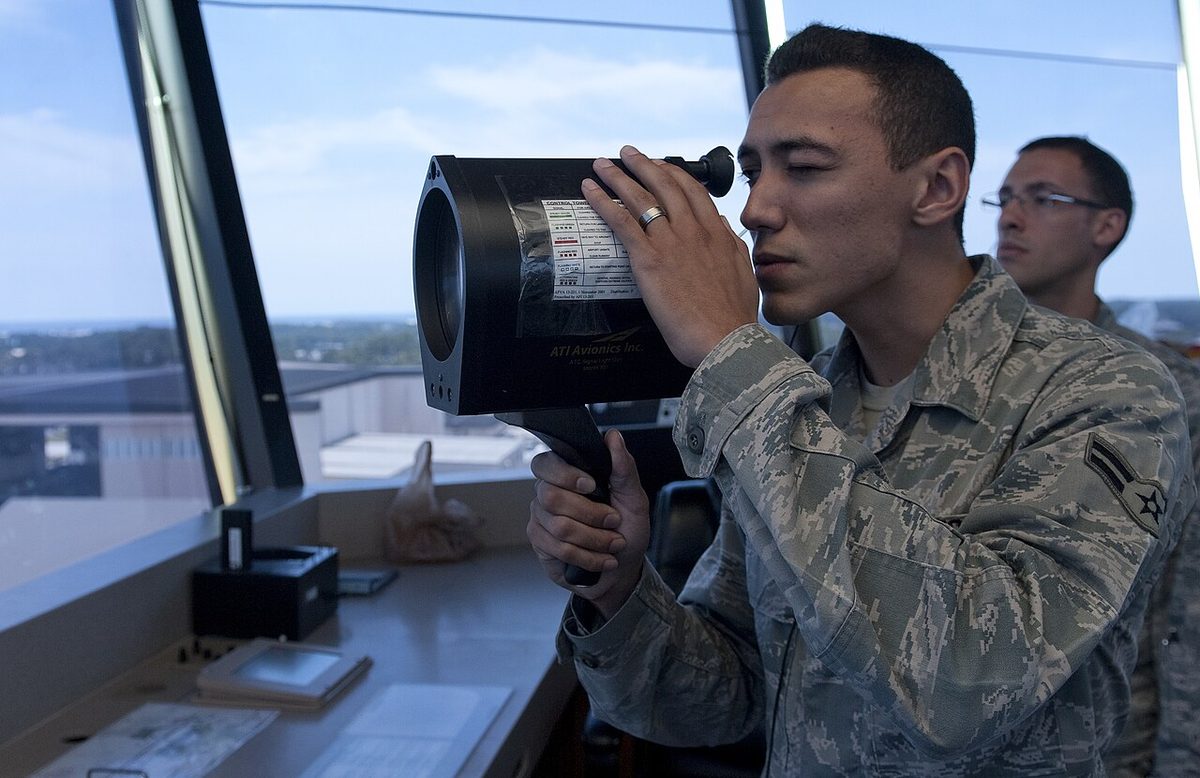
The aerodrome control tower, call sign TOWER, provides aerodrome control service to aerodrome traffic: all traffic on the manoeuvring area and all aircraft flying in the vicinity of the aerodrome, meaning in, entering or leaving the traffic circuit. It controls the use of the runway and issues take-off and landing clearances, circuit joining instructions and traffic information, and warns of wake turbulence and windshear. Much of its work is procedural: pilots report where they are, and the controller combines those reports with what can be seen from the cab. The FAA's AIM adds that, where the responsibility has been delegated, towers also separate IFR aircraft in the terminal area.
The tower is also the first link in the alerting service. If an aircraft cleared to land fails to land within five minutes and contact with it cannot be re-established, the tower reports it at once and the alert phase is declared. When an aircraft's radio fails, the controller directs it with a signal lamp (see radio communication failure).
Approach control
Approach control provides ATC service to arriving and departing controlled flights, usually within the control zones and terminal control areas around one or more aerodromes. It may work in the tower building or in a separate unit. With surveillance it vectors arrivals to the final approach, sequences them and passes expected approach times when they must hold. Where a precision approach radar is used, the radar controller obtains the landing clearance from the tower for the pilot.
The FAA's AIM describes approach control as responsible for all instrument flights within its area. The air route traffic control center tells arriving aircraft when to contact approach, and departure control, which separates departures, is an approach control function. The US radar approach facility is commonly called a terminal radar approach control (TRACON). VFR arrivals at airports with a sequencing service are asked to call approach at about 25 miles. Tower en route control links neighbouring approach control areas, mainly for non-turbojet aircraft at and below 10,000 ft, so that short flights can stay with approach controllers.
Area control centres
An area control centre (ACC), call sign CONTROL, provides area control service to controlled flights in the control areas and airways of its flight information region. The FAA equivalent is the air route traffic control center (ARTCC), called CENTER, established mainly for aircraft on IFR flight plans en route in controlled airspace. Both divide their airspace into sectors, each with its own controller or team and its own frequency, and hand flights from sector to sector. ARTCCs extend their radio coverage through remote air/ground sites that may be hundreds of miles from the centre.
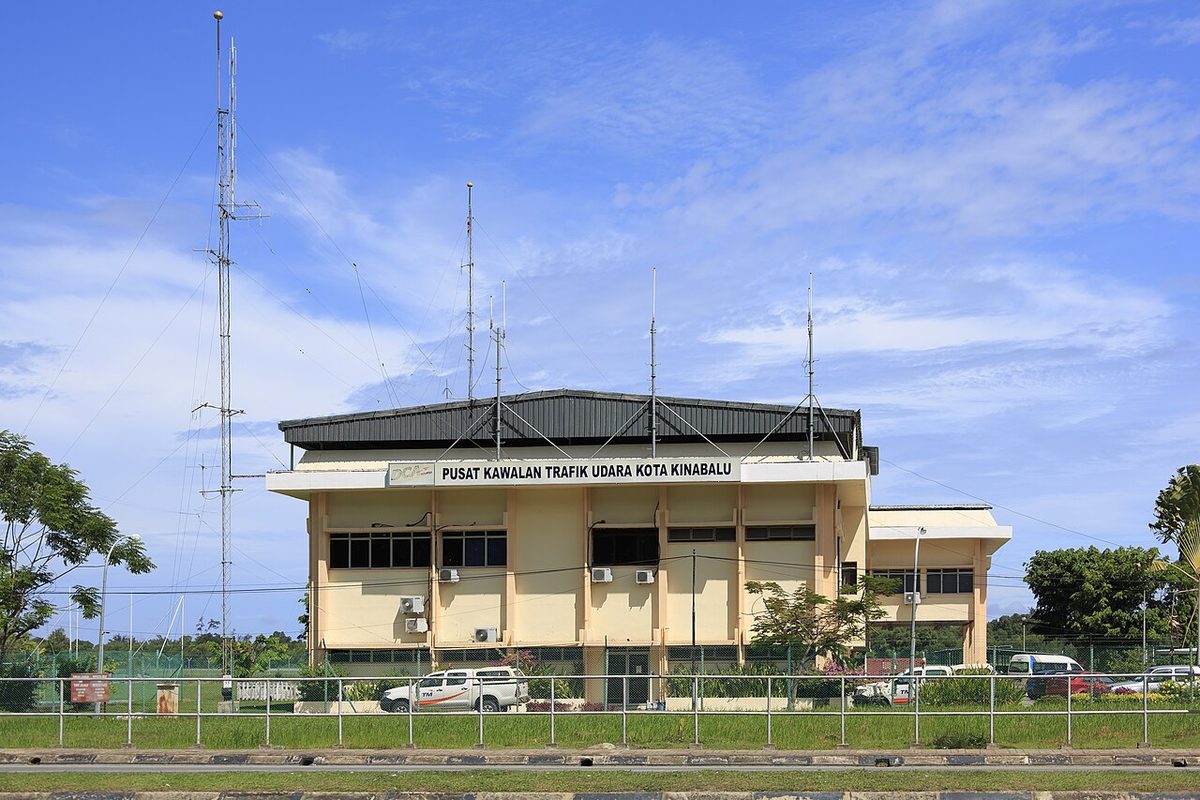
On first contact with a new sector, the pilot gives the call sign and the level, or, when climbing or descending, the level being passed and the cleared level, so that the controller can check the Mode C or Mode S altitude readout and the coordination between the two sectors. The FAA asks for the exact altitude to the nearest 100 ft. Over oceans and remote areas, beyond VHF and radar coverage, centres work by HF radio with SELCAL, and increasingly by CPDLC and ADS-C.
Procedural control and flight progress strips
Procedural control is air traffic control without a surveillance picture. The controller builds the picture from flight plans, the clearances issued and pilots' position reports and estimates, and applies separation rules based on time, distance, level and route. Because the controller cannot see where each aircraft is, the minima are much larger than with radar: the basic ICAO longitudinal standard for aircraft on the same track at the same level is 15 minutes, against a basic radar minimum of 5 NM (see separation standards). Procedural control is still used in oceanic airspace, in remote areas, at many smaller aerodromes and as the fallback when surveillance fails.
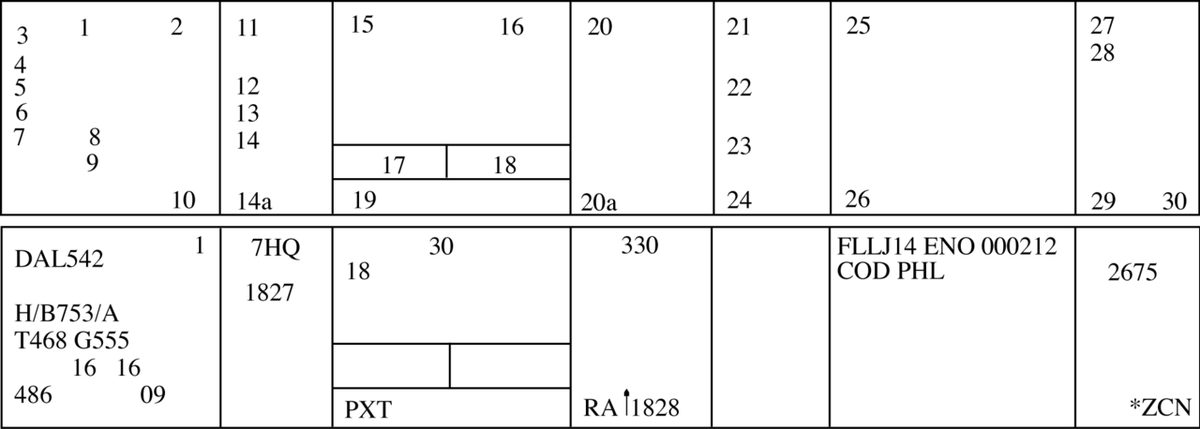
In a procedural environment the position report is the controller's main source of data. It follows a fixed order: aircraft identification, position, time, level, next position and time over it, and the ensuing significant point. The order lets the controller write the report straight onto the strip. Under ICAO rules a revised estimate is passed whenever the estimate for the next reporting point is found to be more than 3 minutes out; the FAA's threshold is 2 minutes, or 3 minutes in the North Atlantic.
The flight progress strip is the record of one flight. It is prepared from the flight plan and passed from controller to controller and from unit to unit as the flight progresses. The controller writes clearances, levels, estimates and reports on it and arranges the strips on a board to show the traffic, for example by reporting point and level. Paper strips remain in use, and some units have replaced them with electronic strips on a display, but the principle is the same: the strip board is the procedural controller's traffic picture, and a quick cross-check for the surveillance controller.
Exam tip: CONTROL is an area control centre, APPROACH approach control, TOWER aerodrome control, GROUND surface movement control and DELIVERY clearance delivery. INFORMATION and RADIO stations give information but no clearances.
Frequently asked questions
What are the main types of ATC unit?
ICAO divides air traffic control service into aerodrome control, approach control and area control. Aerodrome control is provided by the control tower, often split into clearance delivery, ground and tower positions, with apron management alongside. Approach control handles arriving and departing controlled flights around one or more aerodromes. Area control centres handle controlled flights en route. The FAA's equivalents are the airport traffic control tower, the approach facility and the air route traffic control center.
What is the difference between ground control and the tower?
The ground controller, call sign GROUND, handles aircraft and vehicles taxiing on the manoeuvring area. The tower controller, call sign TOWER, controls the runway in use and aircraft flying in the vicinity of the aerodrome, and issues take-off and landing clearances. At a small aerodrome one person may do both on one frequency; at a busy one they are separate positions, and runway crossings are coordinated between them.
What does clearance delivery do?
Clearance delivery, call sign DELIVERY, issues ATC route clearances to departing aircraft before they taxi. Splitting it from ground control keeps long IFR clearances, with their readbacks, off the busy taxi frequency. In the United States, clearances may also be delivered by data link as a pre-departure clearance or a CPDLC departure clearance, and at airports without a tower, clearance is often obtained by telephone.
What is procedural control?
Procedural control is air traffic control without a surveillance picture. The controller builds the traffic picture from flight plans, position reports, estimates and the clearances issued, recorded on flight progress strips, and separates aircraft by rules based on time, distance, level and route. Because positions are less certain, procedural minima are much larger than radar minima; the basic ICAO standard for two aircraft on the same track and level is 15 minutes.
What is a flight progress strip?
A flight progress strip is a record of one flight, prepared from its flight plan and passed from controller to controller, and from unit to unit, as the flight progresses. The controller writes clearances, levels, estimates and position reports on it and arranges the strips to show the traffic situation. Paper strips remain in use, and some units now display electronic strips on a screen instead.
Test yourself on Air Traffic Control Units
The v1prep banks cover this topic in Communications (090), with a worked explanation for every answer. EASA ATPL, PPL, IR and CPL, the FAA written tests and A320/B737 type ratings.
Start practising →Sources and further reading
- ICAO Annex 11, Air Traffic Services (consolidated text)
- ICAO Doc 4444, Procedures for Air Navigation Services, Air Traffic Management (PANS-ATM), 16th edition, as published by Airservices Australia
- ICAO Annex 10, Aeronautical Telecommunications, Volume II, Communication Procedures (call signs of aeronautical stations)
- FAA Aeronautical Information Manual, Chapter 4 Section 1, Services Available to Pilots
- FAA Aeronautical Information Manual, Chapter 5 Section 2, Departure Procedures (5-2-1 pre-taxi clearance, 5-2-8 departure control)
- FAA Aeronautical Information Manual, Chapter 5 Section 3, En Route Procedures
- FAA Aeronautical Information Manual, Chapter 5 Section 4, Arrival Procedures (5-4-3, Approach Control)
- FAA Aeronautical Information Manual, Chapter 5 Section 5, Pilot/Controller Roles and Responsibilities (5-5-1, controller priorities)
Library articles are written for study and exam preparation. They do not replace your aircraft's approved documentation, your operator's procedures or the regulations themselves.